VS

VW Touran vs Peugeot 3008 comparison

Compare performance (150 HP vs 325 HP), boot space and price (36,000 £ vs 35,100 £ ) at a glance. Find out which car is the better choice for you – VW Touran or Peugeot 3008?

VW Touran vs Peugeot 3008: Key differences

VW Touran

4.9 (2 Reviews)
rate
  • marginally lighter
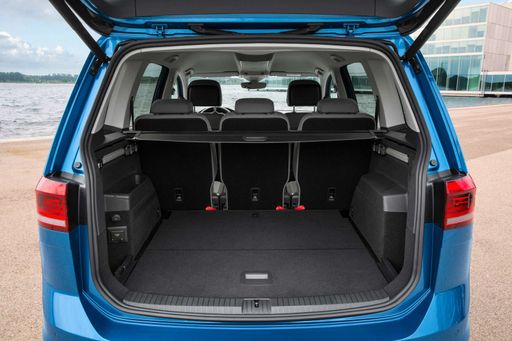
  • noticeably more trunk space

Peugeot 3008

3.4 (4 Reviews)
rate
  • only slightly cheaper
  • clearly more power
  • clearly more efficient
  • substantially quicker 0–100 km/h

All details on performance, efficiency, range and trunk space can be found in the technical comparison below – including user reviews for both models.

Touran

Introduction

In the competitive automotive landscape, the Peugeot 3008 and Volkswagen Touran represent two distinct approaches to family-friendly vehicles. The 3008 is a stylish SUV with an innovative design, while the Touran leans towards the practicality of an MPV. This article will dive into a comparative analysis of both models, assessing their technical specifications, design features, and innovative technologies to help you decide which vehicle fits your lifestyle best.
3008

Performance and Engine Options

The Peugeot 3008 offers a variety of powertrains, including petrol MHEV, plug-in hybrids, and all-electric options. With power outputs ranging from 136 to 231 HP, the 3008 caters to a wide array of driving preferences. It boasts impressive acceleration figures, reaching 0-100 km/h in as little as 8.4 seconds, thanks to its robust torque performance of up to 345 Nm.

On the other hand, the VW Touran predominantly features petrol and diesel engines, with power outputs from 122 to 150 HP. While its acceleration is slightly less nimble compared to the 3008, at 0-100 km/h in 8.9 seconds for the faster option, it compensates with a higher practical power delivery and efficiency. The Touran’s diesel engines also provide greater torque, which can reach 360 Nm, making it a strong contender for those prioritizing towing and load-bearing capabilities.

Touran

Fuel Efficiency and Economy

When it comes to fuel consumption, the Peugeot 3008 shines with its advanced hybrid technology. It can achieve fuel consumption figures as low as 0.9 L/100 km for electric driving modes, making it an excellent choice for eco-conscious drivers. The CO2 emissions also reflect this environmentally friendly approach, with models classified in emissions class A.

The Volkswagen Touran, while slightly less efficient, still holds its ground with consumption figures ranging from 5.1 to 6.4 L/100 km, depending on the engine type. The emissions class ranges from D to E, showing that it is also aiming for better environmental performance, albeit not as aggressively as the 3008.

3008

Interior Space and Comfort

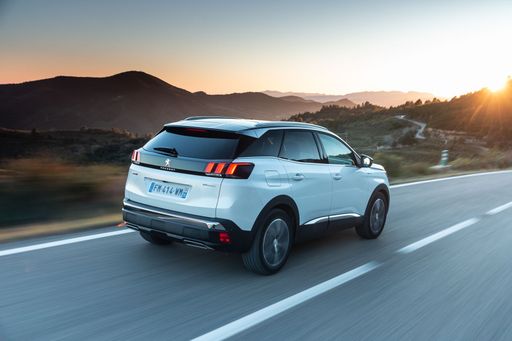
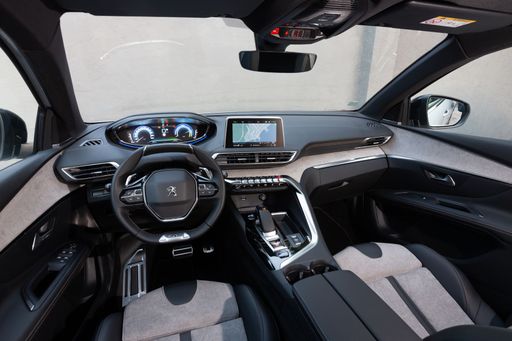
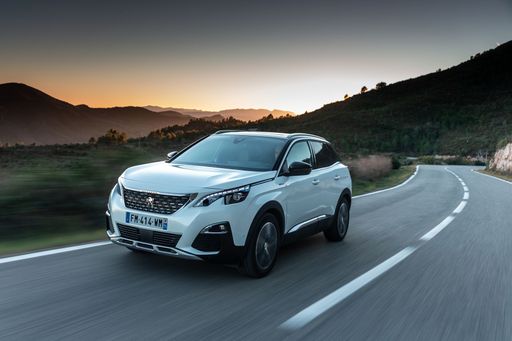
As an SUV, the Peugeot 3008 offers a spacious interior with a trunk capacity of 520 liters, allowing for ample storage space for spontaneous trips or daily errands. The 3008's modern design features a sleek cockpit characterized by a digital gauge cluster and an intuitive infotainment system, enhancing the overall driving experience.

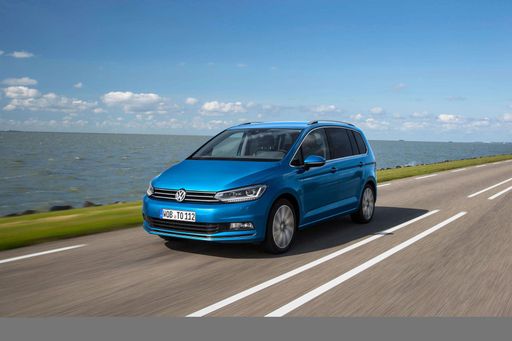
Conversely, the VW Touran, as an MPV, excels in space efficiency with a trunk capacity of 834 liters. Its longer body dimensions (4527 mm length and 1668 mm height) allow for extra passenger room and family-friendly seating configurations. The Touran’s interior is built with practicality in mind, featuring versatile seating arrangements and an array of storage compartments, making it a great choice for larger families.

Touran

Safety and Technology Innovations

Both vehicles are equipped with modern safety features. The Peugeot 3008 includes advanced driver-assistance systems such as Adaptive Cruise Control, Lane Keeping Assist, and Autonomous Emergency Braking, ensuring a safe and connected drive. Additionally, the integration of smart connectivity features through its infotainment system helps drivers stay in touch while on the move.

The Volkswagen Touran does not fall short in the safety department either. It is equipped with similar driver-assistance technologies and offers a comprehensive suite of active safety systems. VW has an established reputation for safety, which is reflected in Touran's performance in Euro NCAP tests, ensuring peace of mind for families on the road.

3008

Conclusion

In summary, choosing between the Peugeot 3008 and the VW Touran largely depends on your specific needs and preferences. If you desire a stylish, tech-forward SUV with efficient powertrain choices, the 3008 is a compelling option. However, if practicality, interior space, and family-friendly design are your top priorities, the Touran stands out as a versatile MPV. Ultimately, both vehicles offer a strong combination of performance, safety, and innovation, making them worthy contenders in their respective segments.

Here’s where it gets real: The technical differences in detail

Touran

Costs and Efficiency:

Price and efficiency are key factors when choosing a car – and this is often where the real differences emerge.

Peugeot 3008 is only slightly cheaper – starting at 35,100 £ , while the VW Touran costs 36,000 £ . That’s a price difference of around 853 £.

Fuel consumption also shows a difference: the Peugeot 3008 uses 2.4 L/100km and is clearly more efficient than the VW Touran with 5.2 L/100km. The difference is about 2.8 L/100km.

3008

Engine and Performance:

Power, torque and acceleration say a lot about how a car feels on the road. This is where you see which model delivers more driving dynamics.

When it comes to engine power, the Peugeot 3008 offers clearly more power – delivering 325 HP compared to 150 HP. That’s roughly 175 HP more horsepower.

When accelerating from 0 to 100 km/h, the Peugeot 3008 is substantially quicker – completing the sprint in 6 s, while the VW Touran takes 8.9 s. That’s about 2.9 s quicker.

There’s also a difference in torque: the Peugeot 3008 delivers markedly more torque with 511 Nm compared to 360 Nm. That’s about 151 Nm more.

Touran

Space and Everyday Use:

Beyond pure performance, interior space and usability matter most in daily life. This is where you see which car is more practical and versatile.

Both vehicles offer seating for 5 people.

In terms of curb weight, VW Touran is marginally lighter – 1,520 kg compared to 1,648 kg. The difference is around 128 kg.

Looking at boot space, the VW Touran offers noticeably more boot space – 834 L compared to 520 L. That’s a difference of about 314 L.

When it comes to payload, the VW Touran carries visibly more – 601 kg compared to 467 kg. That’s a difference of about 134 kg.

Who wins the race in the data check?

The Peugeot 3008 holds a decisive overall lead in the objective data comparison.
This result only shows which model scores more points on paper – not which of the two cars feels right for you.

from £35,100
3008

Peugeot 3008

  • Engine Type : Electric, Petrol MHEV, Plugin Hybrid
  • Transmission : Automatic
  • Drive Type : Front-Wheel Drive, All-Wheel Drive
  • Power HP : 145 - 325 HP
  • Consumption L/100km : 2.4 - 5.4 L/100km
  • Consumption kWh/100km : 16.9 - 17.6 kWh/100km
  • Electric Range : 81 - 698 km
VW Touran
Peugeot 3008

Costs and Consumption

View detailed analysis

Engine and Performance

View detailed analysis

Dimensions and Body

View detailed analysis

VW Touran

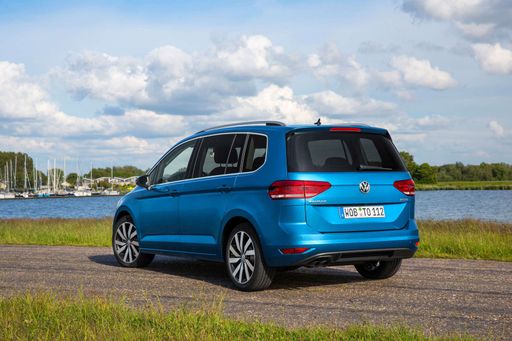
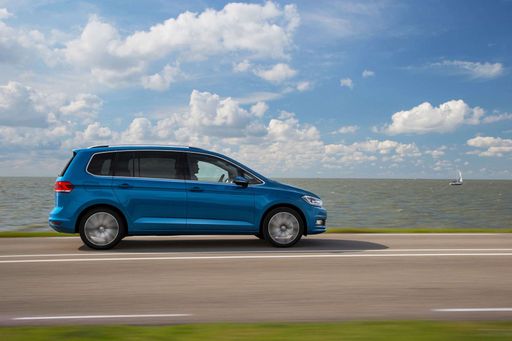
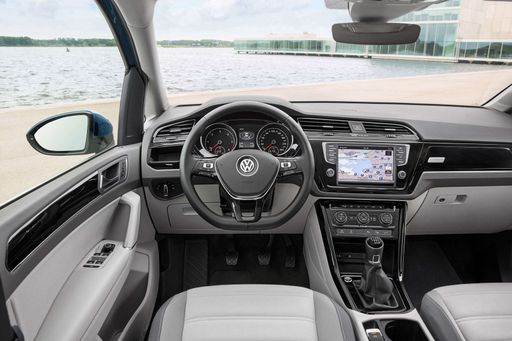
The VW Touran is a sensible family people‑carrier that mixes practical packaging with tidy, German-built refinement, making everyday life with kids and shopping feel a lot less chaotic. If you want a reliable, no-nonsense companion that drives with surprising poise and values usefulness over flash, the Touran is a very persuasive choice.

details

Peugeot 3008

The Peugeot 3008 blends bold French styling with a surprisingly grown-up interior that makes even dull commutes feel a little bit special. Practical enough for family life yet lively to drive, it’s a clever all‑rounder that stands out from the crossover crowd without shouting for attention.

details
VW Touran
Peugeot 3008

Costs and Consumption

Price
36,000 - 45,300 £
Price
35,100 - 52,000 £
Consumption L/100km
5.2 - 6.5 L/100km
Consumption L/100km
2.4 - 5.4 L/100km
Consumption kWh/100km
-
Consumption kWh/100km
16.9 - 17.6 kWh/100km
Electric Range
-
Electric Range
81 - 698 km
Battery Capacity
-
Battery Capacity
0.4 - 96.9 kWh
co2
136 - 149 g/km
co2
0 - 121 g/km
Fuel tank capacity
-
Fuel tank capacity
55 L

Dimensions and Body

Body Type
MPV
Body Type
SUV
Seats
5
Seats
5
Doors
-
Doors
5
Curb weight
1,520 - 1,631 kg
Curb weight
1,648 - 2,266 kg
Trunk capacity
834 L
Trunk capacity
470 - 520 L
Length
-
Length
4,542 mm
Width
1,829 mm
Width
1,895 mm
Height
-
Height
1,641 mm
Max trunk capacity
-
Max trunk capacity
1,430 - 1,480 L
Payload
590 - 601 kg
Payload
432 - 467 kg

Engine and Performance

Engine Type
Petrol, Diesel
Engine Type
Electric, Petrol MHEV, Plugin Hybrid
Transmission
Manuel, Automatic
Transmission
Automatic
Transmission Detail
Manual Gearbox, Dual-Clutch Automatic
Transmission Detail
Reduction Gearbox, Dual-Clutch Automatic
Drive Type
Front-Wheel Drive
Drive Type
Front-Wheel Drive, All-Wheel Drive
Power HP
122 - 150 HP
Power HP
145 - 325 HP
Acceleration 0-100km/h
8.9 - 10.8 s
Acceleration 0-100km/h
6 - 10.2 s
Max Speed
-
Max Speed
170 - 201 km/h
Torque
250 - 360 Nm
Torque
230 - 511 Nm
Number of Cylinders
4
Number of Cylinders
3 - 4
Power kW
90 - 110 kW
Power kW
107 - 239 kW
Engine capacity
1,498 - 1,968 cm3
Engine capacity
1,199 - 1,598 cm3

General

Model Year
2,024 - 2,025
Model Year
2,024 - 2,026
CO2 Efficiency Class
E
CO2 Efficiency Class
A, D, B
Brand
VW
Brand
Peugeot
DriveDuel uses data analysis and artificial intelligence to evaluate vehicle data and create content. Content is regularly reviewed and improved. The displayed prices are estimates based on German list prices, adjusted to the respective country’s VAT. Country-specific registration taxes are not included. This information is not legally binding.