VS

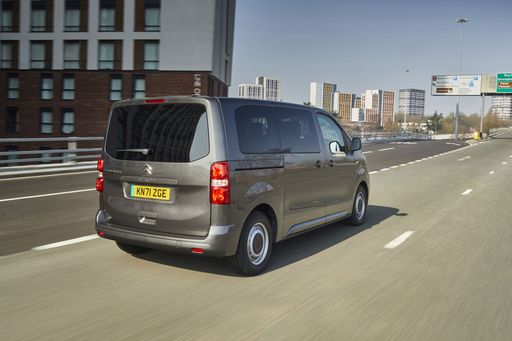
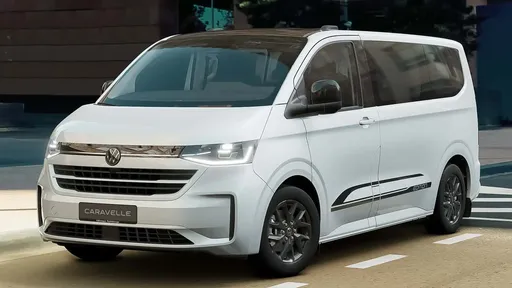
VW Transporter Bus vs Citroen Spacetourer comparison

Compare performance (286 HP vs 180 HP), boot space and price (41,500 £ vs 34,800 £ ) at a glance. Find out which car is the better choice for you – VW Transporter Bus or Citroen Spacetourer?

VW Transporter Bus vs Citroen Spacetourer: Key differences

VW Transporter Bus

  • markedly more power
  • substantially more efficient
  • barely more efficient
  • substantially quicker 0–100 km/h
details

Citroen Spacetourer

  • slightly cheaper
  • barely more electric range
  • barely lighter
  • substantially more trunk space
details

By Achim Sedelmaier

Transporter Bus

The Road Warriors: Citroen Spacetourer vs. VW Transporter Bus

In the thriving market of multi-purpose vehicles (MPVs), the Citroen Spacetourer and VW Transporter Bus have carved out a niche with their practical designs and innovative technologies. Both models exude versatility and comfort, but how do they compare in terms of technical specifications and cutting-edge features?
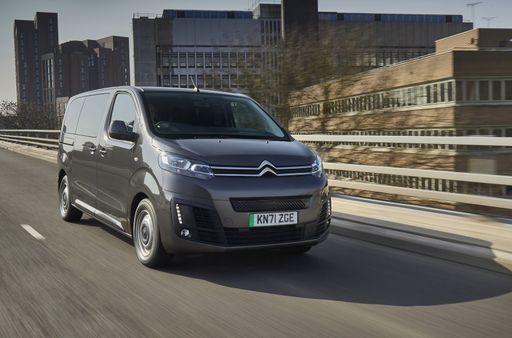
Spacetourer

Under the Hood: Comparing Engines and Performance

The Citroen Spacetourer offers both electric and diesel options, catering to a broad range of preferences. Its electric version boasts a horsepower of 136 HP with a high efficiency of 24.5 kWh per 100 km. For those who prefer diesel, the top variant reaches up to 177 HP and sports a reasonable consumption of 7.3 L/100 km.

On the other hand, the VW Transporter Bus comes with a wider array of engine choices, including diesel, petrol, and plug-in hybrid options. It reaches a peak performance of 286 HP and offers more drivetrain configurations, such as front-wheel, all-wheel, and rear-wheel drive. This diversity offers VW drivers a tailored experience, depending on their driving needs and preferences.

Driving Dynamics: Speed, Acceleration, and Torque

For the Citroen Spacetourer, the 0-100 km/h sprint ranges between 10.6 seconds (for its diesel version) and 12.1 seconds (for its electric version). It provides maximum torque options of 260 to 400 Nm, essential for urban and highway driving.

The VW Transporter showcases quicker acceleration figures, capable of sprinting from 0 to 100 km/h in as little as 7.4 seconds, making it a spirited choice for those who prioritize speed. The torque in VW's engines ranges between 310 to 415 Nm, promising robust performance under various driving conditions.

Structural Dimensions and Capacities

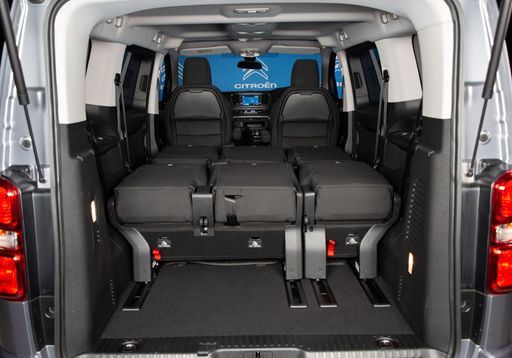
The Spacetourer's length varies from 4983 mm to 5333 mm and houses up to 9 passengers, offering a trunk capacity of up to 2011 L. This suits families and businesses alike, providing a spacious interior complemented by functional design.

Meanwhile, the VW Transporter comes in sizes stretching from 4973 mm to an impressive 5450 mm, with options for seating configurations of up to 8 passengers. Although its trunk space maxes out at 763 L, it compensates with a larger overall footprint and adaptability in cargo arrangements.

Eco and Economy: Curbing the Carbon Footprint

Both contenders prioritize environmental consciousness, with the Spacetourer's electric variant producing zero emissions. Its diesel counterpart emits between 192 to 194 g/km of CO2, positioned within efficiency classes from A to G.

The VW Transporter, with its plug-in hybrid and fully electric models, also delivers eco-friendly options. These variants score highly in CO2 efficiency, characterized by impressive fuel consumption as low as 0.8 L/100 km for the hybrids.

Conclusion: Tailoring Choice to Needs

In the battle between the Citroen Spacetourer and VW Transporter Bus, the choice largely depends on personal priorities. The Citroen shines with its simplistic approach and electric innovation, whereas the VW offers diversity and power across its lineup. Ultimately, both models are stellar choices for anyone seeking a versatile, reliable MPV.

Here’s where it gets real: The technical differences in detail

Transporter Bus

Costs and Efficiency:

Price and efficiency are key factors when choosing a car – and this is often where the real differences emerge.

Citroen Spacetourer is slightly cheaper – starting at 34,800 £ , while the VW Transporter Bus costs 41,500 £ . That’s a price difference of around 6,653 £.

Fuel consumption also shows a difference: the VW Transporter Bus uses 0.8 L/100km and is substantially more efficient than the Citroen Spacetourer with 6.8 L/100km. The difference is about 6 L/100km.

In terms of energy consumption, the VW Transporter Bus is barely more efficient: consuming 22.4 kWh/100km compared to 23.7 kWh/100km for the Citroen Spacetourer. That’s a difference of about 1.3 kWh/100km.

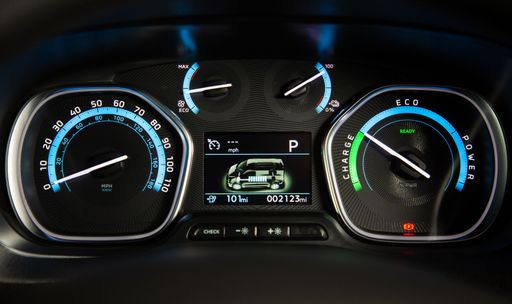
As for electric range, the Citroen Spacetourer offers barely more range – reaching up to 351 km, about 27 km more than the VW Transporter Bus.

Spacetourer

Engine and Performance:

Under the bonnet, it becomes clear which model is tuned for sportiness and which one takes the lead when you hit the accelerator.

When it comes to engine power, the VW Transporter Bus offers markedly more power – delivering 286 HP compared to 180 HP. That’s roughly 106 HP more horsepower.

When accelerating from 0 to 100 km/h, the VW Transporter Bus is substantially quicker – completing the sprint in 7.4 s, while the Citroen Spacetourer takes 11 s. That’s about 3.6 s quicker.

Looking at top speed, the VW Transporter Bus is very slightly faster – reaching 200 km/h, while the Citroen Spacetourer tops out at 185 km/h. The difference is around 15 km/h.

There’s also a difference in torque: the VW Transporter Bus delivers only slightly more torque with 415 Nm compared to 400 Nm. That’s about 15 Nm more.

Space and Everyday Use:

Beyond pure performance, interior space and usability matter most in daily life. This is where you see which car is more practical and versatile.

Seats: Citroen Spacetourer offers more seats – 9 vs 8.

In terms of curb weight, Citroen Spacetourer is barely lighter – 1,953 kg compared to 1,998 kg. The difference is around 45 kg.

Looking at boot space, the Citroen Spacetourer offers substantially more boot space – 2,011 L compared to 763 L. That’s a difference of about 1,248 L.

For maximum load capacity, the VW Transporter Bus offers somewhat more capacity – up to 4,005 L, about 705 L more than the Citroen Spacetourer.

When it comes to payload, the VW Transporter Bus carries visibly more – 1,143 kg compared to 914 kg. That’s a difference of about 229 kg.

Who wins the race in the data check?

The VW Transporter Bus is decisively ahead in the objective data comparison.
This result only shows which model scores more points on paper – not which of the two cars feels right for you.

from £41,500
Transporter Bus

VW Transporter Bus

  • Engine Type : Diesel, Petrol, Plugin Hybrid, Electric
  • Transmission : Manuel, Automatic
  • Drive Type : Front-Wheel Drive, All-Wheel Drive, Rear-Wheel Drive
  • Power HP : 110 - 286 HP
  • Consumption L/100km : 0.8 - 9.2 L/100km
  • Consumption kWh/100km : 22.4 - 24.9 kWh/100km
  • Electric Range : 87 - 324 km
VW Transporter Bus
Citroen Spacetourer

Costs and Consumption

View detailed analysis

Engine and Performance

View detailed analysis

Dimensions and Body

View detailed analysis

VW Transporter Bus

The VW Transporter is the Swiss Army knife of vans — rugged, practical and surprisingly civilized on the road, whether you’re hauling kit for a job or converting it into a weekend camper. It isn’t trying to be glamorous, but its blend of durability, clever packaging and familiar VW charm makes it a sensible choice for buyers who need space without sacrificing driveability.

details

Citroen Spacetourer

The Citroën SpaceTourer is a quietly practical people carrier that turns the chaos of family transport into a calm, sensible experience. With clever interior packaging and a relaxed ride it makes long trips surprisingly pleasant — even the backseat critics might stop grumbling.

details
VW Transporter Bus
Citroen Spacetourer

Costs and Consumption

Price
41,500 - 85,100 £
Price
34,800 - 52,100 £
Consumption L/100km
0.8 - 9.2 L/100km
Consumption L/100km
6.8 L/100km
Consumption kWh/100km
22.4 - 24.9 kWh/100km
Consumption kWh/100km
23.7 - 24.4 kWh/100km
Electric Range
87 - 324 km
Electric Range
217 - 351 km
Battery Capacity
11.8 - 63.8 kWh
Battery Capacity
-
co2
0 - 229 g/km
co2
0 - 180 g/km
Fuel tank capacity
45 - 60 L
Fuel tank capacity
70 L

Dimensions and Body

Body Type
Bus
Body Type
Bus
Seats
4 - 8
Seats
8 - 9
Doors
4 - 5
Doors
5
Curb weight
1,998 - 2,620 kg
Curb weight
1,953 - 2,240 kg
Trunk capacity
0 - 763 L
Trunk capacity
1,624 - 2,011 L
Length
4,973 - 5,450 mm
Length
4,983 - 5,333 mm
Width
1,941 - 2,032 mm
Width
1,920 mm
Height
1,907 - 1,997 mm
Height
1,890 mm
Max trunk capacity
3,672 - 4,005 L
Max trunk capacity
2,700 - 3,300 L
Payload
330 - 1,143 kg
Payload
850 - 914 kg

Engine and Performance

Engine Type
Diesel, Petrol, Plugin Hybrid, Electric
Engine Type
Electric, Diesel
Transmission
Manuel, Automatic
Transmission
Automatic
Transmission Detail
Manual Gearbox, Automatic Gearbox, Dual-Clutch Automatic
Transmission Detail
Reduction Gearbox, Automatic Gearbox
Drive Type
Front-Wheel Drive, All-Wheel Drive, Rear-Wheel Drive
Drive Type
Front-Wheel Drive
Power HP
110 - 286 HP
Power HP
136 - 180 HP
Acceleration 0-100km/h
7.4 - 16.9 s
Acceleration 0-100km/h
11 - 12.1 s
Max Speed
112 - 200 km/h
Max Speed
130 - 185 km/h
Torque
310 - 415 Nm
Torque
260 - 400 Nm
Number of Cylinders
4
Number of Cylinders
4
Power kW
81 - 210 kW
Power kW
100 - 132 kW
Engine capacity
1,498 - 2,488 cm3
Engine capacity
2,184 cm3

General

Model Year
2,024 - 2,025
Model Year
2,024 - 2,025
CO2 Efficiency Class
G, F, B, A
CO2 Efficiency Class
A, G
Brand
VW
Brand
Citroen
DriveDuel uses data analysis and artificial intelligence to evaluate vehicle data and create content. Content is regularly reviewed and improved. The displayed prices are estimates based on German list prices, adjusted to the respective country’s VAT. Country-specific registration taxes are not included. This information is not legally binding.