
VS

VW Transporter Transporter vs Renault Trafic Transporter comparison

Compare performance (286 HP vs 170 HP), boot space and price (37,500 £ vs 38,100 £ ) at a glance. Find out which car is the better choice for you – VW Transporter Transporter or Renault Trafic Transporter?

VW Transporter Transporter vs Renault Trafic Transporter: Key differences

VW Transporter Transporter

  • only slightly cheaper
  • considerably more power
  • very slightly more electric range
  • significantly quicker 0–100 km/h
details

Renault Trafic Transporter

  • only slightly more efficient
  • only slightly more efficient
  • barely lighter
details

By Achim Sedelmaier

Transporter Transporter

Head-to-head: Renault Trafic Transporter vs VW Transporter Transporter

Renault Trafic Transporter vs VW Transporter Transporter is the kind of matchup that separates buyers who want a quietly efficient workhorse from those who need maximum hauling flexibility and modern cockpit tech. The Renault Trafic Transporter arrives as a pragmatic, pkw‑like van with clever in‑body load solutions and a relaxed driving persona. The VW Transporter Transporter answers with more space, higher payload capability and a much more digital cabin package that feels engineered for fleets. Read on to see how those differences play out in daily loading, long runs, city work and who will most likely prefer each van.
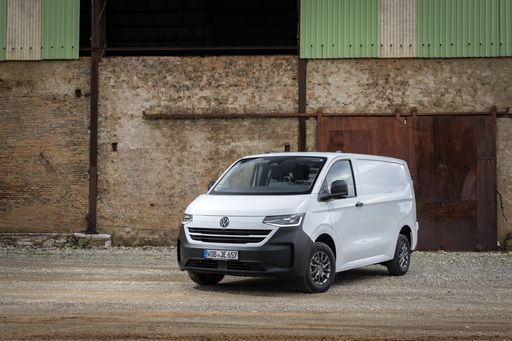
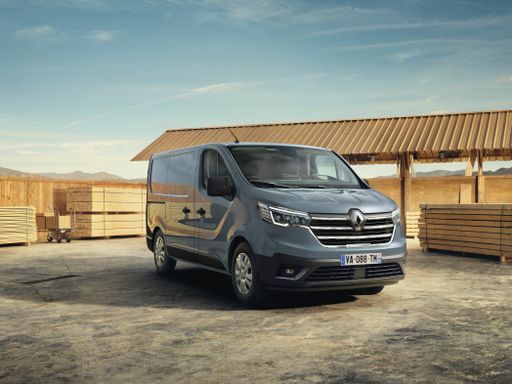
Trafic Transporter

Character and driving feel

The Renault Trafic Transporter drives like a sensible midsize van tuned for calm cruising: refined under load, forgiving steering and an overall focus on comfort. The VW Transporter Transporter leans toward a firmer, more purposeful feel with stronger engines and a sense of greater shove when you need it, which is useful when you tow or hurry jobs along. That extra urgency in the VW comes with trade‑offs — it can feel noisier and more mechanically present at motorway speeds compared with the Trafic’s composed demeanor. If you prefer relaxed mile‑eating the Renault will feel more natural; if you regularly need brisk acceleration or haul trailers the VW’s personality will suit you better.

Cargo, usability and day‑to‑day practicality

The Renault Trafic Transporter wins on thoughtful, real‑world loading details: easy interior through‑access, practical lashing points and door ergonomics that save time and roof‑rack trips. The VW Transporter Transporter, however, simply offers more raw capacity and higher payload and towing capability, so bulk buyers or crews that carry heavy kits will find the VW more versatile. In practice the Trafic’s details make single‑man jobs and long awkward loads easier, while the VW’s bigger box and tougher numbers mean fewer compromises when you must maximize volume or tow weight. Choose the Trafic for smarter packaging; choose the VW for sheer carrying and towing muscle.

Comfort, cabin feel and perceived quality

Inside the Renault Trafic Transporter the cabin aims for functional comfort: seats that suit long shifts, lots of usable storage and a quieter background, especially in electric or modern diesel variants. The VW Transporter Transporter feels more up‑to‑date with a larger digital display and a cleaner, more modern layout, yet that tech brings compromises — climate and some controls migrate to touch menus that irritate in traffic. Material choices in both vans tend toward robustness over luxury, but the VW’s tech-forward presentation gives it a more contemporary sheen while the Trafic’s cockpit feels more straightforward and utilitarian. If you value tactile simplicity and low‑stress ergonomics the Trafic will appeal; if you want a more modern, connected cabin the VW pulls ahead despite a few usability gripes.

City friendliness versus long‑distance behavior

In tight urban work the Renault Trafic Transporter is easy to live with thanks to a high driving position, helpful mirrors and optional camera aids that simplify reversing and lane changes. The VW Transporter Transporter surprises for its size with a small turning circle and low loading sill that make daily stops efficient, but motorway work exposes the VW’s greater wind and tyre noise more than the Trafic. On long runs the Trafic’s calm ride and quieter diesel or electric operation reduce fatigue, whereas the VW’s stronger engines and towing ability make it a better tool for heavy payload trips or mixed job profiles. City‑heavy operators will like the Trafic’s smooth stop‑start behavior; cross‑country haulers and trailer users will prefer the Transporter’s stamina.

Who should pick which van — buyer fit and trade‑offs

Pick the Renault Trafic Transporter if your priorities are clever load solutions, a relaxed driving experience and lots of practical interior detail for one‑man jobs or service routes. Opt for the VW Transporter Transporter if you need the extra payload, towing capacity, or the flexibility of multiple body and powertrain choices and a more modern, digital cabin for fleet use. Both vans are strong tools, but the Trafic trades some payload and the latest interface for quieter long‑distance comfort, while the VW trades acoustic refinement for capability and digital convenience. The technical comparison that follows will unpack those capability differences so you can match numbers and options to the practical buyer fit described here.

Here’s where it gets real: The technical differences in detail

Transporter Transporter

Costs and Efficiency:

When it comes to price and running costs, the biggest differences usually appear. This is often where you see which car fits your budget better in the long run.

VW Transporter Transporter is only slightly cheaper – starting at 37,500 £ , while the Renault Trafic Transporter costs 38,100 £ . That’s a price difference of around 582 £.

Fuel consumption also shows a difference: the Renault Trafic Transporter uses 6.8 L/100km and is only slightly more efficient than the VW Transporter Transporter with 7.1 L/100km. The difference is about 0.3 L/100km.

In terms of energy consumption, the Renault Trafic Transporter is only slightly more efficient: consuming 21.2 kWh/100km compared to 21.9 kWh/100km for the VW Transporter Transporter. That’s a difference of about 0.7 kWh/100km.

As for electric range, the VW Transporter Transporter offers very slightly more range – reaching up to 331 km, about 13 km more than the Renault Trafic Transporter.

Trafic Transporter

Engine and Performance:

Under the bonnet, it becomes clear which model is tuned for sportiness and which one takes the lead when you hit the accelerator.

When it comes to engine power, the VW Transporter Transporter offers considerably more power – delivering 286 HP compared to 170 HP. That’s roughly 116 HP more horsepower.

When accelerating from 0 to 100 km/h, the VW Transporter Transporter is significantly quicker – completing the sprint in 7.4 s, while the Renault Trafic Transporter takes 10.8 s. That’s about 3.4 s quicker.

There’s also a difference in torque: the VW Transporter Transporter delivers barely more torque with 415 Nm compared to 380 Nm. That’s about 35 Nm more.

Space and Everyday Use:

Beyond pure performance, interior space and usability matter most in daily life. This is where you see which car is more practical and versatile.

Seats: Renault Trafic Transporter offers more seats – 6 vs 5.

In terms of curb weight, Renault Trafic Transporter is barely lighter – 1,848 kg compared to 1,872 kg. The difference is around 24 kg.

When it comes to payload, the VW Transporter Transporter carries very slightly more – 1,259 kg compared to 1,222 kg. That’s a difference of about 37 kg.

Who wins the race in the data check?

The VW Transporter Transporter is decisively ahead in the objective data comparison.
This result only shows which model scores more points on paper – not which of the two cars feels right for you.

from £37,500
Transporter Transporter

VW Transporter Transporter

  • Engine Type Diesel, Plugin Hybrid, Electric
  • Transmission Manuel, Automatic
  • Drive Type Front-Wheel Drive, All-Wheel Drive, Rear-Wheel Drive
  • Power HP 110 - 286 HP
  • Consumption L/100km 7.1 - 8.4 L/100km
  • Consumption kWh/100km 21.9 - 24.4 kWh/100km
  • Electric Range 56 - 331 km
VW Transporter Transporter
Renault Trafic Transporter

Costs and Consumption

View detailed analysis

Engine and Performance

View detailed analysis

Dimensions and Body

View detailed analysis

VW Transporter Transporter

The VW Transporter is the workhorse of the modern tradesman, blending practical cleverness with a cabin that's actually pleasant to spend a long day in. It may not steal the style spotlight, but its unshowy durability, clever load solutions and easy-to-live-with character make it a sensible pick for businesses and weekend projects alike.

details

Renault Trafic Transporter

The Renault Trafic is a practical, workhorse transporter that hides thoughtful cabin comfort behind a tough, utilitarian exterior, so you can tackle a busy week without sacrificing sanity. It’s a sensible choice for buyers who want reliability and clever flexibility rather than flash, with just enough character to make daily hauling feel less like a chore.

details
VW Transporter Transporter
Renault Trafic Transporter

Costs and Consumption

Price
37,500 - 60,800 £
Price
38,100 - 43,500 £
Consumption L/100km
7.1 - 8.4 L/100km
Consumption L/100km
6.8 - 7 L/100km
Consumption kWh/100km
21.9 - 24.4 kWh/100km
Consumption kWh/100km
21.2 - 22.2 kWh/100km
Electric Range
56 - 331 km
Electric Range
240 - 318 km
Battery Capacity
11.8 - 63.8 kWh
Battery Capacity
-
co2
0 - 220 g/km
co2
0 - 184 g/km
Fuel tank capacity
55 L
Fuel tank capacity
-

Dimensions and Body

Body Type
Cargo Van
Body Type
Cargo Van
Seats
2 - 5
Seats
3 - 6
Doors
4 - 5
Doors
-
Curb weight
1,872 - 2,462 kg
Curb weight
1,848 - 2,075 kg
Trunk capacity
-
Trunk capacity
-
Length
5,050 - 5,450 mm
Length
-
Width
2,032 mm
Width
1,956 mm
Height
1,966 - 1,985 mm
Height
-
Max trunk capacity
-
Max trunk capacity
-
Payload
755 - 1,259 kg
Payload
899 - 1,222 kg

Engine and Performance

Engine Type
Diesel, Plugin Hybrid, Electric
Engine Type
Electric, Diesel
Transmission
Manuel, Automatic
Transmission
Automatic
Transmission Detail
Manual Gearbox, Automatic Gearbox
Transmission Detail
Reduction Gearbox, Automatic Gearbox
Drive Type
Front-Wheel Drive, All-Wheel Drive, Rear-Wheel Drive
Drive Type
Front-Wheel Drive
Power HP
110 - 286 HP
Power HP
122 - 170 HP
Acceleration 0-100km/h
7.4 - 16.9 s
Acceleration 0-100km/h
10.8 - 13.6 s
Max Speed
112 - 150 km/h
Max Speed
-
Torque
310 - 415 Nm
Torque
245 - 380 Nm
Number of Cylinders
4
Number of Cylinders
4
Power kW
81 - 210 kW
Power kW
90 - 125 kW
Engine capacity
1,996 - 2,488 cm3
Engine capacity
1,997 cm3

General

Model Year
2025
Model Year
2,023 - 2,025
CO2 Efficiency Class
G, A
CO2 Efficiency Class
A, G
Brand
VW
Brand
Renault
DriveDuel uses data analysis and artificial intelligence to evaluate vehicle data and create content. Content is regularly reviewed and improved. The displayed prices are estimates based on German list prices, adjusted to the respective country’s VAT. Country-specific registration taxes are not included. This information is not legally binding.








