Maxus Deliver 7 Cargo Van, starting at 30600 £

The Maxus Deliver 7 Cargo Van impresses with 353 HP 370 km and an attractive starting price of 30600 £ . Here are all the details at a glance.

from about £30,600
default

Maxus Deliver 7

  • Engine Type : Electric, Diesel
  • Transmission : Automatic, Manuel
  • Drive Type : Front-Wheel Drive, All-Wheel Drive
  • Power HP : 148 - 353 HP
  • Consumption L/100km : 8 L
  • Consumption kWh/100km : 26.9 - 28.2 kWh
  • Electric Range : 310 - 370 km

Street Stature and First Impressions

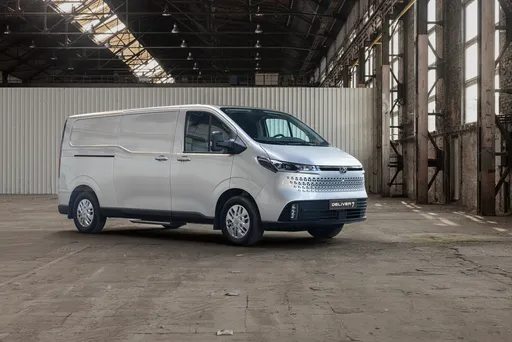
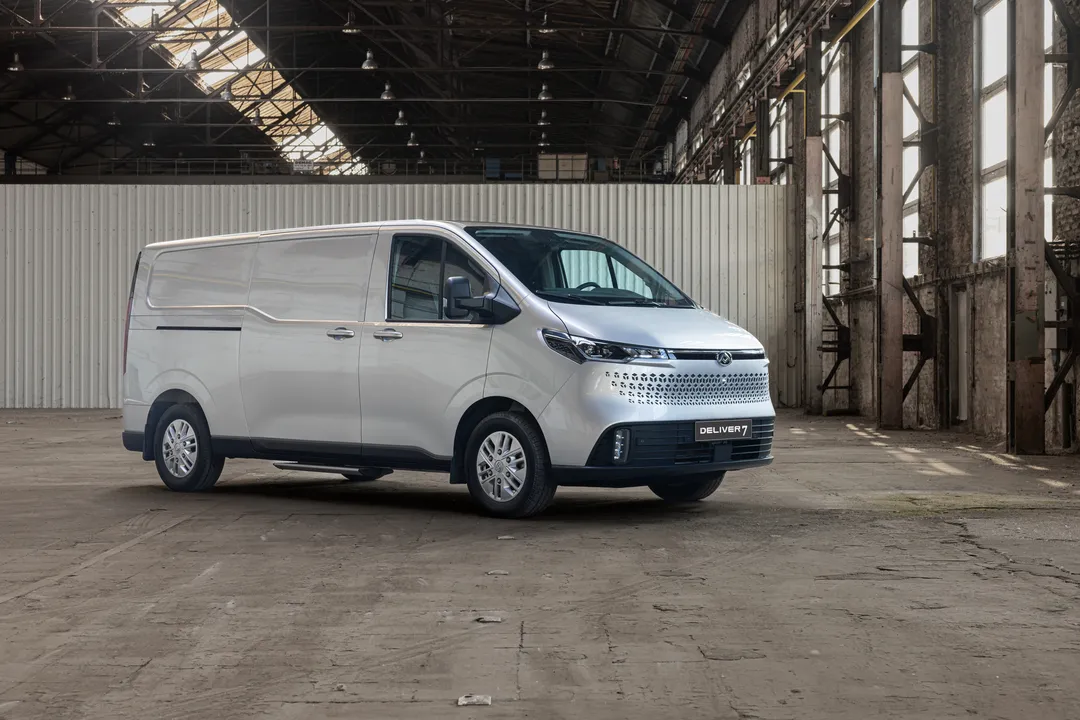
The Maxus Deliver 7 makes an unmistakable commercial statement with proportions that span roughly 5.0 to 5.37 metres in length depending on wheelbase, a high roof and a boxy rear that shouts “cargo first.” The face is modern rather than flashy, with neat LED signatures and a tidy bumper that helps in urban close-quarters parking. Visibility is good thanks to large glass areas and high driving position, which helps when threading between vans and city traffic. Overall presence is practical and purposeful — it wants to be noticed for what it can carry, not for vanity.
Cabin: Functional, Durable and Thoughtful

The cabin of the Deliver 7 is built for work with hard-wearing plastics, sensible switchgear and a layout prioritising visibility and reachability rather than luxury. Three seats are standard, and the centre workstation doubles as a flat surface for paperwork or a clipboard, while multiple cubbies and cup holders keep daily tools close at hand. Materials are more commercial-grade than premium but the ergonomics are straightforward: controls fall to hand and the driver’s view is commanding. Heating, ventilation and seat support are adequate for long days on the road, though those used to car-like refinement will notice the trade-offs for utility.

Load Space That Actually Works

Space is the Deliver 7’s real headline: cargo capacity peaks around 7,200 litres in the largest layout and payloads sit in the 900–1,140 kg band depending on specification, making it capable of handling bulky loads and heavy kit racks without fuss. The different body lengths and roof heights translate directly into usable cubic metres, so choices between shorter L1 and longer L2 versions matter for pallet and racking plans. In everyday use this means one- or two-man trades, parcel fleets and light logistics operators can tailor the van to route density and load type. Practical details such as low sill heights and wide rear openings help loading speed, saving minutes and effort on repeated stops.

Driving: Composed Enough for Commercial Miles

The electric variants use a 204 hp motor in standard form with 330–375 Nm of torque, and a high‑performance AWD version pushes output to 353 hp and about 515 Nm, yielding a brisk 0–100 km/h time near 7.2 seconds for the sporty model while the regular electrics sit around 11–11.6 seconds. Ride comfort is tuned toward stability; body control is decent for a large van and front-wheel-drive variants feel predictable in urban environments, while the heavier AWD version adds traction at the expense of extra mass. Steering is light and parking is manageable for such a big vehicle, but long-haul stability and crosswind response are the areas where the Deliver 7 shows its commercial pedigree rather than sporty ambitions. Top speeds are limited for efficiency and safety, typically in the 120–160 km/h band depending on configuration.

Energy Use, Range and Real-World Costs

Electric consumption figures are in the high-20s kWh/100 km — about 26.9–28.2 kWh/100 km — with WLTP ranges of roughly 310–370 km depending on battery choice (77 or 88 kWh) and body length; that translates to realistic daily ranges for urban and regional work, with the 370 km figure representing a best-case scenario. For operators, 26–28 kWh/100 km means predictable charging costs and the ability to complete typical city routes on a single charge, while the larger battery smooths range anxiety on longer runs. The diesel 2.0 model remains on offer at around 8 L/100 km and suits those who need long-distance flexibility or quicker refuelling at remote depots, though it carries the usual CO2 and maintenance trade-offs. Choosing between electrified and diesel variants comes down to route profiles and total cost of ownership targets rather than headline performance alone.

Driver Aids, Connectivity and Practical Tech

Driver assistance and infotainment are pitched to modern fleet needs with lane-keep aids, adaptive cruise functionality, parking sensors and camera options to ease daily operation and tight deliveries. The infotainment system provides smartphone integration and a touchscreen interface that is serviceable — not cutting-edge but functional for navigation, telematics and route management. Safety kit and telematics compatibility help fleet managers monitor usage and efficiency, which is increasingly important for scheduled services and mixed-power fleets. Options and software vary with trim, so spec’ing the right mix of cameras, sensors and connectivity pays off in reduced downtime and improved driver comfort.

Who Should Consider the Deliver 7?

The Deliver 7 suits businesses that need a rugged, spacious and configurable van with modern electric options: last-mile couriers, tradespeople with heavy kit, and fleet operators looking to electrify urban routes while keeping diesel for longer hauls. The availability of 77 kWh and 88 kWh battery choices, plus a high‑power AWD electric variant and a conventional diesel, means the model range covers everything from short-stop urban runs to heavier regional duties. Buyers who prioritise a comfortable, practical working environment and low running costs in city use will find the electric versions particularly compelling, while traditional diesel remains pragmatic for high-mileage or mixed-terrain assignments. Overall, the Deliver 7 is a work-first van that now speaks to electrification without abandoning conventional fleet needs.

Costs and Consumption

Price
30600 - 53000 £
Consumption L/100km
8 L
Consumption kWh/100km
26.9 - 28.2 kWh
Electric Range
310 - 370 km
Battery Capacity
-
co2
0 - 211 g/km
Fuel tank capacity
-

Dimensions and Body

Body Type
Cargo Van
Seats
3
Doors
4
Curb weight
2360 - 2595 kg
Trunk capacity
-
Length
4998 - 5372 mm
Width
2030 mm
Height
1990 - 1999 mm
Max trunk capacity
5900 - 7200 L
Payload
905 - 1140 kg

Engine and Performance

Engine Type
Electric, Diesel
Transmission
Automatic, Manuel
Transmission Detail
Reduction Gearbox, Manual Gearbox
Drive Type
Front-Wheel Drive, All-Wheel Drive
Power HP
148 - 353 HP
Acceleration 0-100km/h
7.2 - 11.6 s
Max Speed
120 - 160 km/h
Torque
330 - 515 Nm
Number of Cylinders
4
Power kW
108 - 260 kW
Engine capacity
1996 cm3

General

Model Year
2024 - 2025
CO2 Efficiency Class
A, G
Brand
Maxus
Is the Maxus Deliver 7 offered with different drivetrains?

The Maxus Deliver 7 is offered with Front-Wheel Drive or All-Wheel Drive.

The prices shown are estimates based on German list prices, adjusted for local VAT. Local registration taxes (e.g. NoVA, BPM or CO2 malus) are not included. This information is not legally binding.