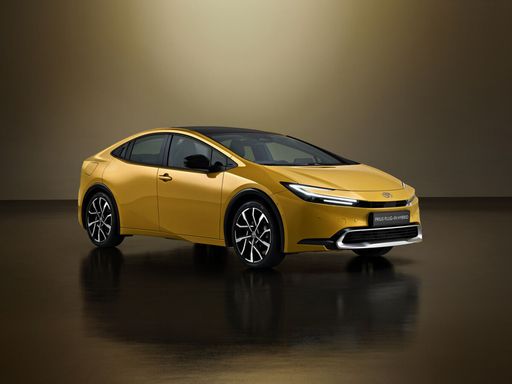
Toyota Prius Hatchback, starting at 39400 £

The Toyota Prius Hatchback impresses with 223 HP 86 km and an attractive starting price of 39400 £ . Here are all the details at a glance.

from about £39,400
Prius

Toyota Prius

  • Engine Type : Plugin Hybrid
  • Transmission : Automatic
  • Drive Type : Front-Wheel Drive
  • Power HP : 223 HP
  • Consumption L/100km : 0.5 - 0.7 L
  • Electric Range : 72 - 86 km

Design & Presence

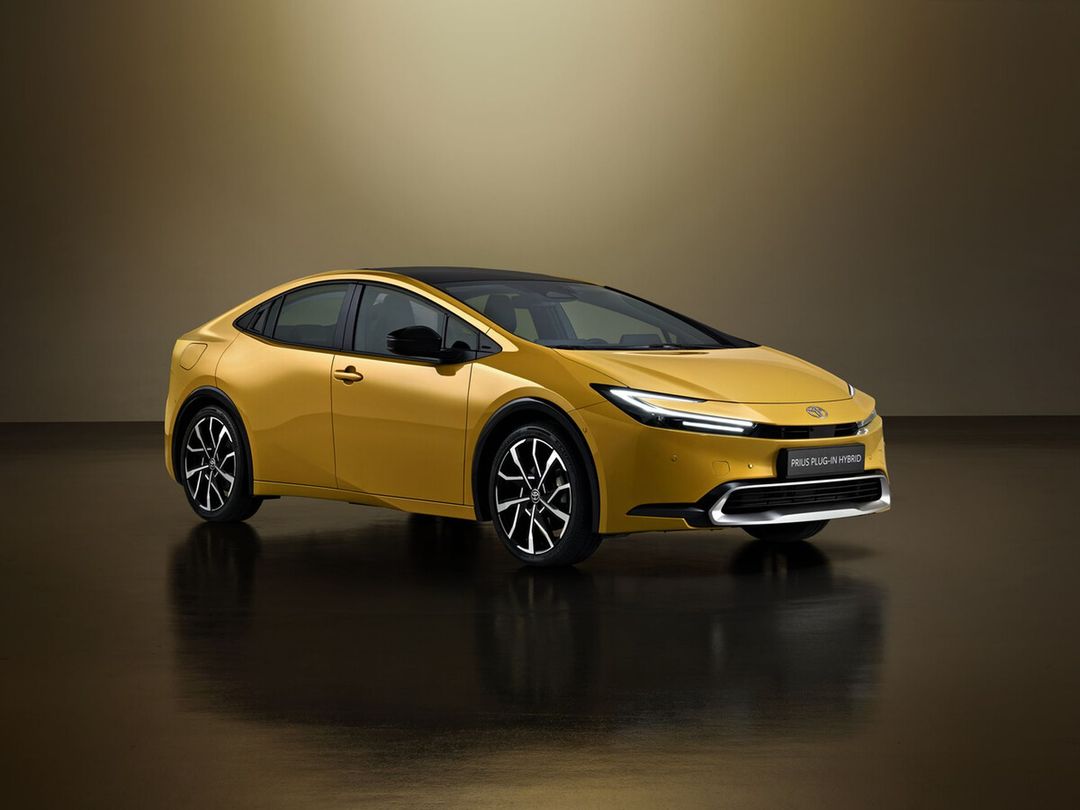
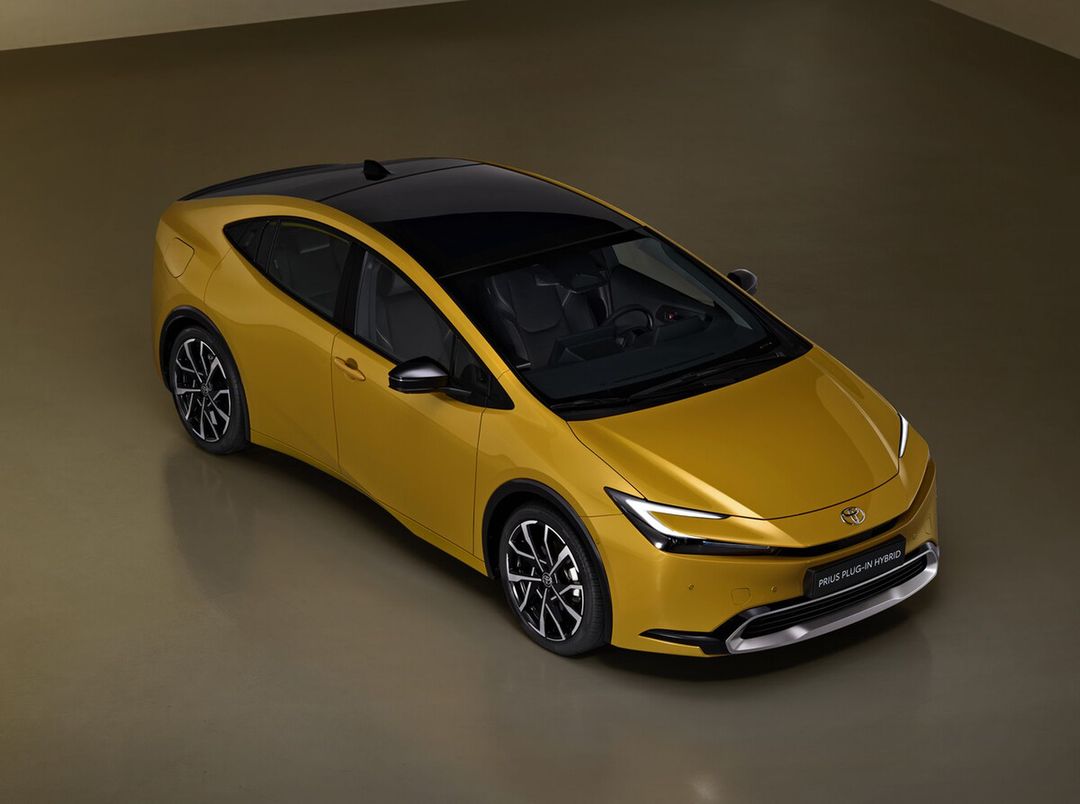
The Prius wears its efficiency on its sleeve with a wedge-shaped silhouette and pronounced aero details that still divide opinions at the traffic lights. At 4,599 mm long, 1,782 mm wide and 1,470 mm high it sits lower and sleeker than many compact crossovers, which helps wind resistance and real-world consumption. The hatchback profile keeps the rear practical while the sharper creases and slim lights give it a modern, almost futuristic stance. On the road it reads as purposeful rather than pretentious — a car clearly designed to save fuel, not win beauty contests.
Interior & Usability

The cabin mixes hard, durable plastics with cleaner soft-touch surfaces in areas that matter, producing a tidy, user-focused environment rather than a luxury one. Seating for five is standard, with supportive front seats for longer commutes and a straightforward control layout that keeps frequently used buttons easy to reach. The infotainment is modern enough, but screen and menu responses can feel behind the curve compared with some rivals. Practical little touches — decent cupholders, sensible door bins and a raised driving position — make day-to-day life simpler.

Space & Everyday Practicality

Passenger space is comfortable for four adults, with adequate legroom front and rear but a slightly raised rear floor due to the battery pack; five is possible for short trips but not ideal for long adult journeys. Cargo volume is limited by the plug-in hybrid hardware, with a trunk of just 284 L, so weekend luggage or family grocery runs may require creative packing or folding the rear seats. The kerb weight of around 1,620–1,630 kg and payload near 365–375 kg underline that the Prius carries a lot of tech and battery, which buyers should weigh against cargo needs. For those who prioritize low running costs over boot space, the trade-off will often make sense.

Driving & Handling

Underway the plug-in hybrid drivetrain produces a combined 223 HP, delivering a surprising 0–100 km/h time of about 6.8 seconds that feels brisk off the line for a Prius. The CVT gearbox and front-wheel-drive layout prioritise smoothness and efficiency rather than sportiness, so cornering tends toward composed understeer rather than razor-sharp responses. Suspension tuning favours comfort, soaking up city irregularities and motorway miles without fuss, although the extra battery mass is noticeable when hustling. A top speed of 177 km/h is ample for long-distance cruising, but the car’s strengths are clearly efficiency and refinement rather than dynamic excitement.

Efficiency, Consumption & Range

This generation of Prius Plug‑In Hybrid can run on electric power for real commutes, with electric ranges quoted at up to 86 km or around 72 km depending on the version, and combined fuel consumption figures as low as 0.5–0.7 L/100 km in mixed cycles. That translates into many daily commutes being entirely electric if the battery is charged regularly, dramatically cutting fuel bills and local emissions (CO2 figures sit in the low double digits, roughly 12–17 g/km). Real-world numbers depend on charge habits and journey profiles, so longer trips with a depleted battery will raise consumption toward conventional hybrid levels. For urban and suburban drivers who can plug in overnight, the Prius delivers its strongest economic case.

Assistance & Infotainment

Standard safety kit is generous, with adaptive cruise, lane-keeping aids and automated emergency braking forming the baseline for modern driver assistance expectations. The infotainment system supports smartphone integration and sensible connectivity, although the interface can feel a little dated compared with newer rivals that offer faster graphics and more intuitive menus. Parking aids and camera visibility are helpful given the sloping rear end, making manoeuvres easier in tight spots. Overall the tech package is practical and safety-focused, aimed at reducing stress more than providing gadget-heavy thrills.

Who is it for?

The Prius Plug‑In Hybrid suits conscientious commuters and buyers who want substantial electric-only motoring without fully committing to a battery EV, making short-to-medium daily journeys cheap and quiet. Current versions focus on the 2.0 plug-in hybrid layout with strong combined performance, electric ranges around 72–86 km and very low quoted consumption of 0.5–0.7 L/100 km, so city-first drivers and fleet users will find the numbers compelling. Those needing maximum cargo space or a luxury interior will be better served elsewhere, but anyone prioritising low running costs, comfortable ride and straightforward technology will find the Prius a compelling, pragmatic choice.

Costs and Consumption

Price
39400 - 45800 £
Consumption L/100km
0.5 - 0.7 L
Consumption kWh/100km
-
Electric Range
72 - 86 km
Battery Capacity
-
co2
12 - 17 g/km
Fuel tank capacity
40 L

Dimensions and Body

Body Type
Hatchback
Seats
5
Doors
5
Curb weight
1620 - 1630 kg
Trunk capacity
284 L
Length
4599 mm
Width
1782 mm
Height
1470 mm
Max trunk capacity
-
Payload
365 - 375 kg

Engine and Performance

Engine Type
Plugin Hybrid
Transmission
Automatic
Transmission Detail
CVT
Drive Type
Front-Wheel Drive
Power HP
223 HP
Acceleration 0-100km/h
6.80 s
Max Speed
177 km/h
Torque
-
Number of Cylinders
4
Power kW
164 kW
Engine capacity
1998 cm3

General

Model Year
2023
CO2 Efficiency Class
B
Brand
Toyota
Is the Toyota Prius offered with different drivetrains?

Available configurations include Front-Wheel Drive.

The prices shown are estimates based on German list prices, adjusted for local VAT. Local registration taxes (e.g. NoVA, BPM or CO2 malus) are not included. This information is not legally binding.