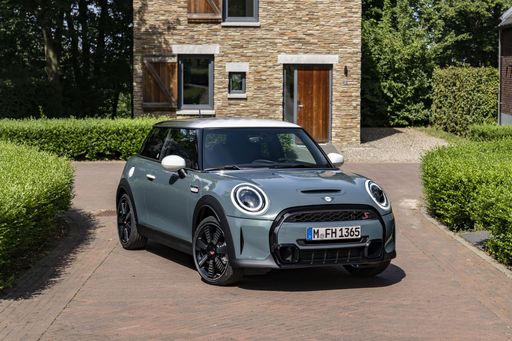
MINI MINI Convertible or Hatchback, starting at 24,900 £

The MINI is a cheeky, joyfully small hatch that turns even the most humdrum commute into something worth smiling about. It serves up go-kart handling, a stylish cabin and near-endless customization, making it a perfect pick for drivers who want personality packed into a compact package.

Reviews & community

All real reviews and experiences about the MINI MINI in one place.

To community

Technical data, trims & prices

All technical data, dimensions and equipment details of this model at a glance.

To technical data

Alternative car models

Discover similar models and possible alternatives to this vehicle.

To alternatives

from £24,900
MINI

MINI MINI

  • Engine Type : Petrol, Electric
  • Transmission : Automatic
  • Drive Type : Front-Wheel Drive
  • Power HP : 156 - 258 HP
  • Consumption L/100km : 5.9 - 6.8 L/100km
  • Consumption kWh/100km : 13.8 - 15.3 kWh/100km
  • Electric Range : 293 - 391 km

First impression: iconic looks with a modern wink

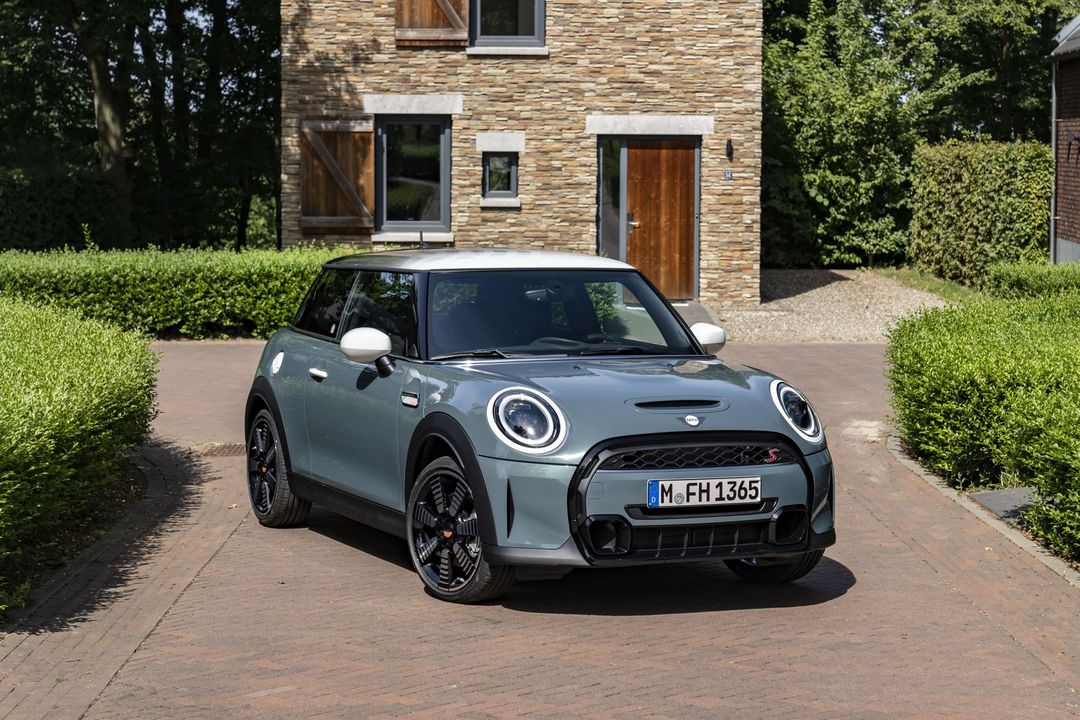
MINI MINI still trades on that unmistakable silhouette — stubby nose, circular lights and a cheeky stance — but the latest generation smooths the retro cues into a more grown-up, modern package. The car’s footprint sits between roughly 3.86 and 4.04 metres in length, so it feels compact on city streets but not toy-sized. The range covers traditional petrol Cooper and Cooper S models, electric Cooper E/SE versions, the open-top Cabrio and high-performance John Cooper Works derivatives, giving buyers plenty of visual and performance choices. In short: attention-grabbing without being a billboard, and highly customisable if style matters as much as substance.
Cabin character: small-stage theatre with decent materials

The interior keeps MINI’s theatrical design language — a large circular centre display, toggle switches and a driver-focused layout — and uses fairly high-quality surfaces where it counts, though a few hard plastics remain in less visible areas. Seat comfort is generally good for short to medium trips, with supportive front buckets on sportier trims and usable adjustments for different body shapes. Controls are tactile and straightforward, with modern connectivity integrated into the centre screen, but the overall atmosphere still favours character over minimalist efficiency. Sound insulation and finish are better than in past generations, making longer runs less fatiguing than the car’s size might suggest.

Practicality: compact footprint, realistic everyday space

Boot volume ranges around 210–275 litres in the hatch, expanding to as much as 725–925 litres with seats folded flat on some variants, so the MINI can handle weekly shopping or a weekend bag but struggles with bulky loads unless the rear seats come down. Rear-seat legroom is tight for adults on long journeys, making the MINI a better match for couples, city professionals or small families with kids. Curb weights start in the mid-1300 kg range and payloads are modest, so heavy kit quickly eats into passenger or luggage capacity. For daily urban use it’s convenient and easy to park; for practical long-haul hauling it’s a compromise by design.

On the move: a go‑kart spirit with modern polish

Handling remains the MINI’s headline: crisp turn-in, communicative steering and a chassis tuned for agility turn town centres and B-roads into playgrounds rather than chores. Powertrains range from around 156 hp in base petrol Cooper units to 204 hp in Cooper S and up to 231–258 hp in John Cooper Works and electric hot variants, giving 0–100 km/h times from roughly 5.9 to 8.2 seconds depending on spec. All versions are front-wheel drive with automatic gearboxes (dual-clutch or reduction for EVs), so traction is predictable and easy to exploit in everyday driving. The ride balances firmness and comfort — sporty trims feel planted but road imperfections are still felt, which is part of the MINI character.

Efficiency and range: fuel or battery, predictable real-world figures

Petrol consumption sits in the mid 5.9–6.8 L/100 km band on official figures, which translates to reasonable running costs for mixed city and motorway use and a 44‑litre tank that gives decent range between fill-ups. Electric Cooper E/SE models quote consumption roughly 13.8–15.3 kWh/100 km with battery packs in the mid 30–50 kWh range, yielding WLTP-type ranges from about 293 up to 402 km depending on the spec — enough for daily commuting and shorter trips without obsessive planning. In real-world conditions expect those EV ranges to fall on cold or fast-driving days, and petrol figures to rise in heavy traffic or sporty motorway runs. Charging speeds and fuel economy vary by model and equipment, so pick the drivetrain that matches typical journey lengths.

Assistance and infotainment: modern tech, MINI flavour

The MINI offers contemporary driver aids such as adaptive cruise, parking assistance and lane-keeping functions in line with class norms, but the brand keeps the setup driver-centric rather than fully autonomous — the focus remains on engagement. Infotainment centers on a circular main display with smartphone mirroring, navigation and voice control, while connected services add convenience features like remote status checks and over-the-air updates on higher trims. Equipment levels and available ADAS packs differ across trims and model years, so the best-equipped cars bring a near-luxury suite of tech while base cars retain a more analogue feel. Overall the tech complements the MINI personality without turning it into a gadget-bomb.

Who should buy a MINI MINI?

The MINI is aimed at buyers who prioritise style, city agility and emotional appeal over maximum interior space or low running costs at motorway speeds. It suits urban professionals, couples and buyers who value customisation and driving fun — the electric Cooper E/SE models will attract eco-conscious urban users, while Cooper S and John Cooper Works variants appeal to those wanting brisk performance (0–100 km/h down to the mid 5‑second range). Families needing frequent long trips or large cargo capacity should look elsewhere, but anyone after a compact car with personality, precision handling and a broad menu of petrol, electric and convertible choices will find a persuasive package.

Costs and Consumption

Price
24,900 - 37,500 £
Consumption L/100km
5.9 - 6.8 L/100km
Consumption kWh/100km
13.8 - 15.3 kWh/100km
Electric Range
293 - 391 km
Battery Capacity
49.2 kWh
co2
0 - 155 g/km
Fuel tank capacity
44 L

Dimensions and Body

Body Type
Convertible, Hatchback
Seats
4 - 5
Doors
2 - 3
Curb weight
1,335 - 1,730 kg
Trunk capacity
210 - 275 L
Length
3,858 - 3,879 mm
Width
1,744 - 1,756 mm
Height
1,431 - 1,460 mm
Max trunk capacity
725 - 800 L
Payload
345 - 445 kg

Engine and Performance

Engine Type
Petrol, Electric
Transmission
Automatic
Transmission Detail
Dual-Clutch Automatic, Reduction Gearbox
Drive Type
Front-Wheel Drive
Power HP
156 - 258 HP
Acceleration 0-100km/h
5.9 - 8.2 s
Max Speed
200 - 250 km/h
Torque
230 - 380 Nm
Number of Cylinders
3 - 4
Power kW
115 - 190 kW
Engine capacity
1,499 - 1,998 cm3

General

Model Year
2,025 - 2,026
CO2 Efficiency Class
E, A, D
Brand
MINI
What drivetrain options does the MINI MINI have?

The MINI MINI is available as Front-Wheel Drive.

DriveDuel uses data analysis and artificial intelligence to evaluate vehicle data and create content. Content is regularly reviewed and improved. The displayed prices are estimates based on German list prices, adjusted to the respective country’s VAT. Country-specific registration taxes are not included. This information is not legally binding.