VS

MINI MINI vs Toyota Yaris comparison

Compare performance (258 HP vs 280 HP), boot space and price (24,900 £ vs 21,900 £ ) at a glance. Find out which car is the better choice for you – MINI MINI or Toyota Yaris?

MINI MINI vs Toyota Yaris: Key differences

MINI MINI

5 (1 Reviews)
rate
details

Toyota Yaris

4.1 (4 Reviews)
rate
  • slightly cheaper
  • only slightly more power
  • substantially more efficient
  • marginally quicker 0–100 km/h
  • noticeably lighter
  • barely more trunk space
details

All details on performance, efficiency, range and trunk space can be found in the technical comparison below – including user reviews for both models.

By Achim Sedelmaier

MINI

MINI MINI VS Toyota Yaris — which small car fits your life?

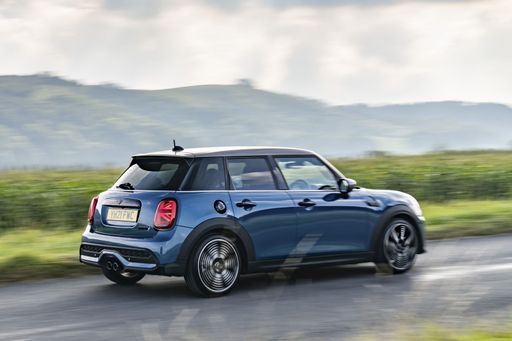
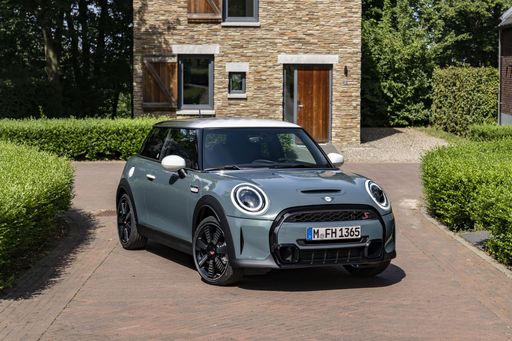
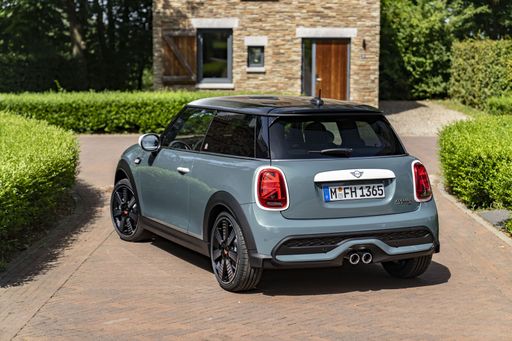
MINI MINI VS Toyota Yaris pits emotional design and driver-focused charm against frugal, everyday efficiency. The MINI MINI arrives as a personality-packed package: immediately engaging steering, distinctive styling and an interior that feels like a boutique rather than a bargain hatch. The Toyota Yaris, by contrast, trades theatrical flair for low running costs, broad safety kit and a steady, unshowy demeanor that puts practicality first. This matchup is really about whether you prioritise feeling and style or everyday economy and ease.
Yaris

Character and driving feel

The MINI MINI is unmistakably driver-centric: tight turn-in, crisp responses and an intoxicating “go‑kart” lightness that makes short trips fun but exposes firm suspension over rough surfaces. The Toyota Yaris is more reserved — predictable, composed and tuned to reduce stress rather than excite; its hybrid system smooths stop‑start city work but the drivetrain lacks the emotional punch of the MINI. Where the MINI rewards quick, enthusiastic runs and city manoeuvres with grin-inducing feedback, the Yaris rewards steady, economical inputs and relaxed commuting. In short, MINI MINI is for drivers who want to feel the road, Toyota Yaris for those who want to forget it.

MINI

Cabin feel and perceived quality

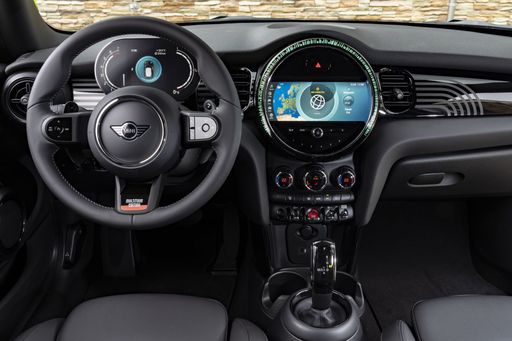
Stepping into the MINI MINI feels like entering a compact premium cocoon: tactile switches, unique trim design and a round central display that gives character, if not always the clearest ergonomics. The Toyota Yaris offers a more orthodox cabin — tidy, well-assembled and lately upgraded with a slicker touchscreen that improves usability at a glance. MINI MINI’s boutique styling can make the interior feel special, but some controls are buried and the small-screen layout can be distracting; Toyota Yaris aims for straightforwardness and wins on everyday clarity. The trade-off is clear: MINI MINI sells emotion and style, Toyota Yaris sells sensible, workaday competence.

Yaris

Comfort and long-distance behavior

On longer runs the MINI MINI’s firm suspension and communicative chassis start to tell — excellent for spirited sections, but tiring across miles and imperfect surfaces. The Toyota Yaris generally feels less taxing over distance, with hybrid-assisted cruising that keeps the cabin calmer in town and a more forgiving ride on mixed roads, though the engine can become vocal when pushed hard. Both cars have limits for full-size passenger comfort, but the Yaris leans toward a more comfortable, less fatiguing daily tourer. Choose MINI MINI for engaging short‑to‑medium drives, Toyota Yaris for more relaxed endurance and economy on routine journeys.

MINI

Usability, space and practicality

Practicality is where the differences become tangible: the MINI MINI emphasises style over cargo and rear space, so luggage and rear-seat access are compromise points, especially in three‑door layouts. The Toyota Yaris, with its five‑door habitability, gives easier rear access and a more practical load floor despite a tall, narrow boot shape that limits large-item usability. For families or anyone who packs regularly, Toyota Yaris’s layout and everyday ergonomics will feel less frustrating than the MINI MINI’s tighter packaging. If rear-seat space and trunk usability matter more than image, the Yaris is the clearer fit; if image and front‑seat experience are priorities, MINI MINI keeps its appeal.

Who should choose which car — matching profiles

If you value charisma, steering engagement and a premium-feeling interior and you mostly drive solo or as a couple, the MINI MINI will reward you with personality and presence that few small cars match. If your priorities are low running costs, extensive safety kit and a stress-free city commute with straightforward usability, the Toyota Yaris is the practical, economical choice. Both cars are compact and easy to park, but they answer different needs: MINI MINI courts emotion and style, Toyota Yaris courts thrift and everyday sense. The technical comparison that follows will make those trade-offs concrete for running costs, performance and space so you can pick the right compromise for your life.

Here’s where it gets real: The technical differences in detail

MINI

Costs and Efficiency:

Looking at overall running costs, both models reveal some interesting differences in everyday economy.

Toyota Yaris is slightly cheaper – starting at 21,900 £ , while the MINI MINI costs 24,900 £ . That’s a price difference of around 3,000 £.

Fuel consumption also shows a difference: the Toyota Yaris uses 3.8 L/100km and is substantially more efficient than the MINI MINI with 5.9 L/100km. The difference is about 2.1 L/100km.

Yaris

Engine and Performance:

Under the bonnet, it becomes clear which model is tuned for sportiness and which one takes the lead when you hit the accelerator.

When it comes to engine power, the Toyota Yaris offers only slightly more power – delivering 280 HP compared to 258 HP. That’s roughly 22 HP more horsepower.

When accelerating from 0 to 100 km/h, the Toyota Yaris is marginally quicker – completing the sprint in 5.5 s, while the MINI MINI takes 5.9 s. That’s about 0.4 s quicker.

There’s also a difference in torque: the Toyota Yaris delivers marginally more torque with 390 Nm compared to 380 Nm. That’s about 10 Nm more.

MINI

Space and Everyday Use:

Beyond pure performance, interior space and usability matter most in daily life. This is where you see which car is more practical and versatile.

Both vehicles offer seating for 5 people.

In terms of curb weight, Toyota Yaris is noticeably lighter – 1,090 kg compared to 1,335 kg. The difference is around 245 kg.

Looking at boot space, the Toyota Yaris offers barely more boot space – 286 L compared to 275 L. That’s a difference of about 11 L.

When it comes to payload, the Toyota Yaris carries somewhat more – 525 kg compared to 445 kg. That’s a difference of about 80 kg.

Who wins the race in the data check?

The MINI MINI sits just ahead overall in the objective data comparison.
This result only shows which model scores more points on paper – not which of the two cars feels right for you.

from £24,900
MINI

MINI MINI

  • Engine Type : Petrol, Electric
  • Transmission : Automatic
  • Drive Type : Front-Wheel Drive
  • Power HP : 156 - 258 HP
  • Consumption L/100km : 5.9 - 6.8 L/100km
  • Consumption kWh/100km : 13.8 - 15.3 kWh/100km
  • Electric Range : 293 - 391 km
MINI MINI
Toyota Yaris

Costs and Consumption

View detailed analysis

Engine and Performance

View detailed analysis

Dimensions and Body

View detailed analysis

MINI MINI

The MINI is a cheeky, joyfully small hatch that turns even the most humdrum commute into something worth smiling about. It serves up go-kart handling, a stylish cabin and near-endless customization, making it a perfect pick for drivers who want personality packed into a compact package.

details

Toyota Yaris

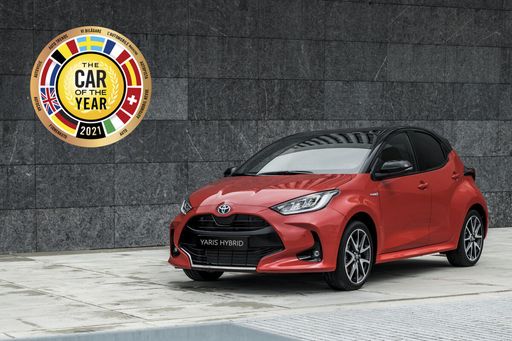
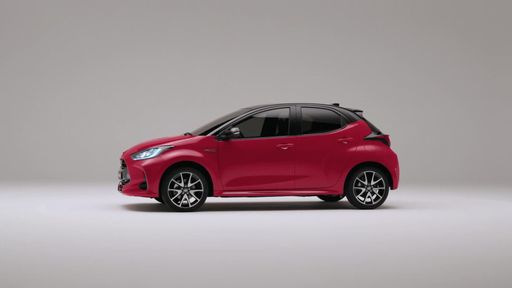
The Yaris is a compact hatchback that blends everyday practicality with Toyota’s long-standing reputation for reliability, making it easy to live with in city traffic. Its nimble handling and sensible interior make the Yaris a smart choice for drivers who want straightforward, fuss-free transport.

details
MINI MINI
Toyota Yaris

Costs and Consumption

Price
24,900 - 37,700 £
Price
21,900 - 40,800 £
Consumption L/100km
5.9 - 6.8 L/100km
Consumption L/100km
3.8 - 8.7 L/100km
Consumption kWh/100km
13.8 - 15.3 kWh/100km
Consumption kWh/100km
-
Electric Range
293 - 391 km
Electric Range
-
Battery Capacity
-
Battery Capacity
-
co2
0 - 155 g/km
co2
87 - 197 g/km
Fuel tank capacity
-
Fuel tank capacity
-

Dimensions and Body

Body Type
Convertible, Hatchback
Body Type
Hatchback
Seats
4 - 5
Seats
4 - 5
Doors
-
Doors
-
Curb weight
1,335 - 1,730 kg
Curb weight
1,090 - 1,356 kg
Trunk capacity
210 - 275 L
Trunk capacity
141 - 286 L
Length
-
Length
-
Width
1,744 - 1,756 mm
Width
1,745 - 1,805 mm
Height
-
Height
-
Max trunk capacity
-
Max trunk capacity
-
Payload
345 - 445 kg
Payload
289 - 525 kg

Engine and Performance

Engine Type
Petrol, Electric
Engine Type
Full Hybrid, Petrol
Transmission
Automatic
Transmission
Automatic, Manuel
Transmission Detail
Dual-Clutch Automatic, Reduction Gearbox
Transmission Detail
CVT, Manual Gearbox
Drive Type
Front-Wheel Drive
Drive Type
Front-Wheel Drive, All-Wheel Drive
Power HP
156 - 258 HP
Power HP
116 - 280 HP
Acceleration 0-100km/h
5.9 - 8.2 s
Acceleration 0-100km/h
5.5 - 9.7 s
Max Speed
-
Max Speed
-
Torque
230 - 380 Nm
Torque
390 Nm
Number of Cylinders
3 - 4
Number of Cylinders
3
Power kW
115 - 190 kW
Power kW
85 - 206 kW
Engine capacity
1,499 - 1,998 cm3
Engine capacity
1,490 - 1,618 cm3

General

Model Year
2,025 - 2,026
Model Year
2026
CO2 Efficiency Class
E, A, D
CO2 Efficiency Class
B, G
Brand
MINI
Brand
Toyota
DriveDuel uses data analysis and artificial intelligence to evaluate vehicle data and create content. Content is regularly reviewed and improved. The displayed prices are estimates based on German list prices, adjusted to the respective country’s VAT. Country-specific registration taxes are not included. This information is not legally binding.