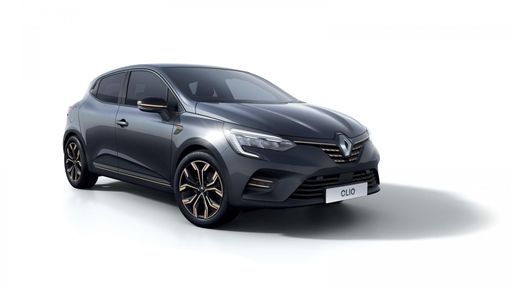
@ Renault Group Media
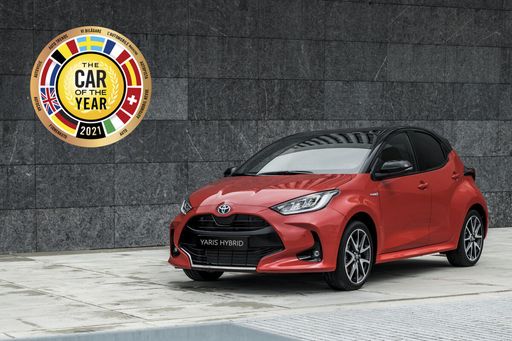
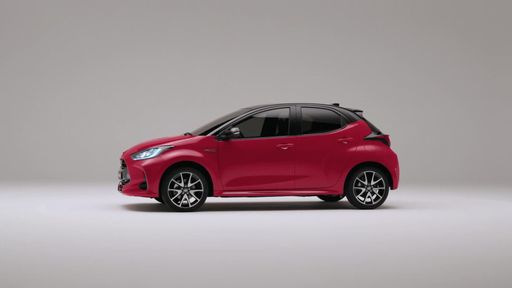
@ Toyota Motor Corporation
VS

Renault Clio vs Toyota Yaris – Performance, range & efficiency compared

Two cars, one duel: Renault Clio meets Toyota Yaris.
Which one wins in performance, efficiency and value for money? Find out now!

Clio @ Renault Group Media

The Battle of Compact Efficiency: Renault Clio vs. Toyota Yaris

The world of compact cars has witnessed fierce competition, with manufacturers pushing the boundaries of technology and design. Among the frontrunners in this segment are the Renault Clio and the Toyota Yaris. Both hatchbacks come with a range of engine types, impressive efficiency, and innovative features. Let’s dive into the technical details to see how these iconic models stack up against each other.

Yaris @ Toyota Motor Corporation

Engine Options and Performance

The Renault Clio offers a diverse range of engine options, including full hybrid, petrol, and LPG variants. Power output ranges from 67 HP to 143 HP, and the car achieves acceleration from 0 to 100 km/h in as fast as 9.3 seconds with its hybrid model. The engines are paired with both manual and automatic transmissions, providing flexibility based on driver preference.

On the other hand, the Toyota Yaris also provides varied engine choices, including a full hybrid system and standard petrol variants. The Yaris hybrid model generates 116 HP, while a more robust petrol variant reaches up to 130 HP. Acceleration is brisk with the Yaris completing 0 to 100 km/h in just 9.2 seconds in its higher-spec model, showcasing its sporty potential.

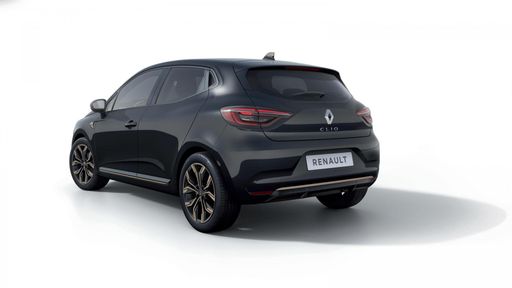
Clio @ Renault Group Media

Fuel Efficiency and Environmental Impact

When it comes to fuel efficiency, both cars deliver impressive figures. The Renault Clio hybrid manages a fuel consumption of 4.3 L/100 km, whereas the petrol versions vary slightly higher, peaking at 7 L/100 km. Additionally, the Clio falls within the CO2 efficiency classes C and D, reflecting its moderate environmental footprint with emissions ranging from 97 to 122 g/km.

The Toyota Yaris shines in efficiency, particularly with its hybrid, nudging a consumption of just 3.8 L/100 km. Its CO2 emissions are also comparatively lower, between 87 to 95 g/km, placing it in efficiency class B. This positions the Yaris as a more eco-friendly choice in the compact car market.

Yaris @ Toyota Motor Corporation

Dimensions and Practicality

Size and practicality are important facets for hatchback buyers. The Renault Clio stretches to 4053 mm in length and boasts a trunk capacity of 391 liters, which is ample for the compact segment. It provides comfortable seating for five, maintaining a balance between interior space and overall dimensions.

The Toyota Yaris, meanwhile, is slightly shorter at 3995 mm in its longest iteration, yet matches the Clio in practicality by offering five seats. However, its trunk space, at 286 liters, is a bit more limited compared to the Clio, but sufficient for everyday usage.

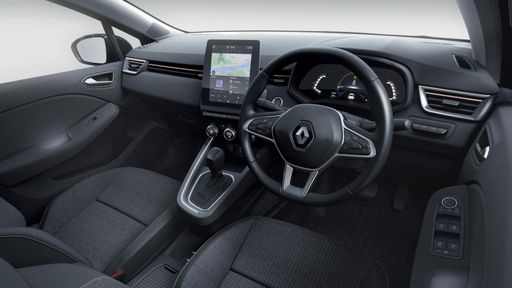
Clio @ Renault Group Media

Innovations and Driving Experience

Renault has infused the Clio with modern technology and a user-centric interior, highlighting infotainment and driver-assistance systems. Features such as full smartphone integration and a customizable digital instrument display offer a cutting-edge experience in a car of its class.

Toyota has equipped the Yaris with equally advanced technology, emphasizing safety and comfort. The Toyota Safety Sense package provides comprehensive driver-assistance features that enhance driving confidence and occupant safety. Additionally, the Yaris’s hybrid technology ensures a smooth and quiet ride, appealing to urban commuters.

Conclusion: Choosing Between the Clio and the Yaris

The choice between the Renault Clio and the Toyota Yaris ultimately hinges on specific preferences and priorities. The Clio offers a diverse range of powertrains and a slightly larger cargo area, making it a versatile option. Meanwhile, the Yaris leads in environmental efficiency and innovative safety technologies. Both vehicles showcase what compact hatchbacks can achieve: a blend of efficiency, innovation, and practicality.

Here’s where it gets real: The technical differences in detail

Costs and Efficiency:

Price and efficiency are often the first things buyers look at. Here it becomes clear which model has the long-term edge – whether at the pump, the plug, or in purchase price.

Renault Clio has a distinct advantage in terms of price – it starts at 16600 £, while the Toyota Yaris costs 21900 £. That’s a price difference of around 5272 £.

Fuel consumption also shows a difference: Toyota Yaris manages with 3.80 L and is therefore minimal more efficient than the Renault Clio with 4.10 L. The difference is about 0.30 L per 100 km.

Engine and Performance:

Under the bonnet, it becomes clear which model is tuned for sportiness and which one takes the lead when you hit the accelerator.

When it comes to engine power, the Toyota Yaris has a clearly edge – offering 280 HP compared to 158 HP. That’s roughly 122 HP more horsepower.

In acceleration from 0 to 100 km/h, the Toyota Yaris is clearly quicker – completing the sprint in 5.50 s, while the Renault Clio takes 8.30 s. That’s about 2.80 s faster.

In terms of top speed, the Toyota Yaris performs evident better – reaching 230 km/h, while the Renault Clio tops out at 180 km/h. The difference is around 50 km/h.

There’s also a difference in torque: Toyota Yaris pulls convincingly stronger with 390 Nm compared to 205 Nm. That’s about 185 Nm difference.

Space and Everyday Use:

Cabin size, boot volume and payload all play a role in everyday practicality. Here, comfort and flexibility make the difference.

Both vehicles offer seating for 5 people.

In curb weight, Toyota Yaris is barely noticeable lighter – 1090 kg compared to 1124 kg. The difference is around 34 kg.

In terms of boot space, the Renault Clio offers evident more room – 391 L compared to 286 L. That’s a difference of about 105 L.

In maximum load capacity, the Renault Clio performs distinct better – up to 1176 L, which is about 241 L more than the Toyota Yaris.

When it comes to payload, Toyota Yaris a bit takes the win – 525 kg compared to 463 kg. That’s a difference of about 62 kg.

Who comes out on top?

Overall, the Toyota Yaris shows itself to be dominates this comparison and secures the title of DriveDuel Champion.
It convinces with the more balanced overall package and proves to be the more versatile choice for everyday use.

from about £21,900
Yaris @ Toyota Motor Corporation

Toyota Yaris

  • Engine Type : Full Hybrid, Petrol
  • Transmission : Automatic, Manuel
  • Drive Type : Front-Wheel Drive, All-Wheel Drive
  • Power HP : 116 - 280 HP
  • Consumption L/100km : 3.8 - 9.5 L

Renault Clio

The Clio punches above its weight with chic French styling and a surprisingly grown-up cabin that makes city driving feel effortlessly stylish. It's an easy-to-live-with choice that keeps ownership simple and even manages to put a grin on your face when the traffic gets dull.

details

Toyota Yaris

The Toyota Yaris is a sprightly city hatch that packs clever packaging, surprising comfort and fuel-sipping manners into a neat, easy-to-park package. It rewards sensible buyers with low running costs, friendly ergonomics and a forgiving drive, delivered with Japanese reliability and just enough personality to make errands feel a little less ordinary.

details
Renault Clio
Toyota Yaris
Clio @ Renault Group Media
Yaris @ Toyota Motor Corporation

Costs and Consumption

Price
16600 - 23700 £
Price
21900 - 46700 £
Consumption L/100km
4.1 - 5.3 L
Consumption L/100km
3.8 - 9.5 L
Consumption kWh/100km
-
Consumption kWh/100km
-
Electric Range
-
Electric Range
-
Battery Capacity
0.60 kWh
Battery Capacity
-
co2
92 - 121 g/km
co2
87 - 215 g/km
Fuel tank capacity
39 - 42 L
Fuel tank capacity
36 - 50 L

Dimensions and Body

Body Type
Hatchback
Body Type
Hatchback
Seats
5
Seats
4 - 5
Doors
5
Doors
3 - 5
Curb weight
1124 - 1331 kg
Curb weight
1090 - 1356 kg
Trunk capacity
301 - 391 L
Trunk capacity
141 - 286 L
Length
4053 - 4116 mm
Length
3940 - 3995 mm
Width
1768 - 1798 mm
Width
1745 - 1805 mm
Height
1440 - 1451 mm
Height
1455 - 1500 mm
Max trunk capacity
979 - 1176 L
Max trunk capacity
935 L
Payload
398 - 463 kg
Payload
289 - 525 kg

Engine and Performance

Engine Type
Full Hybrid, Petrol
Engine Type
Full Hybrid, Petrol
Transmission
Automatic, Manuel
Transmission
Automatic, Manuel
Transmission Detail
Automatic Gearbox, Manual Gearbox, Dual-Clutch Automatic
Transmission Detail
CVT, Manual Gearbox, Automatic Gearbox
Drive Type
Front-Wheel Drive
Drive Type
Front-Wheel Drive, All-Wheel Drive
Power HP
67 - 158 HP
Power HP
116 - 280 HP
Acceleration 0-100km/h
8.3 - 17.1 s
Acceleration 0-100km/h
5.5 - 9.7 s
Max Speed
160 - 180 km/h
Max Speed
175 - 230 km/h
Torque
95 - 205 Nm
Torque
390 Nm
Number of Cylinders
3 - 4
Number of Cylinders
3
Power kW
49 - 116 kW
Power kW
85 - 206 kW
Engine capacity
999 - 1789 cm3
Engine capacity
1490 - 1618 cm3

General

Model Year
2023 - 2026
Model Year
2024 - 2025
CO2 Efficiency Class
C, D, B
CO2 Efficiency Class
B, G
Brand
Renault
Brand
Toyota
Is the Renault Clio offered with different drivetrains?

The Renault Clio is offered with Front-Wheel Drive.

The prices and data displayed are estimates based on German list prices and may vary by country. This information is not legally binding.