VS

Toyota C-HR vs Toyota Yaris comparison

Compare performance (223 HP vs 280 HP), boot space and price (29,100 £ vs 21,900 £ ) at a glance. Find out which car is the better choice for you – Toyota C-HR or Toyota Yaris?

Toyota C-HR vs Toyota Yaris: Key differences

Toyota C-HR

4.8 (2 Reviews)
rate
  • substantially more efficient
  • markedly more trunk space

Toyota Yaris

3.9 (3 Reviews)
rate
  • markedly cheaper
  • visibly more power
  • visibly quicker 0–100 km/h
  • clearly lighter

All details on performance, efficiency, range and trunk space can be found in the technical comparison below – including user reviews for both models.

C-HR

In the ever-evolving world of compact cars, Toyota has made remarkable strides with its C-HR and Yaris models. Though both vehicles hail from the same automotive giant, they cater to different driving requirements and lifestyles. Let’s delve into a detailed comparison of the Toyota C-HR and the Toyota Yaris, exploring their technical aspects and innovative features.
Yaris

An Overview of Both Models

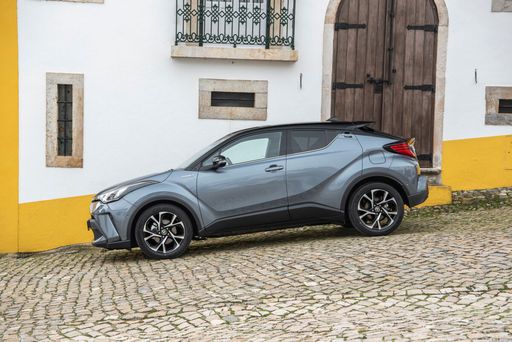
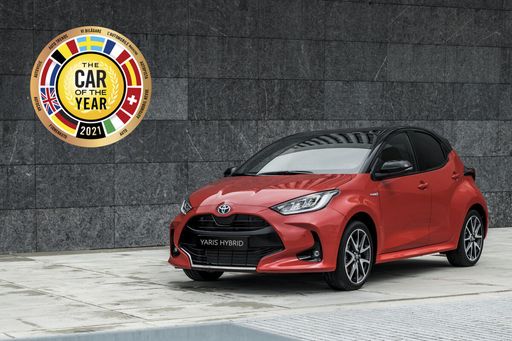
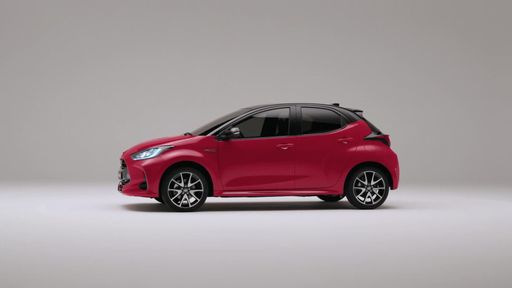
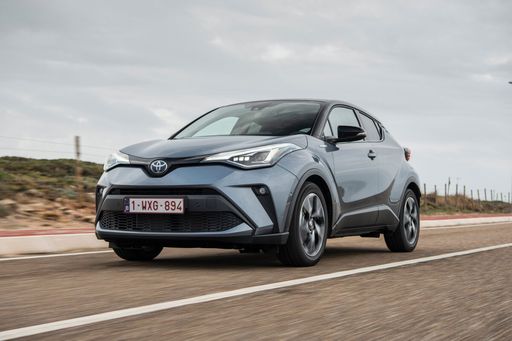
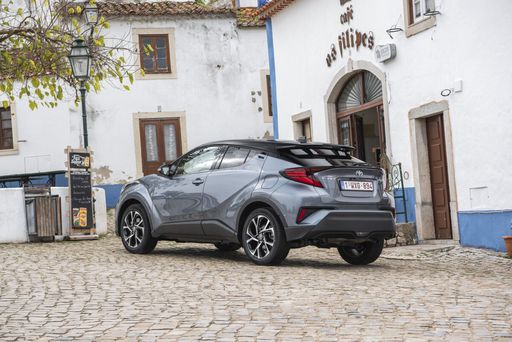
The Toyota C-HR is a stylish SUV that exudes a bold and modern aesthetic. With its high stance and dynamic lines, it captures attention wherever it goes. Conversely, the Yaris, a hatchback, is known for its compact dimensions and practicality, making it perfect for urban environments and tight parking scenarios.

C-HR

Powertrain Options and Performance

Starting with the C-HR, this SUV offers a range of powertrain configurations, including full hybrids and plug-in hybrids. With engine options producing between 140 and 223 horsepower, drivers can choose between front-wheel drive and all-wheel drive systems. The acceleration from 0 to 100 km/h varies across models, ranging from 7.4 seconds to 9.9 seconds, providing spirited performance for city driving and highway cruising alike.

On the other hand, the Toyota Yaris comes equipped with both petrol and hybrid engines, generating power from 116 to a jaw-dropping 280 horsepower in specific configurations. The Yaris, with its 0-100 km/h acceleration swiftly achieved in as little as 5.5 seconds in certain variants, showcases its sportier pedigree while maintaining excellent fuel efficiency.

Yaris

Fuel Efficiency: An Important Consideration

Fuel efficiency is a significant consideration for many drivers today. The C-HR boasts impressive consumption figures, with as low as 4.7 liters per 100 km for hybrid models. The maximum electric range of its plug-in hybrid system reaches up to 67 km, making it a perfect option for short commutes and eco-conscious drivers.

The Yaris takes fuel economy seriously as well, with consumption rates as low as 3.8 liters per 100 km for its hybrid variant. This exceptional efficiency, combined with a smaller fuel tank capacity of 36 to 50 liters, makes the Yaris a favored choice for those who prioritize affordable running costs.

C-HR

Interior Comfort and Space

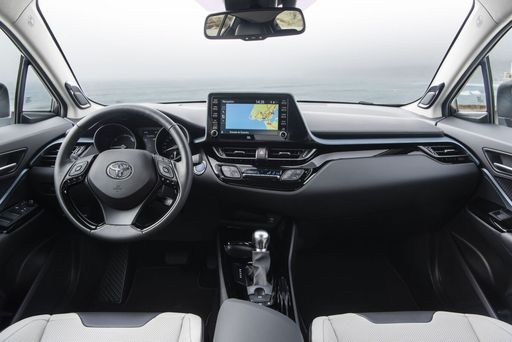
Inside the Toyota C-HR, occupants are treated to a spacious cabin featuring comfortable seating for up to five passengers. The trunk capacity ranges from 350 to 447 liters, providing ample space for luggage or groceries. The C-HR also comes equipped with modern tech features, including a sophisticated infotainment system that enhances connectivity.

The Yaris, while smaller, still accommodates five passengers comfortably. However, its trunk capacity is reduced to 286 liters in certain models, which might limit storage for longer journeys. Technological features in the Yaris focus on connectivity and driver assistance, making it a great option for younger buyers or city dwellers.

Safety and Innovative Features

Safety is paramount for both the C-HR and Yaris. Both cars come equipped with Toyota's Safety Sense suite, which includes features like adaptive cruise control, lane departure alert, and automatic emergency braking. However, due to its size, the C-HR may offer additional features such as advanced parking assistance, enhancing its appeal as a family vehicle.

Moreover, both models integrate modern innovations such as smartphone integration, allowing drivers to access navigation and entertainment seamlessly while on the move. The C-HR, designed for more versatility, may incorporate larger touchscreens and more premium audio systems compared to the Yaris.

Conclusion

Ultimately, choosing between the Toyota C-HR and Toyota Yaris boils down to individual needs and preferences. The C-HR is ideal for those seeking a stylish SUV with advanced features and spacious interiors, perfect for families or adventure seekers. Meanwhile, the Yaris stands out as an economical, city-friendly hatchback that excels in fuel efficiency and compact design.

Both vehicles reflect Toyota’s commitment to innovation and quality, ensuring that either choice will lead to a satisfying driving experience. As the automotive landscape continues to change, these models embody the brand’s dedication to providing compelling options for diverse drivers.

Here’s where it gets real: The technical differences in detail

C-HR

Costs and Efficiency:

When it comes to price and running costs, the biggest differences usually appear. This is often where you see which car fits your budget better in the long run.

Toyota Yaris is markedly cheaper – starting at 21,900 £ , while the Toyota C-HR costs 29,100 £ . That’s a price difference of around 7,277 £.

Fuel consumption also shows a difference: the Toyota C-HR uses 2.3 L/100km and is substantially more efficient than the Toyota Yaris with 3.8 L/100km. The difference is about 1.5 L/100km.

Yaris

Engine and Performance:

Power, torque and acceleration say a lot about how a car feels on the road. This is where you see which model delivers more driving dynamics.

When it comes to engine power, the Toyota Yaris offers visibly more power – delivering 280 HP compared to 223 HP. That’s roughly 57 HP more horsepower.

When accelerating from 0 to 100 km/h, the Toyota Yaris is visibly quicker – completing the sprint in 5.5 s, while the Toyota C-HR takes 7.4 s. That’s about 1.9 s quicker.

C-HR

Space and Everyday Use:

Whether family car or daily driver – which one offers more room, flexibility and comfort?

Both vehicles offer seating for 5 people.

In terms of curb weight, Toyota Yaris is clearly lighter – 1,090 kg compared to 1,505 kg. The difference is around 415 kg.

Looking at boot space, the Toyota C-HR offers markedly more boot space – 447 L compared to 286 L. That’s a difference of about 161 L.

When it comes to payload, the Toyota Yaris carries a bit more – 525 kg compared to 425 kg. That’s a difference of about 100 kg.

Who wins the race in the data check?

The Toyota C-HR stands out in the key areas in the objective data comparison.
This result only shows which model scores more points on paper – not which of the two cars feels right for you.

from £29,100
C-HR

Toyota C-HR

  • Engine Type : Full Hybrid, Plugin Hybrid
  • Transmission : Automatic
  • Drive Type : Front-Wheel Drive, All-Wheel Drive
  • Power HP : 140 - 223 HP
  • Consumption L/100km : 2.3 - 5.1 L/100km
  • Electric Range : 66 km
Toyota C-HR
Toyota Yaris

Costs and Consumption

View detailed analysis

Engine and Performance

View detailed analysis

Dimensions and Body

View detailed analysis

Toyota C-HR

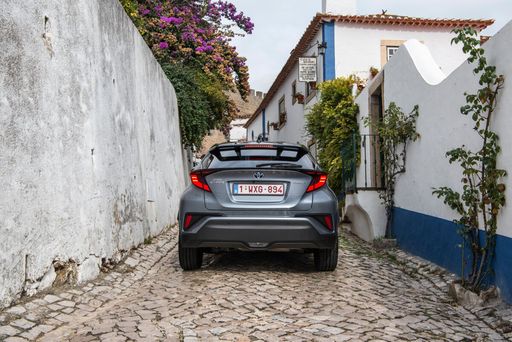
The Toyota C-HR cuts a striking figure with its angular styling and coupe-like profile, so you’ll never go unnoticed in the supermarket car park. It balances everyday practicality with a nimble, city-friendly personality, making routine commutes feel a touch more fun without asking for forgiveness.

details

Toyota Yaris

The Toyota Yaris is a sprightly city hatch that packs clever packaging, surprising comfort and fuel-sipping manners into a neat, easy-to-park package. It rewards sensible buyers with low running costs, friendly ergonomics and a forgiving drive, delivered with Japanese reliability and just enough personality to make errands feel a little less ordinary.

details
Toyota C-HR
Toyota Yaris

Costs and Consumption

Price
29,100 - 42,800 £
Price
21,900 - 40,800 £
Consumption L/100km
2.3 - 5.1 L/100km
Consumption L/100km
3.8 - 8.7 L/100km
Consumption kWh/100km
-
Consumption kWh/100km
-
Electric Range
66 km
Electric Range
-
Battery Capacity
-
Battery Capacity
-
co2
52 - 116 g/km
co2
87 - 197 g/km
Fuel tank capacity
-
Fuel tank capacity
-

Dimensions and Body

Body Type
SUV
Body Type
Hatchback
Seats
5
Seats
4 - 5
Doors
-
Doors
-
Curb weight
1,505 - 1,755 kg
Curb weight
1,090 - 1,356 kg
Trunk capacity
350 - 447 L
Trunk capacity
141 - 286 L
Length
-
Length
-
Width
1,832 mm
Width
1,745 - 1,805 mm
Height
-
Height
-
Max trunk capacity
-
Max trunk capacity
-
Payload
375 - 425 kg
Payload
289 - 525 kg

Engine and Performance

Engine Type
Full Hybrid, Plugin Hybrid
Engine Type
Full Hybrid, Petrol
Transmission
Automatic
Transmission
Automatic, Manuel
Transmission Detail
CVT
Transmission Detail
CVT, Manual Gearbox
Drive Type
Front-Wheel Drive, All-Wheel Drive
Drive Type
Front-Wheel Drive, All-Wheel Drive
Power HP
140 - 223 HP
Power HP
116 - 280 HP
Acceleration 0-100km/h
7.4 - 9.9 s
Acceleration 0-100km/h
5.5 - 9.7 s
Max Speed
-
Max Speed
-
Torque
-
Torque
390 Nm
Number of Cylinders
4
Number of Cylinders
3
Power kW
103 - 164 kW
Power kW
85 - 206 kW
Engine capacity
1,798 - 1,987 cm3
Engine capacity
1,490 - 1,618 cm3

General

Model Year
2,026
Model Year
2,026
CO2 Efficiency Class
C, D, B
CO2 Efficiency Class
B, G
Brand
Toyota
Brand
Toyota
DriveDuel uses data analysis and artificial intelligence to evaluate vehicle data and create content. Content is regularly reviewed and improved. The displayed prices are estimates based on German list prices, adjusted to the respective country’s VAT. Country-specific registration taxes are not included. This information is not legally binding.