VS

Toyota C-HR vs Toyota Corolla Cross comparison

Compare performance (223 HP vs 180 HP), boot space and price (29,100 £ vs 31,700 £ ) at a glance. Find out which car is the better choice for you – Toyota C-HR or Toyota Corolla Cross?

Toyota C-HR vs Toyota Corolla Cross: Key differences

Toyota C-HR

4.9 (6 Reviews)
rate
  • very slightly cheaper
  • slightly more power
  • considerably more efficient
  • only slightly quicker 0–100 km/h
  • marginally more trunk space
details

Toyota Corolla Cross

4.8 (6 Reviews)
rate
  • very slightly lighter
details

All details on performance, efficiency, range and trunk space can be found in the technical comparison below – including user reviews for both models.

By Achim Sedelmaier

C-HR

Toyota C-HR VS Toyota Corolla Cross — quick comparison

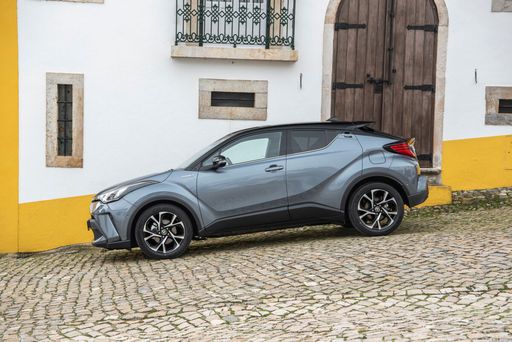
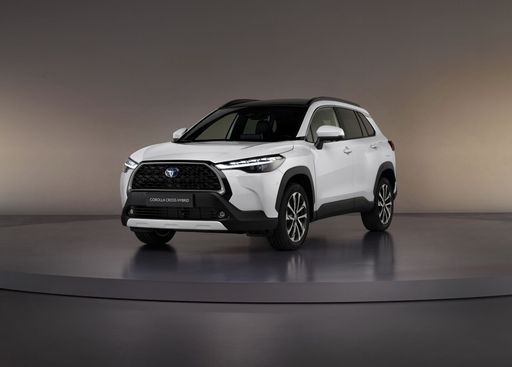
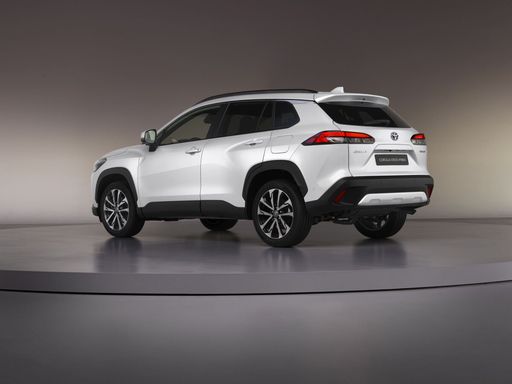
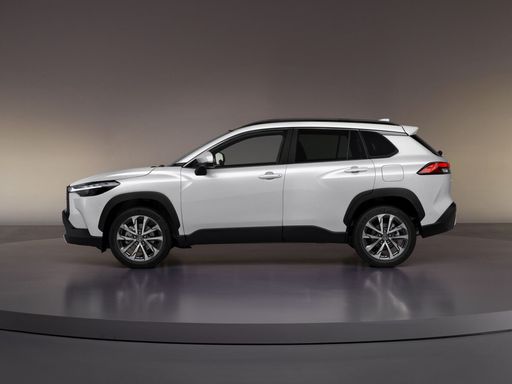
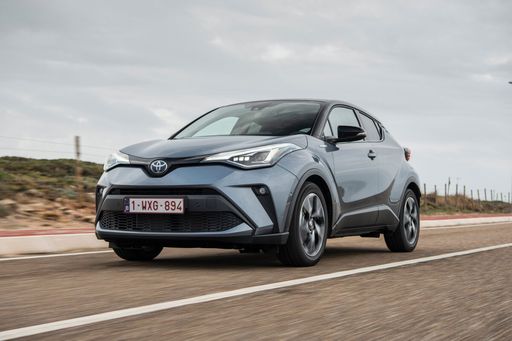
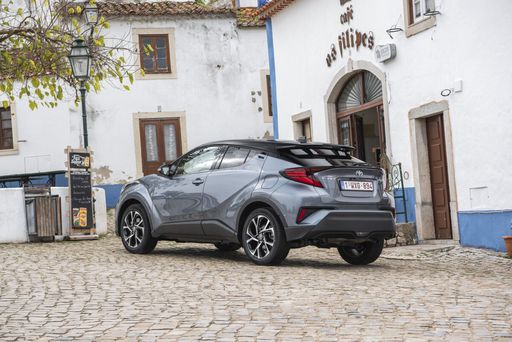
Toyota C-HR VS Toyota Corolla Cross set the tone for two different ideas of what a compact Toyota SUV should be: one leans into distinctive design and efficiency, the other into everyday usability and space. The C‑HR trades generous packaging for a sharper, more refined cabin and a focus on low running costs, while the Corolla Cross prioritizes room, easy loading and forgiving ergonomics. Both feel modern and safe, but they sell different priorities — image and efficiency versus practicality and family friendliness. Read on to see which fits your daily routine better.
Corolla Cross

Character and driving feel

On the road the Toyota C-HR feels taut and precise, whereas the Toyota Corolla Cross prefers relaxed, predictable manners. The C‑HR’s chassis and steering give it a smaller‑car agility that’s especially satisfying around town and on twisty B‑roads, while the Corolla Cross trades a little sharpness for composure and steadiness. Both are hybrids and both are efficient, yet under firm acceleration you’ll notice the hybrid drivetrain’s characteristic climb in revs; it’s more immediately obvious in the C‑HR when you press on. If you want nimble responses and a car that feels eager to place its wheels, choose the C‑HR; if you want confidence and calm, the Corolla Cross is the steadier companion.

C-HR

Comfort and cabin feel

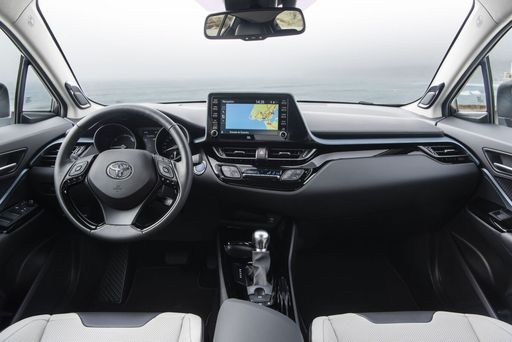
Inside, the Toyota C-HR presents a more modern and slightly upscale ambience compared with the more utilitarian Toyota Corolla Cross. The C‑HR’s materials and interior layout feel targeted at buyers who care about design and a neater experience at the controls, while the Corolla Cross focuses on straightforward ergonomics and long‑distance comfort. Rear‑seat experience highlights the split: the C‑HR’s sloping roof and smaller glass create a cosier, darker bench, whereas the Corolla Cross feels airier and better suited to taller passengers. If rear‑seat comfort or frequent child‑seat work matters, the Corolla Cross will be less compromising; if front‑seat style and a refined touchpoint layout appeal, the C‑HR has the edge.

Corolla Cross

Practicality, luggage and visibility

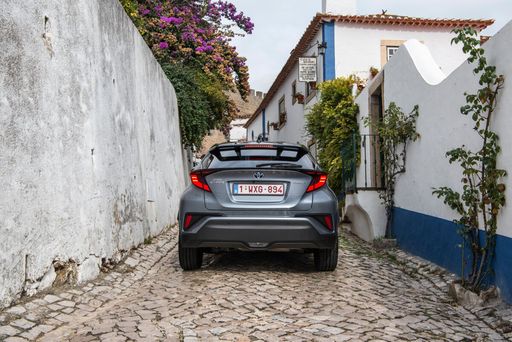
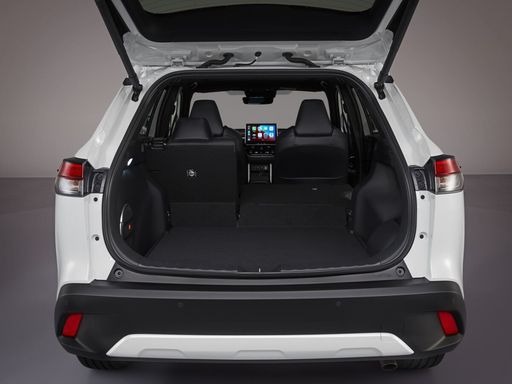
Practical use exposes the clearest differences: the Toyota Corolla Cross is the more forgiving everyday hauler, while the Toyota C-HR asks you to live with a few packaging sacrifices for the sake of styling. Corolla Cross makes loading and stacking easier thanks to a wider opening, lower sill and more regular cargo shape, which suits family life and weekend kit. C‑HR’s boot is narrower with a higher lip and trickier geometry, and opting for the plug‑in variant further reduces usable space — a real annoyance if you routinely carry bulky items. Visibility follows the same pattern: Corolla Cross gives broader outward sightlines and larger mirrors, whereas the C‑HR’s thick pillars and small rear glass push you to rely on cameras more often.

C-HR

City friendliness versus long‑distance behavior

In the city the Toyota C-HR feels at home: compact dimensions, crisp turn‑in and hybrid efficiency make it a calm, economical commuter that slots into tight spots. The Toyota Corolla Cross is also city‑capable, but it comes into its own as trips lengthen — its gentler suspension, roomier seating and more accommodating load area reduce fatigue on longer runs. On the motorway both cruise quietly, but sustained heavy throttle surfaces the hybrid drivetrain’s distinctive sound; the C‑HR tends to present that as a sharper intrusion when hurried, while the Corolla Cross masks it behind a more relaxed character. Choose the C‑HR for urban efficiency and a livelier drive, and the Corolla Cross if your miles include long trips and you value comfort and cargo practicality.

Corolla Cross

Buyer fit and how to choose next

Who should consider which? The Toyota C-HR suits style‑minded singles or couples and duty drivers who want the lowest day‑to‑day running costs, a refined front cabin and a car that’s lively in town. The Toyota Corolla Cross suits families and pragmatic owners who prioritise clear rear space, easier loading and a more neutral, reassuring driving experience. Both score highly on safety and low ownership costs, so the choice hinges on whether you accept the C‑HR’s spatial compromises for design and efficiency or prefer the Corolla Cross’s everyday usability. Scroll into the technical comparison to see how those trade‑offs appear in powertrain choices, cargo packaging and equipment so you can match numbers to the real‑world priorities above.

Here’s where it gets real: The technical differences in detail

C-HR

Costs and Efficiency:

When it comes to price and running costs, the biggest differences usually appear. This is often where you see which car fits your budget better in the long run.

Toyota C-HR is very slightly cheaper – starting at 29,100 £ , while the Toyota Corolla Cross costs 31,700 £ . That’s a price difference of around 2,571 £.

Fuel consumption also shows a difference: the Toyota C-HR uses 2.3 L/100km and is considerably more efficient than the Toyota Corolla Cross with 4.9 L/100km. The difference is about 2.6 L/100km.

Corolla Cross

Engine and Performance:

Under the bonnet, it becomes clear which model is tuned for sportiness and which one takes the lead when you hit the accelerator.

When it comes to engine power, the Toyota C-HR offers slightly more power – delivering 223 HP compared to 180 HP. That’s roughly 43 HP more horsepower.

When accelerating from 0 to 100 km/h, the Toyota C-HR is only slightly quicker – completing the sprint in 7.4 s, while the Toyota Corolla Cross takes 7.6 s. That’s about 0.2 s quicker.

C-HR

Space and Everyday Use:

Beyond pure performance, interior space and usability matter most in daily life. This is where you see which car is more practical and versatile.

Both vehicles offer seating for 5 people.

In terms of curb weight, Toyota Corolla Cross is very slightly lighter – 1,380 kg compared to 1,505 kg. The difference is around 125 kg.

Looking at boot space, the Toyota C-HR offers marginally more boot space – 447 L compared to 425 L. That’s a difference of about 22 L.

When it comes to payload, the Toyota Corolla Cross carries clearly more – 560 kg compared to 425 kg. That’s a difference of about 135 kg.

Who wins the race in the data check?

The Toyota C-HR holds a decisive overall lead in the objective data comparison.
This result only shows which model scores more points on paper – not which of the two cars feels right for you.

from £29,100
C-HR

Toyota C-HR

  • Engine Type : Full Hybrid, Plugin Hybrid
  • Transmission : Automatic
  • Drive Type : Front-Wheel Drive, All-Wheel Drive
  • Power HP : 140 - 223 HP
  • Consumption L/100km : 2.3 - 5.1 L/100km
  • Electric Range : 66 km
Toyota C-HR
Toyota Corolla Cross

Costs and Consumption

View detailed analysis

Engine and Performance

View detailed analysis

Dimensions and Body

View detailed analysis

Toyota C-HR

The Toyota C-HR is a bold, coupe-styled crossover that grabs attention with angular lines and a modern interior design. It’s aimed at comfortable urban driving and sensible efficiency, offering practical features and distinctive looks rather than rugged off-road ability.

details

Toyota Corolla Cross

The Toyota Corolla Cross is a compact crossover that blends the practicality and reliability Toyota is known for with a comfortable, easygoing driving experience. It offers a roomy interior and sensible features that make it a strong choice for daily commuting and family outings.

details
Toyota C-HR
Toyota Corolla Cross

Costs and Consumption

Price
29,100 - 42,800 £
Price
31,700 - 41,900 £
Consumption L/100km
2.3 - 5.1 L/100km
Consumption L/100km
4.9 - 5.3 L/100km
Consumption kWh/100km
-
Consumption kWh/100km
-
Electric Range
66 km
Electric Range
-
Battery Capacity
-
Battery Capacity
-
co2
52 - 116 g/km
co2
112 - 120 g/km
Fuel tank capacity
-
Fuel tank capacity
-

Dimensions and Body

Body Type
SUV
Body Type
SUV
Seats
5
Seats
5
Doors
-
Doors
-
Curb weight
1,505 - 1,755 kg
Curb weight
1,380 - 1,500 kg
Trunk capacity
350 - 447 L
Trunk capacity
414 - 425 L
Length
-
Length
-
Width
1,832 mm
Width
1,825 mm
Height
-
Height
-
Max trunk capacity
-
Max trunk capacity
-
Payload
375 - 425 kg
Payload
515 - 560 kg

Engine and Performance

Engine Type
Full Hybrid, Plugin Hybrid
Engine Type
Full Hybrid
Transmission
Automatic
Transmission
Automatic
Transmission Detail
CVT
Transmission Detail
CVT
Drive Type
Front-Wheel Drive, All-Wheel Drive
Drive Type
Front-Wheel Drive, All-Wheel Drive
Power HP
140 - 223 HP
Power HP
140 - 180 HP
Acceleration 0-100km/h
7.4 - 9.9 s
Acceleration 0-100km/h
7.6 - 10 s
Max Speed
-
Max Speed
-
Torque
-
Torque
-
Number of Cylinders
4
Number of Cylinders
4
Power kW
103 - 164 kW
Power kW
103 - 132 kW
Engine capacity
1,798 - 1,987 cm3
Engine capacity
1,798 - 1,987 cm3

General

Model Year
2026
Model Year
2025
CO2 Efficiency Class
C, D, B
CO2 Efficiency Class
C, D
Brand
Toyota
Brand
Toyota
DriveDuel uses data analysis and artificial intelligence to evaluate vehicle data and create content. Content is regularly reviewed and improved. The displayed prices are estimates based on German list prices, adjusted to the respective country’s VAT. Country-specific registration taxes are not included. This information is not legally binding.