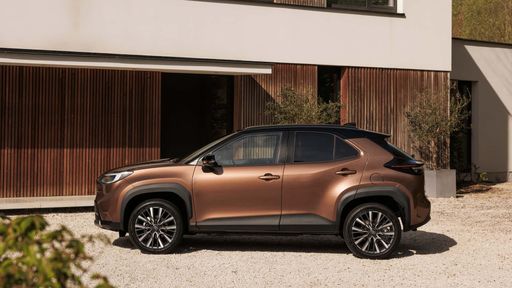
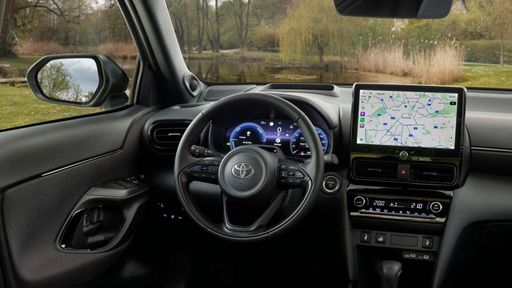
VS

Toyota C-HR vs Toyota Yaris Cross comparison

Compare performance (223 HP vs 130 HP), boot space and price (29,100 £ vs 23,700 £ ) at a glance. Find out which car is the better choice for you – Toyota C-HR or Toyota Yaris Cross?

Toyota C-HR vs Toyota Yaris Cross: Key differences

Toyota C-HR

4.8 (2 Reviews)
rate
  • considerably more power
  • clearly more efficient
  • substantially quicker 0–100 km/h
  • a bit more trunk space

Toyota Yaris Cross

4 (8 Reviews)
rate
  • noticeably cheaper
  • markedly lighter

All details on performance, efficiency, range and trunk space can be found in the technical comparison below – including user reviews for both models.

C-HR

Catwalk Swagger vs Backpack Practicality

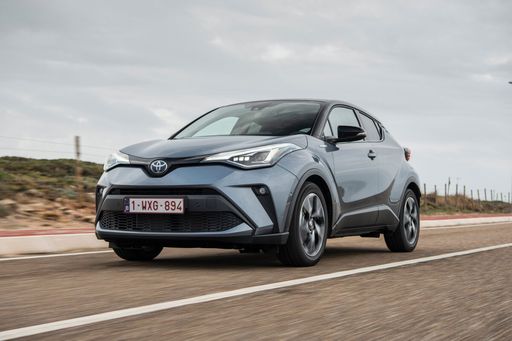
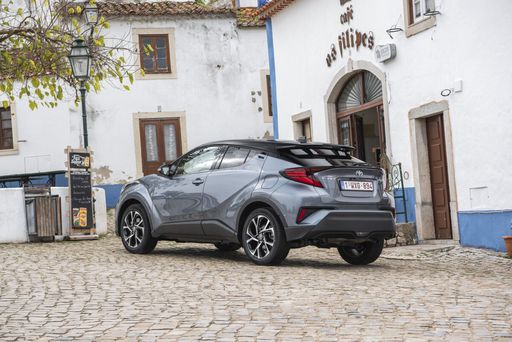
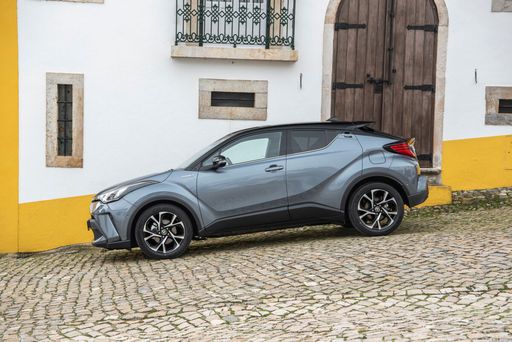
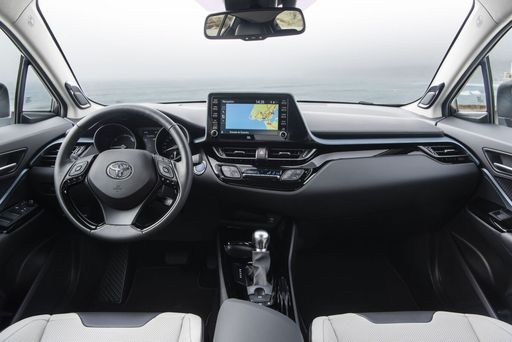
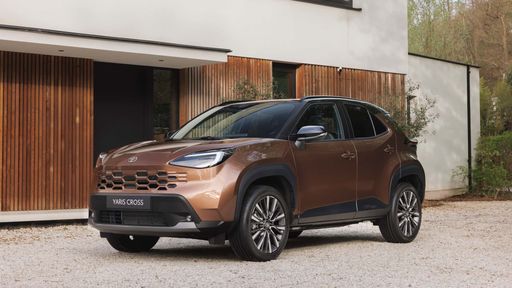
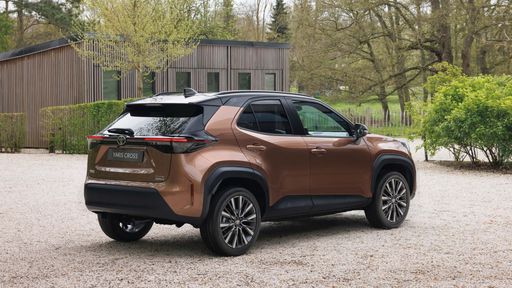
The Toyota C-HR strides in like a concept car that made it to the real world, all sharp creases and coupe attitude. The Yaris Cross wears a neater, boxier suit that whispers functionality over flair. Both are unmistakably Toyota, yet they project very different personalities when they pull up to the curb.

Yaris Cross

Street-Savvy Characters

In town, the Yaris Cross feels like it knows every shortcut, with light controls and an easygoing nature that makes tight streets less of a chore. The C-HR isn’t unwieldy, but it feels more substantial, encouraging smoother inputs and a more measured pace. One is your quick-twitch city companion; the other moves with a more mature, coupe-like stride.

C-HR

Behind the Wheel: Calm vs Composed

The C-HR brings a reassuring sense of stability, the kind that makes flyovers and fast lanes a calm experience. It steers with precision and feels planted, rewarding a more considered driving style. The Yaris Cross counters with eager responses and a nimble footprint, perfect for darting around urban clutter and parking where others balk.

Yaris Cross

Ride Comfort and Road Noise

Toyota’s refinement game is strong in both, but the C-HR sounds and feels a touch more hushed and sophisticated over longer journeys. The Yaris Cross keeps things tidy on everyday bumps and potholes, though larger wheels can add a firmer edge. On the motorway, the C-HR settles into a quieter rhythm; the Yaris Cross remains willing but a bit more vocal when worked hard.

C-HR

Space That Works for You

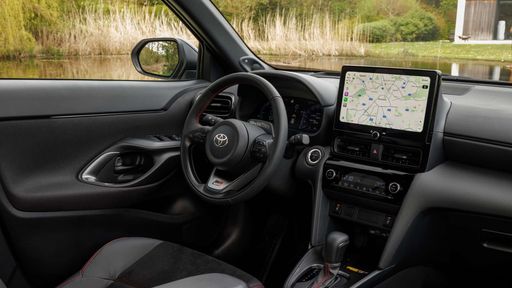
Despite its slinkier roofline, the C-HR’s cabin feels a notch more upmarket, with thoughtful materials and a dash design that’s more lounge than utility. It’s a cocooning space, leaning into style without forgetting everyday ergonomics. The Yaris Cross majors on clever packaging, with a more upright seating position that makes hopping in and out refreshingly simple.

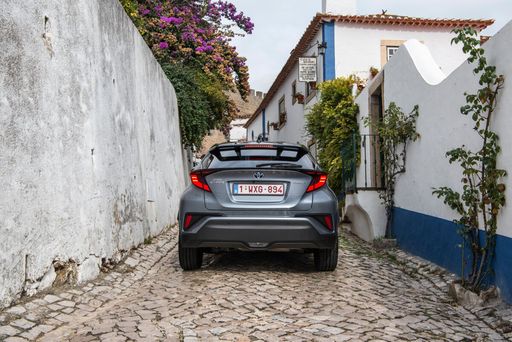
Family duties suit the Yaris Cross, where square edges translate into easy loading and kid-friendly access. The C-HR’s boot is practical enough for a weekly shop and a weekend away, though that swoopy tail can slightly limit the view out. If you’re regularly juggling buggies or bulky hobbies, the Yaris Cross’s straightforward layout keeps stress levels low.

Yaris Cross

Tech You’ll Actually Use

Both benefit from Toyota’s latest infotainment ethos: clearer screens, quicker responses, and sensible menus. The C-HR feels a shade more premium in graphics and ambiance, while the Yaris Cross wins for simplicity and an interface that’s easy to grasp on day one. Driver aids are comprehensive across the board, with the usual Toyota safety net quietly working in the background.

C-HR

Running Smart

Hybrids are Toyota’s comfort zone, and both cars reward gentle driving with impressively calm fuel bills. The Yaris Cross tilts toward budget-friendly ownership and city efficiency, while the C-HR counters with a more refined drive that feels worth stretching for if you value polish. In some markets, the Yaris Cross even adds the security of a light-duty all-wheel setup, handy for slippery driveways and damp campsites.

Yaris Cross

Which One Fits Your Life?

If your days are a carousel of school runs, supermarket sprints, and narrow parking bays, the Yaris Cross makes everyday life easy—and does it without fuss. If you crave a bit more style, a richer cabin, and a calmer long-haul temperament, the C-HR hits a sweet spot between design statement and daily usability. Different tools for different jobs, both carrying Toyota’s signature reliability and no-drama ownership.

Curious which one takes the DriveDuel crown? Keep reading—our Champion awaits just below.

Here’s where it gets real: The technical differences in detail

C-HR

Costs and Efficiency:

Looking at overall running costs, both models reveal some interesting differences in everyday economy.

Toyota Yaris Cross is noticeably cheaper – starting at 23,700 £ , while the Toyota C-HR costs 29,100 £ . That’s a price difference of around 5,443 £.

Fuel consumption also shows a difference: the Toyota C-HR uses 2.3 L/100km and is clearly more efficient than the Toyota Yaris Cross with 4.5 L/100km. The difference is about 2.2 L/100km.

Yaris Cross

Engine and Performance:

Under the bonnet, it becomes clear which model is tuned for sportiness and which one takes the lead when you hit the accelerator.

When it comes to engine power, the Toyota C-HR offers considerably more power – delivering 223 HP compared to 130 HP. That’s roughly 93 HP more horsepower.

When accelerating from 0 to 100 km/h, the Toyota C-HR is substantially quicker – completing the sprint in 7.4 s, while the Toyota Yaris Cross takes 10.7 s. That’s about 3.3 s quicker.

C-HR

Space and Everyday Use:

Cabin size, boot volume and payload all play a role in everyday practicality. Here, comfort and flexibility make the difference.

Both vehicles offer seating for 5 people.

In terms of curb weight, Toyota Yaris Cross is markedly lighter – 1,180 kg compared to 1,505 kg. The difference is around 325 kg.

Looking at boot space, the Toyota C-HR offers a bit more boot space – 447 L compared to 397 L. That’s a difference of about 50 L.

When it comes to payload, the Toyota Yaris Cross carries a bit more – 510 kg compared to 425 kg. That’s a difference of about 85 kg.

Who wins the race in the data check?

The Toyota C-HR is clearly superior overall in the objective data comparison.
This result only shows which model scores more points on paper – not which of the two cars feels right for you.

from £29,100
C-HR

Toyota C-HR

  • Engine Type : Full Hybrid, Plugin Hybrid
  • Transmission : Automatic
  • Drive Type : Front-Wheel Drive, All-Wheel Drive
  • Power HP : 140 - 223 HP
  • Consumption L/100km : 2.3 - 5.1 L/100km
  • Electric Range : 66 km
Toyota C-HR
Toyota Yaris Cross

Costs and Consumption

View detailed analysis

Engine and Performance

View detailed analysis

Dimensions and Body

View detailed analysis

Toyota C-HR

The Toyota C-HR cuts a striking figure with its angular styling and coupe-like profile, so you’ll never go unnoticed in the supermarket car park. It balances everyday practicality with a nimble, city-friendly personality, making routine commutes feel a touch more fun without asking for forgiveness.

details

Toyota Yaris Cross

The Toyota Yaris Cross takes the jaunty personality of the Yaris and gives it a taller stance and a bit more practicality, so you get city-friendly agility with added SUV presence. It’s easy to live with, economical on the daily grind, and smartly packaged — a sensible pick for buyers who want fuss-free transport with a touch of character.

details
Toyota C-HR
Toyota Yaris Cross

Costs and Consumption

Price
29,100 - 42,800 £
Price
23,700 - 34,300 £
Consumption L/100km
2.3 - 5.1 L/100km
Consumption L/100km
4.5 - 4.8 L/100km
Consumption kWh/100km
-
Consumption kWh/100km
-
Electric Range
66 km
Electric Range
-
Battery Capacity
-
Battery Capacity
-
co2
52 - 116 g/km
co2
101 - 108 g/km
Fuel tank capacity
-
Fuel tank capacity
-

Dimensions and Body

Body Type
SUV
Body Type
SUV
Seats
5
Seats
5
Doors
-
Doors
-
Curb weight
1,505 - 1,755 kg
Curb weight
1,180 - 1,290 kg
Trunk capacity
350 - 447 L
Trunk capacity
320 - 397 L
Length
-
Length
-
Width
1,832 mm
Width
1,765 mm
Height
-
Height
-
Max trunk capacity
-
Max trunk capacity
-
Payload
375 - 425 kg
Payload
485 - 510 kg

Engine and Performance

Engine Type
Full Hybrid, Plugin Hybrid
Engine Type
Full Hybrid
Transmission
Automatic
Transmission
Automatic
Transmission Detail
CVT
Transmission Detail
CVT
Drive Type
Front-Wheel Drive, All-Wheel Drive
Drive Type
Front-Wheel Drive, All-Wheel Drive
Power HP
140 - 223 HP
Power HP
116 - 130 HP
Acceleration 0-100km/h
7.4 - 9.9 s
Acceleration 0-100km/h
10.7 - 11.3 s
Max Speed
-
Max Speed
-
Torque
-
Torque
-
Number of Cylinders
4
Number of Cylinders
3
Power kW
103 - 164 kW
Power kW
85 - 96 kW
Engine capacity
1,798 - 1,987 cm3
Engine capacity
1,490 cm3

General

Model Year
2,026
Model Year
2,026
CO2 Efficiency Class
C, D, B
CO2 Efficiency Class
C
Brand
Toyota
Brand
Toyota
DriveDuel uses data analysis and artificial intelligence to evaluate vehicle data and create content. Content is regularly reviewed and improved. The displayed prices are estimates based on German list prices, adjusted to the respective country’s VAT. Country-specific registration taxes are not included. This information is not legally binding.