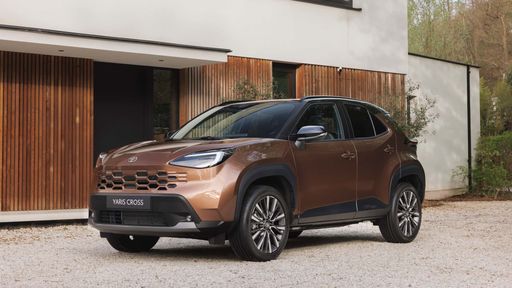
Toyota Yaris Cross SUV, starting at 23,700 £

4.2 (19 Reviews)
rate

The Toyota Yaris Cross blends the maneuverability of a small hatch with the higher driving position and practicality of a crossover, wrapped in Toyota's dependable build quality. It suits urban buyers who need easy parking, flexible cargo space and a comfortable, economical daily driver.

Reviews & community

All real reviews and experiences about the Toyota Yaris Cross in one place.

To community

Technical data, trims & prices

All technical data, dimensions and equipment details of this model at a glance.

To technical data

Alternative car models

Discover similar models and possible alternatives to this vehicle.

To alternatives

from £23,700
Yaris Cross

Toyota Yaris Cross

  • Engine Type Full Hybrid
  • Transmission Automatic
  • Drive Type Front-Wheel Drive, All-Wheel Drive
  • Power HP 116 - 130 HP
  • Consumption L/100km 4.5 - 4.8 L/100km

City-Sized, Crossover-Confident

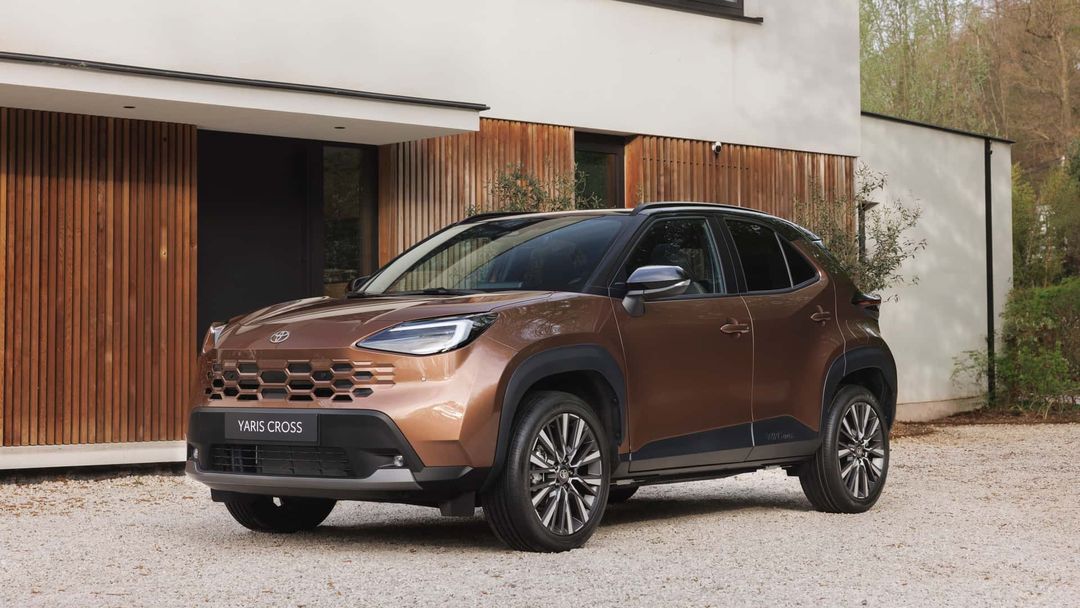
The Toyota Yaris Cross wears its little‑RAV4 look well, with chunky cladding, a raised stance and clean surfacing that feels grown‑up rather than cute. At 1,765 mm wide it fits urban spaces easily, yet it projects the taller seating position many buyers want. Wheel designs and trims shift the mood from sensible to sporty, though the GR Sport’s tougher look comes with a firmer ride. Panel fit is tidy and paint quality solid for the class, underlining Toyota’s sensible, no‑nonsense approach. It is more about durable style than delicate details, which suits its everyday brief.
Cabin Logic Over Gimmicks

Inside, usability leads: clear instruments, physical climate knobs and straightforward menus make it stress‑free from day one. The latest touchscreen (9 to 10.5 inches depending on trim) loads quickly, supports wireless Apple CarPlay/Android Auto and accepts over‑the‑air updates. Materials are robust and neatly assembled, with soft‑touch in key places, though rivals like a 2008 or Captur can feel a shade plusher. Front seats are supportive with a natural driving position and broad adjustment. Over‑shoulder visibility is merely fair due to thick rear pillars, so cameras and sensors are worthwhile.

Compact Footprint, Thoughtful Practicality

For its size, the boot is a highlight: front‑wheel‑drive versions offer up to 397 litres with a useful multi‑level floor that keeps loads flat. Choose the optional AWD-i and space drops notably to around 320 litres, so factor that in if you pack big. The rear bench splits 60:40 but does not slide, and rear door openings are on the small side. Legroom in the second row is tight for tall adults, making it better for kids or short hops with grown‑ups. It seats five on paper, yet four travel most comfortably day to day.

Hybrid Ease, Calm Control

A 1.5‑litre three‑cylinder full hybrid and e‑CVT underpin the range, available with 116 hp or a punchier 130 hp, both driving the front wheels, with the 130 also offering all‑wheel drive. Performance is adequate rather than urgent, with 0–100 km/h in roughly 10.7–11.3 seconds depending on version. In town it feels smooth and eager, gliding frequently on electric power and pulling away cleanly without fuss. Press harder and the CVT lets the engine sound build, a trait improved by added insulation but still noticeable. Steering is light, body control secure and predictable, and motorway stability is reassuring. Ride comfort is acceptable on smaller wheels, while 18‑inch setups and GR Sport tuning can make sharp bumps feel more abrupt.

Uses Little, Especially In The City

This is a hybrid SUV that genuinely sips fuel: official consumption sits around 4.5–4.8 L/100 km, with many real‑world tests landing near 4.9–5.6. Urban and stop‑start driving play to its strengths, where frequent EV running trims costs and emissions. On faster roads it remains efficient for a petrol car, albeit with less of an advantage than in town. CO2 figures of about 101–108 g/km reflect its frugal nature and help with tax in many markets. The AWD‑i variants barely dent efficiency on paper, though their extra weight and traction hardware show more in the boot than at the pump.

Tech That Lightens The Load

Toyota Safety Sense brings a deep roster of aids, including adaptive cruise with lane keeping, proactive pre‑collision assistance and traffic sign recognition. Blind‑spot monitoring, rear cross‑traffic alerts and a 360‑degree camera are available to ease tight parking and busy junctions. The infotainment update brings crisper graphics and quicker responses, making it far better than early systems, if still not segment‑best. A configurable digital cluster, decent voice control and solid smartphone mirroring cover everyday tech needs. It’s technology designed to reduce workload rather than distract, which fits the car’s calm character.

Who It Suits

City commuters and first‑time SUV buyers will value the effortless automatic feel, tiny fuel bills and simple controls. Small families get a friendly front row and an everyday‑useful boot, especially in FWD, while winter‑region drivers can pick AWD‑i for extra traction with only a mild efficiency penalty. Those who often carry tall adults in the back or crave hushed, long‑distance refinement may want to look up a class. Enthusiasts seeking a sporty drive will find it safe and tidy rather than entertaining. The range quietly covers bases: a thrifty 116 hp FWD suits economy‑minded buyers, while the 130 hp brings stronger overtaking and the option of all‑wheel drive without changing the Yaris Cross’s sensible core.

Costs and Consumption

Price
23,700 - 34,300 £
Consumption L/100km
4.5 - 4.8 L/100km
Consumption kWh/100km
-
Electric Range
-
Battery Capacity
-
co2
101 - 108 g/km
Fuel tank capacity
-

Dimensions and Body

Body Type
SUV
Seats
5
Doors
-
Curb weight
1,180 - 1,290 kg
Trunk capacity
320 - 397 L
Length
-
Width
1,765 mm
Height
-
Max trunk capacity
-
Payload
485 - 510 kg

Engine and Performance

Engine Type
Full Hybrid
Transmission
Automatic
Transmission Detail
CVT
Drive Type
Front-Wheel Drive, All-Wheel Drive
Power HP
116 - 130 HP
Acceleration 0-100km/h
10.7 - 11.3 s
Max Speed
-
Torque
-
Number of Cylinders
3
Power kW
85 - 96 kW
Engine capacity
1,490 cm3

General

Model Year
2026
CO2 Efficiency Class
C
Brand
Toyota
What drive types are available for the Toyota Yaris Cross?

The Toyota Yaris Cross is available as Front-Wheel Drive or All-Wheel Drive.

DriveDuel uses data analysis and artificial intelligence to evaluate vehicle data and create content. Content is regularly reviewed and improved. The displayed prices are estimates based on German list prices, adjusted to the respective country’s VAT. Country-specific registration taxes are not included. This information is not legally binding.