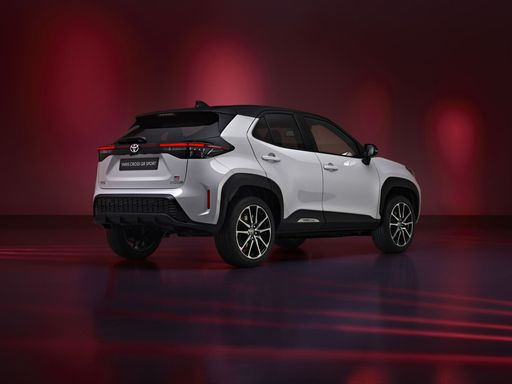
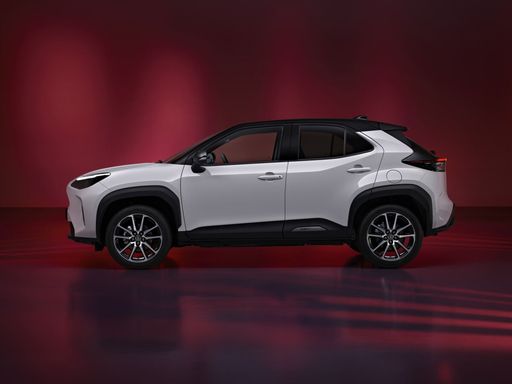
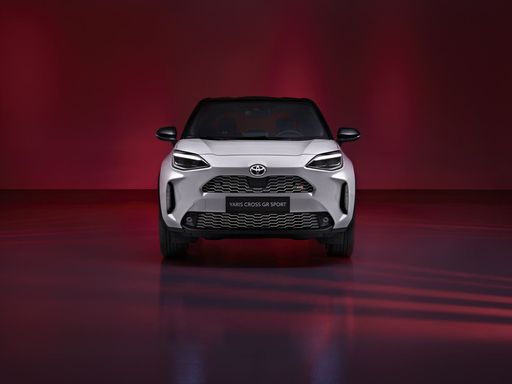
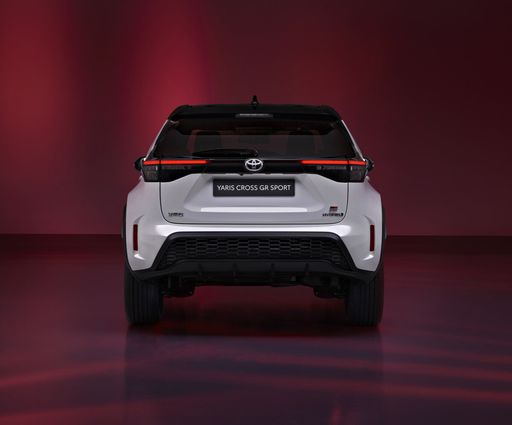
VS

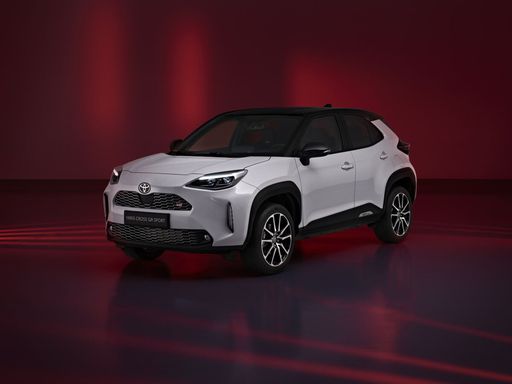
Toyota Yaris Cross vs Toyota Yaris comparison

Compare performance (130 HP vs 280 HP), boot space and price (23,700 £ vs 21,900 £ ) at a glance. Find out which car is the better choice for you – Toyota Yaris Cross or Toyota Yaris?

Toyota Yaris Cross vs Toyota Yaris: Key differences

Toyota Yaris Cross

4 (8 Reviews)
rate
  • clearly more trunk space

Toyota Yaris

3.9 (3 Reviews)
rate
  • barely cheaper
  • substantially more power
  • moderately more efficient
  • considerably quicker 0–100 km/h
  • barely lighter

All details on performance, efficiency, range and trunk space can be found in the technical comparison below – including user reviews for both models.

Yaris Cross

In the competitive landscape of compact vehicles, Toyota has carved a niche for itself with its standout offerings: the Toyota Yaris and the emerging Toyota Yaris Cross. Though both models boast Toyota's commitment to quality and innovation, they cater to different driving needs and preferences. Here, we will dive into a comprehensive comparison of the two, focusing on their specifications, design, and advanced technologies.
Yaris

Design and Body Type

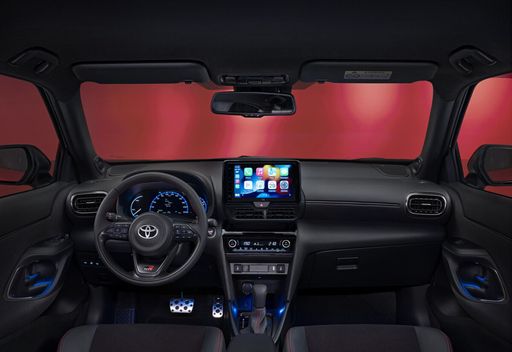
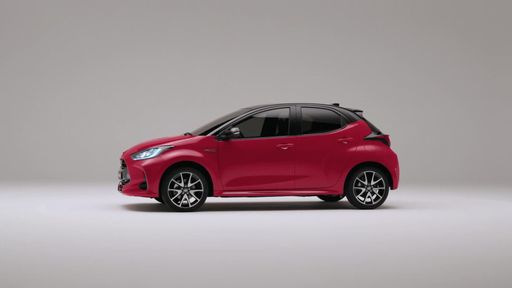
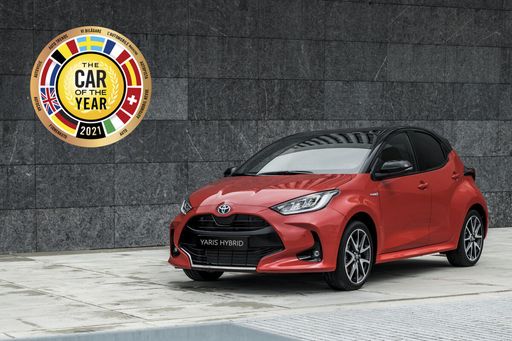
The Toyota Yaris Cross presents itself as a sleek SUV, designed for urban and adventurous landscapes alike. With a length of 4180 mm, width of 1765 mm, and height of 1595 mm, it exudes a commanding presence on the road. In contrast, the traditional Toyota Yaris retains its charm as a practical hatchback, measuring between 3940 mm and 3995 mm in length, with a width of about 1745 mm to 1805 mm, and a more compact height of 1500 mm or 1455 mm. This difference in body type caters to varying consumer needs, with the Yaris Cross offering a higher driving position and more cargo space.

Yaris Cross

Engine Performance and Efficiency

Both vehicles are powered by full hybrid engines, showcasing Toyota's advancement in eco-friendly technology. The Yaris Cross boasts a power output of 116 to 130 HP from its 1490 cm³ engine, while offering exceptional fuel efficiency at around 4.5 to 4.8 L/100km. Acceleration from 0-100 km/h ranges between 10.7 to 11.3 seconds, combined with a maximum speed of 170 km/h.

On the other hand, the Yaris presents varied engine options, including petrol variants, with outputs ranging from 116 to an impressive 280 HP. Fuel economy is commendable as well, with some models achieving as low as 3.8 L/100km. The hatchback excels in acceleration, with some configurations reaching 0-100 km/h in just 5.5 seconds. With a maximum speed that can go up to 230 km/h, it certainly appeals to sporty enthusiasts.

Yaris

Interior Comfort and Space

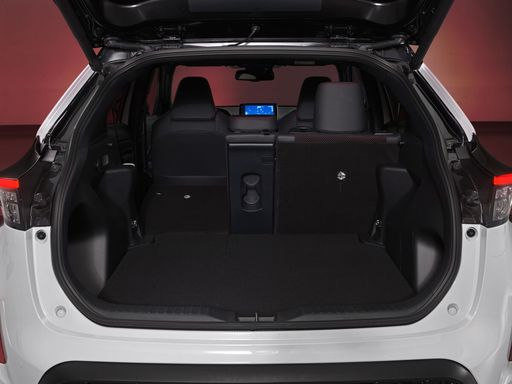
When it comes to interior space, the Yaris Cross leads with a trunk capacity of 397 L, making it a practical choice for families or those requiring extra cargo space. It comfortably seats five passengers, maintaining spaciousness throughout. The Yaris, with trunk capacities ranging from 141 to 286 L, also accommodates five, but has variants that seat four, offering flexibility depending on passenger requirements.

Yaris Cross

Technological Innovations

Compared to the Yaris, the Yaris Cross boasts modern infotainment features and advanced safety technologies that enhance the driving experience. Standard in most models, Toyota’s Safety Sense package includes features such as pre-collision systems, lane departure alerts, and adaptive cruise control, promoting a safer journey.

The Yaris, while not lacking in tech, focuses more on user-friendly controls and infotainment systems designed for convenience. With features like Apple CarPlay and Android Auto compatibility, it provides an easy interface for tech-savvy drivers. However, the Cross’s SUV stature offers more space for technologically advanced features that enhance both driver experience and passenger comfort.

Conclusion: Choosing Your Toyota

The choice between the Toyota Yaris Cross and the Toyota Yaris ultimately depends on personal preference and lifestyle. If you value a compact size with energetic performance and don’t require extensive cargo space, the Yaris is a fantastic option. However, if you seek a robust SUV with enhanced cargo capacity, state-of-the-art technology, and a comfortable driving height, the Yaris Cross is your best bet.

Both models encapsulate Toyota's dedication to innovation and quality, ensuring that whether you choose the Yaris or the Yaris Cross, you’re investing in reliability and performance.

Here’s where it gets real: The technical differences in detail

Yaris Cross

Costs and Efficiency:

Price and efficiency are often the first things buyers look at. Here it becomes clear which model has the long-term edge – whether at the pump, the plug, or in purchase price.

Toyota Yaris is barely cheaper – starting at 21,900 £ , while the Toyota Yaris Cross costs 23,700 £ . That’s a price difference of around 1,834 £.

Fuel consumption also shows a difference: the Toyota Yaris uses 3.8 L/100km and is moderately more efficient than the Toyota Yaris Cross with 4.5 L/100km. The difference is about 0.7 L/100km.

Yaris

Engine and Performance:

Under the bonnet, it becomes clear which model is tuned for sportiness and which one takes the lead when you hit the accelerator.

When it comes to engine power, the Toyota Yaris offers substantially more power – delivering 280 HP compared to 130 HP. That’s roughly 150 HP more horsepower.

When accelerating from 0 to 100 km/h, the Toyota Yaris is considerably quicker – completing the sprint in 5.5 s, while the Toyota Yaris Cross takes 10.7 s. That’s about 5.2 s quicker.

Yaris Cross

Space and Everyday Use:

Beyond pure performance, interior space and usability matter most in daily life. This is where you see which car is more practical and versatile.

Both vehicles offer seating for 5 people.

In terms of curb weight, Toyota Yaris is barely lighter – 1,090 kg compared to 1,180 kg. The difference is around 90 kg.

Looking at boot space, the Toyota Yaris Cross offers clearly more boot space – 397 L compared to 286 L. That’s a difference of about 111 L.

When it comes to payload, the Toyota Yaris carries marginally more – 525 kg compared to 510 kg. That’s a difference of about 15 kg.

Who wins the race in the data check?

The Toyota Yaris is clearly superior overall in the objective data comparison.
This result only shows which model scores more points on paper – not which of the two cars feels right for you.

from £21,900
Yaris

Toyota Yaris

  • Engine Type : Full Hybrid, Petrol
  • Transmission : Automatic, Manuel
  • Drive Type : Front-Wheel Drive, All-Wheel Drive
  • Power HP : 116 - 280 HP
  • Consumption L/100km : 3.8 - 8.7 L/100km
Toyota Yaris Cross
Toyota Yaris

Costs and Consumption

View detailed analysis

Engine and Performance

View detailed analysis

Dimensions and Body

View detailed analysis

Toyota Yaris Cross

The Toyota Yaris Cross takes the jaunty personality of the Yaris and gives it a taller stance and a bit more practicality, so you get city-friendly agility with added SUV presence. It’s easy to live with, economical on the daily grind, and smartly packaged — a sensible pick for buyers who want fuss-free transport with a touch of character.

details

Toyota Yaris

The Toyota Yaris is a sprightly city hatch that packs clever packaging, surprising comfort and fuel-sipping manners into a neat, easy-to-park package. It rewards sensible buyers with low running costs, friendly ergonomics and a forgiving drive, delivered with Japanese reliability and just enough personality to make errands feel a little less ordinary.

details
Toyota Yaris Cross
Toyota Yaris

Costs and Consumption

Price
23,700 - 34,300 £
Price
21,900 - 40,800 £
Consumption L/100km
4.5 - 4.8 L/100km
Consumption L/100km
3.8 - 8.7 L/100km
Consumption kWh/100km
-
Consumption kWh/100km
-
Electric Range
-
Electric Range
-
Battery Capacity
-
Battery Capacity
-
co2
101 - 108 g/km
co2
87 - 197 g/km
Fuel tank capacity
-
Fuel tank capacity
-

Dimensions and Body

Body Type
SUV
Body Type
Hatchback
Seats
5
Seats
4 - 5
Doors
-
Doors
-
Curb weight
1,180 - 1,290 kg
Curb weight
1,090 - 1,356 kg
Trunk capacity
320 - 397 L
Trunk capacity
141 - 286 L
Length
-
Length
-
Width
1,765 mm
Width
1,745 - 1,805 mm
Height
-
Height
-
Max trunk capacity
-
Max trunk capacity
-
Payload
485 - 510 kg
Payload
289 - 525 kg

Engine and Performance

Engine Type
Full Hybrid
Engine Type
Full Hybrid, Petrol
Transmission
Automatic
Transmission
Automatic, Manuel
Transmission Detail
CVT
Transmission Detail
CVT, Manual Gearbox
Drive Type
Front-Wheel Drive, All-Wheel Drive
Drive Type
Front-Wheel Drive, All-Wheel Drive
Power HP
116 - 130 HP
Power HP
116 - 280 HP
Acceleration 0-100km/h
10.7 - 11.3 s
Acceleration 0-100km/h
5.5 - 9.7 s
Max Speed
-
Max Speed
-
Torque
-
Torque
390 Nm
Number of Cylinders
3
Number of Cylinders
3
Power kW
85 - 96 kW
Power kW
85 - 206 kW
Engine capacity
1,490 cm3
Engine capacity
1,490 - 1,618 cm3

General

Model Year
2,026
Model Year
2,026
CO2 Efficiency Class
C
CO2 Efficiency Class
B, G
Brand
Toyota
Brand
Toyota
DriveDuel uses data analysis and artificial intelligence to evaluate vehicle data and create content. Content is regularly reviewed and improved. The displayed prices are estimates based on German list prices, adjusted to the respective country’s VAT. Country-specific registration taxes are not included. This information is not legally binding.