VS

Toyota Corolla Cross vs Toyota Yaris Cross comparison

Compare performance (180 HP vs 130 HP), boot space and price (31,700 £ vs 23,700 £ ) at a glance. Find out which car is the better choice for you – Toyota Corolla Cross or Toyota Yaris Cross?

Toyota Corolla Cross vs Toyota Yaris Cross: Key differences

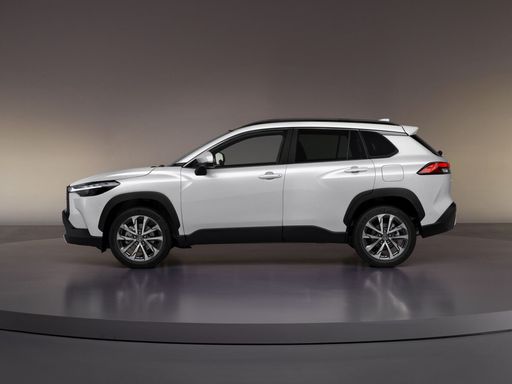
Toyota Corolla Cross

4.8 (6 Reviews)
rate
  • noticeably more power
  • substantially quicker 0–100 km/h
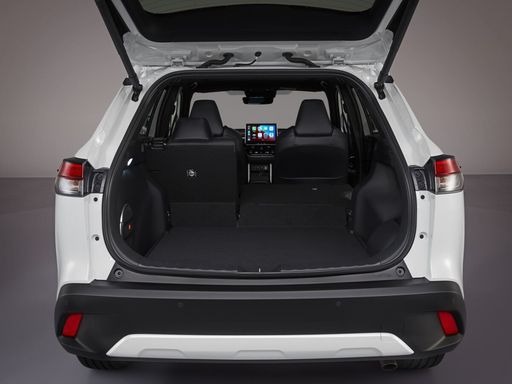
  • very slightly more trunk space
details

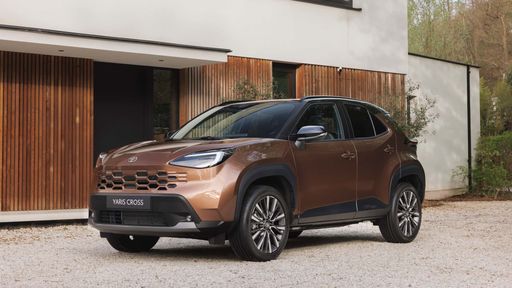
Toyota Yaris Cross

4.3 (14 Reviews)
rate
  • noticeably cheaper
  • very slightly more efficient
  • slightly lighter
details

All details on performance, efficiency, range and trunk space can be found in the technical comparison below – including user reviews for both models.

By Achim Sedelmaier

Corolla Cross

Toyota Corolla Cross vs Toyota Yaris Cross: the right hybrid SUV for your life

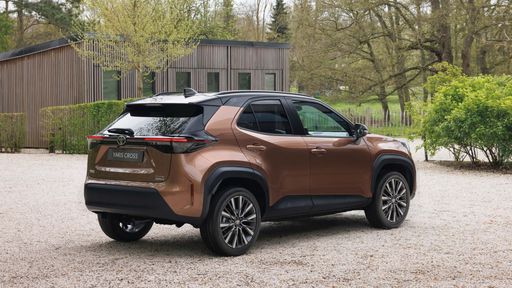
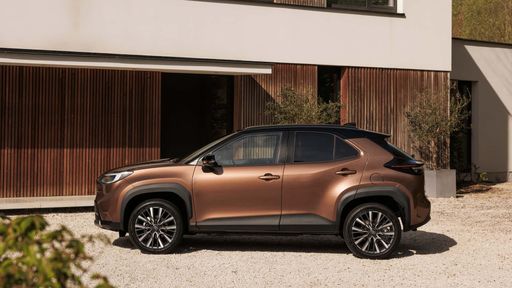
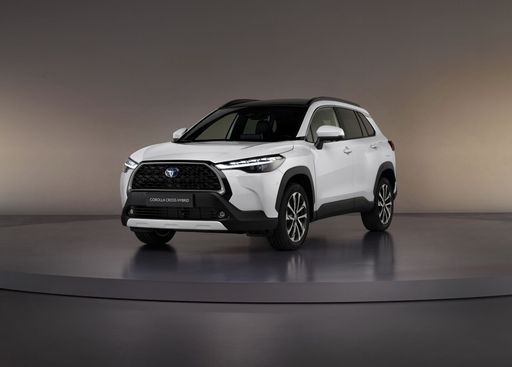
Toyota Corolla Cross and Toyota Yaris Cross are cut from the same sensible-hybrid cloth, but they serve different needs. In this direct Toyota Corolla Cross VS Toyota Yaris Cross matchup, size, character and budget pull you in different directions. The Corolla Cross feels like a calm, grown‑up compact SUV that takes the stress out of longer trips. The Yaris Cross plays the urban ace: smaller, keener to park, and easier to justify on price while staying impressively frugal. What follows focuses on how each one actually fits into daily life rather than spec-sheet bragging rights.
Yaris Cross

Driving feel and refinement

On the road, the Corolla Cross moves with a relaxed confidence that comes from a stronger hybrid and a smoother four‑cylinder. It merges and overtakes with less fuss, and at a cruise it settles into a quieter, more grown-up gait. The Yaris Cross feels nippy and willing in town, but when you ask for full effort its three‑cylinder and e‑CVT get more vocal. Ride comfort also tilts toward the Corolla Cross, which stays more composed on battered motorways, while the Yaris Cross can fidget over sharp edges, especially on larger wheels. Neither chases sportiness, yet both are secure and predictable—choose Corolla Cross for serenity, Yaris Cross for light-footed responses.

Corolla Cross

Space and everyday practicality

In everyday use, space is where the Corolla Cross quietly earns its keep. The rear bench offers more legroom and an easier entry, making school runs and adult passengers simpler, even if it’s not palatial. The Yaris Cross’s back seats are fine for kids and short hops, but taller friends will notice the tighter knee room and smaller door openings. For luggage, the Corolla Cross carries a bit more, though its folded-seat floor isn’t perfectly flat, while the Yaris Cross counters with a handy adjustable load floor and neat organization. Both take child seats easily and offer an AWD‑i option, but note that all-wheel drive trims in the Yaris Cross eat into boot space more noticeably.

Yaris Cross

Cabin feel and tech

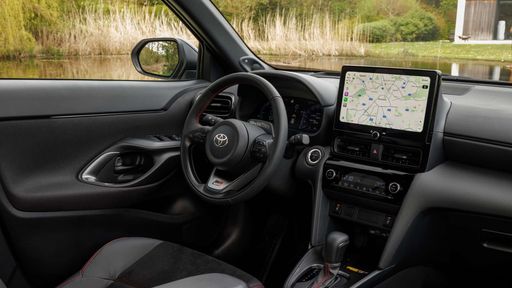
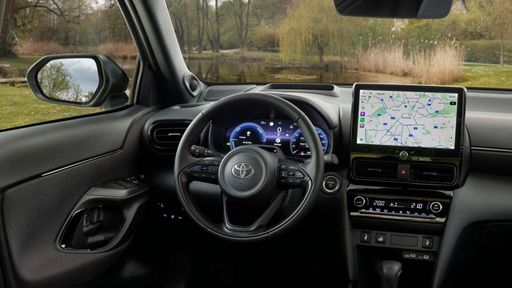
Cabin feel reflects the class gap. The Corolla Cross looks and feels a size up, with broader surfaces, quieter road manners and larger, clearer screens that make long stints easier. It’s more robust than plush, but the perceived quality and noise isolation still edge the smaller car. The Yaris Cross keeps controls simple and visibility good up front, yet harder plastics are more apparent and thick rear pillars mean you rely on the camera more in tight spots. Both serve up modern smartphone integration and over‑the‑air updates; think Corolla Cross for a calmer, more expansive ambience, Yaris Cross for straightforward, get‑in‑and‑go usability.

Corolla Cross

City manners and running costs

In the city, the Yaris Cross is in its element: tiny footprint, easy steering, and a hybrid that glides away silently so queues feel less tiring. The Corolla Cross is still friendly to park and peer out of, but its extra size simply asks for a bit more space on narrow streets. On running costs, both hybrids are outstandingly efficient, though the Yaris Cross tends to sip a touch less in stop‑start driving and costs less to get into. Stretch the distance and the Corolla Cross holds its economy well while feeling more settled and hushed. Either way, Toyota’s long, service‑linked warranty program adds welcome peace of mind for cost‑conscious buyers.

Yaris Cross

Who should buy which?

Choose the Corolla Cross if your week mixes school runs with regular motorway miles, you carry adults in the back, or you simply want a calmer, more substantial drive. Choose the Yaris Cross if your life is mostly urban, you park in tight spots, and you value an easygoing hybrid that keeps costs in check. Both offer optional AWD‑i for extra traction at low speeds, but the packaging compromises hit the Yaris Cross’s boot harder, so think carefully if you travel packed. If you prioritize refinement and long‑haul comfort, the Corolla Cross feels the safer bet; if agility, price and parking take precedence, the Yaris Cross is the smarter match. With those priorities in mind, the technical comparison below shows how each car’s hybrid tune and packaging deliver these real‑world differences.

Here’s where it gets real: The technical differences in detail

Corolla Cross

Costs and Efficiency:

When it comes to price and running costs, the biggest differences usually appear. This is often where you see which car fits your budget better in the long run.

Toyota Yaris Cross is noticeably cheaper – starting at 23,700 £ , while the Toyota Corolla Cross costs 31,700 £ . That’s a price difference of around 8,014 £.

Fuel consumption also shows a difference: the Toyota Yaris Cross uses 4.5 L/100km and is very slightly more efficient than the Toyota Corolla Cross with 4.9 L/100km. The difference is about 0.4 L/100km.

Yaris Cross

Engine and Performance:

Under the bonnet, it becomes clear which model is tuned for sportiness and which one takes the lead when you hit the accelerator.

When it comes to engine power, the Toyota Corolla Cross offers noticeably more power – delivering 180 HP compared to 130 HP. That’s roughly 50 HP more horsepower.

When accelerating from 0 to 100 km/h, the Toyota Corolla Cross is substantially quicker – completing the sprint in 7.6 s, while the Toyota Yaris Cross takes 10.7 s. That’s about 3.1 s quicker.

Corolla Cross

Space and Everyday Use:

Whether family car or daily driver – which one offers more room, flexibility and comfort?

Both vehicles offer seating for 5 people.

In terms of curb weight, Toyota Yaris Cross is slightly lighter – 1,180 kg compared to 1,380 kg. The difference is around 200 kg.

Looking at boot space, the Toyota Corolla Cross offers very slightly more boot space – 425 L compared to 397 L. That’s a difference of about 28 L.

When it comes to payload, the Toyota Corolla Cross carries marginally more – 560 kg compared to 510 kg. That’s a difference of about 50 kg.

Who wins the race in the data check?

The Toyota Corolla Cross stands well ahead of its rival in the objective data comparison.
This result only shows which model scores more points on paper – not which of the two cars feels right for you.

from £31,700
Corolla Cross

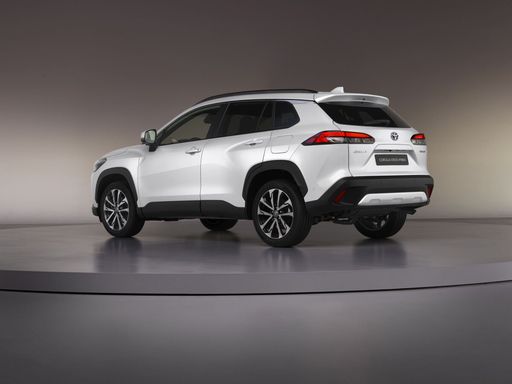
Toyota Corolla Cross

  • Engine Type : Full Hybrid
  • Transmission : Automatic
  • Drive Type : Front-Wheel Drive, All-Wheel Drive
  • Power HP : 140 - 180 HP
  • Consumption L/100km : 4.9 - 5.3 L/100km
Toyota Corolla Cross
Toyota Yaris Cross

Costs and Consumption

View detailed analysis

Engine and Performance

View detailed analysis

Dimensions and Body

View detailed analysis

Toyota Corolla Cross

The Toyota Corolla Cross is a compact crossover that blends the practicality and reliability Toyota is known for with a comfortable, easygoing driving experience. It offers a roomy interior and sensible features that make it a strong choice for daily commuting and family outings.

details

Toyota Yaris Cross

The Toyota Yaris Cross blends the maneuverability of a small hatch with the higher driving position and practicality of a crossover, wrapped in Toyota's dependable build quality. It suits urban buyers who need easy parking, flexible cargo space and a comfortable, economical daily driver.

details
Toyota Corolla Cross
Toyota Yaris Cross

Costs and Consumption

Price
31,700 - 41,900 £
Price
23,700 - 34,300 £
Consumption L/100km
4.9 - 5.3 L/100km
Consumption L/100km
4.5 - 4.8 L/100km
Consumption kWh/100km
-
Consumption kWh/100km
-
Electric Range
-
Electric Range
-
Battery Capacity
-
Battery Capacity
-
co2
112 - 120 g/km
co2
101 - 108 g/km
Fuel tank capacity
-
Fuel tank capacity
-

Dimensions and Body

Body Type
SUV
Body Type
SUV
Seats
5
Seats
5
Doors
-
Doors
-
Curb weight
1,380 - 1,500 kg
Curb weight
1,180 - 1,290 kg
Trunk capacity
414 - 425 L
Trunk capacity
320 - 397 L
Length
-
Length
-
Width
1,825 mm
Width
1,765 mm
Height
-
Height
-
Max trunk capacity
-
Max trunk capacity
-
Payload
515 - 560 kg
Payload
485 - 510 kg

Engine and Performance

Engine Type
Full Hybrid
Engine Type
Full Hybrid
Transmission
Automatic
Transmission
Automatic
Transmission Detail
CVT
Transmission Detail
CVT
Drive Type
Front-Wheel Drive, All-Wheel Drive
Drive Type
Front-Wheel Drive, All-Wheel Drive
Power HP
140 - 180 HP
Power HP
116 - 130 HP
Acceleration 0-100km/h
7.6 - 10 s
Acceleration 0-100km/h
10.7 - 11.3 s
Max Speed
-
Max Speed
-
Torque
-
Torque
-
Number of Cylinders
4
Number of Cylinders
3
Power kW
103 - 132 kW
Power kW
85 - 96 kW
Engine capacity
1,798 - 1,987 cm3
Engine capacity
1,490 cm3

General

Model Year
2025
Model Year
2026
CO2 Efficiency Class
C, D
CO2 Efficiency Class
C
Brand
Toyota
Brand
Toyota
DriveDuel uses data analysis and artificial intelligence to evaluate vehicle data and create content. Content is regularly reviewed and improved. The displayed prices are estimates based on German list prices, adjusted to the respective country’s VAT. Country-specific registration taxes are not included. This information is not legally binding.