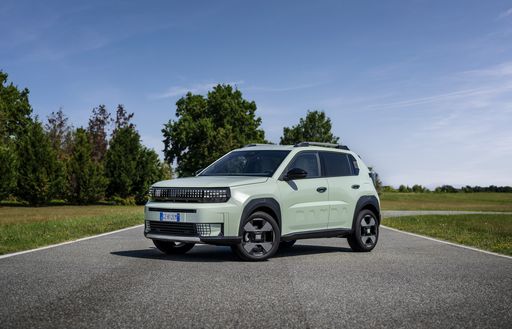
VS

Toyota Yaris vs Fiat Grande Panda comparison

Compare performance (280 HP vs 113 HP), boot space and price (21,900 £ vs 16,300 £ ) at a glance. Find out which car is the better choice for you – Toyota Yaris or Fiat Grande Panda?

Toyota Yaris vs Fiat Grande Panda: Key differences

Toyota Yaris

4 (7 Reviews)
rate
  • considerably more power
  • noticeably more efficient
  • considerably quicker 0–100 km/h
  • moderately lighter
details

Fiat Grande Panda

4.1 (2 Reviews)
rate
  • visibly cheaper
  • noticeably more trunk space
details

All details on performance, efficiency, range and trunk space can be found in the technical comparison below – including user reviews for both models.

By Achim Sedelmaier

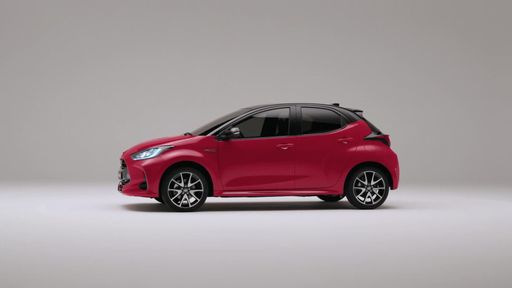
Yaris

Overview: Toyota Yaris VS Fiat Grande Panda — two small cars, different priorities

Toyota Yaris VS Fiat Grande Panda sets up a clear choice between frugality and everyday space: the Toyota Yaris pushes hybrid efficiency, safety tech and city agility, while the Fiat Grande Panda emphasizes cabin practicality, luggage room and a friendlier price. The Toyota Yaris feels engineered to minimise running costs and stress in daily traffic, whereas the Fiat Grande Panda is designed to swallow shopping bags, strollers and weekend loads without drama. Toyota Yaris buyers get more driver aids and a modern infotainment update; Fiat Grande Panda buyers get basic, usable features and clever packaging. Those differences aren’t academic — they shape who will be happiest behind the wheel day after day.
Grande Panda

Character and driving feel

Toyota Yaris and Fiat Grande Panda drive with different personalities: the Toyota Yaris is lively in town, light on its feet and often able to run short stretches on electric power, while the Fiat Grande Panda prefers a comfort-first, forgiving ride that masks bumps and encourages relaxed driving. The Toyota Yaris trades outright refinement at full throttle for low-speed smoothness and nimble handling; the Fiat Grande Panda rewards a gentler right foot and feels more conventional rather than sporty. In traffic the Toyota Yaris feels more modern and efficient; on winding secondary roads the Fiat Grande Panda’s setup is comfortable but never engaging. Choose the Toyota Yaris if you want urban agility and crisp steering, pick the Fiat Grande Panda if you value a composed, easy-going character on everyday routes.

Yaris

Comfort and long-distance behaviour

On longer runs Toyota Yaris and Fiat Grande Panda reveal different compromises: the Toyota Yaris stays stable and safe at speed but its small rear space and the hybrid’s sound under load can become fatiguing on extended motorway hauls, while the Fiat Grande Panda offers roomier seats and a more relaxed posture that make longer trips more tolerable for passengers. The Fiat Grande Panda’s larger luggage area and more practical rear seat layout mean you can pack for a weekend without constant reorganisation, whereas the Toyota Yaris forces you to be selective with luggage and rear passengers. Noise and drivetrain character differ too — Toyota Yaris can be quiet in city driving but vocal under heavy acceleration; Fiat Grande Panda can be steady but may run higher consumption or noise at sustained motorway speeds. If your driving is mostly long runs with luggage and adults aboard, the Fiat Grande Panda tends to be the easier companion; if you prioritise low running costs on mixed routes, the Toyota Yaris will still appeal despite its compromises.

Grande Panda

City friendliness and everyday usability

Both Toyota Yaris and Fiat Grande Panda are built for urban life, but they solve city problems differently: the Toyota Yaris excels at stop-and-go efficiency, compact footprint and modern parking aids that simplify tight maneuvers, while the Fiat Grande Panda doubles down on practical touches — roomy boot loading, useful hooks, and an intentionally simple control layout that makes daily tasks quicker. Toyota Yaris owners benefit from hybrid EV moments that reduce fuel bills and make short hops pleasantly quiet, whereas Fiat Grande Panda owners get the peace of mind of more usable luggage space and easier rear-seat access for kids. The Fiat Grande Panda’s lower entry price and everyday practicality make errands and family chores less fiddly; the Toyota Yaris makes commuting cheaper and less stressful. For city-focused buyers who also haul a lot, the Fiat Grande Panda will feel more sensible; for commuters chasing economy and assistance tech, the Toyota Yaris has the edge.

Cabin feel, perceived quality and practicality

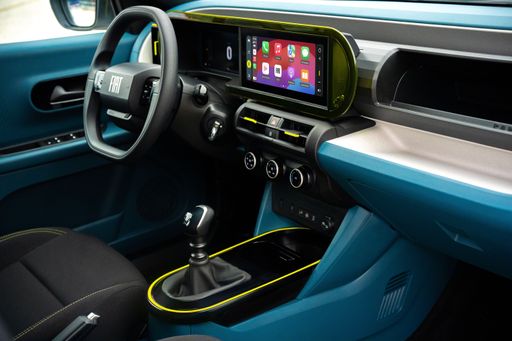
Step inside the Toyota Yaris or the Fiat Grande Panda and the contrast is immediate: Toyota Yaris presents a cleaner, more up-to-date infotainment and safety package but still uses a fair amount of hard surfaces and modest door storage, while the Fiat Grande Panda accepts a simpler material finish in exchange for clever storage, a larger practical boot and some charming design touches. The Toyota Yaris feels more tech-forward and safer on paper, but the Fiat Grande Panda’s layout shows how much thought went into everyday usability — pockets, hooks and the option of an integrated charging cable on electrified variants. Visibility quirks affect both cars thanks to thick pillars, but the Toyota Yaris offsets that with better camera and driver aids in higher trims. If perceived refinement matters to you, Toyota Yaris reads as the more modern cabin; if tactile practicality and load-carrying matter more, Fiat Grande Panda wins on everyday usefulness.

Buyer fit: who should choose which car

Choosing between Toyota Yaris and Fiat Grande Panda comes down to lifestyle rather than specs: the Toyota Yaris suits commuters and city drivers who prioritise the lowest running costs, modern assistance systems and a compact, efficient package. The Fiat Grande Panda fits buyers who want maximum practicality on a tight budget — more boot space, easier daily loading and a straightforward, comfortable cabin for families or weekend gear. Expect to pay more up front for the Toyota Yaris but save on fuel over time; expect the Fiat Grande Panda to give you more usable space and a lower purchase price while accepting modestly lower refinement at speed. If you want numbers and exact trade-offs to map these choices to your mileage and budget, the technical comparison that follows will show where those real-world consequences come from.

Here’s where it gets real: The technical differences in detail

Yaris

Costs and Efficiency:

Price and efficiency are key factors when choosing a car – and this is often where the real differences emerge.

Fiat Grande Panda is visibly cheaper – starting at 16,300 £ , while the Toyota Yaris costs 21,900 £ . That’s a price difference of around 5,580 £.

Fuel consumption also shows a difference: the Toyota Yaris uses 3.8 L/100km and is noticeably more efficient than the Fiat Grande Panda with 5.1 L/100km. The difference is about 1.3 L/100km.

Grande Panda

Engine and Performance:

Power, torque and acceleration say a lot about how a car feels on the road. This is where you see which model delivers more driving dynamics.

When it comes to engine power, the Toyota Yaris offers considerably more power – delivering 280 HP compared to 113 HP. That’s roughly 167 HP more horsepower.

When accelerating from 0 to 100 km/h, the Toyota Yaris is considerably quicker – completing the sprint in 5.5 s, while the Fiat Grande Panda takes 11.2 s. That’s about 5.7 s quicker.

There’s also a difference in torque: the Toyota Yaris delivers clearly more torque with 390 Nm compared to 205 Nm. That’s about 185 Nm more.

Yaris

Space and Everyday Use:

Beyond pure performance, interior space and usability matter most in daily life. This is where you see which car is more practical and versatile.

Both vehicles offer seating for 5 people.

In terms of curb weight, Toyota Yaris is moderately lighter – 1,090 kg compared to 1,295 kg. The difference is around 205 kg.

Looking at boot space, the Fiat Grande Panda offers noticeably more boot space – 412 L compared to 286 L. That’s a difference of about 126 L.

When it comes to payload, the Toyota Yaris carries moderately more – 525 kg compared to 453 kg. That’s a difference of about 72 kg.

Who wins the race in the data check?

The Toyota Yaris holds a decisive overall lead in the objective data comparison.
This result only shows which model scores more points on paper – not which of the two cars feels right for you.

from £21,900
Yaris

Toyota Yaris

  • Engine Type Full Hybrid, Petrol
  • Transmission Automatic, Manuel
  • Drive Type Front-Wheel Drive, All-Wheel Drive
  • Power HP 116 - 280 HP
  • Consumption L/100km 3.8 - 8.7 L/100km
Toyota Yaris
Fiat Grande Panda

Costs and Consumption

View detailed analysis

Engine and Performance

View detailed analysis

Dimensions and Body

View detailed analysis

Toyota Yaris

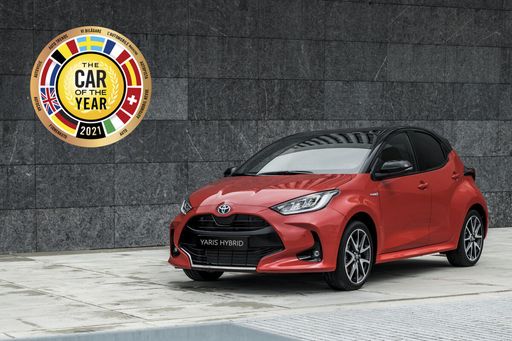
The Yaris is a compact hatchback that blends everyday practicality with Toyota’s long-standing reputation for reliability, making it easy to live with in city traffic. Its nimble handling and sensible interior make the Yaris a smart choice for drivers who want straightforward, fuss-free transport.

details

Fiat Grande Panda

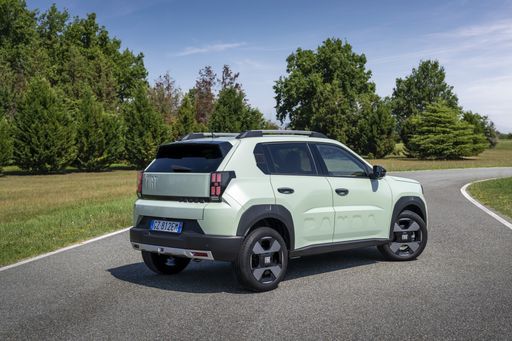
The Grande Panda is a delightful blend of practicality and charm, making it a popular choice for urban dwellers and families alike. With its compact design, the car navigates city streets effortlessly while providing ample interior space for passengers and cargo. Its quirky styling and user-friendly features make the Grande Panda not just a mode of transport, but a fun driving experience.

details
Toyota Yaris
Fiat Grande Panda

Costs and Consumption

Price
21,900 - 40,800 £
Price
16,300 - 25,700 £
Consumption L/100km
3.8 - 8.7 L/100km
Consumption L/100km
5.1 - 5.7 L/100km
Consumption kWh/100km
-
Consumption kWh/100km
16.8 kWh/100km
Electric Range
-
Electric Range
320 km
Battery Capacity
-
Battery Capacity
-
co2
87 - 197 g/km
co2
0 - 131 g/km
Fuel tank capacity
-
Fuel tank capacity
-

Dimensions and Body

Body Type
Hatchback
Body Type
SUV
Seats
4 - 5
Seats
5
Doors
-
Doors
-
Curb weight
1,090 - 1,356 kg
Curb weight
1,295 - 1,554 kg
Trunk capacity
141 - 286 L
Trunk capacity
361 - 412 L
Length
-
Length
-
Width
1,745 - 1,805 mm
Width
1,763 mm
Height
-
Height
-
Max trunk capacity
-
Max trunk capacity
-
Payload
289 - 525 kg
Payload
353 - 453 kg

Engine and Performance

Engine Type
Full Hybrid, Petrol
Engine Type
Electric, Petrol MHEV, Petrol
Transmission
Automatic, Manuel
Transmission
Automatic, Manuel
Transmission Detail
CVT, Manual Gearbox
Transmission Detail
Reduction Gearbox, Dual-Clutch Automatic, Manual Gearbox
Drive Type
Front-Wheel Drive, All-Wheel Drive
Drive Type
Front-Wheel Drive
Power HP
116 - 280 HP
Power HP
100 - 113 HP
Acceleration 0-100km/h
5.5 - 9.7 s
Acceleration 0-100km/h
11.2 - 11.5 s
Max Speed
-
Max Speed
-
Torque
390 Nm
Torque
122 - 205 Nm
Number of Cylinders
3
Number of Cylinders
3
Power kW
85 - 206 kW
Power kW
74 - 83 kW
Engine capacity
1,490 - 1,618 cm3
Engine capacity
1,199 cm3

General

Model Year
2026
Model Year
2025
CO2 Efficiency Class
B, G
CO2 Efficiency Class
A, D
Brand
Toyota
Brand
Fiat
DriveDuel uses data analysis and artificial intelligence to evaluate vehicle data and create content. Content is regularly reviewed and improved. The displayed prices are estimates based on German list prices, adjusted to the respective country’s VAT. Country-specific registration taxes are not included. This information is not legally binding.