VS

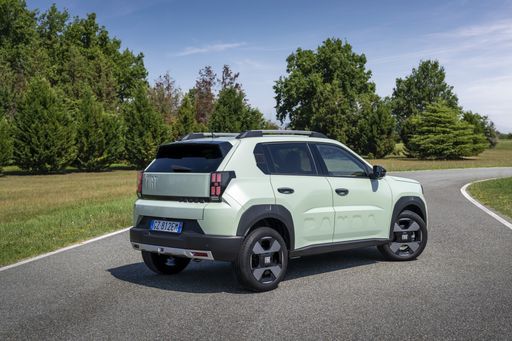
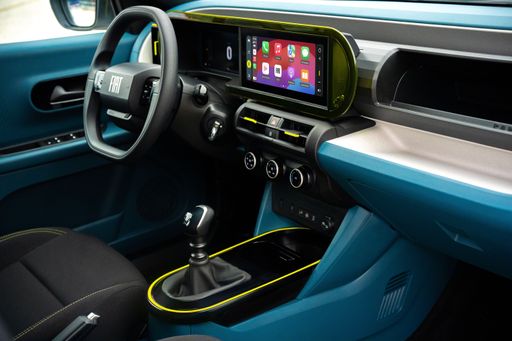
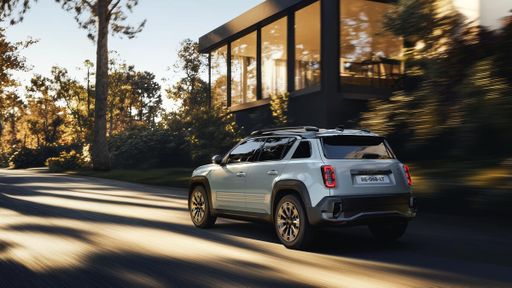
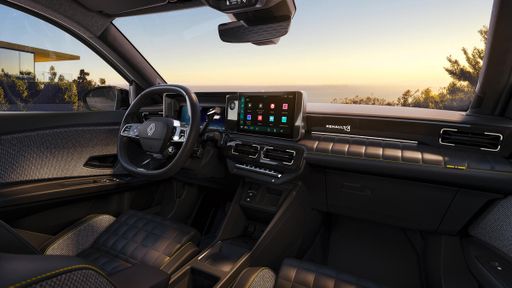
Fiat Grande Panda vs Renault R4 comparison

Compare performance (113 HP vs 150 HP), boot space and price (16,300 £ vs 27,300 £ ) at a glance. Find out which car is the better choice for you – Fiat Grande Panda or Renault R4?

Fiat Grande Panda vs Renault R4: Key differences

Fiat Grande Panda

3.8 (1 Reviews)
rate
  • considerably cheaper
  • a bit lighter
details

Renault R4

5 (1 Reviews)
rate
  • markedly more power
  • slightly more efficient
  • noticeably more electric range
  • noticeably quicker 0–100 km/h
  • considerably more trunk space
details

By Achim Sedelmaier

Grande Panda

Fiat Grande Panda VS Renault R4: quick take for shoppers

Fiat Grande Panda VS Renault R4 frames an honest crossroad: a budget‑minded, utilitarian small car against a slightly more refined, roomy neo‑retro rival. The Fiat Grande Panda sells the idea of maximum everyday usefulness for less money, with a straightforward cabin and practical touches aimed squarely at city life. The Renault R4 leans into calm, comfortable cruising and a genuinely large, easy‑to‑use boot that changes the way you pack for weekends. This comparison focuses on how each car feels day‑to‑day—not just what their labels say—and which buyer will likely prefer which compromises.
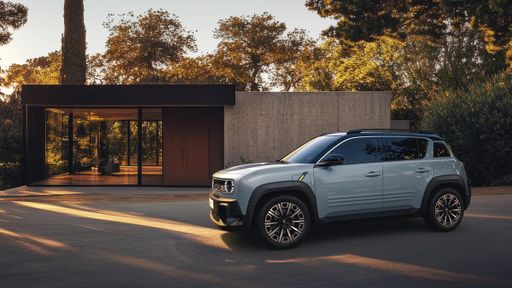
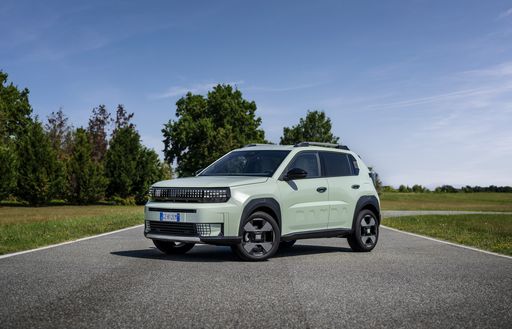
R4

Character and driving feel

The Fiat Grande Panda presents itself as lively and economical around town, with light steering and a forgiving suspension that makes daily traffic less stressful. The Renault R4 feels more composed at speed, with a quieter, steadier demeanour that rewards motorway miles and relaxed country runs. Where the Grande Panda can feel a touch buzzy under load or at higher speeds, the Renault R4 puts emphasis on calmness and a stronger shove when you need it. Choosing between them is really about temperament: choose the Panda if you want sprightly, budget‑aware urban manners; pick the R4 if you prefer a smoother, more effortless cruiser.

Grande Panda

Comfort and long‑distance behavior

For short hops and stop‑and‑go commutes the Fiat Grande Panda’s softer city setup is comfortable and welcoming, but it reveals louder consumption and more drivetrain strain on long motorway stints. The Renault R4 is the better long‑distance companion by feel — generally quieter and less tiring over sustained speeds — even if it isn’t a high‑speed express car. Both rear seats are more suited to kids or shorter adults, but the Panda’s upright bench can feel cramped sooner while the R4’s lower seat gives a cocooned, slightly firmer impression. In practice, families that do occasional highways will appreciate the R4’s subdued cruise; urban commuters who rarely leave town will value the Panda’s city‑tuned ride.

R4

Practicality and everyday usability

This is where the Renault R4 clearly stretches the envelope: its low loading sill and large, square boot make grocery runs, strollers and weekend gear much easier to manage than in the Fiat Grande Panda. The Fiat Grande Panda, however, uses clever interior packaging and thoughtful small details to deliver impressive usable space for its footprint, so it often surprises buyers with how much fits inside. The trade‑off is cost: the Grande Panda undercuts the R4 on price and keeps ownership cheaper, whereas the R4 buys you convenience and carrying flexibility at a higher outlay. If cargo access and effortless loading are priorities, the Renault R4 is the smarter pick; if initial cost and clever space use matter more, the Fiat Grande Panda stays compelling.

Grande Panda

City friendliness and daily controls

Both cars are strong city performers, yet they approach urban life differently: the Fiat Grande Panda scores with simple, tactile controls and very familiar ergonomics that reduce fuss when you’re rushing about. The Renault R4 brings modern infotainment and optional one‑pedal driving that can make stop‑start traffic less tiring and navigation easier with integrated services. Parking and visibility are mixed for both—tight pillars and camera resolution can frustrate in either car—so maneuverability and driver aids matter more than raw dimensions. In short, choose the Panda for no‑nonsense, budget‑centric urbanity; choose the R4 if you want technology and regeneration features that smooth everyday driving.

R4

Buyer fit and how to decide before the specs

If your checklist begins with price, straightforward operation and surprising interior cleverness, the Fiat Grande Panda will likely feel like the sensible, less complicated choice. If your priorities tilt toward a relaxed ride, the most usable bootspace and a polished infotainment experience, the Renault R4 will feel more grown‑up and convenient despite its higher cost. Both cars have compromises in rear‑seat comfort and long‑distance range characteristics, but they point at different lifestyles: Panda for pragmatic urban families and budget‑minded commuters, R4 for those who value comfort, luggage flexibility and a quieter highway experience. Read on to the technical comparison to see how range, power, charging and boot measurements concretely map to these real‑world differences.

Here’s where it gets real: The technical differences in detail

Grande Panda

Costs and Efficiency:

Price and efficiency are often the first things buyers look at. Here it becomes clear which model has the long-term edge – whether at the pump, the plug, or in purchase price.

Fiat Grande Panda is considerably cheaper – starting at 16,300 £ , while the Renault R4 costs 27,300 £ . That’s a price difference of around 11,048 £.

In terms of energy consumption, the Renault R4 is slightly more efficient: consuming 15.1 kWh/100km compared to 16.8 kWh/100km for the Fiat Grande Panda. That’s a difference of about 1.7 kWh/100km.

As for electric range, the Renault R4 offers noticeably more range – reaching up to 409 km, about 89 km more than the Fiat Grande Panda.

R4

Engine and Performance:

Power, torque and acceleration are the classic benchmarks for car enthusiasts – and here, some clear differences start to show.

When it comes to engine power, the Renault R4 offers markedly more power – delivering 150 HP compared to 113 HP. That’s roughly 37 HP more horsepower.

When accelerating from 0 to 100 km/h, the Renault R4 is noticeably quicker – completing the sprint in 8.2 s, while the Fiat Grande Panda takes 11.2 s. That’s about 3 s quicker.

There’s also a difference in torque: the Renault R4 delivers a bit more torque with 245 Nm compared to 205 Nm. That’s about 40 Nm more.

Grande Panda

Space and Everyday Use:

Whether family car or daily driver – which one offers more room, flexibility and comfort?

Both vehicles offer seating for 5 people.

In terms of curb weight, Fiat Grande Panda is a bit lighter – 1,295 kg compared to 1,510 kg. The difference is around 215 kg.

Looking at boot space, the Renault R4 offers considerably more boot space – 1,045 L compared to 412 L. That’s a difference of about 633 L.

When it comes to payload, the Fiat Grande Panda carries very slightly more – 453 kg compared to 443 kg. That’s a difference of about 10 kg.

Who wins the race in the data check?

The Renault R4 is decisively ahead in the objective data comparison.
This result only shows which model scores more points on paper – not which of the two cars feels right for you.

from £27,300
R4

Renault R4

  • Engine Type Electric
  • Transmission Automatic
  • Drive Type Front-Wheel Drive
  • Power HP 150 HP
  • Consumption kWh/100km 15.1 kWh/100km
  • Electric Range 409 km
Fiat Grande Panda
Renault R4

Costs and Consumption

View detailed analysis

Engine and Performance

View detailed analysis

Dimensions and Body

View detailed analysis

Fiat Grande Panda

The Grande Panda is a delightful blend of practicality and charm, making it a popular choice for urban dwellers and families alike. With its compact design, the car navigates city streets effortlessly while providing ample interior space for passengers and cargo. Its quirky styling and user-friendly features make the Grande Panda not just a mode of transport, but a fun driving experience.

details

Renault R4

The Renault R4, affectionately known as the "R4," is a quintessential symbol of French automotive simplicity and practicality. This classic compact car, originally introduced in the early 1960s, won over numerous enthusiasts with its versatile design and dependable performance. Its no-frills charm and robust build made it a beloved choice for rural drivers and city dwellers alike, cementing its status as an iconic piece of automotive history.

details
Fiat Grande Panda
Renault R4

Costs and Consumption

Price
16,300 - 25,700 £
Price
27,300 - 32,800 £
Consumption L/100km
5.1 - 5.7 L/100km
Consumption L/100km
-
Consumption kWh/100km
16.8 kWh/100km
Consumption kWh/100km
15.1 kWh/100km
Electric Range
320 km
Electric Range
409 km
Battery Capacity
-
Battery Capacity
-
co2
0 - 131 g/km
co2
0 g/km
Fuel tank capacity
-
Fuel tank capacity
-

Dimensions and Body

Body Type
SUV
Body Type
SUV
Seats
5
Seats
2 - 5
Doors
-
Doors
-
Curb weight
1,295 - 1,554 kg
Curb weight
1,510 - 1,537 kg
Trunk capacity
361 - 412 L
Trunk capacity
420 - 1,045 L
Length
-
Length
-
Width
1,763 mm
Width
1,808 mm
Height
-
Height
-
Max trunk capacity
-
Max trunk capacity
-
Payload
353 - 453 kg
Payload
385 - 443 kg

Engine and Performance

Engine Type
Electric, Petrol MHEV, Petrol
Engine Type
Electric
Transmission
Automatic, Manuel
Transmission
Automatic
Transmission Detail
Reduction Gearbox, Dual-Clutch Automatic, Manual Gearbox
Transmission Detail
Reduction Gearbox
Drive Type
Front-Wheel Drive
Drive Type
Front-Wheel Drive
Power HP
100 - 113 HP
Power HP
150 HP
Acceleration 0-100km/h
11.2 - 11.5 s
Acceleration 0-100km/h
8.2 s
Max Speed
-
Max Speed
-
Torque
122 - 205 Nm
Torque
245 Nm
Number of Cylinders
3
Number of Cylinders
-
Power kW
74 - 83 kW
Power kW
110 kW
Engine capacity
1,199 cm3
Engine capacity
-

General

Model Year
2025
Model Year
2,025 - 2,026
CO2 Efficiency Class
A, D
CO2 Efficiency Class
A
Brand
Fiat
Brand
Renault
DriveDuel uses data analysis and artificial intelligence to evaluate vehicle data and create content. Content is regularly reviewed and improved. The displayed prices are estimates based on German list prices, adjusted to the respective country’s VAT. Country-specific registration taxes are not included. This information is not legally binding.