VS

Toyota Aygo vs Toyota Yaris comparison

Compare performance (116 HP vs 280 HP), boot space and price (18,800 £ vs 21,900 £ ) at a glance. Find out which car is the better choice for you – Toyota Aygo or Toyota Yaris?

Toyota Aygo vs Toyota Yaris: Key differences

Toyota Aygo

5 (1 Reviews)
rate
  • somewhat cheaper
  • barely more efficient
details

Toyota Yaris

4.1 (4 Reviews)
rate
  • significantly more power
  • considerably quicker 0–100 km/h
  • slightly more trunk space
details

All details on performance, efficiency, range and trunk space can be found in the technical comparison below – including user reviews for both models.

By Achim Sedelmaier

Aygo

Toyota Aygo vs Toyota Yaris: which suits your everyday?

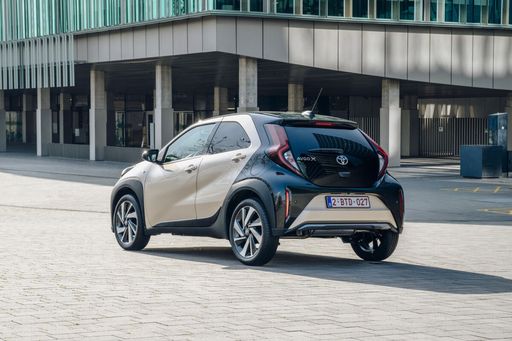
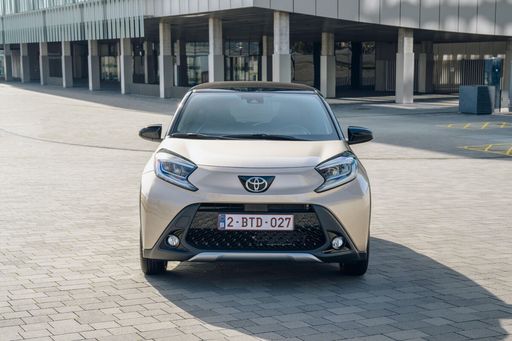
Toyota Aygo VS Toyota Yaris pits two efficient small Toyotas with very different daily personalities against each other. The Toyota Aygo is a city‑first micro crossover that thrives in tight streets and quick errands. The Toyota Yaris is a more grown‑up small hatch that feels calmer beyond the ring road and is easier to live with if you carry people and bags more often. Both lean on Toyota’s easygoing hybrid ethos, but they deliver it in distinct ways that matter in real life.
Yaris

On the road: calm commuter or cheeky city specialist

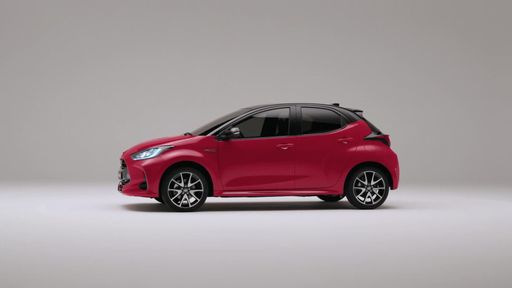
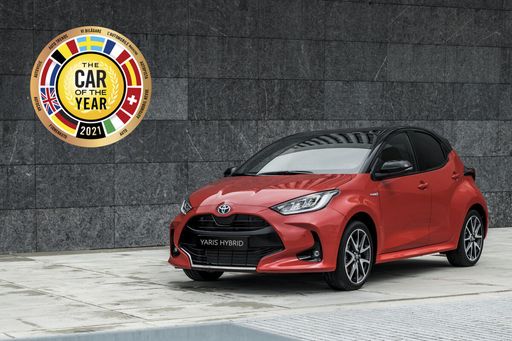
The Toyota Aygo feels light, eager and instantly at home in traffic, darting into gaps with featherlight steering and stress‑free automatic responses. The Toyota Yaris is the steadier partner: it rides with more composure on rougher stretches and has stronger pull when you need a confident overtake or a quick merge. Push either and you’ll still hear that familiar hybrid hum, but the Aygo’s shorter stance and firmer edge make it busier at speed, while the Yaris settles down more cleanly on a long run. Choose the Toyota Aygo if you want sprightly, point‑and‑shoot urban energy; choose the Toyota Yaris if you value a calmer, more relaxed commute.

Aygo

Space and practicality: small compromises, different limits

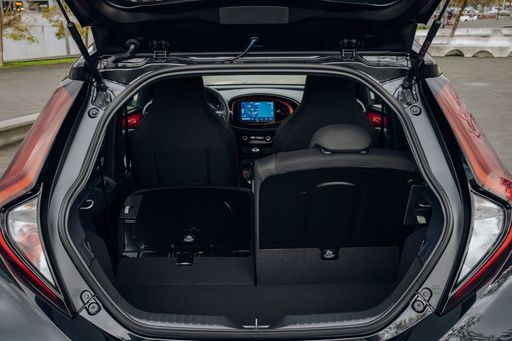
The Toyota Aygo prioritizes tiny‑car agility, and you feel that in the snug back seat and the modest boot that’s fine for a weekly shop or a couple of soft bags. The Toyota Yaris isn’t a family hauler, yet it gives you a more usable luggage area and an extra belted spot in the rear for those occasional lifts. Installing child seats is less fiddly in the Yaris thanks to wider openings, while the Aygo’s smaller doors and tighter quarters demand more patience. If most journeys are two‑up with light luggage, the Toyota Aygo fits neatly; if you juggle friends, school runs or bulkier errands, the Toyota Yaris makes life easier.

Yaris

Cabin feel and tech: maturity versus simplicity

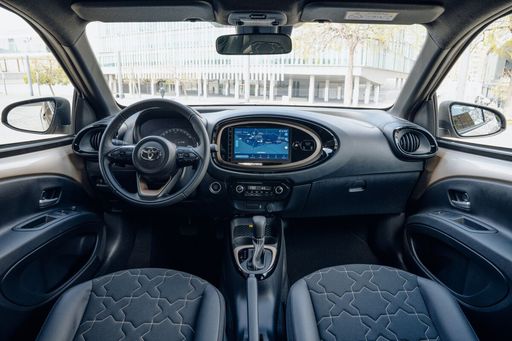
The Toyota Aygo’s cabin is straightforward and robust, with a high, confident seating position and an interface that keeps essentials obvious. The Toyota Yaris feels a notch more mature in materials and offers richer infotainment options, with snappier responses and more scope to customize displays. Both give you modern phone integration and the latest Toyota safety assists, but the Aygo’s playful vibe contrasts with the Yaris’s more businesslike layout. Rear visibility is a shared weak spot due to chunky pillars, though the Yaris’s camera and wider glass make parking a touch less guessy.

Aygo

City life and running costs: where each one saves you effort

Threading traffic and nailing tight parking spots come easiest in the Toyota Aygo, thanks to its tiny footprint, tight turning circle and standard automatic smoothness. The Toyota Yaris still parks easily, yet needs a fraction more space; it pays you back with a calmer ride over speed humps and a stronger electric glide in slow‑moving queues. Both are frugal hybrids that cut fuel bills hard, with the Aygo typically eking out a little more efficiency in dense urban use. Upfront, the Toyota Aygo usually undercuts the Toyota Yaris on price, while the Yaris’s broader ability can return its value if your routes vary.

Buyer fit: match the car to your miles

If your world is narrow streets, short hops and stress‑free parking, the Toyota Aygo is the right tool: fun, super thrifty and brilliantly easy to place. If your week mixes cross‑town errands with regular motorway stints and the odd extra passenger, the Toyota Yaris is the more comfortable and versatile choice. Think of the Toyota Aygo as the specialist that nails the city brief, and the Toyota Yaris as the small all‑rounder that stretches further without fuss. From here, the specs underline these differences so you can confirm which set of trade‑offs fits your life best.

Here’s where it gets real: The technical differences in detail

Aygo

Costs and Efficiency:

Looking at overall running costs, both models reveal some interesting differences in everyday economy.

Toyota Aygo is somewhat cheaper – starting at 18,800 £ , while the Toyota Yaris costs 21,900 £ . That’s a price difference of around 3,009 £.

Fuel consumption also shows a difference: the Toyota Aygo uses 3.7 L/100km and is barely more efficient than the Toyota Yaris with 3.8 L/100km. The difference is about 0.1 L/100km.

Yaris

Engine and Performance:

Power, torque and acceleration are the classic benchmarks for car enthusiasts – and here, some clear differences start to show.

When it comes to engine power, the Toyota Yaris offers significantly more power – delivering 280 HP compared to 116 HP. That’s roughly 164 HP more horsepower.

When accelerating from 0 to 100 km/h, the Toyota Yaris is considerably quicker – completing the sprint in 5.5 s, while the Toyota Aygo takes 9.2 s. That’s about 3.7 s quicker.

There’s also a difference in torque: the Toyota Yaris delivers clearly more torque with 390 Nm compared to 120 Nm. That’s about 270 Nm more.

Aygo

Space and Everyday Use:

Whether family car or daily driver – which one offers more room, flexibility and comfort?

Seats: Toyota Yaris offers more seats – 5 vs 4.

Both models weigh roughly the same – around 1,090 kg.

Looking at boot space, the Toyota Yaris offers slightly more boot space – 286 L compared to 231 L. That’s a difference of about 55 L.

When it comes to payload, the Toyota Yaris carries moderately more – 525 kg compared to 420 kg. That’s a difference of about 105 kg.

Who wins the race in the data check?

The Toyota Yaris holds a decisive overall lead in the objective data comparison.
This result only shows which model scores more points on paper – not which of the two cars feels right for you.

from £21,900
Yaris

Toyota Yaris

  • Engine Type : Full Hybrid, Petrol
  • Transmission : Automatic, Manuel
  • Drive Type : Front-Wheel Drive, All-Wheel Drive
  • Power HP : 116 - 280 HP
  • Consumption L/100km : 3.8 - 8.7 L/100km
Toyota Aygo
Toyota Yaris

Costs and Consumption

View detailed analysis

Engine and Performance

View detailed analysis

Dimensions and Body

View detailed analysis

Toyota Aygo

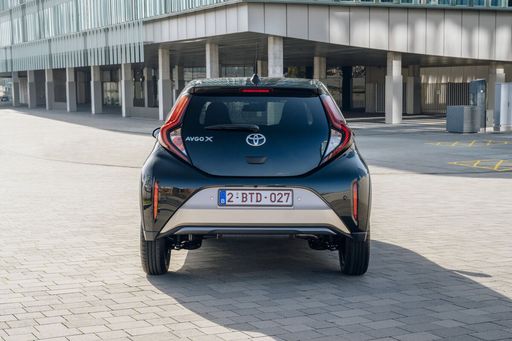
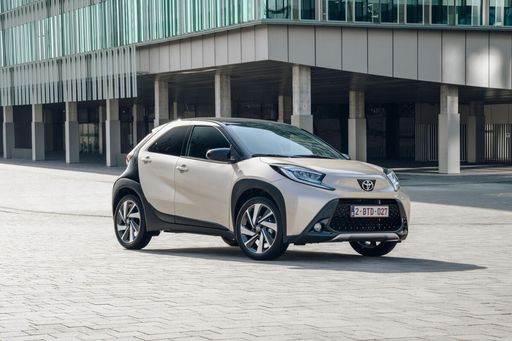
The Aygo is a cheeky city car that turns congested streets into a playground, with bold styling and sprightly manners that make parking a pleasure rather than a pain. Economical to run and surprisingly well equipped for its size, the Aygo is a smart choice for urban buyers who want personality without a premium price and a car that brings a smile to the daily commute.

details

Toyota Yaris

The Yaris is a compact hatchback that blends everyday practicality with Toyota’s long-standing reputation for reliability, making it easy to live with in city traffic. Its nimble handling and sensible interior make the Yaris a smart choice for drivers who want straightforward, fuss-free transport.

details
Toyota Aygo
Toyota Yaris

Costs and Consumption

Price
18,800 - 24,300 £
Price
21,900 - 40,800 £
Consumption L/100km
3.7 L/100km
Consumption L/100km
3.8 - 8.7 L/100km
Consumption kWh/100km
-
Consumption kWh/100km
-
Electric Range
-
Electric Range
-
Battery Capacity
-
Battery Capacity
-
co2
85 g/km
co2
87 - 197 g/km
Fuel tank capacity
-
Fuel tank capacity
-

Dimensions and Body

Body Type
SUV
Body Type
Hatchback
Seats
4
Seats
4 - 5
Doors
-
Doors
-
Curb weight
1,090 kg
Curb weight
1,090 - 1,356 kg
Trunk capacity
231 L
Trunk capacity
141 - 286 L
Length
-
Length
-
Width
1,740 mm
Width
1,745 - 1,805 mm
Height
-
Height
-
Max trunk capacity
-
Max trunk capacity
-
Payload
420 kg
Payload
289 - 525 kg

Engine and Performance

Engine Type
Full Hybrid
Engine Type
Full Hybrid, Petrol
Transmission
Automatic
Transmission
Automatic, Manuel
Transmission Detail
CVT
Transmission Detail
CVT, Manual Gearbox
Drive Type
Front-Wheel Drive
Drive Type
Front-Wheel Drive, All-Wheel Drive
Power HP
116 HP
Power HP
116 - 280 HP
Acceleration 0-100km/h
9.2 s
Acceleration 0-100km/h
5.5 - 9.7 s
Max Speed
-
Max Speed
-
Torque
120 Nm
Torque
390 Nm
Number of Cylinders
3
Number of Cylinders
3
Power kW
85 kW
Power kW
85 - 206 kW
Engine capacity
1,490 cm3
Engine capacity
1,490 - 1,618 cm3

General

Model Year
2025
Model Year
2026
CO2 Efficiency Class
B
CO2 Efficiency Class
B, G
Brand
Toyota
Brand
Toyota
DriveDuel uses data analysis and artificial intelligence to evaluate vehicle data and create content. Content is regularly reviewed and improved. The displayed prices are estimates based on German list prices, adjusted to the respective country’s VAT. Country-specific registration taxes are not included. This information is not legally binding.