VS

Honda Jazz vs Toyota Aygo comparison

Compare performance (122 HP vs 116 HP), boot space and price (22,200 £ vs 18,800 £ ) at a glance. Find out which car is the better choice for you – Honda Jazz or Toyota Aygo?

Honda Jazz vs Toyota Aygo: Key differences

Honda Jazz

4.5 (5 Reviews)
rate
  • marginally more power
  • clearly more trunk space
details

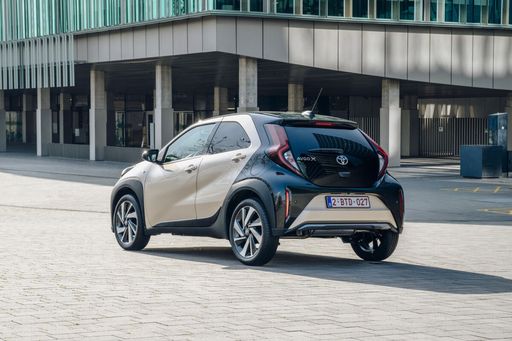
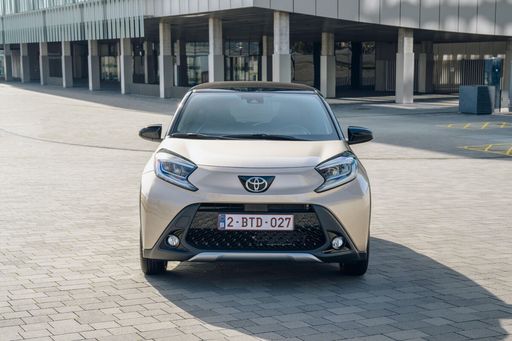
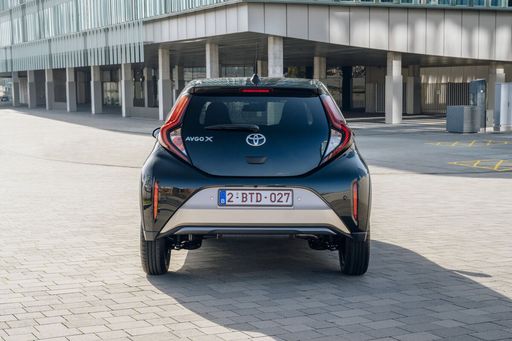
Toyota Aygo

5 (1 Reviews)
rate
  • a bit cheaper
  • clearly more efficient
  • barely quicker 0–100 km/h
  • moderately lighter
details

All details on performance, efficiency, range and trunk space can be found in the technical comparison below – including user reviews for both models.

By Achim Sedelmaier

Jazz

Honda Jazz vs Toyota Aygo: which small car suits your life?

Honda Jazz and Toyota Aygo represent two very different answers to the same problem: good urban transport. The Jazz plays the pragmatic, mini‑MPV card with a roomier cabin and clever seating, while the Aygo doubles down on tiny‑car agility and minimal running costs. That contrast is the theme of this comparison — one car prioritises everyday space and low stress, the other prioritises compactness and economy. Read on to see which trade‑offs matter most for your daily routine.
Aygo

Character and driving feel

The Honda Jazz feels cultured and composed, set up for comfortable cruising and predictable manners rather than sporty responses, while the Toyota Aygo feels light on its feet and eager to be hustled through traffic. Jazz owners report a calm, upright driving posture and a drivetrain that rewards steady throttle use, whereas Aygo drivers praise instant manoeuvrability and a gearbox that makes stop‑and‑go trivial. On faster roads the Jazz can sound and work harder under aggressive acceleration but still feels more settled, whereas the Aygo is at its happiest in short hops and tight urban loops but becomes louder and choppier on longer runs. Both are easy to drive, but they reward different styles: Jazz for relaxed practicality, Aygo for sharp urban nimbleness.

Jazz

Comfort and cabin feel

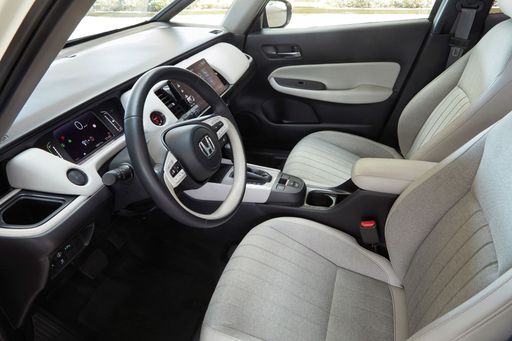
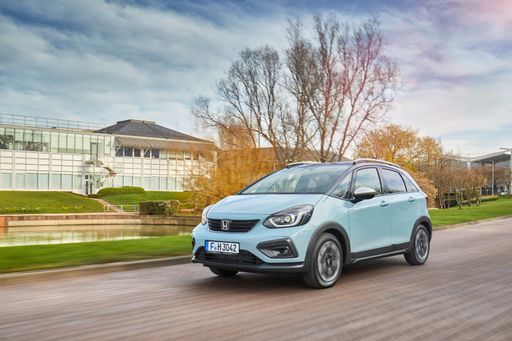
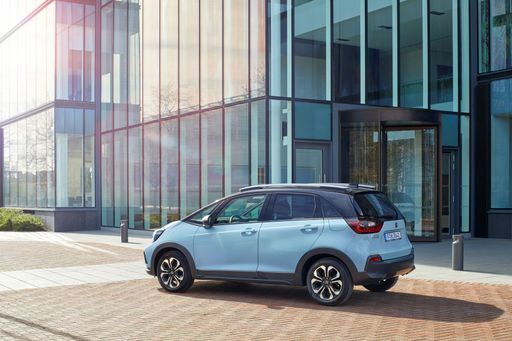
Step into the Honda Jazz and the sense is one of space: taller roofline, generous rear accommodation and a practical layout that makes longer trips and family use less of a squeeze. The Toyota Aygo offers a higher seating perch in a much more compact package, which helps visibility up front but leaves rear passengers scrunched and awkward to load through narrow doors. Material choices differ too — the Jazz leans toward robust, slightly more refined surfaces at common touchpoints, while the Aygo keeps things straightforward and functional with more hard plastics. If cabin calm and roominess matter, the Jazz will feel more grown‑up; if short hops and easy ingress for two are your priority, the Aygo’s compact cabin is perfectly honest about its compromises.

Aygo

Usability and everyday practicality

Practicality is where the Honda Jazz really stretches its lead: flexible seat configurations, a low loading sill and clever storage make it a genuine small‑family mover in day‑to‑day life. The Toyota Aygo is strictly about minimal footprint practicality — excellent for quick supermarket trips and tight parking, but its boot and rear layout limit what you can realistically carry on weekend escapes or with child equipment. Jazz’s layout turns awkward items into manageable loads without contortions, while Aygo asks you to plan and pack with tight dimensions in mind. Both are useful, but they serve different chore lists: Jazz for cargo and people versatility, Aygo for urban errands and solo commuting.

Jazz

City friendliness and running costs

In city driving both cars shine for different reasons: the Toyota Aygo is a specialist, ultra‑thrifty and effortless in traffic thanks to its compact size and seamless automatic, so daily running costs and parking are notably forgiving. The Honda Jazz is also city‑savvy — excellent visibility and a relaxed driving position make urban miles less stressful, and its efficient hybrid modes keep fuel use low in stop‑start conditions. Purchase and operating economics tilt in Aygo’s favour up front, but Jazz offers broader utility that can reduce friction (and extra trips) over ownership. For strict cost minimisers who rarely need rear space, the Aygo is the natural pick; for buyers who want low running costs plus flexible utility, the Jazz balances both.

Aygo

Who each car actually fits

Choose the Honda Jazz if your life includes regular passengers, bits of bulky cargo, longer commutes or the occasional motorway trip where a calmer cabin and flexible seats earn their keep. Opt for the Toyota Aygo if you live in the heart of town, want the lowest possible fuel bill, need the smallest car for parking and are usually travelling solo or as a pair. Both cars are perfectly competent in cities, but the Jazz broadens what you can do beyond the inner ring while the Aygo excels inside it. The technical comparison that follows will break down how those real‑world differences stem from drivetrain, weight and packaging choices so you can match spec to everyday needs.

Here’s where it gets real: The technical differences in detail

Jazz

Costs and Efficiency:

Price and efficiency are often the first things buyers look at. Here it becomes clear which model has the long-term edge – whether at the pump, the plug, or in purchase price.

Toyota Aygo is a bit cheaper – starting at 18,800 £ , while the Honda Jazz costs 22,200 £ . That’s a price difference of around 3,352 £.

Fuel consumption also shows a difference: the Toyota Aygo uses 3.7 L/100km and is clearly more efficient than the Honda Jazz with 4.5 L/100km. The difference is about 0.8 L/100km.

Aygo

Engine and Performance:

Power, torque and acceleration say a lot about how a car feels on the road. This is where you see which model delivers more driving dynamics.

When it comes to engine power, the Honda Jazz offers marginally more power – delivering 122 HP compared to 116 HP. That’s roughly 6 HP more horsepower.

When accelerating from 0 to 100 km/h, the Toyota Aygo is barely quicker – completing the sprint in 9.2 s, while the Honda Jazz takes 9.4 s. That’s about 0.2 s quicker.

There’s also a difference in torque: the Honda Jazz delivers considerably more torque with 253 Nm compared to 120 Nm. That’s about 133 Nm more.

Jazz

Space and Everyday Use:

Cabin size, boot volume and payload all play a role in everyday practicality. Here, comfort and flexibility make the difference.

Seats: Honda Jazz offers more seats – 5 vs 4.

In terms of curb weight, Toyota Aygo is moderately lighter – 1,090 kg compared to 1,302 kg. The difference is around 212 kg.

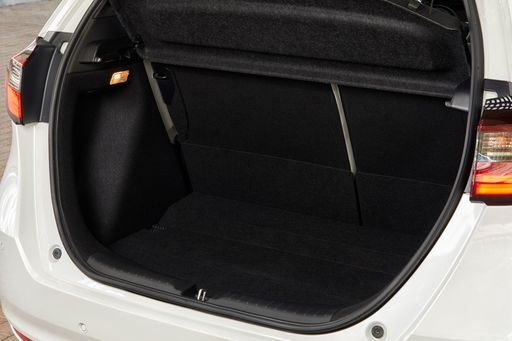
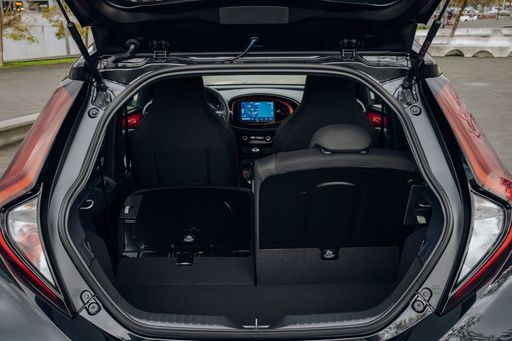
Looking at boot space, the Honda Jazz offers clearly more boot space – 304 L compared to 231 L. That’s a difference of about 73 L.

When it comes to payload, the Toyota Aygo carries very slightly more – 420 kg compared to 388 kg. That’s a difference of about 32 kg.

Who wins the race in the data check?

The Honda Jazz comes out clearly ahead in the objective data comparison.
This result only shows which model scores more points on paper – not which of the two cars feels right for you.

from £22,200
Jazz

Honda Jazz

  • Engine Type Full Hybrid
  • Transmission Automatic
  • Drive Type Front-Wheel Drive
  • Power HP 122 HP
  • Consumption L/100km 4.5 - 4.8 L/100km
Honda Jazz
Toyota Aygo

Costs and Consumption

View detailed analysis

Engine and Performance

View detailed analysis

Dimensions and Body

View detailed analysis

Honda Jazz

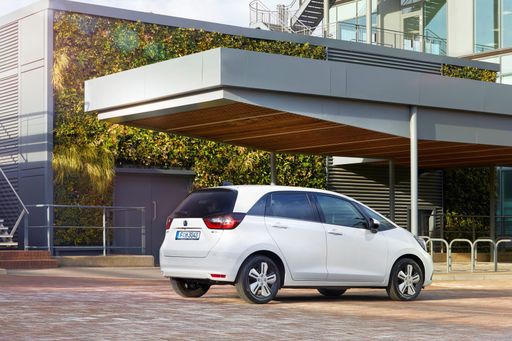
The Honda Jazz is a supremely practical small hatch that hides clever packaging and more usable space than it lets on, with friendly styling and an unfussy charm. It’s economical to run, easy to park and perfect for buyers who want reliable, versatile daily motoring without the hassle.

details

Toyota Aygo

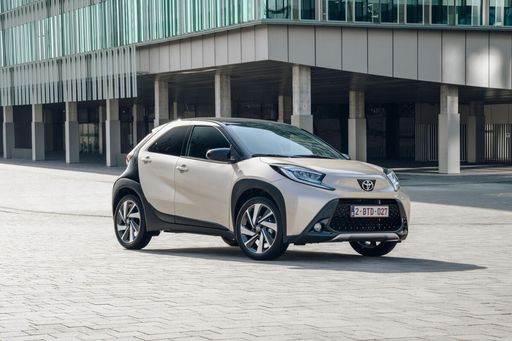
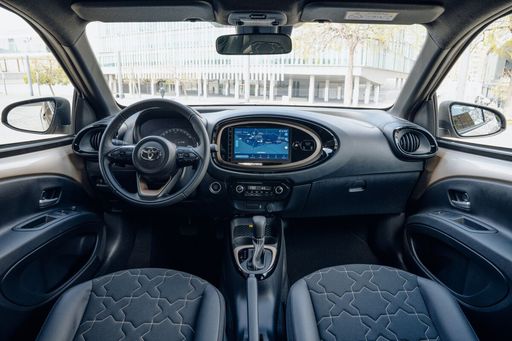
The Aygo is a cheeky city car that turns congested streets into a playground, with bold styling and sprightly manners that make parking a pleasure rather than a pain. Economical to run and surprisingly well equipped for its size, the Aygo is a smart choice for urban buyers who want personality without a premium price and a car that brings a smile to the daily commute.

details
Honda Jazz
Toyota Aygo

Costs and Consumption

Price
22,200 - 25,900 £
Price
18,800 - 24,300 £
Consumption L/100km
4.5 - 4.8 L/100km
Consumption L/100km
3.7 L/100km
Consumption kWh/100km
-
Consumption kWh/100km
-
Electric Range
-
Electric Range
-
Battery Capacity
-
Battery Capacity
-
co2
102 - 108 g/km
co2
85 g/km
Fuel tank capacity
-
Fuel tank capacity
-

Dimensions and Body

Body Type
Hatchback
Body Type
SUV
Seats
5
Seats
4
Doors
-
Doors
-
Curb weight
1,302 - 1,321 kg
Curb weight
1,090 kg
Trunk capacity
304 L
Trunk capacity
231 L
Length
-
Length
-
Width
1,694 mm
Width
1,740 mm
Height
-
Height
-
Max trunk capacity
-
Max trunk capacity
-
Payload
369 - 388 kg
Payload
420 kg

Engine and Performance

Engine Type
Full Hybrid
Engine Type
Full Hybrid
Transmission
Automatic
Transmission
Automatic
Transmission Detail
Automatic Gearbox
Transmission Detail
CVT
Drive Type
Front-Wheel Drive
Drive Type
Front-Wheel Drive
Power HP
122 HP
Power HP
116 HP
Acceleration 0-100km/h
9.4 - 9.7 s
Acceleration 0-100km/h
9.2 s
Max Speed
-
Max Speed
-
Torque
253 Nm
Torque
120 Nm
Number of Cylinders
4
Number of Cylinders
3
Power kW
90 kW
Power kW
85 kW
Engine capacity
1,498 cm3
Engine capacity
1,490 cm3

General

Model Year
2025
Model Year
2025
CO2 Efficiency Class
C
CO2 Efficiency Class
B
Brand
Honda
Brand
Toyota
DriveDuel uses data analysis and artificial intelligence to evaluate vehicle data and create content. Content is regularly reviewed and improved. The displayed prices are estimates based on German list prices, adjusted to the respective country’s VAT. Country-specific registration taxes are not included. This information is not legally binding.