VS

Honda HR-V vs Honda Jazz comparison

Compare performance (131 HP vs 122 HP), boot space and price (29,700 £ vs 23,100 £ ) at a glance. Find out which car is the better choice for you – Honda HR-V or Honda Jazz?

Honda HR-V vs Honda Jazz: Key differences

Honda HR-V

4.2 (13 Reviews)
rate
  • barely more power
  • barely more trunk space
Overall, owners tend to find the Honda HR‑V a practical, reliable and economical compact SUV that’s easy to live with in town and for family duties, offering predictable handling and a comfortable ride. Common positives include good fuel economy, roomy/intuive packaging and reassuring manners; common negatives some owners mention are noticeable noise under brisk acceleration or low‑speed maneuvers and a tendency to feel underpowered on sustained highway runs. So while feedback is broadly favorable for city and everyday use, opinions are more mixed on long‑distance refinement — worth a motorway run during your test drive if that’s your regular terrain.

Honda Jazz

4.8 (3 Reviews)
rate
  • clearly cheaper
  • visibly more efficient
  • somewhat quicker 0–100 km/h
  • moderately lighter

All details on performance, efficiency, range and trunk space can be found in the technical comparison below – including user reviews for both models.

HR-V

Street Presence: Small‑SUV Swagger vs Urban Grace

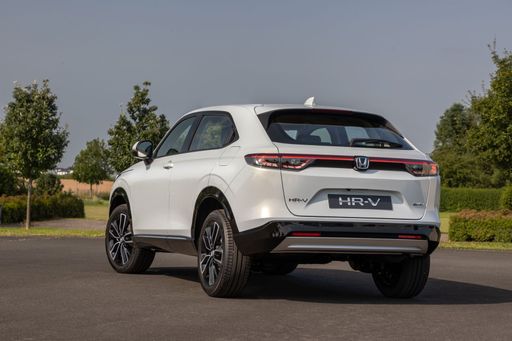
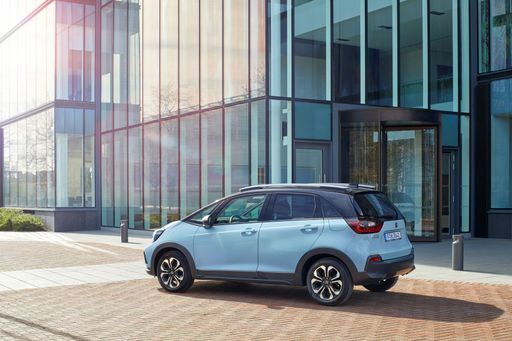
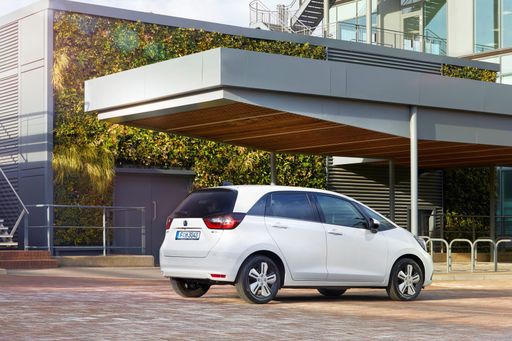
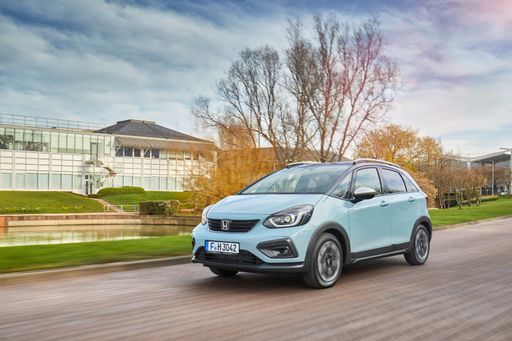
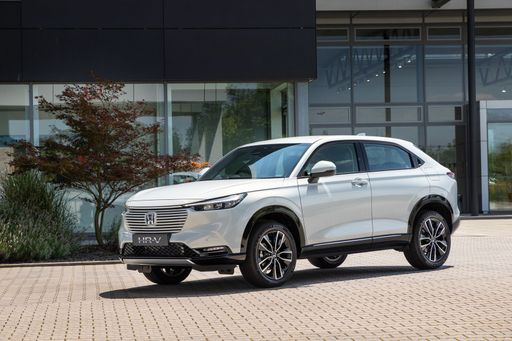
The HR‑V arrives with a taller, more rugged silhouette that projects confidence at a traffic light, while the Jazz has the sort of composed, friendly face that suits tight city streets and multi‑storey car parks. Both wear Honda’s clean design language, but they aim at different buyers: one wants presence, the other wants fuss‑free practicality. Pick the look that matches how you want to be seen on the daily commute or the school run.
Jazz

Behind the Wheel: Character and Composure

On the move, the HR‑V feels like a compact SUV that leans toward composed comfort and a calm driving posture, whereas the Jazz is all about nimble immediacy and encouraging city manners. Steering and suspension tuning give them distinct personalities—one prefers to soak and steady, the other to dart and slot into gaps. Your choice comes down to whether you prioritise relaxed confidence or breezy agility in everyday traffic.

HR-V

Cabin Life: Flexibility and Feel

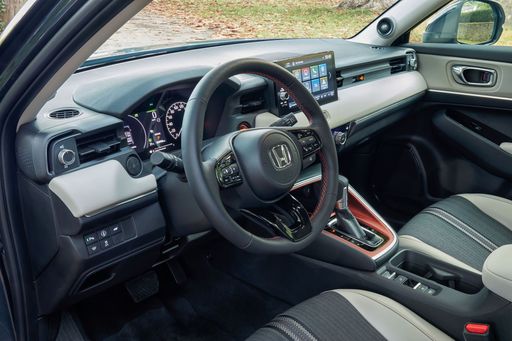
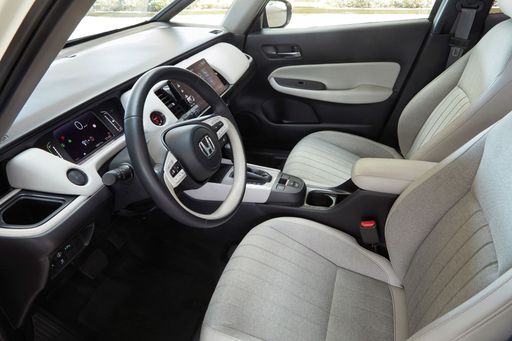
Both cabins are thoughtfully arranged but with different priorities: the Jazz emphasises clever packaging and a light, airy ambience, while the HR‑V offers a slightly loftier perspective and a stronger sense of SUV practicality. Materials and ergonomics feel typically Honda—intuitive switchgear, sensible controls and seats that are comfortable for long runs. If you value inventive interior space tricks, one of them will catch your eye; if you prefer a classier, higher seating position, the other will feel more natural.

Jazz

Family Logic: Practicalities and Packability

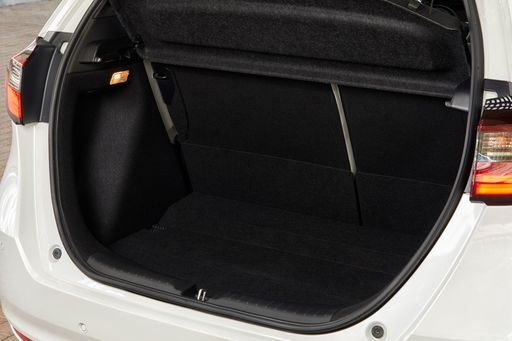
When it comes to daily family life, both handle the essentials well but with different strengths: the HR‑V leans toward versatile load options and a more SUV‑friendly approach, while the Jazz excels at fitting awkward items into a compact footprint. Rear seat usability and access are good in both, but the way each car swallows real‑world kit—buggy, shopping, sports gear—feels distinct. Think about the shape of your life: frequent long hauls with varied cargo or tight urban chores with clever flexibility.

HR-V

Everyday Comfort: Seats, Ride and Visibility

Ride quality and seating comfort are where personality shows through—one settles into a softer groove for soothing suburban miles, the other keeps you more connected to the road with tauter responses and superior urban visibility. Noise insulation and seating ergonomics are competently done across the range, so long drives remain pleasant in either. The decision is largely a sensory one: cushioned and composed or alert and communicative?

Jazz

Ownership Mood: Running Ease and User‑Friendliness

Both models make life easy for owners with straightforward controls, sensible service expectations and usability that’s kind to everyday routines, though they attract subtly different budgets and priorities. Practicalities like visibility, parking ease and interior storage feel designed for real life rather than showroom spreadsheets. Choose the car that aligns with how you value convenience, cost of living with, and long‑term ease.

HR-V

Read On — The DriveDuel Champion Awaits

You've met the characters; now decide which personality fits your life best — keep reading, because the DriveDuel Champion will be revealed afterwards and might just tip the balance for your next buy.

Here’s where it gets real: The technical differences in detail

HR-V

Costs and Efficiency:

When it comes to price and running costs, the biggest differences usually appear. This is often where you see which car fits your budget better in the long run.

Honda Jazz is clearly cheaper – starting at 23,100 £ , while the Honda HR-V costs 29,700 £ . That’s a price difference of around 6,642 £.

Fuel consumption also shows a difference: the Honda Jazz uses 4.5 L/100km and is visibly more efficient than the Honda HR-V with 5.4 L/100km. The difference is about 0.9 L/100km.

Jazz

Engine and Performance:

Under the bonnet, it becomes clear which model is tuned for sportiness and which one takes the lead when you hit the accelerator.

When it comes to engine power, the Honda HR-V offers barely more power – delivering 131 HP compared to 122 HP. That’s roughly 9 HP more horsepower.

When accelerating from 0 to 100 km/h, the Honda Jazz is somewhat quicker – completing the sprint in 9.4 s, while the Honda HR-V takes 10.6 s. That’s about 1.2 s quicker.

Both models offer the same torque – 253 Nm.

HR-V

Space and Everyday Use:

Beyond pure performance, interior space and usability matter most in daily life. This is where you see which car is more practical and versatile.

Both vehicles offer seating for 5 people.

In terms of curb weight, Honda Jazz is moderately lighter – 1,302 kg compared to 1,452 kg. The difference is around 150 kg.

Looking at boot space, the Honda HR-V offers barely more boot space – 319 L compared to 304 L. That’s a difference of about 15 L.

When it comes to payload, the Honda HR-V carries marginally more – 418 kg compared to 388 kg. That’s a difference of about 30 kg.

Who wins the race in the data check?

The Honda Jazz is decisively ahead in the objective data comparison.
This result only shows which model scores more points on paper – not which of the two cars feels right for you.

from £23,100
Jazz

Honda Jazz

  • Engine Type : Full Hybrid
  • Transmission : Automatic
  • Drive Type : Front-Wheel Drive
  • Power HP : 122 HP
  • Consumption L/100km : 4.5 - 4.8 L/100km
Honda HR-V
Honda Jazz

Costs and Consumption

View detailed analysis

Engine and Performance

View detailed analysis

Dimensions and Body

View detailed analysis

Honda HR-V

The Honda HR-V is the sensible compact crossover that blends roomy practicality with a composed, friendly drive, making it an easy pick for buyers who want everyday usability without fuss. It won’t thrill hardcore enthusiasts, but its clever packaging, comfortable cabin and low-key styling make life simpler — and that’s exactly the point.

details

Honda Jazz

The Honda Jazz is a supremely practical small hatch that hides clever packaging and more usable space than it lets on, with friendly styling and an unfussy charm. It’s economical to run, easy to park and perfect for buyers who want reliable, versatile daily motoring without the hassle.

details
Honda HR-V
Honda Jazz

Costs and Consumption

Price
29,700 - 35,400 £
Price
23,100 - 26,700 £
Consumption L/100km
5.4 L/100km
Consumption L/100km
4.5 - 4.8 L/100km
Consumption kWh/100km
-
Consumption kWh/100km
-
Electric Range
-
Electric Range
-
Battery Capacity
-
Battery Capacity
-
co2
122 g/km
co2
102 - 108 g/km
Fuel tank capacity
-
Fuel tank capacity
-

Dimensions and Body

Body Type
SUV
Body Type
Hatchback
Seats
5
Seats
5
Doors
-
Doors
-
Curb weight
1,452 kg
Curb weight
1,302 - 1,321 kg
Trunk capacity
319 L
Trunk capacity
304 L
Length
-
Length
-
Width
-
Width
-
Height
-
Height
-
Max trunk capacity
-
Max trunk capacity
-
Payload
418 kg
Payload
369 - 388 kg

Engine and Performance

Engine Type
Full Hybrid
Engine Type
Full Hybrid
Transmission
Automatic
Transmission
Automatic
Transmission Detail
CVT
Transmission Detail
CVT
Drive Type
Front-Wheel Drive
Drive Type
Front-Wheel Drive
Power HP
131 HP
Power HP
122 HP
Acceleration 0-100km/h
10.6 - 10.8 s
Acceleration 0-100km/h
9.4 - 9.7 s
Max Speed
-
Max Speed
-
Torque
253 Nm
Torque
253 Nm
Number of Cylinders
4
Number of Cylinders
4
Power kW
96 kW
Power kW
90 kW
Engine capacity
1,498 cm3
Engine capacity
1,498 cm3

General

Model Year
2,025
Model Year
2,025
CO2 Efficiency Class
D
CO2 Efficiency Class
C
Brand
Honda
Brand
Honda
DriveDuel uses data analysis and artificial intelligence to evaluate vehicle data and create content. Content is regularly reviewed and improved. The displayed prices are estimates based on German list prices, adjusted to the respective country’s VAT. Country-specific registration taxes are not included. This information is not legally binding.