VS

Honda Jazz vs Honda CR-V comparison

Compare performance (122 HP vs 184 HP), boot space and price (23,100 £ vs 42,800 £ ) at a glance. Find out which car is the better choice for you – Honda Jazz or Honda CR-V?

Honda Jazz vs Honda CR-V: Key differences

Honda Jazz

4.6 (4 Reviews)
rate
  • substantially cheaper
  • clearly lighter
details

Honda CR-V

4.8 (2 Reviews)
rate
  • markedly more power
  • clearly more efficient
  • marginally quicker 0–100 km/h
  • considerably more trunk space
details

All details on performance, efficiency, range and trunk space can be found in the technical comparison below – including user reviews for both models.

By Achim Sedelmaier

Jazz

Honda Jazz VS Honda CR-V: which Honda fits your life?

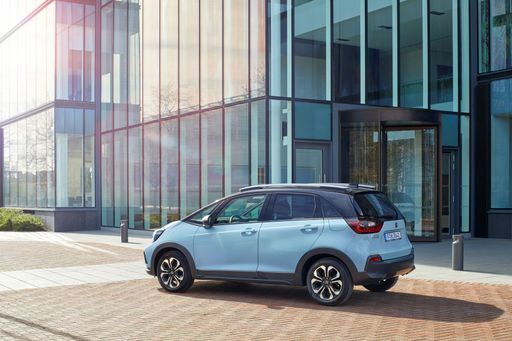
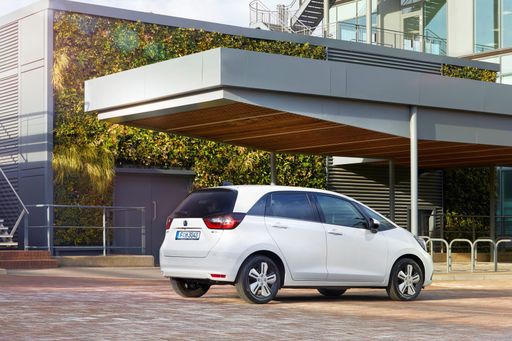
The Honda Jazz and Honda CR‑V could not be more different in everyday terms: one is a compact, clever city car, the other a roomy, comfort‑focused SUV. The Jazz trades outright size for extraordinary interior flexibility and a city‑friendly footprint that makes tight streets and parking easy. The CR‑V answers with ample rear space, a big boot and a calm, long‑distance demeanor that suits families and regular motorway miles. Put simply: the Jazz simplifies urban life; the CR‑V expands it.
CR-V

Character and driving feel

The Jazz feels light on its feet, with an easy, forgiving steering and a suspension tuned for urban comfort rather than sporty responses; it rewards low‑stress daily driving more than enthusiastic cornering. By contrast, the CR‑V brings a planted, composed presence—its weight and suspension choices create a steady, relaxed ride on long runs though it never pretends to be a handling star. The Jazz’s drivetrain is happiest in town and under light load, while the CR‑V’s hybrid/petrol options deliver a steadier, more substantial pull when you’re loaded or cruising. If you favour nimbleness and predictability in traffic pick the Jazz; if you prioritise stability and composed highway miles pick the CR‑V.

Jazz

Comfort and perceived quality inside

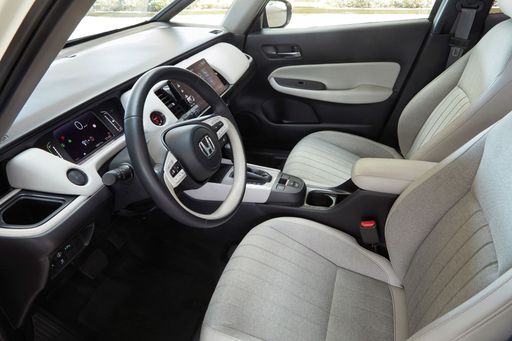
The Jazz surprises for its class with excellent outward visibility, a high seating position that makes entry effortless and materials that feel robust at main touchpoints, but its compact cabin inevitably feels cozier. The CR‑V presents a more conventional SUV ambience: broader seats, more rear‑legroom and a generally more mature, solid cabin feel that reads as higher value on first impressions. Noise insulation and seat support tend to favour the CR‑V on long runs, whereas the Jazz feels lighter and airier around town. For buyers who spend most time in traffic or need easy access, the Jazz’s ergonomics win; for those who seek lounge‑like comfort on long journeys, the CR‑V is the better match.

CR-V

Practicality and everyday usability

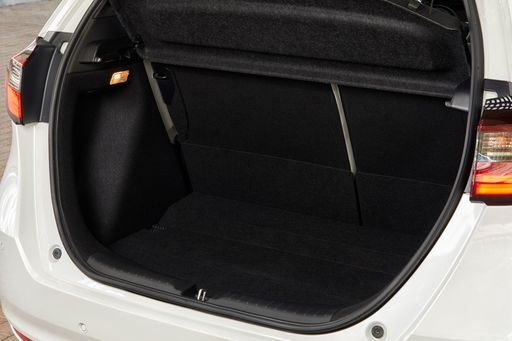
Practicality is where the Jazz punches above its weight: its clever seat architecture and flat floor let you carry awkward loads in a much shorter car, and the low loading sill makes daily grocery, stroller or flat‑pack handling simple. The CR‑V answers with sheer capacity—a larger, well‑shaped boot and a sliding rear bench that help with child seats and adult passengers on longer trips, though there’s no third row to expand seating. The trade‑off is footprint: the Jazz fits more places and is easier to live with in tight urban environments, while the CR‑V handles weekend luggage, sports kit and family gear with less compromise. If your life revolves around city errands and flexible cargo, the Jazz is the clever choice; if you routinely haul large loads or people, the CR‑V does the heavy lifting better.

Jazz

City friendliness versus long‑distance behavior

In city use the Jazz is unmistakably friendlier: small turning circles, excellent sightlines and frugal urban running make it a low‑stress commuter car. The CR‑V is competent in town—its higher driving position helps visibility—but its size and turning radius make city parking and narrow streets more work. On longer trips the CR‑V’s composure, room and comfort features become obvious advantages, while the Jazz can start to feel strained under sustained high‑speed or heavy load conditions. Consider charging habits too: if you can plug in depending on the CR‑V variant, you’ll change the economics and daily experience significantly; the Jazz rewards stop‑start urban life without that dependency.

CR-V

Who each car suits best and how to decide next

Choose the Jazz if you prioritise compactness, maximum interior flexibility for odd loads, superb city economy and a relaxed, uncomplicated cabin for two adults and occasional passengers. Opt for the CR‑V if you need generous rear space, a big boot for family life or regular long journeys and prefer a calmer, more substantial highway experience even at a higher purchase cost. The decision is a classic trade‑off between footprint and capacity: small‑footprint brilliance versus roomy, composed utility. Read on to the technical comparison to see how those practical differences map to powertrains, cargo volumes and running costs so you can match numbers to the lived trade‑offs above.

Here’s where it gets real: The technical differences in detail

Jazz

Costs and Efficiency:

Looking at overall running costs, both models reveal some interesting differences in everyday economy.

Honda Jazz is substantially cheaper – starting at 23,100 £ , while the Honda CR-V costs 42,800 £ . That’s a price difference of around 19,671 £.

Fuel consumption also shows a difference: the Honda CR-V uses 2.6 L/100km and is clearly more efficient than the Honda Jazz with 4.5 L/100km. The difference is about 1.9 L/100km.

CR-V

Engine and Performance:

Power, torque and acceleration are the classic benchmarks for car enthusiasts – and here, some clear differences start to show.

When it comes to engine power, the Honda CR-V offers markedly more power – delivering 184 HP compared to 122 HP. That’s roughly 62 HP more horsepower.

When accelerating from 0 to 100 km/h, the Honda CR-V is marginally quicker – completing the sprint in 9 s, while the Honda Jazz takes 9.4 s. That’s about 0.4 s quicker.

There’s also a difference in torque: the Honda CR-V delivers markedly more torque with 335 Nm compared to 253 Nm. That’s about 82 Nm more.

Jazz

Space and Everyday Use:

Beyond pure performance, interior space and usability matter most in daily life. This is where you see which car is more practical and versatile.

Both vehicles offer seating for 5 people.

In terms of curb weight, Honda Jazz is clearly lighter – 1,302 kg compared to 1,821 kg. The difference is around 519 kg.

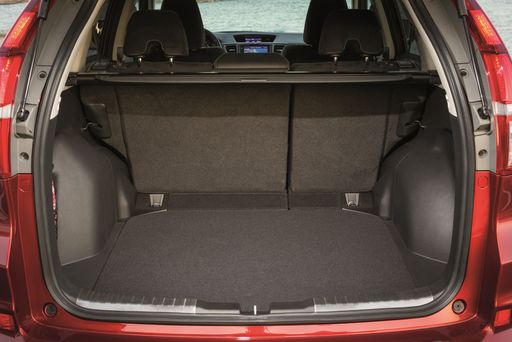
Looking at boot space, the Honda CR-V offers considerably more boot space – 617 L compared to 304 L. That’s a difference of about 313 L.

When it comes to payload, the Honda CR-V carries a bit more – 475 kg compared to 388 kg. That’s a difference of about 87 kg.

Who wins the race in the data check?

The Honda CR-V holds a decisive overall lead in the objective data comparison.
This result only shows which model scores more points on paper – not which of the two cars feels right for you.

from £42,800
CR-V

Honda CR-V

  • Engine Type : Full Hybrid, Plugin Hybrid
  • Transmission : Automatic
  • Drive Type : Front-Wheel Drive, All-Wheel Drive
  • Power HP : 184 HP
  • Consumption L/100km : 2.6 - 6.7 L/100km
  • Electric Range : 78 km
Honda Jazz
Honda CR-V

Costs and Consumption

View detailed analysis

Engine and Performance

View detailed analysis

Dimensions and Body

View detailed analysis

Honda Jazz

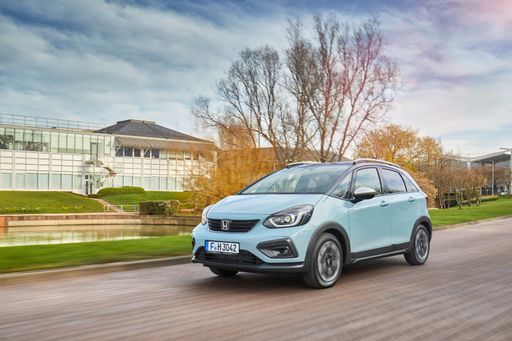
The Honda Jazz is a supremely practical small hatch that hides clever packaging and more usable space than it lets on, with friendly styling and an unfussy charm. It’s economical to run, easy to park and perfect for buyers who want reliable, versatile daily motoring without the hassle.

details

Honda CR-V

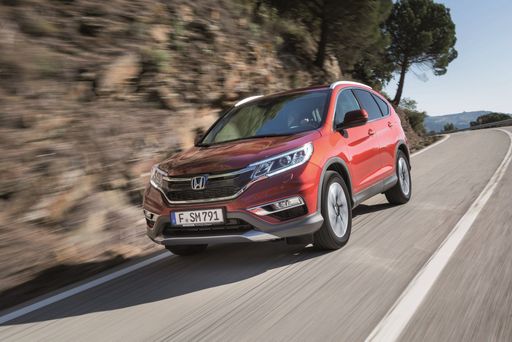
The Honda CR-V blends sensible practicality with a polished feel, offering roomy interiors and a confident ride that keeps commutes and weekend escapes equally comfortable. Its unshowy styling and reliable reputation make it a smart, low‑drama choice for buyers who want versatility without fuss — the kind of car that quietly makes everyday life a little easier.

details
Honda Jazz
Honda CR-V

Costs and Consumption

Price
23,100 - 26,700 £
Price
42,800 - 52,100 £
Consumption L/100km
4.5 - 4.8 L/100km
Consumption L/100km
2.6 - 6.7 L/100km
Consumption kWh/100km
-
Consumption kWh/100km
-
Electric Range
-
Electric Range
78 km
Battery Capacity
-
Battery Capacity
-
co2
102 - 108 g/km
co2
59 - 152 g/km
Fuel tank capacity
-
Fuel tank capacity
-

Dimensions and Body

Body Type
Hatchback
Body Type
SUV
Seats
5
Seats
5
Doors
-
Doors
-
Curb weight
1,302 - 1,321 kg
Curb weight
1,821 - 1,988 kg
Trunk capacity
304 L
Trunk capacity
579 - 617 L
Length
-
Length
-
Width
-
Width
1,866 mm
Height
-
Height
-
Max trunk capacity
-
Max trunk capacity
-
Payload
369 - 388 kg
Payload
439 - 475 kg

Engine and Performance

Engine Type
Full Hybrid
Engine Type
Full Hybrid, Plugin Hybrid
Transmission
Automatic
Transmission
Automatic
Transmission Detail
CVT
Transmission Detail
CVT
Drive Type
Front-Wheel Drive
Drive Type
Front-Wheel Drive, All-Wheel Drive
Power HP
122 HP
Power HP
184 HP
Acceleration 0-100km/h
9.4 - 9.7 s
Acceleration 0-100km/h
9 - 9.5 s
Max Speed
-
Max Speed
-
Torque
253 Nm
Torque
335 Nm
Number of Cylinders
4
Number of Cylinders
4
Power kW
90 kW
Power kW
135 kW
Engine capacity
1,498 cm3
Engine capacity
1,993 cm3

General

Model Year
2025
Model Year
2025
CO2 Efficiency Class
C
CO2 Efficiency Class
D, E, B
Brand
Honda
Brand
Honda
DriveDuel uses data analysis and artificial intelligence to evaluate vehicle data and create content. Content is regularly reviewed and improved. The displayed prices are estimates based on German list prices, adjusted to the respective country’s VAT. Country-specific registration taxes are not included. This information is not legally binding.