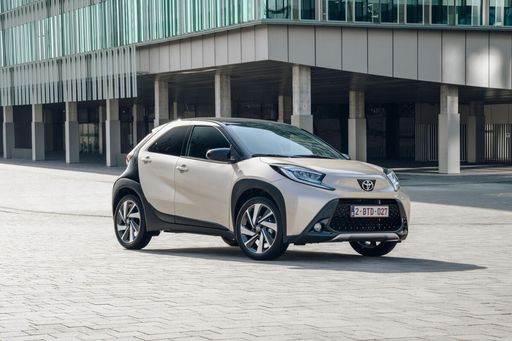
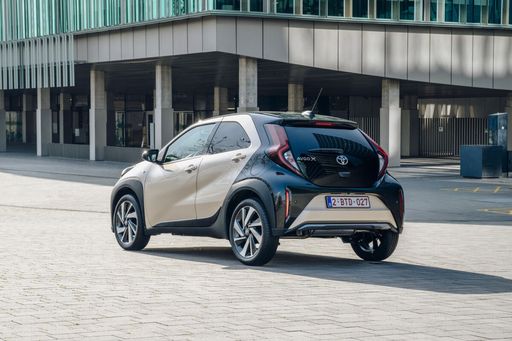
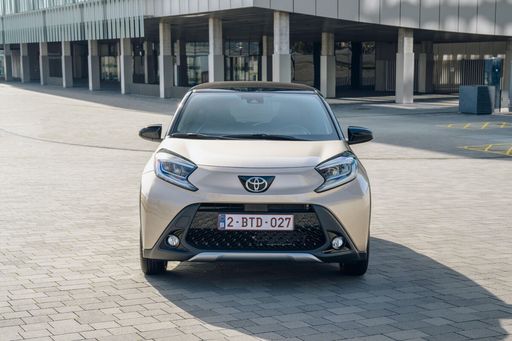
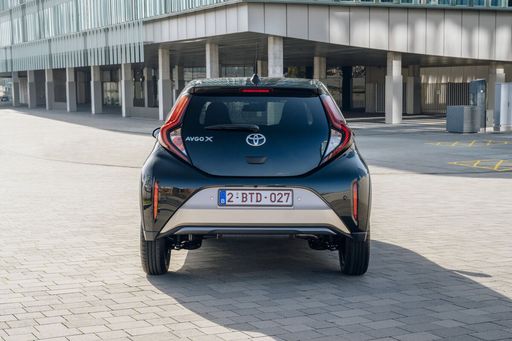
VS

Peugeot 208 vs Toyota Aygo comparison

Compare performance (156 HP vs 116 HP), boot space and price (21,000 £ vs 18,800 £ ) at a glance. Find out which car is the better choice for you – Peugeot 208 or Toyota Aygo?

Peugeot 208 vs Toyota Aygo: Key differences

Peugeot 208

4 (2 Reviews)
rate
  • markedly more power
  • somewhat quicker 0–100 km/h
details

Toyota Aygo

5 (1 Reviews)
rate
  • somewhat cheaper
  • markedly more efficient
  • only slightly lighter
details

All details on performance, efficiency, range and trunk space can be found in the technical comparison below – including user reviews for both models.

By Achim Sedelmaier

Here’s where it gets real: The technical differences in detail

208

Costs and Efficiency:

Price and efficiency are key factors when choosing a car – and this is often where the real differences emerge.

Toyota Aygo is somewhat cheaper – starting at 18,800 £ , while the Peugeot 208 costs 21,000 £ . That’s a price difference of around 2,134 £.

Fuel consumption also shows a difference: the Toyota Aygo uses 3.7 L/100km and is markedly more efficient than the Peugeot 208 with 4.5 L/100km. The difference is about 0.8 L/100km.

Aygo

Engine and Performance:

Power, torque and acceleration are the classic benchmarks for car enthusiasts – and here, some clear differences start to show.

When it comes to engine power, the Peugeot 208 offers markedly more power – delivering 156 HP compared to 116 HP. That’s roughly 40 HP more horsepower.

When accelerating from 0 to 100 km/h, the Peugeot 208 is somewhat quicker – completing the sprint in 8.3 s, while the Toyota Aygo takes 9.2 s. That’s about 0.9 s quicker.

There’s also a difference in torque: the Peugeot 208 delivers considerably more torque with 270 Nm compared to 120 Nm. That’s about 150 Nm more.

208

Space and Everyday Use:

Cabin size, boot volume and payload all play a role in everyday practicality. Here, comfort and flexibility make the difference.

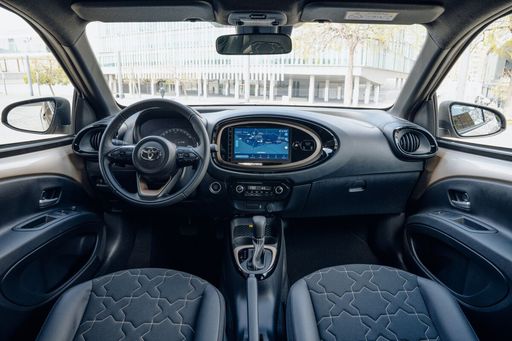
Seats: Peugeot 208 offers more seats – 5 vs 4.

In terms of curb weight, Toyota Aygo is only slightly lighter – 1,090 kg compared to 1,165 kg. The difference is around 75 kg.

When it comes to payload, the Peugeot 208 carries marginally more – 430 kg compared to 420 kg. That’s a difference of about 10 kg.

Who wins the race in the data check?

The Peugeot 208 holds a decisive overall lead in the objective data comparison.
This result only shows which model scores more points on paper – not which of the two cars feels right for you.

from £21,000
208

Peugeot 208

  • Engine Type : Petrol MHEV, Electric, Petrol
  • Transmission : Automatic, Manuel
  • Drive Type : Front-Wheel Drive
  • Power HP : 101 - 156 HP
  • Consumption L/100km : 4.5 - 5.1 L/100km
  • Consumption kWh/100km : 14.1 - 15.4 kWh/100km
  • Electric Range : 363 - 432 km
Peugeot 208
Toyota Aygo

Costs and Consumption

View detailed analysis

Engine and Performance

View detailed analysis

Dimensions and Body

View detailed analysis

Peugeot 208

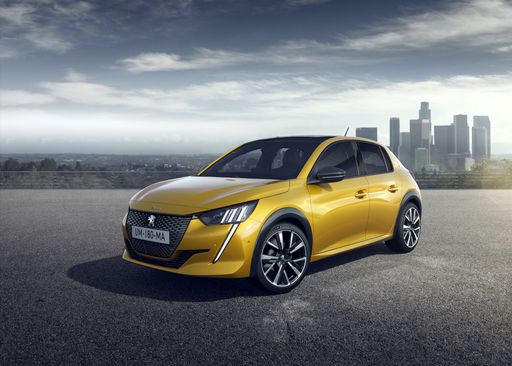
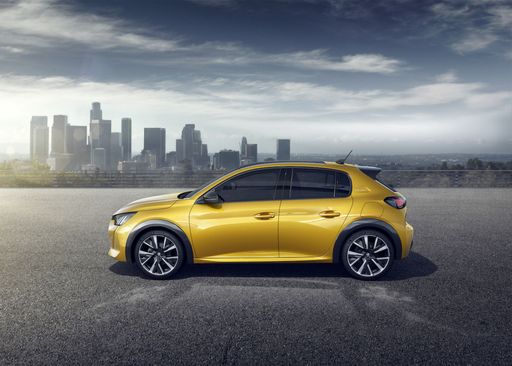
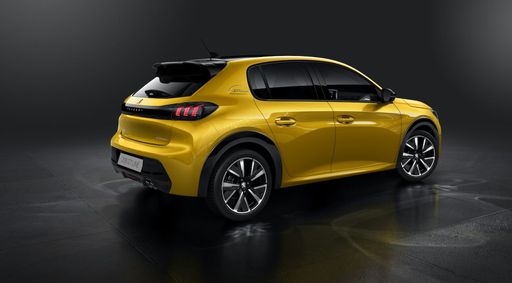
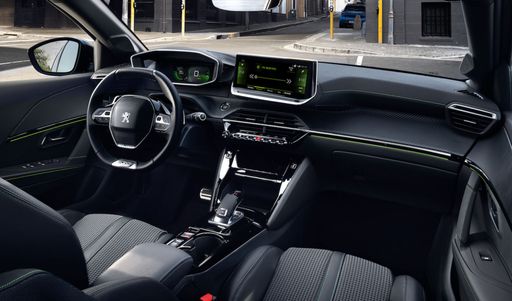
The Peugeot 208 feels like a city-savvy fox: compact, stylish and surprisingly grown-up, with a cabin that punches above its weight and enough personality to make daily commutes a little less boring. It’s a smart pick for buyers who want chic practicality without the showroom bluster — easy to park, thrifty to run and oddly fun when the road tightens up.

details

Toyota Aygo

The Aygo is a cheeky city car that turns congested streets into a playground, with bold styling and sprightly manners that make parking a pleasure rather than a pain. Economical to run and surprisingly well equipped for its size, the Aygo is a smart choice for urban buyers who want personality without a premium price and a car that brings a smile to the daily commute.

details
Peugeot 208
Toyota Aygo

Costs and Consumption

Price
21,000 - 33,200 £
Price
18,800 - 24,300 £
Consumption L/100km
4.5 - 5.1 L/100km
Consumption L/100km
3.7 L/100km
Consumption kWh/100km
14.1 - 15.4 kWh/100km
Consumption kWh/100km
-
Electric Range
363 - 432 km
Electric Range
-
Battery Capacity
-
Battery Capacity
-
co2
0 - 116 g/km
co2
85 g/km
Fuel tank capacity
-
Fuel tank capacity
-

Dimensions and Body

Body Type
Hatchback
Body Type
SUV
Seats
5
Seats
4
Doors
-
Doors
-
Curb weight
1,165 - 1,530 kg
Curb weight
1,090 kg
Trunk capacity
-
Trunk capacity
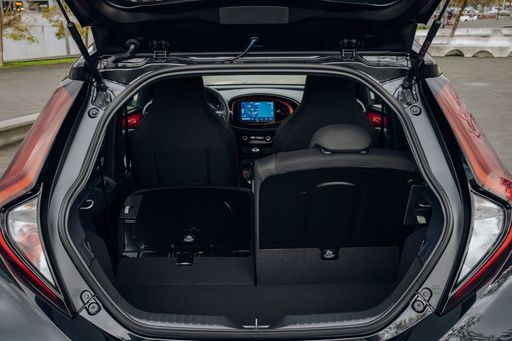
231 L
Length
-
Length
-
Width
1,745 mm
Width
1,740 mm
Height
-
Height
-
Max trunk capacity
-
Max trunk capacity
-
Payload
380 - 430 kg
Payload
420 kg

Engine and Performance

Engine Type
Petrol MHEV, Electric, Petrol
Engine Type
Full Hybrid
Transmission
Automatic, Manuel
Transmission
Automatic
Transmission Detail
Dual-Clutch Automatic, Reduction Gearbox, Manual Gearbox
Transmission Detail
CVT
Drive Type
Front-Wheel Drive
Drive Type
Front-Wheel Drive
Power HP
101 - 156 HP
Power HP
116 HP
Acceleration 0-100km/h
8.3 - 10.9 s
Acceleration 0-100km/h
9.2 s
Max Speed
-
Max Speed
-
Torque
205 - 270 Nm
Torque
120 Nm
Number of Cylinders
3
Number of Cylinders
3
Power kW
74 - 115 kW
Power kW
85 kW
Engine capacity
1,199 cm3
Engine capacity
1,490 cm3

General

Model Year
2,025 - 2,026
Model Year
2025
CO2 Efficiency Class
C, A, D
CO2 Efficiency Class
B
Brand
Peugeot
Brand
Toyota
DriveDuel uses data analysis and artificial intelligence to evaluate vehicle data and create content. Content is regularly reviewed and improved. The displayed prices are estimates based on German list prices, adjusted to the respective country’s VAT. Country-specific registration taxes are not included. This information is not legally binding.