VS

Vauxhall Mokka vs Peugeot 208 comparison

Compare performance (281 HP vs 156 HP), boot space and price (23000 £ vs 21000 £ ) at a glance. Find out which car is the better choice for you – Vauxhall Mokka or Peugeot 208?

Mokka

Urban Chic: Opel Mokka vs. Peugeot 208

In today's bustling urban environments, the demand for compact cars offering efficiency, innovation, and style is paramount. Among the top contenders are the Opel Mokka and the Peugeot 208. Both vehicles have marked their territory with unique offerings that cater to both the electric and internal combustion engine markets.

208

Design and Dimensions

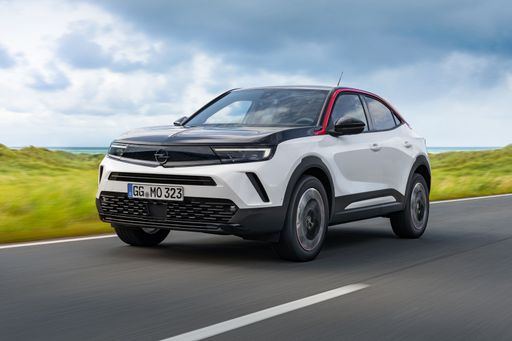
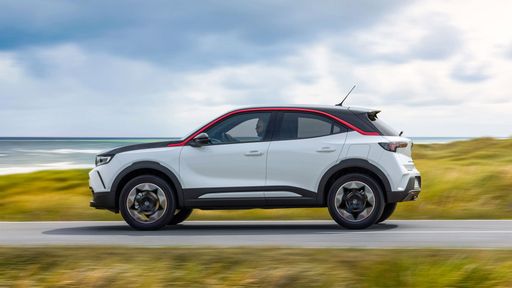
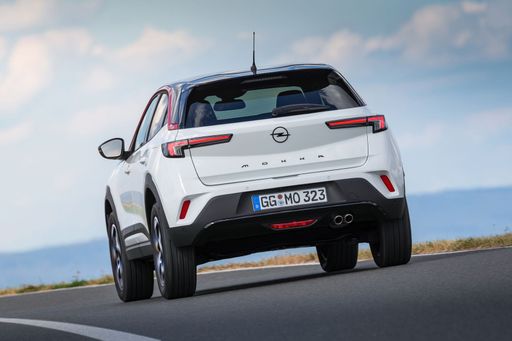
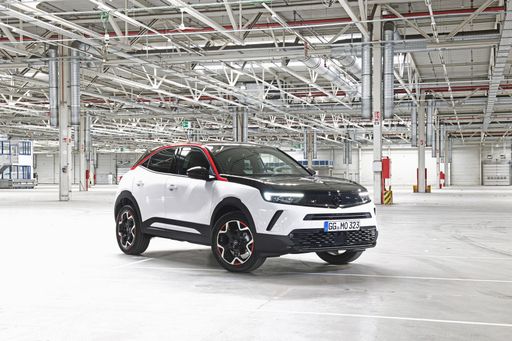
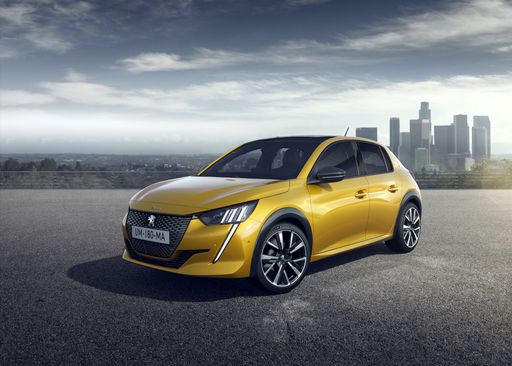
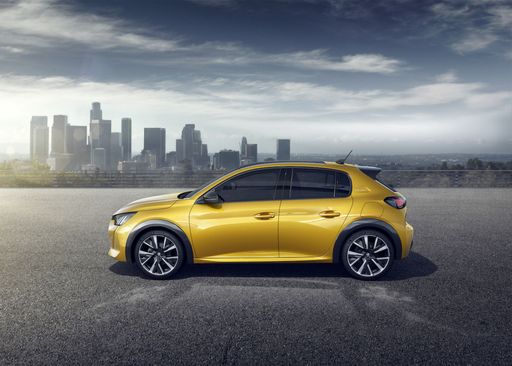
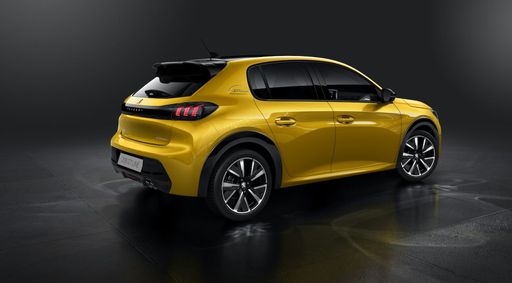
The Opel Mokka presents itself as a sleek SUV with a robust presence. Measuring 4,150 mm in length, 1,787 mm in width, and 1,535 mm in height, it provides a compact yet sturdy design, ideal for both city and suburban driving. Conversely, the Peugeot 208, a sporty hatchback, is slightly more compact at 4,055 mm in length, 1,745 mm in width, and 1,430 mm in height, making it a great fit for city streets and tight parking spaces.

Mokka

Engine and Performance

Both models offer a range of engine types to suit varied preferences. The Opel Mokka comes equipped with choices between petrol, petrol MHEV (Mild Hybrid Electric Vehicle), and full electric options. Power ranges from 130 HP to 156 HP, with the electric variant offering a range of up to 403 km. The Mokka has a commendable acceleration, reaching 0-100 km/h in as little as 9 seconds.

The Peugeot 208 also follows a similar trend, offering petrol, petrol MHEV, and electric variants. Its power output ranges from 101 HP to 156 HP, and its top electric range is an impressive 410 km. Regarding acceleration, the fastest version of the 208 achieves 0-100 km/h in just 8.3 seconds, making it slightly quicker than its Opel counterpart.

208

Transmission and Drive

Both vehicles feature front-wheel drive, ensuring stable performance and efficient fuel consumption. The Mokka offers a variety of transmission options, including automatic, manual, and dual-clutch systems. Likewise, the 208 provides options for both automatic and manual transmissions, catering to diverse driving preferences.

Mokka

Efficiency and Environmental Impact

Considering environmental impact is crucial in today's automotive landscape. The Opel Mokka boasts a CO2 efficiency class ranging from A to E, with emissions from 0 to 139 g/km, aligning well with global environmental standards. The Peugeot 208 matches this with a CO2 efficiency class between A and D, and emissions range from 0 to 121 g/km, effectively contributing towards a greener planet.

208

Interior Space and Comfort

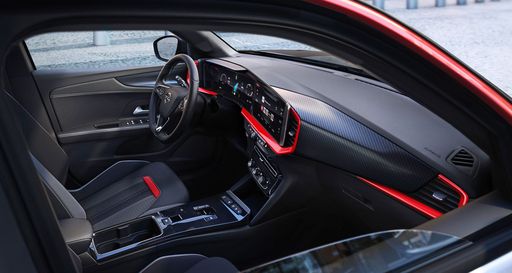
Inside, both models offer a comfortable experience with seating for five. The Opel Mokka provides a trunk capacity of 310 to 350 liters, while the 208 offers a bit less, with capacities ranging from 265 to 309 liters. Despite these differences, both interiors promise practicality with adequate space for shopping or weekend getaways.

Mokka

Conclusion

Deciding between the Opel Mokka and the Peugeot 208 largely depends on individual needs. The Mokka, with its SUV stature, delivers a more commanding presence and slightly larger cabin space, while the 208 hatchback appeals to those prioritizing agility and style in urban settings. Both vehicles embrace the future with their hybrid and electric models, catering to eco-conscious drivers without compromising on performance.

Ultimately, whether it's the SUV appeal of the Mokka or the sporty charm of the 208, both models are fantastic representations of innovation in the modern automotive world.

Vauxhall Mokka vs Peugeot 208: Key differences

Vauxhall Mokka

4.3 (3 Reviews)
rate
  • significantly more power
  • clearly quicker from 0–100 km/h

Peugeot 208

4 (2 Reviews)
rate
  • minimal cheaper
  • slight more efficient
  • minimal more efficient
  • slight more electric range
  • slightly lighter
  • slight more trunk space

All details on performance, efficiency, range and trunk space can be found in the technical comparison below – including user reviews for both models.

Here’s where it gets real: The technical differences in detail

208

Costs and Efficiency:

Price and efficiency are key factors when choosing a car – and this is often where the real differences emerge.

Peugeot 208 has a minimal advantage in terms of price – it starts at 21000 £ , while the Vauxhall Mokka costs 23000 £ . That’s a price difference of around 2066 £.

Fuel consumption also shows a difference: Peugeot 208 manages with 4.50 L and is therefore slight more efficient than the Vauxhall Mokka with 4.90 L. The difference is about 0.40 L per 100 km.

In terms of energy consumption, the advantage goes to the Peugeot 208: with 14.10 kWh per 100 km, it’s minimal more efficient than the Vauxhall Mokka with 15.40 kWh. That’s a difference of about 1.30 kWh.

As for electric range, the Peugeot 208 performs slight better – achieving up to 432 km, about 29 km more than the Vauxhall Mokka.

Mokka

Engine and Performance:

Under the bonnet, it becomes clear which model is tuned for sportiness and which one takes the lead when you hit the accelerator.

When it comes to engine power, the Vauxhall Mokka has a significantly edge – offering 281 HP compared to 156 HP. That’s roughly 125 HP more horsepower.

In acceleration from 0 to 100 km/h, the Vauxhall Mokka is clearly quicker – completing the sprint in 5.90 s, while the Peugeot 208 takes 8.30 s. That’s about 2.40 s faster.

In terms of top speed, the Vauxhall Mokka performs hardly perceptible better – reaching 209 km/h, while the Peugeot 208 tops out at 200 km/h. The difference is around 9 km/h.

There’s also a difference in torque: Vauxhall Mokka pulls clearly perceptible stronger with 345 Nm compared to 270 Nm. That’s about 75 Nm difference.

Space and Everyday Use:

Cabin size, boot volume and payload all play a role in everyday practicality. Here, comfort and flexibility make the difference.

Both vehicles offer seating for 5 people.

In curb weight, Peugeot 208 is slightly lighter – 1165 kg compared to 1294 kg. The difference is around 129 kg.

In terms of boot space, the Peugeot 208 offers slight more room – 352 L compared to 350 L. That’s a difference of about 2 L.

In maximum load capacity, the Peugeot 208 performs barely noticeable better – up to 1163 L, which is about 58 L more than the Vauxhall Mokka.

When it comes to payload, Peugeot 208 slight takes the win – 430 kg compared to 400 kg. That’s a difference of about 30 kg.

Who wins the race in the data check?

The Vauxhall Mokka is far ahead overall in the objective data comparison.
This result only shows which model scores more points on paper – not which of the two cars feels right for you.

Vauxhall Mokka
Peugeot 208

Costs and Consumption

View detailed analysis

Engine and Performance

View detailed analysis

Dimensions and Body

View detailed analysis
from about £23,000
Mokka

Vauxhall Mokka

  • Engine Type : Electric, Petrol MHEV, Petrol
  • Transmission : Automatic, Manuel
  • Drive Type : Front-Wheel Drive
  • Power HP : 136 - 281 HP
  • Consumption L/100km : 4.9 - 5.7 L
  • Consumption kWh/100km : 15.4 - 18.5 kWh
  • Electric Range : 336 - 403 km

Vauxhall Mokka

4.3 (3 Reviews)
rate

The Opel Mokka cuts a smart, modern silhouette that feels right at home in the city while still turning heads on the open road. It's a practical, easy-to-live-with crossover that blends comfy driving manners with enough flair and tech to keep daily commutes interesting — and it won’t make you regret trading up.

details

Peugeot 208

4 (2 Reviews)
rate

The Peugeot 208 feels like a city-savvy fox: compact, stylish and surprisingly grown-up, with a cabin that punches above its weight and enough personality to make daily commutes a little less boring. It’s a smart pick for buyers who want chic practicality without the showroom bluster — easy to park, thrifty to run and oddly fun when the road tightens up.

details
Vauxhall Mokka
Peugeot 208

Costs and Consumption

Price
23000 - 40500 £
Price
21000 - 35200 £
Consumption L/100km
4.9 - 5.7 L
Consumption L/100km
4.5 - 5.1 L
Consumption kWh/100km
15.4 - 18.5 kWh
Consumption kWh/100km
14.1 - 15.4 kWh
Electric Range
336 - 403 km
Electric Range
362 - 432 km
Battery Capacity
51 kWh
Battery Capacity
46 - 51 kWh
co2
0 - 129 g/km
co2
0 - 116 g/km
Fuel tank capacity
44 L
Fuel tank capacity
44 L

Dimensions and Body

Body Type
SUV
Body Type
Hatchback
Seats
5
Seats
5
Doors
5
Doors
5
Curb weight
1294 - 1672 kg
Curb weight
1165 - 1530 kg
Trunk capacity
310 - 350 L
Trunk capacity
309 - 352 L
Length
4150 mm
Length
4055 mm
Width
1787 mm
Width
1745 mm
Height
1506 - 1535 mm
Height
1430 mm
Max trunk capacity
1060 - 1105 L
Max trunk capacity
1118 - 1163 L
Payload
388 - 400 kg
Payload
380 - 430 kg

Engine and Performance

Engine Type
Electric, Petrol MHEV, Petrol
Engine Type
Electric, Petrol MHEV, Petrol
Transmission
Automatic, Manuel
Transmission
Automatic, Manuel
Transmission Detail
Reduction Gearbox, Dual-Clutch Automatic, Manual Gearbox
Transmission Detail
Reduction Gearbox, Dual-Clutch Automatic, Manual Gearbox
Drive Type
Front-Wheel Drive
Drive Type
Front-Wheel Drive
Power HP
136 - 281 HP
Power HP
101 - 156 HP
Acceleration 0-100km/h
5.9 - 9 s
Acceleration 0-100km/h
8.3 - 10.9 s
Max Speed
150 - 209 km/h
Max Speed
150 - 200 km/h
Torque
230 - 345 Nm
Torque
205 - 270 Nm
Number of Cylinders
3
Number of Cylinders
3
Power kW
100 - 207 kW
Power kW
74 - 115 kW
Engine capacity
1199 cm3
Engine capacity
1199 cm3

General

Model Year
2024 - 2025
Model Year
2023 - 2026
CO2 Efficiency Class
A, C, D
CO2 Efficiency Class
A, C, D
Brand
Vauxhall
Brand
Peugeot
What drive types are available for the Vauxhall Mokka?

The Vauxhall Mokka is offered with Front-Wheel Drive.

The prices shown are estimates based on German list prices, adjusted for local VAT. Local registration taxes (e.g. NoVA, BPM or CO2 malus) are not included. This information is not legally binding.