VS

Vauxhall Corsa vs Vauxhall Mokka comparison

Compare performance (156 HP vs 281 HP), boot space and price (19,600 £ vs 23,000 £ ) at a glance. Find out which car is the better choice for you – Vauxhall Corsa or Vauxhall Mokka?

Vauxhall Corsa vs Vauxhall Mokka: Key differences

Vauxhall Corsa

  • moderately cheaper
  • marginally more efficient
  • marginally more efficient
  • barely more electric range
  • slightly lighter

Vauxhall Mokka

4.3 (3 Reviews)
rate
  • considerably more power
  • markedly quicker 0–100 km/h
  • somewhat more trunk space
Corsa

Street Character: A Tale of Two Personalities

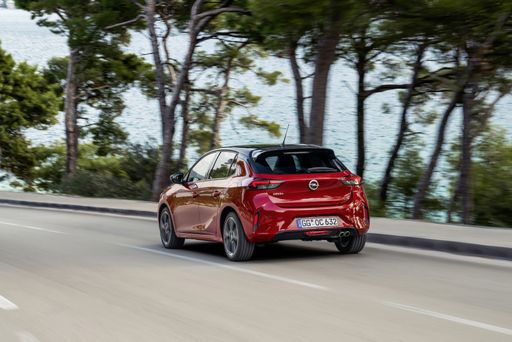
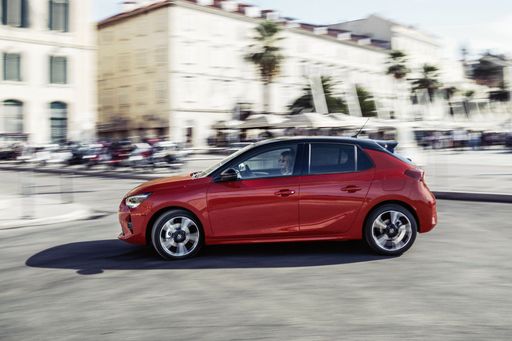
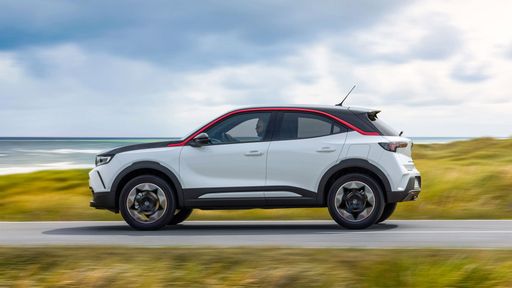
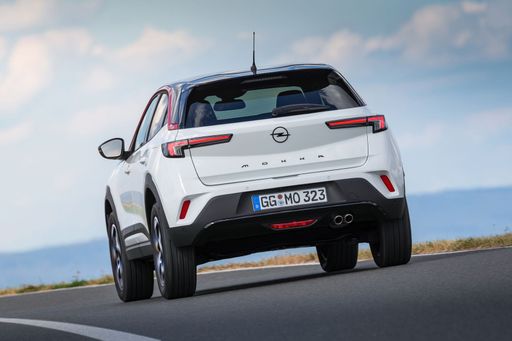
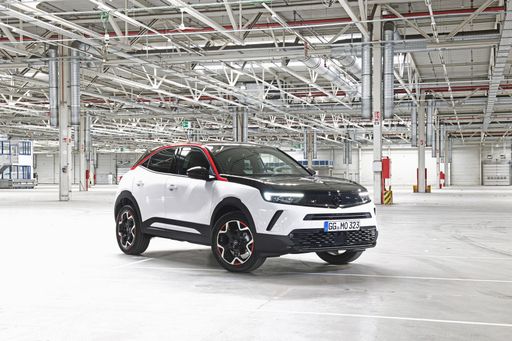
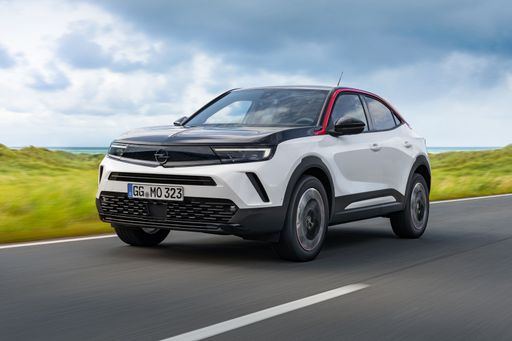
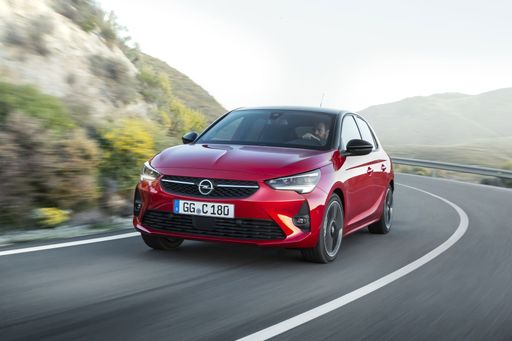
The cheeky Opel Corsa wears its compact, playful lines like a wink — it’s clearly aimed at drivers who want fuss-free style and a sprightly presence in the urban jungle. By contrast, the upright, more assertive silhouette of the Opel Mokka gives off SUV vibes, projecting confidence and a slightly loftier road stance that attracts attention. Both have personality, but they speak to different tastes: one flirts with agility, the other with attitude, making initial impressions a matter of mood rather than measurement.
Mokka

City Ballet: How They Tango With Traffic

In tight streets and packed parking lots the lighter, more nimble candidate feels eager and forgiving, sliding through gaps with minimal fuss and a friendly steering feel that rewards quick maneuvers. The taller contender trades a bit of that agility for a calmer view of the road and easier ingress and egress, which many drivers appreciate when the commute is long or the driving day is busy. Both are practical in town, but the way they go about it — sprightly vs. composed — will decide which one matches your daily rhythm.

Corsa

Practicalities That Make Weekdays Easier

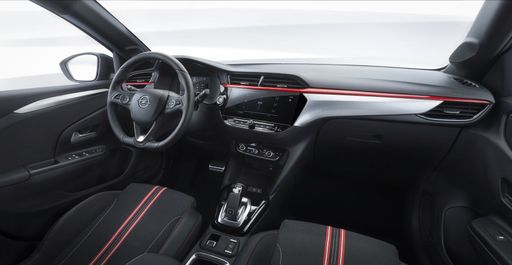
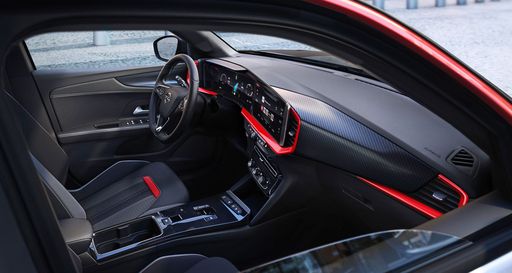
Open the doors and you notice subtle differences in how each car organizes life: one leans toward a compact, efficient footprint that maximises usability in tight spaces, while the other prioritises a roomier feel and slightly more flexible load-minded arrangements for weekending or family tasks. Controls and storage nooks are sensibly thought out in both, but the perception of space and the ease of loading everyday items lean on design rather than raw capacity. If you regularly ski, shop for a household, or ferry kids and gear, the way a car makes those routines simpler will matter more than any spec sheet.

Mokka

Long Road Comfort: Relaxed or Sporty?

On long stretches, one car rewards with a composed, comfortable cruise that hides imperfections and encourages a relaxed tempo, making motorway miles glide by without fuss. The other keeps things a touch livelier, responding with a firmer attitude that’s engaging when the road bends, but sometimes asks for a firmer hand over longer stints. Which you prefer depends on whether you prize serenity and refinement or prefer a more connected, responsive feel when you point it down the highway.

Corsa

Who Should Buy Which: Match the Car to the Driver

City commuters and younger buyers often gravitate toward the compact option for its urban ease, affordable personality and straightforward usability, while style-conscious buyers who like a taller seating position and a stronger road presence tend to be drawn to the SUV-flavoured choice. Families who need a sensible daily companion with occasional cargo demands will find merits in both, depending on whether they prioritise manoeuvrability or a more commanding seating position. Ultimately, your lifestyle — school runs, long commutes, weekend escapes — will make the decision feel obvious.

Mokka

Living With It: Practical Value and Peace of Mind

Both cars are engineered to be low-fuss companions, but the ownership experience is defined by perceived build quality, cabin ergonomics and how each model answers the little annoyances of daily life like visibility, seat comfort and infotainment friendliness. One gives a lighter, cheekier ownership vibe that’s easy to live with, while the other delivers a more substantial, SUV-like presence that some will value for its perceived robustness. Keep reading — the DriveDuel Champion will be revealed afterwards.

Here’s where it gets real: The technical differences in detail

Corsa

Costs and Efficiency:

Price and efficiency are often the first things buyers look at. Here it becomes clear which model has the long-term edge – whether at the pump, the plug, or in purchase price.

Vauxhall Corsa is moderately cheaper – starting at 19,600 £ , while the Vauxhall Mokka costs 23,000 £ . That’s a price difference of around 3,428 £.

Fuel consumption also shows a difference: the Vauxhall Corsa uses 4.6 L/100km and is marginally more efficient than the Vauxhall Mokka with 4.9 L/100km. The difference is about 0.3 L/100km.

In terms of energy consumption, the Vauxhall Corsa is marginally more efficient: consuming 14.4 kWh/100km compared to 15.4 kWh/100km for the Vauxhall Mokka. That’s a difference of about 1 kWh/100km.

As for electric range, the Vauxhall Corsa offers barely more range – reaching up to 424 km, about 21 km more than the Vauxhall Mokka.

Mokka

Engine and Performance:

Under the bonnet, it becomes clear which model is tuned for sportiness and which one takes the lead when you hit the accelerator.

When it comes to engine power, the Vauxhall Mokka offers considerably more power – delivering 281 HP compared to 156 HP. That’s roughly 125 HP more horsepower.

When accelerating from 0 to 100 km/h, the Vauxhall Mokka is markedly quicker – completing the sprint in 5.9 s, while the Vauxhall Corsa takes 7.9 s. That’s about 2 s quicker.

Looking at top speed, the Vauxhall Corsa is barely faster – reaching 210 km/h, while the Vauxhall Mokka tops out at 209 km/h. The difference is around 1 km/h.

There’s also a difference in torque: the Vauxhall Mokka delivers visibly more torque with 345 Nm compared to 260 Nm. That’s about 85 Nm more.

Corsa

Space and Everyday Use:

Beyond pure performance, interior space and usability matter most in daily life. This is where you see which car is more practical and versatile.

Both vehicles offer seating for 5 people.

In terms of curb weight, Vauxhall Corsa is slightly lighter – 1,175 kg compared to 1,294 kg. The difference is around 119 kg.

Looking at boot space, the Vauxhall Mokka offers somewhat more boot space – 350 L compared to 309 L. That’s a difference of about 41 L.

For maximum load capacity, the Vauxhall Mokka offers very slightly more capacity – up to 1,105 L, about 63 L more than the Vauxhall Corsa.

When it comes to payload, the Vauxhall Corsa carries a bit more – 445 kg compared to 400 kg. That’s a difference of about 45 kg.

Who wins the race in the data check?

The Vauxhall Mokka is decisively ahead in the objective data comparison.
This result only shows which model scores more points on paper – not which of the two cars feels right for you.

from £23,000
Mokka

Vauxhall Mokka

  • Engine Type : Electric, Petrol MHEV, Petrol
  • Transmission : Automatic, Manuel
  • Drive Type : Front-Wheel Drive
  • Power HP : 136 - 281 HP
  • Consumption L/100km : 4.9 - 5.7 L/100km
  • Consumption kWh/100km : 15.4 - 18.5 kWh/100km
  • Electric Range : 336 - 403 km
Vauxhall Corsa
Vauxhall Mokka

Costs and Consumption

View detailed analysis

Engine and Performance

View detailed analysis

Dimensions and Body

View detailed analysis

Vauxhall Corsa

The Opel Corsa is a tidy little package that blends cheeky styling with sensible practicality, perfect for city streets and weekend escapes alike. It’s easy to live with, economical to run and just lively enough to make daily driving a bit more fun.

details

Vauxhall Mokka

The Opel Mokka cuts a smart, modern silhouette that feels right at home in the city while still turning heads on the open road. It's a practical, easy-to-live-with crossover that blends comfy driving manners with enough flair and tech to keep daily commutes interesting — and it won’t make you regret trading up.

details
Vauxhall Corsa
Vauxhall Mokka

Costs and Consumption

Price
19,600 - 30,600 £
Price
23,000 - 40,500 £
Consumption L/100km
4.6 - 5.2 L/100km
Consumption L/100km
4.9 - 5.7 L/100km
Consumption kWh/100km
14.4 - 16.2 kWh/100km
Consumption kWh/100km
15.4 - 18.5 kWh/100km
Electric Range
347 - 424 km
Electric Range
336 - 403 km
Battery Capacity
46 - 51 kWh
Battery Capacity
51 kWh
co2
0 - 116 g/km
co2
0 - 129 g/km
Fuel tank capacity
44 L
Fuel tank capacity
44 L

Dimensions and Body

Body Type
Hatchback
Body Type
SUV
Seats
5
Seats
5
Doors
5
Doors
5
Curb weight
1,175 - 1,544 kg
Curb weight
1,294 - 1,672 kg
Trunk capacity
267 - 309 L
Trunk capacity
310 - 350 L
Length
4,061 mm
Length
4,150 mm
Width
1,765 mm
Width
1,787 mm
Height
1,435 mm
Height
1,515 - 1,535 mm
Max trunk capacity
1,004 - 1,042 L
Max trunk capacity
1,060 - 1,105 L
Payload
376 - 445 kg
Payload
388 - 400 kg

Engine and Performance

Engine Type
Electric, Petrol MHEV, Petrol
Engine Type
Electric, Petrol MHEV, Petrol
Transmission
Automatic, Manuel
Transmission
Automatic, Manuel
Transmission Detail
Reduction Gearbox, Dual-Clutch Automatic, Manual Gearbox
Transmission Detail
Reduction Gearbox, Dual-Clutch Automatic, Manual Gearbox
Drive Type
Front-Wheel Drive
Drive Type
Front-Wheel Drive
Power HP
100 - 156 HP
Power HP
136 - 281 HP
Acceleration 0-100km/h
7.9 - 9.9 s
Acceleration 0-100km/h
5.9 - 9 s
Max Speed
150 - 210 km/h
Max Speed
150 - 209 km/h
Torque
205 - 260 Nm
Torque
230 - 345 Nm
Number of Cylinders
3
Number of Cylinders
3
Power kW
74 - 115 kW
Power kW
100 - 207 kW
Engine capacity
1,199 cm3
Engine capacity
1,199 cm3

General

Model Year
2,024 - 2,025
Model Year
2,024 - 2,025
CO2 Efficiency Class
A, C, D
CO2 Efficiency Class
A, C, D
Brand
Vauxhall
Brand
Vauxhall
DriveDuel uses data analysis and artificial intelligence to evaluate vehicle data and create content. Content is regularly reviewed and improved. The displayed prices are estimates based on German list prices, adjusted to the respective country’s VAT. Country-specific registration taxes are not included. This information is not legally binding.