VS

Vauxhall Corsa vs Toyota Aygo comparison

Compare performance (156 HP vs 116 HP), boot space and price (19,600 £ vs 18,800 £ ) at a glance. Find out which car is the better choice for you – Vauxhall Corsa or Toyota Aygo?

Vauxhall Corsa vs Toyota Aygo: Key differences

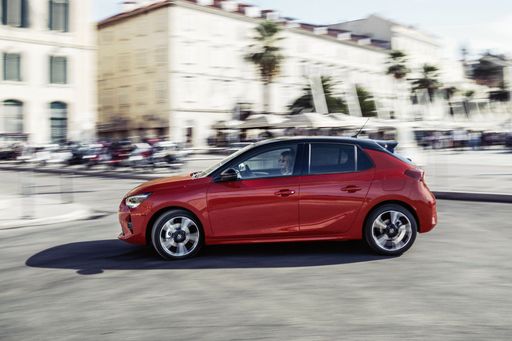
Vauxhall Corsa

  • visibly more power
  • slightly quicker 0–100 km/h
  • visibly more trunk space
details

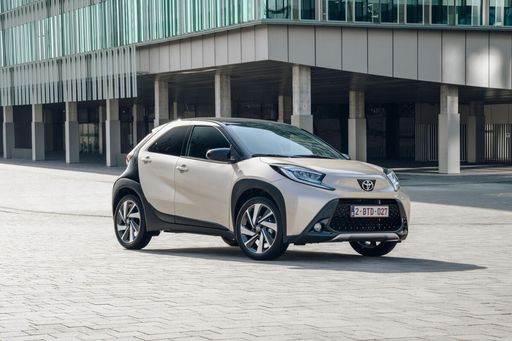
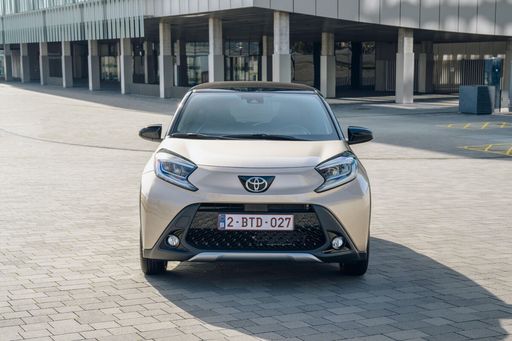
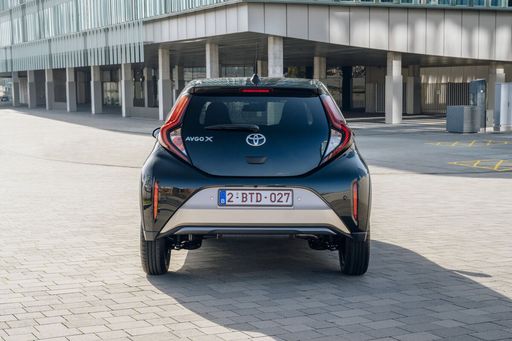
Toyota Aygo

5 (1 Reviews)
rate
  • marginally cheaper
  • visibly more efficient
  • marginally lighter
details

All details on performance, efficiency, range and trunk space can be found in the technical comparison below – including user reviews for both models.

By Achim Sedelmaier

Corsa

Opel Corsa VS Toyota Aygo: which small car fits your life?

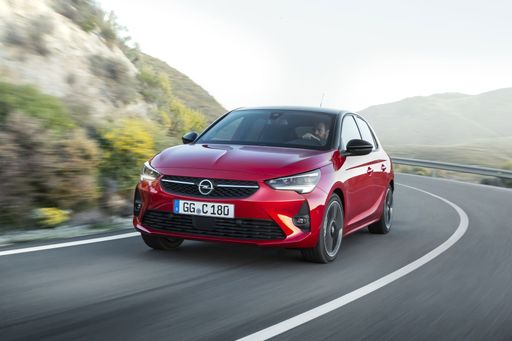
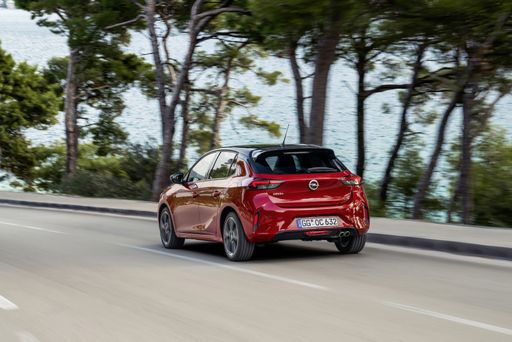
The Opel Corsa and Toyota Aygo take two different routes to the same brief: small, easy-to-live-with cars for urban and short‑distance use. The Opel Corsa leans toward a more planted, slightly grown‑up feel with stronger acceleration and optional tech that hints at a larger car, while the Toyota Aygo doubles down on minimal running costs, a relaxed automatic drive and city-first agility. In everyday terms that means the Corsa feels more like a proper compact with compromises in back‑seat space, whereas the Aygo feels delightfully small and simple but demands acceptance of tight rear seats and a small boot. This page lays out those trade-offs so you can match either car to the way you actually drive, not just the spec sheet.
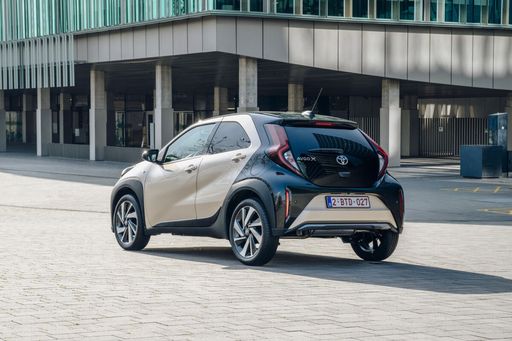
Aygo

Character and driving feel

The Opel Corsa projects a firmer, more grown-up driving character: steering is precise, the car stays composed during lane changes and it accelerates with noticeably more urge when you want it. The Toyota Aygo feels lighter and more eager in town, trading outright shove for nimbleness and a smooth automatic that makes stop‑start traffic effortless. On the highway the Corsa's greater composure and stronger sustained performance give it the edge for confident overtakes, but that composure comes with a firmer suspension and more wind or tyre noise. The Aygo remains the city specialist — playful and forgiving in tight spaces — but it reveals its small‑car limitations when you push it beyond urban speeds.

Corsa

Comfort and long‑distance behavior

For routine commutes and occasional motorway trips the Opel Corsa is the more comfortable long‑distance partner thanks to supportive front seats and a setup tuned toward control rather than softness. The Toyota Aygo keeps you comfortable in town — the automatic gearbox and upright seating make short runs easy — but on coarse surfaces and long stretches it can feel fidgety and louder under load. Rear occupants will notice the difference: the Corsa’s rear is snug but marginally more forgiving, while the Aygo’s rearspace and small door openings make extended journeys less pleasant for adults. If highway serenity and long stints matter more than frugality, the Corsa tends to suit that brief better; if most miles are urban hops, the Aygo’s compromises are easier to live with.

Aygo

Practicality, cabin feel and usability

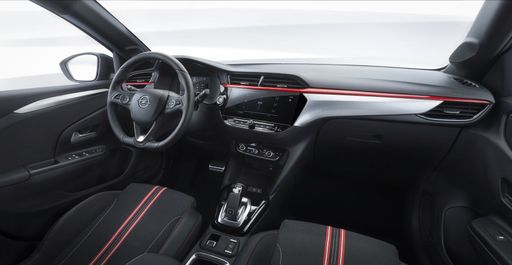
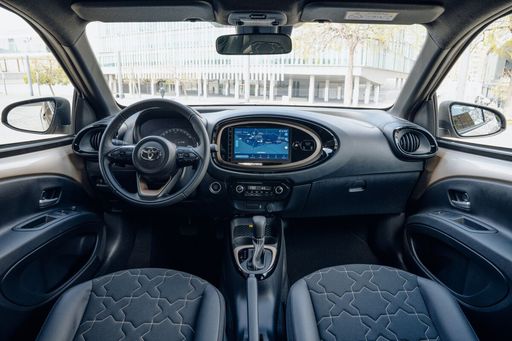
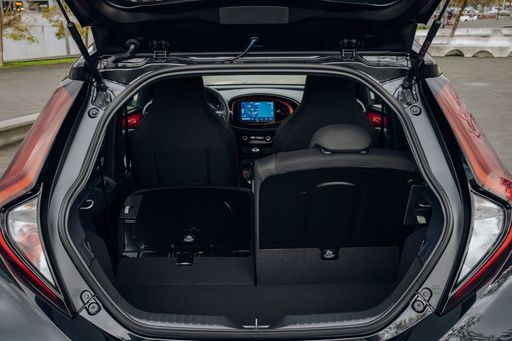
Practical realities split the two clearly: the Opel Corsa offers the more usable boot and genuine five‑seat layout that makes everyday family tasks easier, whereas the Toyota Aygo’s compactness forces you to plan cargo and rear seating more carefully. Inside, both cars use hard plastics in places, but the Corsa’s recent updates give its infotainment and controls a fresher, slightly more coherent feel that helps with daily usability. The Aygo compensates with a higher seating position and excellent forward visibility that many city drivers prefer, even if rear visibility and boot capacity are notably smaller. In short: pick the Corsa for modestly better carrying ability and a more grown‑up cockpit, pick the Aygo if minimal footprint and simple, clear controls are the priority.

Corsa

City friendliness and running costs

When the postcode is mostly urban, the Toyota Aygo is hard to beat: tiny turning circle, a fuss‑free automatic and exceptionally low real‑world fuel use make it an economical city shuttle. The Opel Corsa is still very city‑competent, and its hybrid options add efficiency and smooth low‑speed manners, but it carries a slightly larger footprint and can be more costly to buy in higher trims. Parking, maneuvering and short trips are just easier in the Aygo, while the Corsa rewards those who mix city driving with longer runs by offering more performance and a bit more space. If lowest running cost and the absolute smallest footprint matter, the Aygo is the natural fit; if you want one car that can do town duties and longer commutes without feeling toy‑like, the Corsa is the more versatile choice.

Aygo

Who should consider which car next?

Choose the Opel Corsa if you want a small car that behaves a bit like a larger compact: stronger acceleration, more usable luggage space and a cabin that feels updated for modern life, making it better for mixed driving and occasional longer trips. Opt for the Toyota Aygo if your life is overwhelmingly urban, you prize the lowest possible running costs and effortless automatic driving, and you can live with tight rear seats and a small boot. Both cars are efficient and easy to live with, but the Corsa bends toward versatility and the Aygo toward city economy; read the technical comparison that follows to see how those everyday differences map to drivetrain, space and equipment choices for your budget and driving pattern.

Here’s where it gets real: The technical differences in detail

Corsa

Costs and Efficiency:

Price and efficiency are often the first things buyers look at. Here it becomes clear which model has the long-term edge – whether at the pump, the plug, or in purchase price.

Toyota Aygo is marginally cheaper – starting at 18,800 £ , while the Vauxhall Corsa costs 19,600 £ . That’s a price difference of around 772 £.

Fuel consumption also shows a difference: the Toyota Aygo uses 3.7 L/100km and is visibly more efficient than the Vauxhall Corsa with 4.5 L/100km. The difference is about 0.8 L/100km.

Aygo

Engine and Performance:

Under the bonnet, it becomes clear which model is tuned for sportiness and which one takes the lead when you hit the accelerator.

When it comes to engine power, the Vauxhall Corsa offers visibly more power – delivering 156 HP compared to 116 HP. That’s roughly 40 HP more horsepower.

When accelerating from 0 to 100 km/h, the Vauxhall Corsa is slightly quicker – completing the sprint in 7.9 s, while the Toyota Aygo takes 9.2 s. That’s about 1.3 s quicker.

There’s also a difference in torque: the Vauxhall Corsa delivers substantially more torque with 260 Nm compared to 120 Nm. That’s about 140 Nm more.

Corsa

Space and Everyday Use:

Cabin size, boot volume and payload all play a role in everyday practicality. Here, comfort and flexibility make the difference.

Seats: Vauxhall Corsa offers more seats – 5 vs 4.

In terms of curb weight, Toyota Aygo is marginally lighter – 1,090 kg compared to 1,175 kg. The difference is around 85 kg.

Looking at boot space, the Vauxhall Corsa offers visibly more boot space – 309 L compared to 231 L. That’s a difference of about 78 L.

When it comes to payload, the Vauxhall Corsa carries only slightly more – 445 kg compared to 420 kg. That’s a difference of about 25 kg.

Who wins the race in the data check?

The Vauxhall Corsa stands well ahead of its rival in the objective data comparison.
This result only shows which model scores more points on paper – not which of the two cars feels right for you.

from £19,600
Corsa

Vauxhall Corsa

  • Engine Type Electric, Petrol MHEV, Petrol
  • Transmission Automatic, Manuel
  • Drive Type Front-Wheel Drive
  • Power HP 100 - 156 HP
  • Consumption L/100km 4.5 - 5.1 L/100km
  • Consumption kWh/100km 14.2 - 15.7 kWh/100km
  • Electric Range 357 - 429 km
Vauxhall Corsa
Toyota Aygo

Costs and Consumption

View detailed analysis

Engine and Performance

View detailed analysis

Dimensions and Body

View detailed analysis

Vauxhall Corsa

The Opel Corsa is a tidy little package that blends cheeky styling with sensible practicality, perfect for city streets and weekend escapes alike. It’s easy to live with, economical to run and just lively enough to make daily driving a bit more fun.

details

Toyota Aygo

The Aygo is a cheeky city car that turns congested streets into a playground, with bold styling and sprightly manners that make parking a pleasure rather than a pain. Economical to run and surprisingly well equipped for its size, the Aygo is a smart choice for urban buyers who want personality without a premium price and a car that brings a smile to the daily commute.

details
Vauxhall Corsa
Toyota Aygo

Costs and Consumption

Price
19,600 - 30,600 £
Price
18,800 - 24,300 £
Consumption L/100km
4.5 - 5.1 L/100km
Consumption L/100km
3.7 L/100km
Consumption kWh/100km
14.2 - 15.7 kWh/100km
Consumption kWh/100km
-
Electric Range
357 - 429 km
Electric Range
-
Battery Capacity
-
Battery Capacity
-
co2
0 - 116 g/km
co2
85 g/km
Fuel tank capacity
-
Fuel tank capacity
-

Dimensions and Body

Body Type
Hatchback
Body Type
SUV
Seats
5
Seats
4
Doors
-
Doors
-
Curb weight
1,175 - 1,544 kg
Curb weight
1,090 kg
Trunk capacity
267 - 309 L
Trunk capacity
231 L
Length
-
Length
-
Width
1,765 mm
Width
1,740 mm
Height
-
Height
-
Max trunk capacity
-
Max trunk capacity
-
Payload
376 - 445 kg
Payload
420 kg

Engine and Performance

Engine Type
Electric, Petrol MHEV, Petrol
Engine Type
Full Hybrid
Transmission
Automatic, Manuel
Transmission
Automatic
Transmission Detail
Reduction Gearbox, Dual-Clutch Automatic, Manual Gearbox
Transmission Detail
CVT
Drive Type
Front-Wheel Drive
Drive Type
Front-Wheel Drive
Power HP
100 - 156 HP
Power HP
116 HP
Acceleration 0-100km/h
7.9 - 9.9 s
Acceleration 0-100km/h
9.2 s
Max Speed
-
Max Speed
-
Torque
205 - 260 Nm
Torque
120 Nm
Number of Cylinders
3
Number of Cylinders
3
Power kW
74 - 115 kW
Power kW
85 kW
Engine capacity
1,199 cm3
Engine capacity
1,490 cm3

General

Model Year
2,024 - 2,025
Model Year
2025
CO2 Efficiency Class
A, C, D
CO2 Efficiency Class
B
Brand
Vauxhall
Brand
Toyota
DriveDuel uses data analysis and artificial intelligence to evaluate vehicle data and create content. Content is regularly reviewed and improved. The displayed prices are estimates based on German list prices, adjusted to the respective country’s VAT. Country-specific registration taxes are not included. This information is not legally binding.