@ Ford Motor Company / Ford Media Center
@ Opel / Stellantis Media
VS

Ford Focus vs Vauxhall Corsa – Differences & prices compared

Everyday use, family trips or long-distance drives – here’s where the differences show.
Discover whether Ford Focus or Vauxhall Corsa fits your lifestyle better.

Focus @ Ford Motor Company / Ford Media Center

City Sprint or Country Cruise?

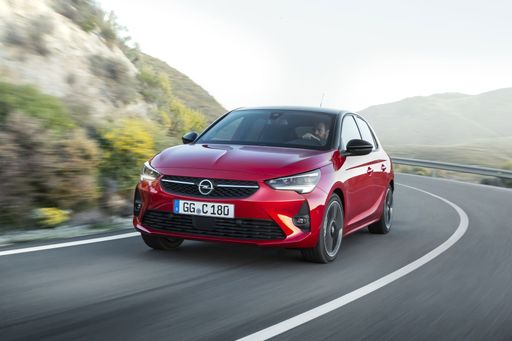
On the move, the Ford Focus and Opel Corsa reveal two distinct personalities: one feels poised and grown-up, the other eager and light-footed. The Focus gives a sense of composure whether you’re threading roundabouts or stretching out on an open road, while the Corsa’s compactness and quick reactions make it a natural in dense traffic and tight parking. Both are capable in their own lanes, it just depends whether you favour planted confidence or feisty agility. Choose the flavour that suits your daily commute and weekend escapes.
Corsa @ Opel / Stellantis Media

Behind the Wheel

Steering and suspension tell the story of intent: the Focus steers with measured feedback and a suspension that settles into corners, whereas the Corsa trades a bit of that heft for a livelier, more playful feel. That liveliness makes the Corsa feel effortless in urban manoeuvres, but the Focus rewards a firmer hand on longer runs and when you want composure at pace. Neither is harsh — both aim to balance comfort with driver engagement — but they do so in noticeably different ways. Your preference for precision versus pep will decide which seat feels right.

Focus @ Ford Motor Company / Ford Media Center

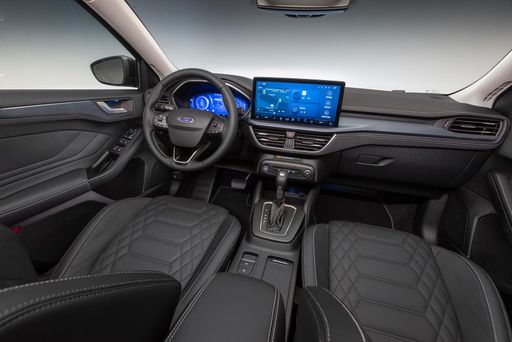
Cabin Comfort and Controls

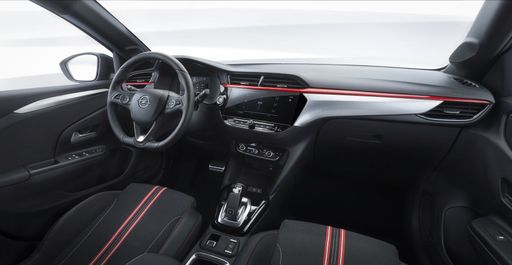
Step inside and you notice the tone each car strikes: the Focus leans toward a more grown-up layout with a reassuringly solid switchgear and supportive seating, while the Corsa favours a bright, user-friendly environment that’s easy to live with day to day. Controls are generally intuitive in both, though the Focus feels slightly more refined for longer stints and the Corsa rewards anyone who values simplicity and reachability over gadgetry. Visibility and general ergonomics are strong points for everyday usability in both cabins. In short, the Focus whispers “executive commuter,” the Corsa chirps “city-friendly companion.”

Corsa @ Opel / Stellantis Media

Living with It: Space and Practicalities

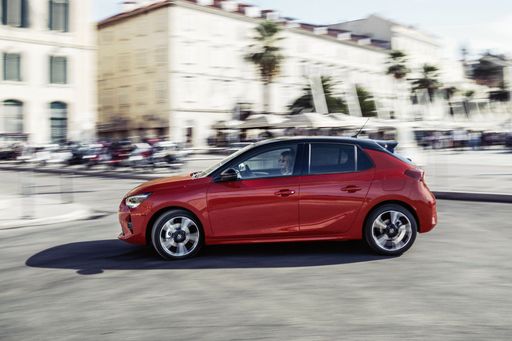
If you regularly haul passengers, kit or the odd weekend project, the two approach practicality differently: the Focus offers a more accommodating, grown-up package that makes family life and longer trips less of a squeeze, whereas the Corsa maximises its compact footprint to make urban life easier. Rear-seat access and day-to-day stowage reflect those priorities — one leans toward generous usability, the other toward clever packaging in tight spaces. For buyers balancing family duty with city living, the decision will hinge on how often you need the extra room. Both will do the job, but they do it with different emphases.

Focus @ Ford Motor Company / Ford Media Center

Looks and Character

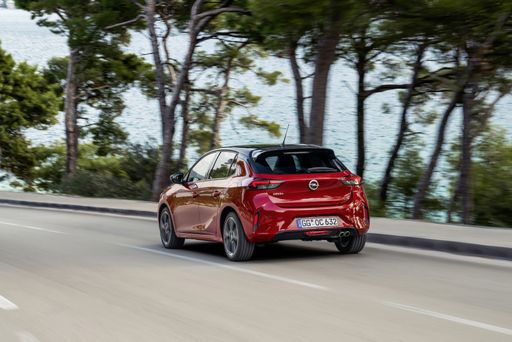
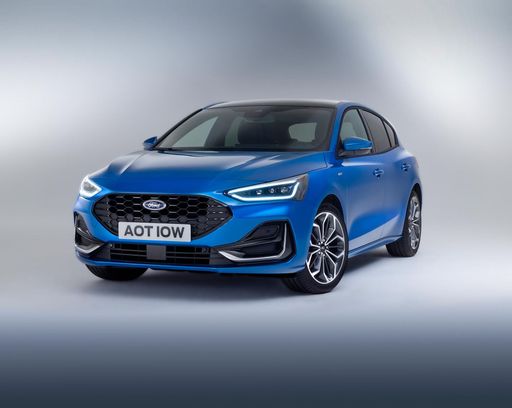
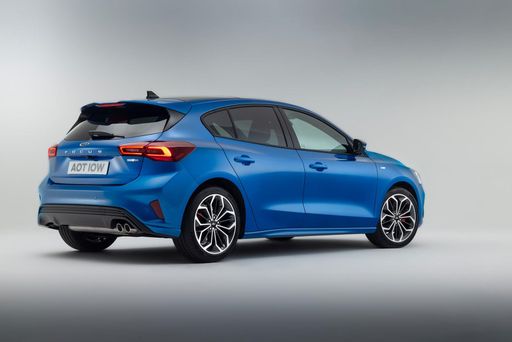
Stylistically, the Focus presents a more mature, cohesive presence that reads as purpose-built and slightly more serious, while the Corsa goes for a cheekier, contemporary look that aims to attract younger, style-conscious buyers. Personality seeps through the detailing: the Focus intends to be universally appealing with subtle authority, whereas the Corsa wants to be noticed in the car park and feels a touch more playful. Either way, you’re getting a head-turner in the right environment — one for understated confidence, the other for urban charisma. It’s a matter of taste rather than correctness.

Corsa @ Opel / Stellantis Media

Who Should Put Which on Their Driveway?

Commuters who value composed stability and a grown-up feel will likely find the Focus more satisfying on longer daily runs, while city dwellers and first-time buyers who prioritise manoeuvrability and low fuss will appreciate the Corsa’s compact charm. Families who need extra breathing room for children and cargo will lean toward the model with the more accommodating interior, whereas those who live in tight urban quarters or want a cheaper-to-own urban shuttle will favour the smaller package. Ultimately, your lifestyle — not a spec sheet — should decide which suits you best.

Stick Around for the Verdict

If you’re invested in how these characters stack up in our full DriveDuel scoring, stay tuned — we’ll be breaking down every nuance and revealing the DriveDuel Champion shortly, so keep reading to see which model earns the crown. This is where subtle differences turn into decisive choices, and you won’t want to miss the final call. Find out which car fits your priorities and lifestyle when we unveil the result. Keep going — the prize is coming up next.

Here’s where it gets real: The technical differences in detail

Costs and Efficiency:

Looking at overall running costs, both models reveal some interesting differences in everyday economy.

Vauxhall Corsa has a convincingly advantage in terms of price – it starts at 19600 £, while the Ford Focus costs 27500 £. That’s a price difference of around 7894 £.

Fuel consumption also shows a difference: Vauxhall Corsa manages with 4.60 L and is therefore hardly perceptible more efficient than the Ford Focus with 4.90 L. The difference is about 0.30 L per 100 km.

Engine and Performance:

Power, torque and acceleration are the classic benchmarks for car enthusiasts – and here, some clear differences start to show.

When it comes to engine power, the Ford Focus has a convincingly edge – offering 280 HP compared to 156 HP. That’s roughly 124 HP more horsepower.

In acceleration from 0 to 100 km/h, the Ford Focus is clearly perceptible quicker – completing the sprint in 5.70 s, while the Vauxhall Corsa takes 7.90 s. That’s about 2.20 s faster.

In terms of top speed, the Ford Focus performs a bit better – reaching 250 km/h, while the Vauxhall Corsa tops out at 210 km/h. The difference is around 40 km/h.

There’s also a difference in torque: Ford Focus pulls evident stronger with 420 Nm compared to 260 Nm. That’s about 160 Nm difference.

Space and Everyday Use:

Beyond pure performance, interior space and usability matter most in daily life. This is where you see which car is more practical and versatile.

Both vehicles offer seating for 5 people.

In curb weight, Vauxhall Corsa is a bit lighter – 1175 kg compared to 1330 kg. The difference is around 155 kg.

In terms of boot space, the Ford Focus offers evident more room – 392 L compared to 309 L. That’s a difference of about 83 L.

In maximum load capacity, the Ford Focus performs clearly perceptible better – up to 1354 L, which is about 273 L more than the Vauxhall Corsa.

When it comes to payload, Ford Focus noticeable takes the win – 560 kg compared to 445 kg. That’s a difference of about 115 kg.

Who wins the race?

The Ford Focus proves to be leaves the rival little chance and therefore becomes our DriveDuel Champion!
Ford Focus is the better all-rounder in this comparison.

from about £27,500
Focus @ Ford Motor Company / Ford Media Center

Ford Focus

  • Engine Type : Petrol MHEV, Diesel, Petrol
  • Transmission : Manuel, Automatic
  • Drive Type : Front-Wheel Drive
  • Power HP : 115 - 280 HP
  • Consumption L/100km : 4.9 - 8 L

Ford Focus

The Ford Focus remains a clever all‑rounder that balances sharp handling with everyday comfort, making it a strong choice whether your commute is city streets or country lanes. Its practical cabin and sensible running costs mean you’ll spend more time enjoying the drive and less time worrying about ownership, with a playful streak underfoot that keeps things interesting.

details

Vauxhall Corsa

The Opel Corsa is a tidy little package that blends cheeky styling with sensible practicality, perfect for city streets and weekend escapes alike. It’s easy to live with, economical to run and just lively enough to make daily driving a bit more fun.

details
Ford Focus
Vauxhall Corsa
Focus @ Ford Motor Company / Ford Media Center
Corsa @ Opel / Stellantis Media

Costs and Consumption

Price
27500 - 42700 £
Price
19600 - 30600 £
Consumption L/100km
4.9 - 8 L
Consumption L/100km
4.6 - 5.3 L
Consumption kWh/100km
-
Consumption kWh/100km
14.4 - 16.2 kWh
Electric Range
-
Electric Range
347 - 424 km
Battery Capacity
-
Battery Capacity
46 - 51 kWh
co2
117 - 183 g/km
co2
0 - 120 g/km
Fuel tank capacity
52 L
Fuel tank capacity
44 L

Dimensions and Body

Body Type
Hatchback
Body Type
Hatchback
Seats
5
Seats
5
Doors
5
Doors
5
Curb weight
1330 - 1529 kg
Curb weight
1175 - 1544 kg
Trunk capacity
392 L
Trunk capacity
267 - 309 L
Length
4382 - 4397 mm
Length
4061 mm
Width
1825 - 1844 mm
Width
1765 mm
Height
1438 - 1482 mm
Height
1435 mm
Max trunk capacity
1354 L
Max trunk capacity
1004 - 1081 L
Payload
495 - 560 kg
Payload
376 - 445 kg

Engine and Performance

Engine Type
Petrol MHEV, Diesel, Petrol
Engine Type
Petrol, Electric, Petrol MHEV
Transmission
Manuel, Automatic
Transmission
Manuel, Automatic
Transmission Detail
Manual Gearbox, Dual-Clutch Automatic, Automatic Gearbox
Transmission Detail
Manual Gearbox, Reduction Gearbox, Dual-Clutch Automatic
Drive Type
Front-Wheel Drive
Drive Type
Front-Wheel Drive
Power HP
115 - 280 HP
Power HP
100 - 156 HP
Acceleration 0-100km/h
5.7 - 11.8 s
Acceleration 0-100km/h
7.9 - 9.9 s
Max Speed
186 - 250 km/h
Max Speed
150 - 210 km/h
Torque
170 - 420 Nm
Torque
205 - 260 Nm
Number of Cylinders
3 - 4
Number of Cylinders
3
Power kW
85 - 206 kW
Power kW
74 - 115 kW
Engine capacity
999 - 2261 cm3
Engine capacity
1199 cm3

General

Model Year
2022 - 2024
Model Year
2023 - 2025
CO2 Efficiency Class
D, G
CO2 Efficiency Class
D, A, C
Brand
Ford
Brand
Vauxhall
What drive types are available for the Ford Focus?

Available configurations include Front-Wheel Drive.

The prices and data displayed are estimates based on German list prices and may vary by country. This information is not legally binding.