VS

Ford Focus vs Ford Kuga comparison

Compare performance (280 HP vs 243 HP), boot space and price (27,500 £ vs 34,200 £ ) at a glance. Find out which car is the better choice for you – Ford Focus or Ford Kuga?

Ford Focus vs Ford Kuga: Key differences

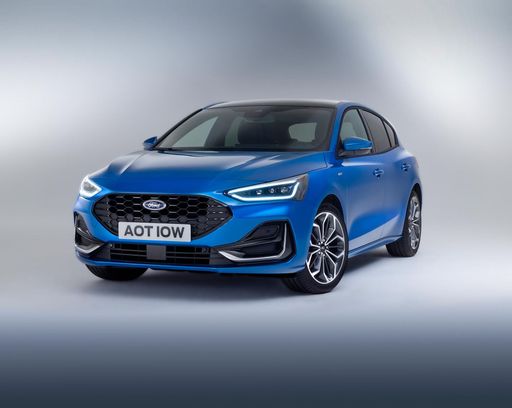
Ford Focus

4.6 (1 Reviews)
rate
  • clearly cheaper
  • somewhat more power
  • markedly quicker 0–100 km/h
  • somewhat lighter

Ford Kuga

4.3 (5 Reviews)
rate
  • significantly more efficient

All details on performance, efficiency, range and trunk space can be found in the technical comparison below – including user reviews for both models.

Focus

City Mischief vs Country Calm

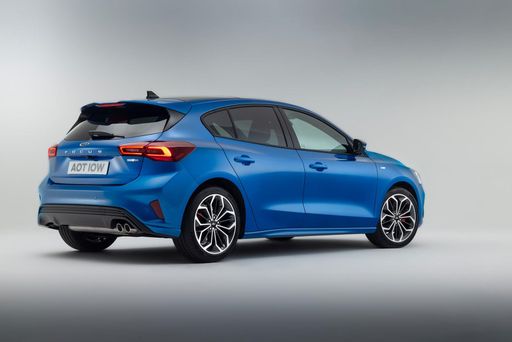
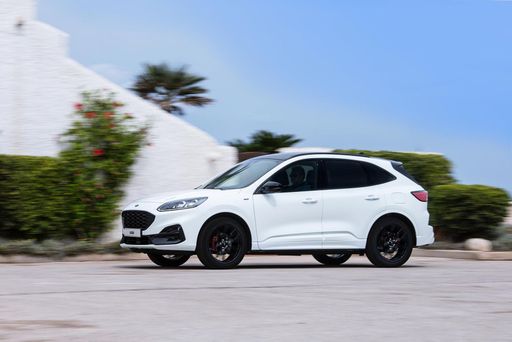
Think of the Focus as the compact prankster that loves threading through traffic and parking where other cars only dream of squeezing in, while the Kuga plays the role of the calm, confident companion that likes a bit more road under its tyres and a higher view of the world. In town the Focus feels eager and alive, rewarding quick direction changes with a grin, whereas the Kuga offers a more relaxed demeanour that reassures rather than excites. Both have their moments: one for darting through the urban jungle, the other for settling into a composed groove when distances grow. Your daily landscape will tell you which personality fits better into your life.
Kuga

Seat of Power

Behind the wheel the Focus speaks to drivers who want a direct, connected experience — steering that feels communicative and a chassis that welcomes a bend. The Kuga, by contrast, prioritises composure and isolation from the road, giving a sense of elevated control that suits longer tours and mixed surfaces. Neither is harsh; the Focus simply flirts with sportiness while the Kuga leans into comfort. Pick based on whether you crave engagement or reassurance when you look out over the bonnet.

Focus

Living with It

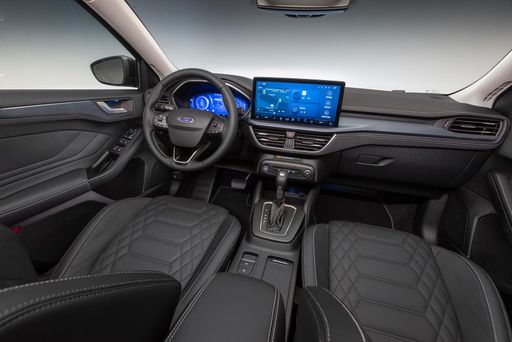
Inside, the Focus wraps you in a cockpit that favours driver-friendly ergonomics and a snug feeling, which some will find invigorating and others slightly confining for taller occupants. The Kuga trades a bit of intimacy for a more airy cabin and an easier approach to loading everyday kit, making family routines and weekend gear less of a choreography. Both cabins are sensible and modern in their layouts, but the way they prioritise space and access speaks clearly to different households. Think about how often you pile in passengers and cargo — that habit will shape which interior will feel nicer day after day.

Kuga

Running Costs and Real Life

In daily ownership the Focus tends to sit on the cheaper end of the spectrum and feels easier to live with for tight city budgets or frequent short trips, while the Kuga asks for a slightly larger commitment but returns that in versatility and a sense of long-haul efficiency. Insurance, servicing expectations and the way each car eats up tyres and parking spaces will steer total costs in practical directions rather than dramatic swings. If your life is mostly close-to-home errands, the Focus makes a lot of sense; if your week includes long motorway runs or regular family-hauling duties, the Kuga’s strengths become more apparent. It’s a trade-off where lifestyle matters more than headline figures.

Focus

Looks that Turn Heads

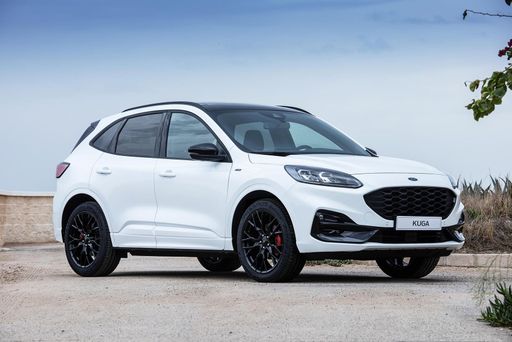
The Focus wears its design like a crisp suit — athletic, sharp and unmistakably driven — while the Kuga adopts a bulkier, more purposeful stance that signals capability and presence. Inside, finishes and materials are competitive across both, but the Focus pushes a sportier vibe and the Kuga aims for a more premium, roomy feel. Style-wise it’s a choice between urban dynamism and confident SUV understatement, each with its own crowd of admirers. Pick the silhouette that matches the image you want to project on the street.

Kuga

Who’s Sitting in the Driver’s Seat?

Commuters and those who live in tight urban grids will likely love the Focus for its agility and easy-fit manners, while families and drivers who prioritise flexibility and a commanding view of the road are better served by the Kuga. Style-conscious buyers who want a sporty hatchback vibe will gravitate to the Focus, whereas those who need versatility for child seats, pet crates and weekend kit will appreciate what the Kuga brings. Ultimately, your weekly routine — from school runs to business trips — should be the deciding map. Choose the character that makes your life simpler and more enjoyable.

Don’t Go Just Yet

Both cars offer strong, distinct personalities and choosing between them comes down to how you live, drive and pack your days; neither is a wrong choice, just a different fit. Read on for our detailed driving impressions and ownership notes to see how subtle differences play out on real roads and in real garages. Stay with us — the DriveDuel Champion will be revealed afterwards, and the next few pages will make your decision much easier.

Here’s where it gets real: The technical differences in detail

Focus

Costs and Efficiency:

Price and efficiency are often the first things buyers look at. Here it becomes clear which model has the long-term edge – whether at the pump, the plug, or in purchase price.

Ford Focus is clearly cheaper – starting at 27,500 £ , while the Ford Kuga costs 34,200 £ . That’s a price difference of around 6,728 £.

Fuel consumption also shows a difference: the Ford Kuga uses 2.8 L/100km and is significantly more efficient than the Ford Focus with 4.9 L/100km. The difference is about 2.1 L/100km.

Kuga

Engine and Performance:

Under the bonnet, it becomes clear which model is tuned for sportiness and which one takes the lead when you hit the accelerator.

When it comes to engine power, the Ford Focus offers somewhat more power – delivering 280 HP compared to 243 HP. That’s roughly 37 HP more horsepower.

When accelerating from 0 to 100 km/h, the Ford Focus is markedly quicker – completing the sprint in 5.7 s, while the Ford Kuga takes 7.3 s. That’s about 1.6 s quicker.

There’s also a difference in torque: the Ford Focus delivers clearly more torque with 420 Nm compared to 240 Nm. That’s about 180 Nm more.

Focus

Space and Everyday Use:

Beyond pure performance, interior space and usability matter most in daily life. This is where you see which car is more practical and versatile.

Both vehicles offer seating for 5 people.

In terms of curb weight, Ford Focus is somewhat lighter – 1,330 kg compared to 1,526 kg. The difference is around 196 kg.

When it comes to payload, the Ford Focus carries marginally more – 560 kg compared to 550 kg. That’s a difference of about 10 kg.

Who wins the race in the data check?

The Ford Kuga leads convincingly in the objective data comparison.
This result only shows which model scores more points on paper – not which of the two cars feels right for you.

from £34,200
Kuga

Ford Kuga

  • Engine Type : Petrol, Full Hybrid, Plugin Hybrid
  • Transmission : Manuel, Automatic
  • Drive Type : Front-Wheel Drive, All-Wheel Drive
  • Power HP : 150 - 243 HP
  • Consumption L/100km : 2.8 - 6.8 L/100km
  • Electric Range : 68 km
Ford Focus
Ford Kuga

Costs and Consumption

View detailed analysis

Engine and Performance

View detailed analysis

Dimensions and Body

View detailed analysis

Ford Focus

The Ford Focus remains a clever all‑rounder that balances sharp handling with everyday comfort, making it a strong choice whether your commute is city streets or country lanes. Its practical cabin and sensible running costs mean you’ll spend more time enjoying the drive and less time worrying about ownership, with a playful streak underfoot that keeps things interesting.

details

Ford Kuga

The Kuga is Ford’s adaptable family SUV that blends usable space with a surprisingly lively driving character, making daily commutes and weekend escapes equally enjoyable. With smart interior packaging, an easy-to-use infotainment setup and composed road manners, it’s a sensible choice for buyers who want a bit of fun without the fuss.

details
Ford Focus
Ford Kuga

Costs and Consumption

Price
27,500 - 42,700 £
Price
34,200 - 46,300 £
Consumption L/100km
4.9 - 8 L/100km
Consumption L/100km
2.8 - 6.8 L/100km
Consumption kWh/100km
-
Consumption kWh/100km
-
Electric Range
-
Electric Range
68 km
Battery Capacity
-
Battery Capacity
-
co2
117 - 183 g/km
co2
55 - 154 g/km
Fuel tank capacity
52 L
Fuel tank capacity
-

Dimensions and Body

Body Type
Hatchback
Body Type
SUV
Seats
5
Seats
5
Doors
5
Doors
-
Curb weight
1,330 - 1,529 kg
Curb weight
1,526 - 1,859 kg
Trunk capacity
392 L
Trunk capacity
-
Length
4,382 - 4,397 mm
Length
-
Width
1,825 - 1,844 mm
Width
1,882 mm
Height
1,438 - 1,482 mm
Height
-
Max trunk capacity
1,354 L
Max trunk capacity
-
Payload
495 - 560 kg
Payload
541 - 550 kg

Engine and Performance

Engine Type
Petrol MHEV, Diesel, Petrol
Engine Type
Petrol, Full Hybrid, Plugin Hybrid
Transmission
Manuel, Automatic
Transmission
Manuel, Automatic
Transmission Detail
Manual Gearbox, Dual-Clutch Automatic, Automatic Gearbox
Transmission Detail
Manual Gearbox, CVT, Automatic Gearbox
Drive Type
Front-Wheel Drive
Drive Type
Front-Wheel Drive, All-Wheel Drive
Power HP
115 - 280 HP
Power HP
150 - 243 HP
Acceleration 0-100km/h
5.7 - 11.8 s
Acceleration 0-100km/h
7.3 - 9.9 s
Max Speed
186 - 250 km/h
Max Speed
-
Torque
170 - 420 Nm
Torque
240 Nm
Number of Cylinders
3 - 4
Number of Cylinders
3 - 4
Power kW
85 - 206 kW
Power kW
111 - 178 kW
Engine capacity
999 - 2,261 cm3
Engine capacity
1,496 - 2,488 cm3

General

Model Year
2,022 - 2,024
Model Year
2,025
CO2 Efficiency Class
D, G
CO2 Efficiency Class
E, D, B
Brand
Ford
Brand
Ford
DriveDuel uses data analysis and artificial intelligence to evaluate vehicle data and create content. Content is regularly reviewed and improved. The displayed prices are estimates based on German list prices, adjusted to the respective country’s VAT. Country-specific registration taxes are not included. This information is not legally binding.