VS

Ford Focus vs Kia Ceed comparison

Compare performance (280 HP vs 140 HP), boot space and price (27,500 £ vs 23,500 £ ) at a glance. Find out which car is the better choice for you – Ford Focus or Kia Ceed?

Ford Focus vs Kia Ceed: Key differences

Ford Focus

4.6 (1 Reviews)
rate
  • substantially more power
  • markedly more efficient
  • considerably quicker 0–100 km/h
details

Kia Ceed

4.4 (1 Reviews)
rate
  • slightly cheaper
  • only slightly lighter
details

All details on performance, efficiency, range and trunk space can be found in the technical comparison below – including user reviews for both models.

By Achim Sedelmaier

Focus

Ford Focus VS Kia Ceed — compact hatchbacks, different priorities

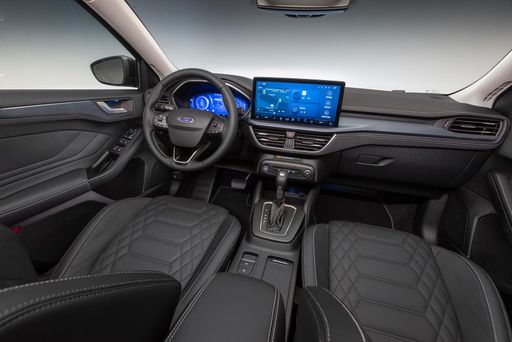
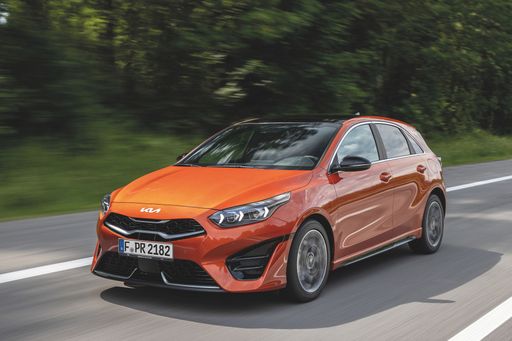
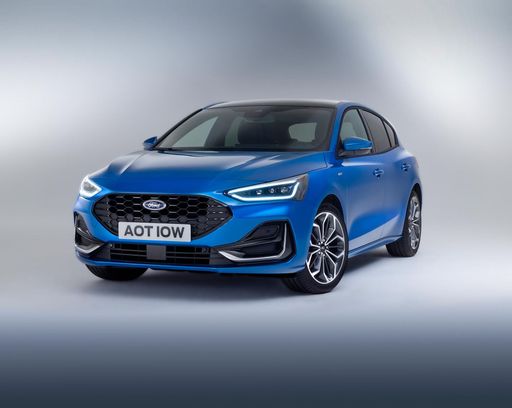
Ford Focus VS Kia Ceed set the tone for two distinct takes on the compact class: the Ford Focus is built around driver engagement and rear-seat space, while the Kia Ceed prioritises everyday usability and long-term reassurance. The Focus feels sharper and more connected when you push on, whereas the Ceed trades that edge for a calmer, more forgiving ride. Both cars are sensible for a family, but they reach that goal by different routes — feel versus fuss-free practicality. That contrast is what will decide most buyers rather than headline specs.
Ceed

Character and driving feel

The Ford Focus is the one you notice behind the wheel: precise steering, taut body control and a tendency to reward an engaged driver with predictable responses. The Kia Ceed is quieter in its emotional register — neutral steering, comfortable composure and a focus on predictable, confidence-inspiring behaviour rather than excitement. In everyday driving the Focus makes cornering and overtaking feel alive, while the Ceed aims to make those same tasks effortless and unobtrusive. Choose the Focus if you want involvement; pick the Ceed if you prefer calm and low-stress manners.

Focus

Comfort and long-distance behaviour

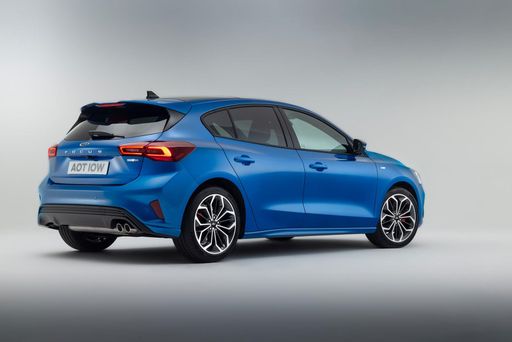
On long runs the Focus surprises with strong motorway manners — stable, composed and with good noise suppression — but the ride can feel firmer, especially on sportier wheels. The Ceed leans into comfort: softer suspension tuning, easy-seat comfort and a layout that keeps fatigue down over hours behind the wheel. Rear passengers will notice a difference too: the Focus tends to offer a touch more legroom, while the Ceed compensates with a roomier, lower-loading boot that makes packing for trips simpler. In short, the Focus is a sportier cruiser; the Ceed is the relaxed tourer.

Ceed

Cabin usability and perceived quality

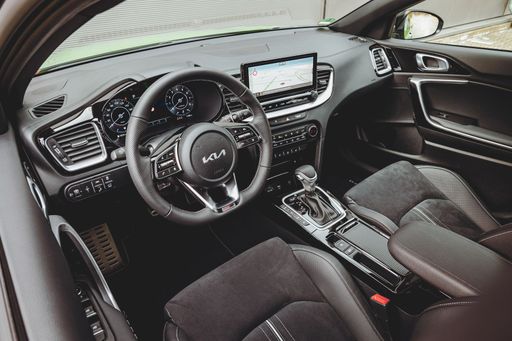
The Focus presents a modern interior with a large central screen that gives it a high-tech feel, but some controls — notably climate functions — are moved into touch interfaces that can be fiddly on the move. The Ceed keeps things straightforward with physical knobs and a clear, conservative layout that rewards drivers who want minimal distraction. Material choices feel different too: the Focus leans more functional than luxurious, while the Ceed aims for durable finishes and a reassuringly solid fit and finish. If tactile buttons and a long warranty matter, the Ceed wins on everyday usability; if you want a more contemporary cockpit and bigger digital presence, the Focus will appeal more.

Focus

Practicality and city friendliness

For city life the Kia Ceed’s lower boot sill and pragmatic loading area make shopping runs and weekend gear less of a hassle, and its cabin ergonomics favour quick, intuitive use. The Ford Focus, despite a slightly higher loading lip, scores for manoeuvrability and steering feel — parking and tight turns feel confident, and driver aids can help in cramped spaces. The Ceed’s automatic transmission can be a little hesitant from a standstill in heavy traffic, which is a real annoyance for urban commuters, while the Focus’s drivetrains tend to feel more immediate. So urban buyers who prize easy loading and simple controls will favour the Ceed, whereas those who want sharper city manners should lean toward the Focus.

Ceed

Who should buy which car?

If your priority is driving enjoyment, rear-seat comfort for adults and a cockpit that feels modern and engaging, the Ford Focus aligns with those needs and rewards drivers who value handling and motorway composure. If you want a compact that minimises fuss, offers practical boot space, comfortable ride quality and reassurance through long warranty coverage, the Kia Ceed is the pragmatic choice. Both are capable daily drivers, but the trade-off is clear: choose feeling and involvement with the Focus, or pick low-maintenance practicality and user-friendly design with the Ceed. The technical comparison that follows will make those trade-offs measurable for items like fuel use, performance and load capacity so you can match figures to the real-world priorities above.

Here’s where it gets real: The technical differences in detail

Focus

Costs and Efficiency:

Looking at overall running costs, both models reveal some interesting differences in everyday economy.

Kia Ceed is slightly cheaper – starting at 23,500 £ , while the Ford Focus costs 27,500 £ . That’s a price difference of around 4,037 £.

Fuel consumption also shows a difference: the Ford Focus uses 4.9 L/100km and is markedly more efficient than the Kia Ceed with 6 L/100km. The difference is about 1.1 L/100km.

Ceed

Engine and Performance:

Under the bonnet, it becomes clear which model is tuned for sportiness and which one takes the lead when you hit the accelerator.

When it comes to engine power, the Ford Focus offers substantially more power – delivering 280 HP compared to 140 HP. That’s roughly 140 HP more horsepower.

When accelerating from 0 to 100 km/h, the Ford Focus is considerably quicker – completing the sprint in 5.7 s, while the Kia Ceed takes 9.5 s. That’s about 3.8 s quicker.

There’s also a difference in torque: the Ford Focus delivers visibly more torque with 420 Nm compared to 253 Nm. That’s about 167 Nm more.

Focus

Space and Everyday Use:

Beyond pure performance, interior space and usability matter most in daily life. This is where you see which car is more practical and versatile.

Both vehicles offer seating for 5 people.

In terms of curb weight, Kia Ceed is only slightly lighter – 1,298 kg compared to 1,330 kg. The difference is around 32 kg.

When it comes to payload, the Ford Focus carries slightly more – 560 kg compared to 490 kg. That’s a difference of about 70 kg.

Who wins the race in the data check?

The Ford Focus stands well ahead of its rival in the objective data comparison.
This result only shows which model scores more points on paper – not which of the two cars feels right for you.

from £27,500
Focus

Ford Focus

  • Engine Type Petrol MHEV, Diesel, Petrol
  • Transmission Manuel, Automatic
  • Drive Type Front-Wheel Drive
  • Power HP 115 - 280 HP
  • Consumption L/100km 4.9 - 8 L/100km
Ford Focus
Kia Ceed

Costs and Consumption

View detailed analysis

Engine and Performance

View detailed analysis

Dimensions and Body

View detailed analysis

Ford Focus

The Ford Focus remains a clever all‑rounder that balances sharp handling with everyday comfort, making it a strong choice whether your commute is city streets or country lanes. Its practical cabin and sensible running costs mean you’ll spend more time enjoying the drive and less time worrying about ownership, with a playful streak underfoot that keeps things interesting.

details

Kia Ceed

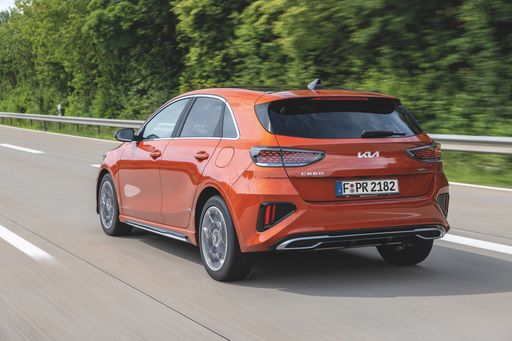
The Kia Ceed is a sensible, stylish hatchback that gives buyers more than they'd expect for the money, blending practical space with crisp, modern looks. It drives with measured confidence and comes loaded with user-friendly kit, so you can enjoy daily life behind the wheel without breaking into a sweat.

details
Ford Focus
Kia Ceed

Costs and Consumption

Price
27,500 - 42,700 £
Price
23,500 - 26,300 £
Consumption L/100km
4.9 - 8 L/100km
Consumption L/100km
6 - 6.4 L/100km
Consumption kWh/100km
-
Consumption kWh/100km
-
Electric Range
-
Electric Range
-
Battery Capacity
-
Battery Capacity
-
co2
117 - 183 g/km
co2
137 - 146 g/km
Fuel tank capacity
52 L
Fuel tank capacity
-

Dimensions and Body

Body Type
Hatchback
Body Type
Hatchback
Seats
5
Seats
5
Doors
5
Doors
-
Curb weight
1,330 - 1,529 kg
Curb weight
1,298 - 1,372 kg
Trunk capacity
392 L
Trunk capacity
-
Length
4,382 - 4,397 mm
Length
-
Width
1,825 - 1,844 mm
Width
1,800 mm
Height
1,438 - 1,482 mm
Height
-
Max trunk capacity
1,354 L
Max trunk capacity
-
Payload
495 - 560 kg
Payload
478 - 490 kg

Engine and Performance

Engine Type
Petrol MHEV, Diesel, Petrol
Engine Type
Petrol, Petrol MHEV
Transmission
Manuel, Automatic
Transmission
Manuel, Automatic
Transmission Detail
Manual Gearbox, Dual-Clutch Automatic, Automatic Gearbox
Transmission Detail
Manual Gearbox, Dual-Clutch Automatic
Drive Type
Front-Wheel Drive
Drive Type
Front-Wheel Drive
Power HP
115 - 280 HP
Power HP
100 - 140 HP
Acceleration 0-100km/h
5.7 - 11.8 s
Acceleration 0-100km/h
9.5 - 13.2 s
Max Speed
186 - 250 km/h
Max Speed
-
Torque
170 - 420 Nm
Torque
172 - 253 Nm
Number of Cylinders
3 - 4
Number of Cylinders
3 - 4
Power kW
85 - 206 kW
Power kW
74 - 103 kW
Engine capacity
999 - 2,261 cm3
Engine capacity
998 - 1,482 cm3

General

Model Year
2,022 - 2,024
Model Year
2024
CO2 Efficiency Class
D, G
CO2 Efficiency Class
E
Brand
Ford
Brand
Kia
DriveDuel uses data analysis and artificial intelligence to evaluate vehicle data and create content. Content is regularly reviewed and improved. The displayed prices are estimates based on German list prices, adjusted to the respective country’s VAT. Country-specific registration taxes are not included. This information is not legally binding.