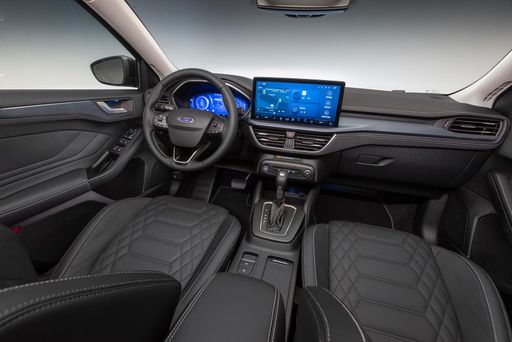
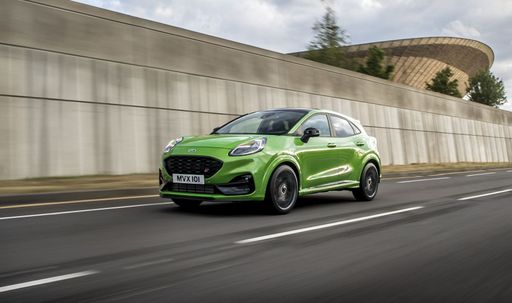
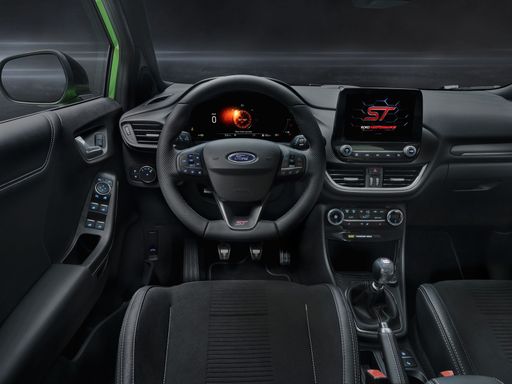
VS

Ford Focus vs Ford Puma comparison

Compare performance (280 HP vs 168 HP), boot space and price (27,500 £ vs 23,900 £ ) at a glance. Find out which car is the better choice for you – Ford Focus or Ford Puma?

Ford Focus vs Ford Puma: Key differences

Ford Focus

4.6 (1 Reviews)
rate
  • noticeably more power
  • slightly more efficient
  • visibly quicker 0–100 km/h

Ford Puma

3 (11 Reviews)
rate
  • slightly cheaper
  • marginally lighter

All details on performance, efficiency, range and trunk space can be found in the technical comparison below – including user reviews for both models.

Focus

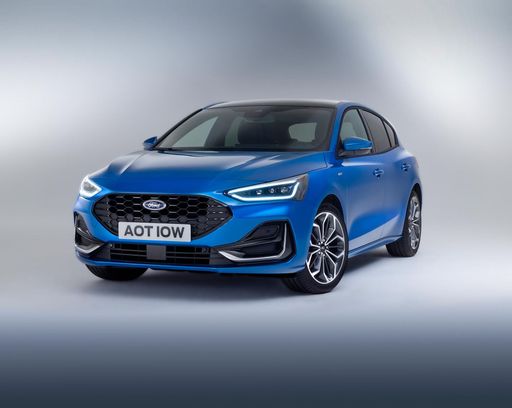
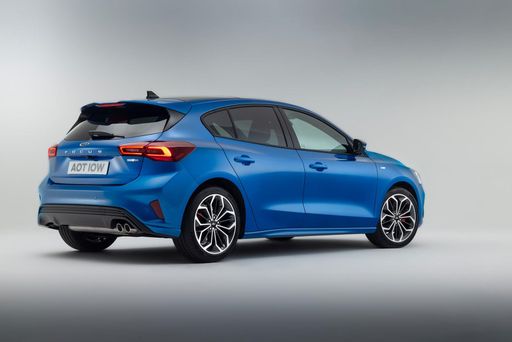
Two Fords, Two Moods

Meet the pair: a familiar hatch that has spent years sharpening its manners, and a compact crossover that turned up to the party with a grin and a bigger personality. Both wear the oval badge and share a pragmatic streak, but they speak to very different tastes behind the wheel. This is less about which one is right on paper and more about which one fits your life and ego.
Puma

Understated Discipline vs. Playful Attitude

The Focus feels engineered for intent — composed, communicative and a little serious about cornering, the sort of car that rewards concentration. The Puma answers with ease and charm: a bouncier, more upright character that likes to be noticed and makes the day-to-day feel less formal. One says “purposeful,” the other says “I’m comfortable with attention.”

Focus

How They Live with You Daily

On longer runs the Focus tends to settle in, slicing through traffic with a steady demeanour and an interior that keeps distractions to a minimum. The Puma leans into urban life, where its higher stance and flexible practicality make school runs, tight parking and weekend gear-hauls feel simpler. Both cope well with everyday chores, but they go about it with distinct priorities: involvement versus convenience.

Puma

Choosing a Car That Talks About You

If you’re after a car that projects quiet competence the Focus lets you justify your choice with substance — it’s the car for someone who cares about driving manners and a tidy package. The Puma is a louder statement: more playful, more lifestyle-fluent, and easier to sell at a glance as the kind of car that fits a busy, social life. Neither is shy; they just advertise different virtues.

Focus

If what matters to you is driving focus and methodical sense

If what matters to you is crisp responses, purposeful setup and a no-nonsense approach to everyday use, the Ford Focus will feel like a natural fit. It suits someone who values tidy ergonomics and a steering feel that gives confidence on longer journeys. Expect practicality delivered with a driver’s mindset rather than loud theatrics.

Puma

If what matters to you is charm, presence and flexible living

If what matters to you is a car that feels friendly, lifts the mood of the daily routine and offers adaptable space for hobbies and errands, the Ford Puma is pitched at that life. Where the Focus trades on driver engagement, this one trades on personality and everyday convenience, making it easy to live with and pleasantly conspicuous. Read the data that follows and then decide which kind of companion you want in your driveway.

Here’s where it gets real: The technical differences in detail

Focus

Costs and Efficiency:

Price and efficiency are often the first things buyers look at. Here it becomes clear which model has the long-term edge – whether at the pump, the plug, or in purchase price.

Ford Puma is slightly cheaper – starting at 23,900 £ , while the Ford Focus costs 27,500 £ . That’s a price difference of around 3,600 £.

Fuel consumption also shows a difference: the Ford Focus uses 4.9 L/100km and is slightly more efficient than the Ford Puma with 5.4 L/100km. The difference is about 0.5 L/100km.

Puma

Engine and Performance:

Power, torque and acceleration are the classic benchmarks for car enthusiasts – and here, some clear differences start to show.

When it comes to engine power, the Ford Focus offers noticeably more power – delivering 280 HP compared to 168 HP. That’s roughly 112 HP more horsepower.

When accelerating from 0 to 100 km/h, the Ford Focus is visibly quicker – completing the sprint in 5.7 s, while the Ford Puma takes 7.4 s. That’s about 1.7 s quicker.

There’s also a difference in torque: the Ford Focus delivers noticeably more torque with 420 Nm compared to 290 Nm. That’s about 130 Nm more.

Focus

Space and Everyday Use:

Whether family car or daily driver – which one offers more room, flexibility and comfort?

Both vehicles offer seating for 5 people.

In terms of curb weight, Ford Puma is marginally lighter – 1,316 kg compared to 1,330 kg. The difference is around 14 kg.

When it comes to payload, the Ford Focus carries a bit more – 560 kg compared to 469 kg. That’s a difference of about 91 kg.

Who wins the race in the data check?

The Ford Focus is far ahead overall in the objective data comparison.
This result only shows which model scores more points on paper – not which of the two cars feels right for you.

from £27,500
Focus

Ford Focus

  • Engine Type : Petrol MHEV, Diesel, Petrol
  • Transmission : Manuel, Automatic
  • Drive Type : Front-Wheel Drive
  • Power HP : 115 - 280 HP
  • Consumption L/100km : 4.9 - 8 L/100km
Ford Focus
Ford Puma

Costs and Consumption

View detailed analysis

Engine and Performance

View detailed analysis

Dimensions and Body

View detailed analysis

Ford Focus

The Ford Focus remains a clever all‑rounder that balances sharp handling with everyday comfort, making it a strong choice whether your commute is city streets or country lanes. Its practical cabin and sensible running costs mean you’ll spend more time enjoying the drive and less time worrying about ownership, with a playful streak underfoot that keeps things interesting.

details

Ford Puma

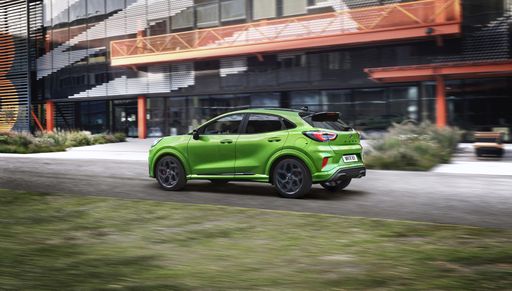
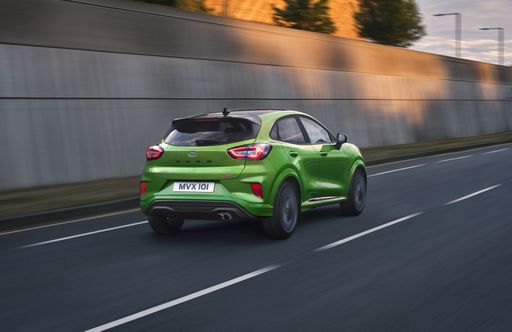
The Ford Puma is a cheeky compact crossover that blends sporty styling with city-friendly practicality, giving drivers a surprisingly fun and composed ride. With clever storage tricks and a lively personality, it’s a smart pick for buyers who want enjoyment without fuss.

details
Ford Focus
Ford Puma

Costs and Consumption

Price
27,500 - 42,700 £
Price
23,900 - 36,300 £
Consumption L/100km
4.9 - 8 L/100km
Consumption L/100km
5.4 - 5.9 L/100km
Consumption kWh/100km
-
Consumption kWh/100km
13 - 13.7 kWh/100km
Electric Range
-
Electric Range
404 - 417 km
Battery Capacity
-
Battery Capacity
-
co2
117 - 183 g/km
co2
0 - 135 g/km
Fuel tank capacity
52 L
Fuel tank capacity
-

Dimensions and Body

Body Type
Hatchback
Body Type
SUV
Seats
5
Seats
5
Doors
5
Doors
-
Curb weight
1,330 - 1,529 kg
Curb weight
1,316 - 1,563 kg
Trunk capacity
392 L
Trunk capacity
-
Length
4,382 - 4,397 mm
Length
-
Width
1,825 - 1,844 mm
Width
1,805 mm
Height
1,438 - 1,482 mm
Height
-
Max trunk capacity
1,354 L
Max trunk capacity
-
Payload
495 - 560 kg
Payload
367 - 469 kg

Engine and Performance

Engine Type
Petrol MHEV, Diesel, Petrol
Engine Type
Petrol MHEV, Electric
Transmission
Manuel, Automatic
Transmission
Manuel, Automatic
Transmission Detail
Manual Gearbox, Dual-Clutch Automatic, Automatic Gearbox
Transmission Detail
Manual Gearbox, Dual-Clutch Automatic, Reduction Gearbox
Drive Type
Front-Wheel Drive
Drive Type
Front-Wheel Drive
Power HP
115 - 280 HP
Power HP
125 - 168 HP
Acceleration 0-100km/h
5.7 - 11.8 s
Acceleration 0-100km/h
7.4 - 9.8 s
Max Speed
186 - 250 km/h
Max Speed
-
Torque
170 - 420 Nm
Torque
170 - 290 Nm
Number of Cylinders
3 - 4
Number of Cylinders
3
Power kW
85 - 206 kW
Power kW
92 - 124 kW
Engine capacity
999 - 2,261 cm3
Engine capacity
999 cm3

General

Model Year
2,022 - 2,024
Model Year
2,025 - 2,026
CO2 Efficiency Class
D, G
CO2 Efficiency Class
D, A
Brand
Ford
Brand
Ford
DriveDuel uses data analysis and artificial intelligence to evaluate vehicle data and create content. Content is regularly reviewed and improved. The displayed prices are estimates based on German list prices, adjusted to the respective country’s VAT. Country-specific registration taxes are not included. This information is not legally binding.