VS

Kia Ceed vs Kia Ceed Sportswagon comparison

Compare performance (140 HP vs 140 HP), boot space and price (23,500 £ vs 24,300 £ ) at a glance. Find out which car is the better choice for you – Kia Ceed or Kia Ceed Sportswagon?

Kia Ceed vs Kia Ceed Sportswagon: Key differences

Kia Ceed

  • very slightly cheaper
  • very slightly quicker 0–100 km/h
  • barely lighter

Kia Ceed Sportswagon

Ceed

A Battle of Versatility: Kia Ceed vs. Kia Ceed Sportswagon

The 2024 Kia Ceed and the Ceed Sportswagon present a fascinating duo in the compact car segment, particularly for those seeking a balance between practicality and performance. Both models come from Kia's stable, sharing similar traits but designed to cater to slightly different lifestyle needs. Here's a closer look at their technical nuances and standout features.

Ceed Sportswagon

Design & Dimensions

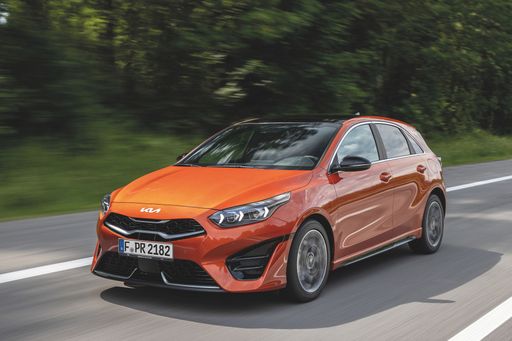
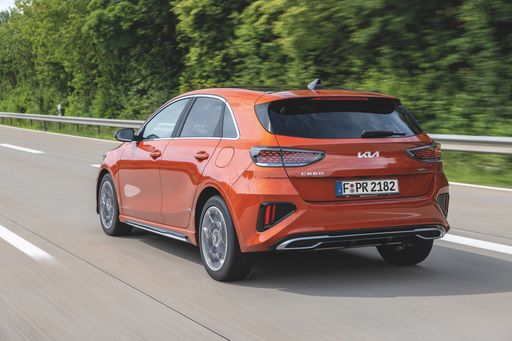
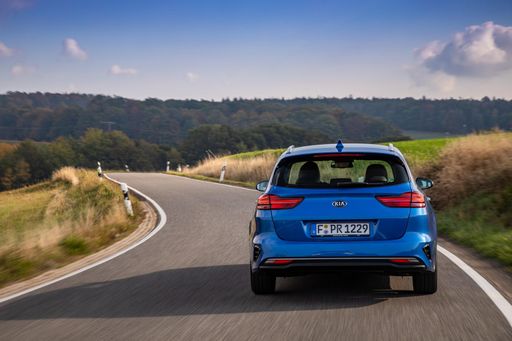
At first glance, the Kia Ceed and Ceed Sportswagon can be distinguished by their body types. The Ceed is a classic hatchback, known for its compact dimensions, measuring 4315 mm in length, 1800 mm in width, and 1447 mm in height. This makes it an ideal companion for urban driving and tight parking spots.

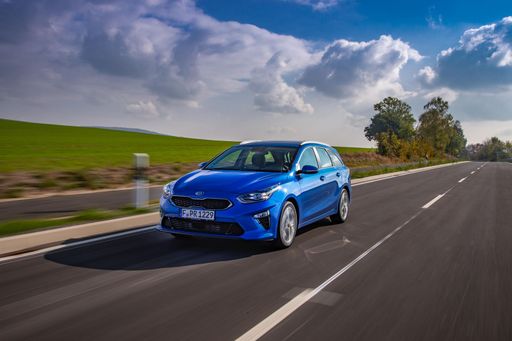
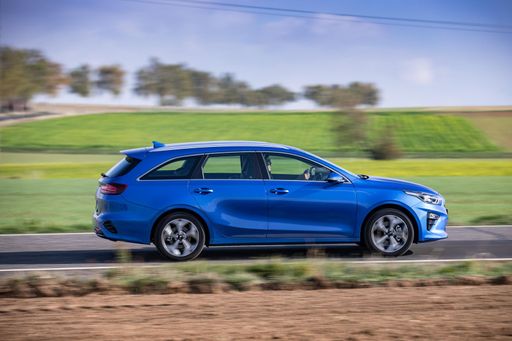
The Ceed Sportswagon, on the other hand, is a more elongated wagon with a length of 4605 mm. Its width matches the Ceed at 1800 mm, but it varies in height from 1422 mm to 1465 mm, offering slightly increased interior space. The wagon design not only enhances its road presence but also significantly boosts cargo capabilities.

Ceed

Performance & Powertrain

Both models feature similar engine options: Petrol and Petrol Mild Hybrid Electric Vehicle (MHEV), with manual and dual-clutch automatic transmissions available. They are powered by either a 1.0-liter 3-cylinder or a 1.5-liter 4-cylinder engine. These configurations cater to a range of driving preferences.

The power output for both the Ceed and Ceed Sportswagon maxes out at 140 HP, translating to a responsive drive. The Ceed can reach 0-100 km/h in as fast as 9.5 seconds, while the Sportswagon logs a similar time of 9.7 seconds for some engine variants. Maximum speeds are impressive as well, with both models capable of reaching up to 197 km/h.

Ceed Sportswagon

Efficiency & Environment

Despite their robust performances, both models maintain reasonable fuel efficiency, consuming between 6.0 to 6.4 liters per 100 km, depending on the engine and configuration. Both the Ceed and Ceed Sportswagon share a CO2 efficiency class rating of E, with carbon emissions ranging between 137 to 146 g/km.

Ceed

Interior Space & Flexibility

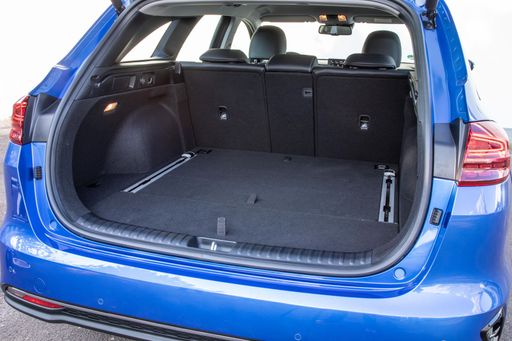
Interior space is where the Ceed Sportswagon shines, boasting a trunk capacity that ranges from 512 to 625 liters, vastly overshadowing the Ceed's 357 to 395 liters. For those needing ample cargo space, particularly families and individuals with active lifestyles, the Sportswagon offers practical flexibility without sacrificing passenger comfort. Both models seat five comfortably, emphasizing Kia's commitment to passenger space and ergonomic design.

Ceed Sportswagon

Innovation & Technology

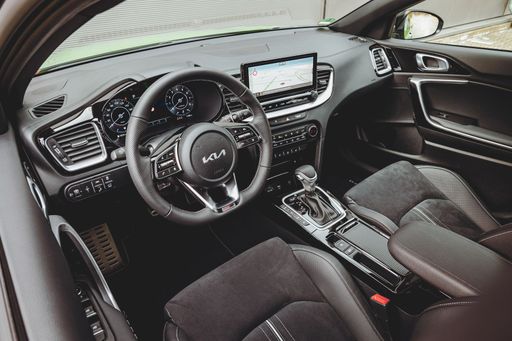
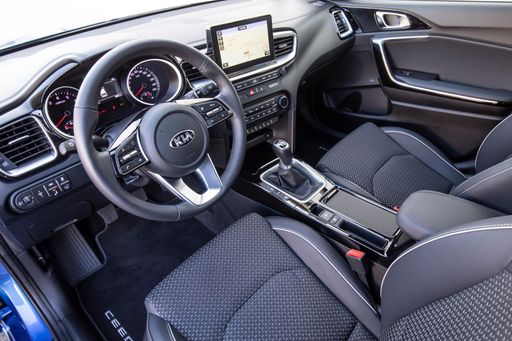
Kia's 2024 lineup continues to usher in its latest technology offerings across both models, with advanced infotainment systems and a suite of safety features. The choice between manual and automatic transmission, combined with state-of-the-art connectivity options, ensures that both models cater to tech-savvy drivers and traditionalists alike.

Conclusion: Choosing Your Ceed

In conclusion, the choice between the Kia Ceed and the Kia Ceed Sportswagon largely depends on the driver's needs and lifestyle. The Ceed hatchback is well-suited for those desiring a compact, city-friendly car without compromising on performance. Meanwhile, the Ceed Sportswagon is perfect for buyers who need extra cargo space and flexibility for a variety of activities.

Both vehicles exemplify Kia's commitment to delivering high-quality, versatile vehicles tailored to the demands of modern drivers. Whichever you choose, the 2024 Kia Ceed and Ceed Sportswagon promise efficiency, style, and reliability.

Here’s where it gets real: The technical differences in detail

Ceed

Costs and Efficiency:

When it comes to price and running costs, the biggest differences usually appear. This is often where you see which car fits your budget better in the long run.

Kia Ceed is very slightly cheaper – starting at 23,500 £ , while the Kia Ceed Sportswagon costs 24,300 £ . That’s a price difference of around 857 £.

Both cars consume an average of 6 L/100km – no difference here.

Ceed Sportswagon

Engine and Performance:

Under the bonnet, it becomes clear which model is tuned for sportiness and which one takes the lead when you hit the accelerator.

Both models deliver identical power – 140 HP each.

When accelerating from 0 to 100 km/h, the Kia Ceed is very slightly quicker – completing the sprint in 9.5 s, while the Kia Ceed Sportswagon takes 9.7 s. That’s about 0.2 s quicker.

Both models offer the same torque – 253 Nm.

Ceed

Space and Everyday Use:

Beyond pure performance, interior space and usability matter most in daily life. This is where you see which car is more practical and versatile.

Both vehicles offer seating for 5 people.

In terms of curb weight, Kia Ceed is barely lighter – 1,298 kg compared to 1,335 kg. The difference is around 37 kg.

When it comes to payload, the Kia Ceed carries marginally more – 490 kg compared to 485 kg. That’s a difference of about 5 kg.

Who wins the race in the data check?

The Kia Ceed holds a slight edge in the objective data comparison.
This result only shows which model scores more points on paper – not which of the two cars feels right for you.

from £23,500
Ceed

Kia Ceed

  • Engine Type : Petrol, Petrol MHEV
  • Transmission : Manuel, Automatic
  • Drive Type : Front-Wheel Drive
  • Power HP : 100 - 140 HP
  • Consumption L/100km : 6 - 6.4 L/100km
Kia Ceed
Kia Ceed Sportswagon

Costs and Consumption

View detailed analysis

Engine and Performance

View detailed analysis

Dimensions and Body

View detailed analysis

Kia Ceed

The Kia Ceed is a sensible, stylish hatchback that gives buyers more than they'd expect for the money, blending practical space with crisp, modern looks. It drives with measured confidence and comes loaded with user-friendly kit, so you can enjoy daily life behind the wheel without breaking into a sweat.

details

Kia Ceed Sportswagon

The Kia Ceed Sportswagon is a sensible and surprisingly stylish family wagon that turns daily chores into a bit less of a grind. Practical, comfortable and packed with thoughtful touches where they matter, it’s a smart choice for buyers who want usefulness without sacrificing personality.

details
Kia Ceed
Kia Ceed Sportswagon

Costs and Consumption

Price
23,500 - 26,300 £
Price
24,300 - 27,200 £
Consumption L/100km
6 - 6.4 L/100km
Consumption L/100km
6 - 6.4 L/100km
Consumption kWh/100km
-
Consumption kWh/100km
-
Electric Range
-
Electric Range
-
Battery Capacity
-
Battery Capacity
-
co2
137 - 146 g/km
co2
137 - 146 g/km
Fuel tank capacity
-
Fuel tank capacity
-

Dimensions and Body

Body Type
Hatchback
Body Type
Estate
Seats
5
Seats
5
Doors
-
Doors
-
Curb weight
1,298 - 1,372 kg
Curb weight
1,335 - 1,437 kg
Trunk capacity
-
Trunk capacity
-
Length
-
Length
-
Width
1,800 mm
Width
1,800 mm
Height
-
Height
-
Max trunk capacity
-
Max trunk capacity
-
Payload
478 - 490 kg
Payload
463 - 485 kg

Engine and Performance

Engine Type
Petrol, Petrol MHEV
Engine Type
Petrol, Petrol MHEV
Transmission
Manuel, Automatic
Transmission
Manuel, Automatic
Transmission Detail
Manual Gearbox, Dual-Clutch Automatic
Transmission Detail
Manual Gearbox, Dual-Clutch Automatic
Drive Type
Front-Wheel Drive
Drive Type
Front-Wheel Drive
Power HP
100 - 140 HP
Power HP
100 - 140 HP
Acceleration 0-100km/h
9.5 - 13.2 s
Acceleration 0-100km/h
9.7 - 13.5 s
Max Speed
-
Max Speed
-
Torque
172 - 253 Nm
Torque
172 - 253 Nm
Number of Cylinders
3 - 4
Number of Cylinders
3 - 4
Power kW
74 - 103 kW
Power kW
74 - 103 kW
Engine capacity
998 - 1,482 cm3
Engine capacity
998 - 1,482 cm3

General

Model Year
2,024
Model Year
2,024
CO2 Efficiency Class
E
CO2 Efficiency Class
E
Brand
Kia
Brand
Kia
DriveDuel uses data analysis and artificial intelligence to evaluate vehicle data and create content. Content is regularly reviewed and improved. The displayed prices are estimates based on German list prices, adjusted to the respective country’s VAT. Country-specific registration taxes are not included. This information is not legally binding.