VS

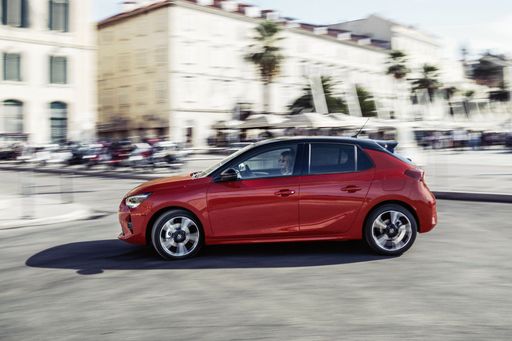
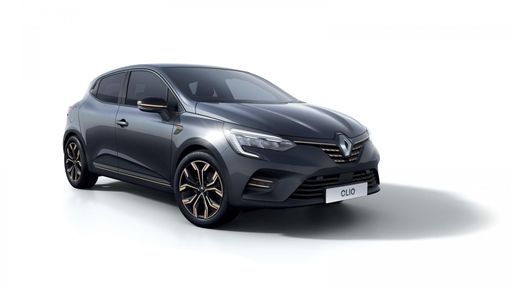
Vauxhall Corsa vs Renault Clio comparison

Compare performance (156 HP vs 158 HP), boot space and price (19,600 £ vs 17,100 £ ) at a glance. Find out which car is the better choice for you – Vauxhall Corsa or Renault Clio?

Vauxhall Corsa vs Renault Clio: Key differences

Vauxhall Corsa

  • very slightly quicker 0–100 km/h
  • marginally lighter
details

Renault Clio

4.7 (1 Reviews)
rate
  • slightly cheaper
  • barely more power
  • very slightly more efficient
  • barely more trunk space
details

All details on performance, efficiency, range and trunk space can be found in the technical comparison below – including user reviews for both models.

By Achim Sedelmaier

Corsa

Vauxhall Corsa and Renault Clio — a compact-car face-off

Vauxhall Corsa VS Renault Clio often appears on shoppers’ shortlists because both promise city-friendly size with modern tech, but they arrive at that promise from different directions. The Vauxhall Corsa makes its case as a nimble, no-nonsense urban specialist that lets you park, hustle and keep running costs low. The Renault Clio leans toward a more composed, grown-up character that prioritises quiet highway cruising and a tech-forward cabin. This comparison spells out how those different priorities change everyday life behind the wheel so you can pick the one that fits your routine rather than your expectations.
Clio

Character and driving feel

The Vauxhall Corsa feels taut and alert: steering and suspension favour precision, so it rewards short trips, tight parking and decisive city moves. The Renault Clio steers a touch more reserved and delivers a calmer, more composed ride when you stretch the miles; it’s less about sporty feedback and more about composed progress. In town the Corsa’s sharper responses make traffic and narrow streets easier to manage, while on the motorway the Clio’s quieter, more settled demeanor reduces driver fatigue. Choose Corsa if you want punchy city manners; choose Clio if you prefer a relaxed, confidence-inspiring long run.

Corsa

Comfort and long-distance behaviour

Up front both cars are comfortable for daily drives, but they diverge once distances grow: the Vauxhall Corsa’s firmer setup transmits road imperfections more clearly, so long highway stints feel busier. The Renault Clio generally isolates bumps better and maintains a lower noise level at cruising pace, which makes touring and commuting longer distances easier on the nerves. Both rear seats are tighter than in larger rivals, yet the Clio’s cabin packaging gives marginally more composure for rear passengers on sustained trips. If motorway calm and reduced fatigue matter most, the Clio is the better fit; for short hops and sharper handling the Corsa keeps things lively.

Clio

Practicality and family usability

Practicality is where the callers often split: the Renault Clio usually offers the more flexible luggage layout in its conventional petrol form, while the Vauxhall Corsa is optimised for compact external dimensions and easy manoeuvring. The Corsa’s smaller boot and snug rear bench mean fitting bulky loads or multiple booster seats takes more planning, whereas the Clio’s larger ICE boot and smarter seat options handle everyday family life with fewer compromises. That said, the Corsa’s tighter footprint is a real advantage in city streets and tight driveways, so families who rarely haul big loads but value parking ease may prefer it. It’s a classic trade-off between cargo capacity and urban agility.

Corsa

Cabin feel, tech and perceived quality

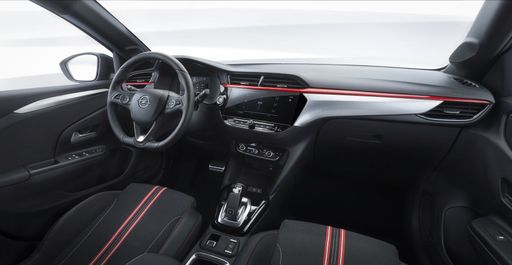
Both interiors favour practicality over luxury in mid trims, but they project different personalities: the Renault Clio impresses with a slick, Google‑based infotainment ecosystem and a generally more modern presentation, while the Vauxhall Corsa wins on straightforward ergonomics and physical climate controls that are intuitive to use. Material quality is mixed in both cars at lower specification levels, though Clio’s higher trims can feel noticeably more premium. Infotainment responsiveness and over‑the‑air capability tip toward the Clio for tech‑savvy buyers, whereas Corsa’s simpler layout will appeal to those who prize distraction‑free controls. If a cutting‑edge cabin matters, lean Clio; if fuss‑free usability is your priority, lean Corsa.

Clio

Who should choose which car — clear buyer fit

If your life is largely urban — short commutes, tight parking, and you value brisk steering and low running costs — the Vauxhall Corsa fits that bill better with its city-centric agility and straightforward controls. If you regularly cover longer distances, carry luggage or want a more serene cabin and advanced infotainment, the Renault Clio suits those needs with a quieter ride and richer tech package. Budget-sensitive buyers should weigh the Clio’s generally sharper value on entry against the Corsa’s saved time and hassle in town. Below this editorial section the technical comparison will unpack the mechanical and equipment differences that turn these everyday trade-offs into concrete buying decisions.

Here’s where it gets real: The technical differences in detail

Corsa

Costs and Efficiency:

Looking at overall running costs, both models reveal some interesting differences in everyday economy.

Renault Clio is slightly cheaper – starting at 17,100 £ , while the Vauxhall Corsa costs 19,600 £ . That’s a price difference of around 2,563 £.

Fuel consumption also shows a difference: the Renault Clio uses 4.1 L/100km and is very slightly more efficient than the Vauxhall Corsa with 4.5 L/100km. The difference is about 0.4 L/100km.

Clio

Engine and Performance:

Power, torque and acceleration say a lot about how a car feels on the road. This is where you see which model delivers more driving dynamics.

When it comes to engine power, the Renault Clio offers barely more power – delivering 158 HP compared to 156 HP. That’s roughly 2 HP more horsepower.

When accelerating from 0 to 100 km/h, the Vauxhall Corsa is very slightly quicker – completing the sprint in 7.9 s, while the Renault Clio takes 8.3 s. That’s about 0.4 s quicker.

There’s also a difference in torque: the Vauxhall Corsa delivers noticeably more torque with 260 Nm compared to 190 Nm. That’s about 70 Nm more.

Corsa

Space and Everyday Use:

Whether family car or daily driver – which one offers more room, flexibility and comfort?

Both vehicles offer seating for 5 people.

In terms of curb weight, Vauxhall Corsa is marginally lighter – 1,175 kg compared to 1,202 kg. The difference is around 27 kg.

Looking at boot space, the Renault Clio offers barely more boot space – 327 L compared to 309 L. That’s a difference of about 18 L.

When it comes to payload, the Renault Clio carries marginally more – 463 kg compared to 445 kg. That’s a difference of about 18 kg.

Who wins the race in the data check?

The Vauxhall Corsa leads convincingly in the objective data comparison.
This result only shows which model scores more points on paper – not which of the two cars feels right for you.

from £19,600
Corsa

Vauxhall Corsa

  • Engine Type : Electric, Petrol MHEV, Petrol
  • Transmission : Automatic, Manuel
  • Drive Type : Front-Wheel Drive
  • Power HP : 100 - 156 HP
  • Consumption L/100km : 4.5 - 5.2 L/100km
  • Consumption kWh/100km : 14.2 - 15.7 kWh/100km
  • Electric Range : 357 - 429 km
Vauxhall Corsa
Renault Clio

Costs and Consumption

View detailed analysis

Engine and Performance

View detailed analysis

Dimensions and Body

View detailed analysis

Vauxhall Corsa

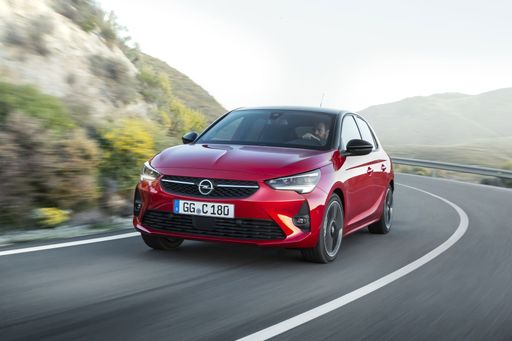
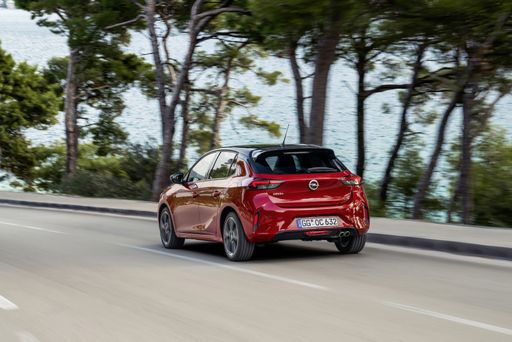
The Opel Corsa is a tidy little package that blends cheeky styling with sensible practicality, perfect for city streets and weekend escapes alike. It’s easy to live with, economical to run and just lively enough to make daily driving a bit more fun.

details

Renault Clio

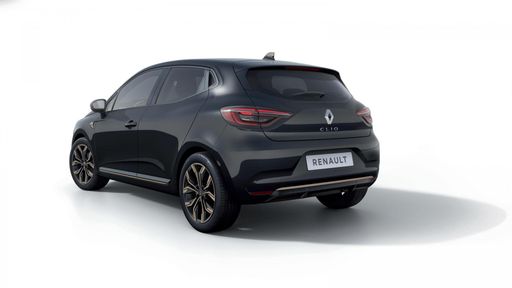
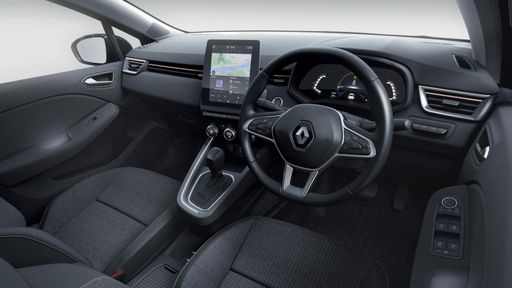
The Renault Clio is a smartly styled and practical compact hatch that feels at home in city traffic while offering a surprisingly refined ride. It pairs user-friendly tech and a comfortable interior with a reputation for being economical and easy to live with.

details
Vauxhall Corsa
Renault Clio

Costs and Consumption

Price
19,600 - 30,600 £
Price
17,100 - 23,700 £
Consumption L/100km
4.5 - 5.2 L/100km
Consumption L/100km
4.1 - 5.2 L/100km
Consumption kWh/100km
14.2 - 15.7 kWh/100km
Consumption kWh/100km
-
Electric Range
357 - 429 km
Electric Range
-
Battery Capacity
-
Battery Capacity
-
co2
0 - 116 g/km
co2
92 - 118 g/km
Fuel tank capacity
-
Fuel tank capacity
-

Dimensions and Body

Body Type
Hatchback
Body Type
Hatchback
Seats
5
Seats
5
Doors
-
Doors
-
Curb weight
1,175 - 1,544 kg
Curb weight
1,202 - 1,316 kg
Trunk capacity
267 - 309 L
Trunk capacity
301 - 327 L
Length
-
Length
-
Width
1,765 mm
Width
1,768 mm
Height
-
Height
-
Max trunk capacity
-
Max trunk capacity
-
Payload
376 - 445 kg
Payload
453 - 463 kg

Engine and Performance

Engine Type
Electric, Petrol MHEV, Petrol
Engine Type
Petrol, Full Hybrid
Transmission
Automatic, Manuel
Transmission
Manuel, Automatic
Transmission Detail
Reduction Gearbox, Dual-Clutch Automatic, Manual Gearbox
Transmission Detail
Manual Gearbox, Dual-Clutch Automatic, Automatic Gearbox
Drive Type
Front-Wheel Drive
Drive Type
Front-Wheel Drive
Power HP
100 - 156 HP
Power HP
115 - 158 HP
Acceleration 0-100km/h
7.9 - 9.9 s
Acceleration 0-100km/h
8.3 - 10.3 s
Max Speed
-
Max Speed
-
Torque
205 - 260 Nm
Torque
190 Nm
Number of Cylinders
3
Number of Cylinders
3 - 4
Power kW
74 - 115 kW
Power kW
84 - 116 kW
Engine capacity
1,199 cm3
Engine capacity
1,199 - 1,789 cm3

General

Model Year
2,024 - 2,025
Model Year
2026
CO2 Efficiency Class
A, C, D
CO2 Efficiency Class
C, D, B
Brand
Vauxhall
Brand
Renault
DriveDuel uses data analysis and artificial intelligence to evaluate vehicle data and create content. Content is regularly reviewed and improved. The displayed prices are estimates based on German list prices, adjusted to the respective country’s VAT. Country-specific registration taxes are not included. This information is not legally binding.