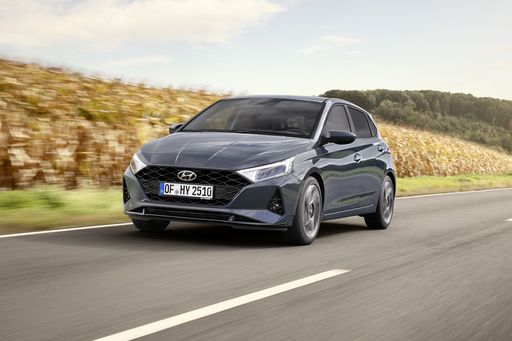
@ Hyundai Motor Company
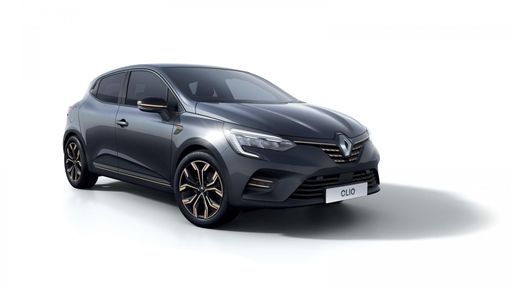
@ Renault Group Media
VS

Hyundai i20 vs Renault Clio – Which one offers the better deal?

Two cars, one duel: Hyundai i20 meets Renault Clio.
Which one wins in performance, efficiency and value for money? Find out now!

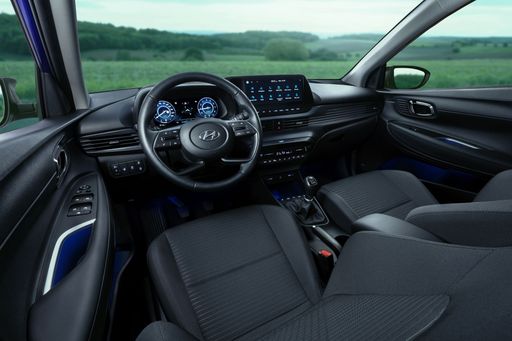
i20 @ Hyundai Motor Company

Hyundai i20 vs. Renault Clio: A Hatchback Showdown

As two of the most popular choices in the hatchback segment, the Hyundai i20 and the Renault Clio go head-to-head in a competitive duel. Both offer a blend of style, innovation, and performance, appealing to a diverse audience. In this in-depth comparison, we delve into the technical specifications and innovations that set these two models apart.

Clio @ Renault Group Media

Performance & Power

The Hyundai i20 offers a range of engine options, including both petrol and mild hybrid petrol variants, producing between 79 to 100 HP. The i20's acceleration ranges from 11.1 to 13.7 seconds, with top speeds reaching up to 183 km/h. Notably, the i20 employs both manual and dual-clutch automatic transmissions, with an efficient fuel consumption of 5.1 to 5.3 L/100km.

In contrast, the Renault Clio is available in full hybrid, petrol, and LPG versions, delivering between 67 and 143 HP. With an acceleration of 9.3 to 17.1 seconds, the Clio capitalizes on efficient fuel economy, boasting consumption from 4.3 to 7 L/100km. The Clio's CO2 efficiency class is slightly better in the hybrid variant, rated at Class C, while petrol options meet Class D standards.

i20 @ Hyundai Motor Company

Design & Dimensions

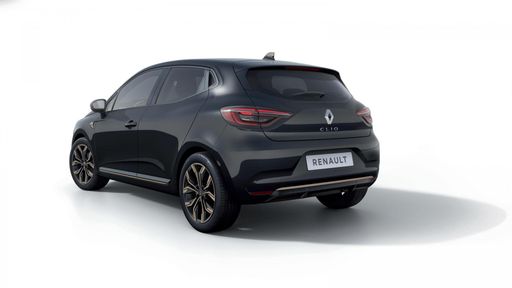
Both the i20 and Clio offer sleek hatchback silhouettes, but the nuances lie in their dimension specifications. The Hyundai i20 measures between 4075 mm and width of 1775 mm, with a height of around 1455 mm. Meanwhile, the Renault Clio is a tad more compact with a length of 4053 mm, a slightly wider stance at 1798 mm, and a lower height of 1440 mm.

The i20 accommodates 352 liters of trunk capacity, proving slightly more spacious than the Clio's 301 to 391-liter range, making Hyundai a compelling choice for those prioritizing cargo space.

Clio @ Renault Group Media

Comfort & Interior

Inside, both vehicles offer seating for five, emphasizing comfort and utility. The Hyundai i20 showcases a clever use of its internal dimensions to maximize space without compromising on aesthetics or functionality. Notably, Hyundai has integrated modern tech features and a thoughtful dashboard layout to enhance the driving experience.

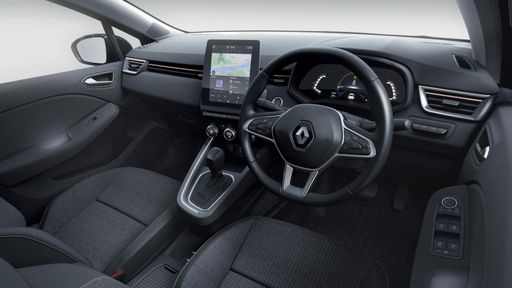
Renault, in its Clio variant, capitalizes on stylish interiors and technology. Particularly for the 2023 and 2024 models, Renault has focused on refining the driving experience through enhanced cabin materials and modern technology interfaces.

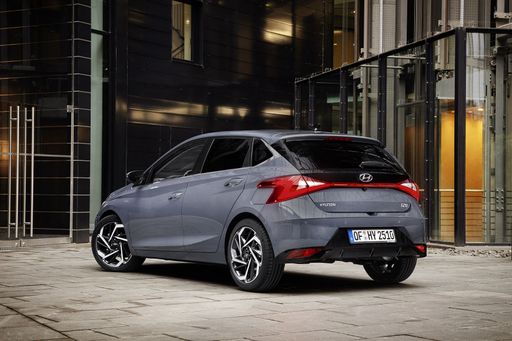
i20 @ Hyundai Motor Company

Innovation & Connectivity

Hyundai has pushed its innovation envelope with a focus on safety and connectivity, integrating advanced driver-assistance systems across its lineup. The i20 is equipped with several safety features, ensuring peace of mind on the road.

The Renault Clio counters with its unique full hybrid powertrain, blending efficiency with performance. Renault has also emphasized innovation, especially in the integration of hybrid technology, enhancing both performance and eco-friendliness.

Clio @ Renault Group Media

Verdict: A Matter of Preference

The Hyundai i20 and Renault Clio each have their strengths. The i20 stands out with its cutting-edge technology, spaciousness, and slightly superior top speed, ideal for consumers looking for efficiency paired with performance. Meanwhile, the Clio offers a well-rounded package with its hybrid option and superior interior design, favored by those seeking an eco-conscious ride with style.

Ultimately, choosing between these two vehicles boils down to individual preferences, whether leaning towards innovation and performance with the Hyundai i20 or the efficient, stylish practicality of the Renault Clio.

Here’s where it gets real: The technical differences in detail

i20 @ Hyundai Motor Company

Costs and Efficiency:

Price and efficiency are often the first things buyers look at. Here it becomes clear which model has the long-term edge – whether at the pump, the plug, or in purchase price.

Renault Clio has a hardly perceptible advantage in terms of price – it starts at 16600 £, while the Hyundai i20 costs 17400 £. That’s a price difference of around 815 £.

Fuel consumption also shows a difference: Renault Clio manages with 4.10 L and is therefore noticeable more efficient than the Hyundai i20 with 5.20 L. The difference is about 1.10 L per 100 km.

Engine and Performance:

Under the bonnet, it becomes clear which model is tuned for sportiness and which one takes the lead when you hit the accelerator.

When it comes to engine power, the Renault Clio has a evident edge – offering 158 HP compared to 100 HP. That’s roughly 58 HP more horsepower.

In acceleration from 0 to 100 km/h, the Renault Clio is distinct quicker – completing the sprint in 8.30 s, while the Hyundai i20 takes 11.10 s. That’s about 2.80 s faster.

In terms of top speed, the Hyundai i20 performs barely noticeable better – reaching 183 km/h, while the Renault Clio tops out at 180 km/h. The difference is around 3 km/h.

There’s also a difference in torque: Renault Clio pulls barely noticeable stronger with 205 Nm compared to 200 Nm. That’s about 5 Nm difference.

Space and Everyday Use:

Whether family car or daily driver – which one offers more room, flexibility and comfort?

Both vehicles offer seating for 5 people.

In curb weight, Hyundai i20 is hardly perceptible lighter – 1088 kg compared to 1124 kg. The difference is around 36 kg.

In terms of boot space, the Renault Clio offers minimal more room – 391 L compared to 352 L. That’s a difference of about 39 L.

In maximum load capacity, the Renault Clio performs slight better – up to 1176 L, which is about 11 L more than the Hyundai i20.

When it comes to payload, Hyundai i20 slight takes the win – 472 kg compared to 463 kg. That’s a difference of about 9 kg.

Who comes out on top?

Overall, the Renault Clio shows itself to be outperforms in nearly all aspects and secures the title of DriveDuel Champion.
It convinces with the more balanced overall package and proves to be the more versatile choice for everyday use.

from about £16,600
Clio @ Renault Group Media

Renault Clio

  • Engine Type : Full Hybrid, Petrol
  • Transmission : Automatic, Manuel
  • Drive Type : Front-Wheel Drive
  • Power HP : 67 - 158 HP
  • Consumption L/100km : 4.1 - 5.3 L

Hyundai i20

4 (1)
rate

The Hyundai i20 is a cheeky small car that mixes smart styling with sensible practicality, feeling more polished and roomy than you might expect for the money. It’s an easy car to live with, offering engaging handling, a comfy cabin and useful equipment that make daily commutes and weekend errands notably less dull.

details

Renault Clio

The Clio punches above its weight with chic French styling and a surprisingly grown-up cabin that makes city driving feel effortlessly stylish. It's an easy-to-live-with choice that keeps ownership simple and even manages to put a grin on your face when the traffic gets dull.

details
Hyundai i20
Renault Clio
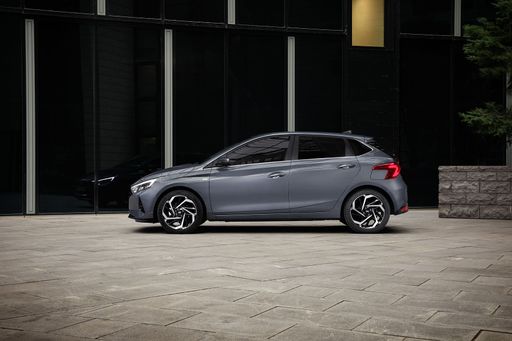
i20 @ Hyundai Motor Company
Clio @ Renault Group Media

Costs and Consumption

Price
17400 - 24000 £
Price
16600 - 23700 £
Consumption L/100km
5.2 - 5.3 L
Consumption L/100km
4.1 - 5.3 L
Consumption kWh/100km
-
Consumption kWh/100km
-
Electric Range
-
Electric Range
-
Battery Capacity
-
Battery Capacity
0.60 kWh
co2
119 - 121 g/km
co2
92 - 121 g/km
Fuel tank capacity
40 L
Fuel tank capacity
39 - 42 L

Dimensions and Body

Body Type
Hatchback
Body Type
Hatchback
Seats
5
Seats
5
Doors
5
Doors
5
Curb weight
1088 - 1190 kg
Curb weight
1124 - 1331 kg
Trunk capacity
352 L
Trunk capacity
301 - 391 L
Length
4065 - 4075 mm
Length
4053 - 4116 mm
Width
1775 mm
Width
1768 - 1798 mm
Height
1450 - 1455 mm
Height
1440 - 1451 mm
Max trunk capacity
1165 L
Max trunk capacity
979 - 1176 L
Payload
450 - 472 kg
Payload
398 - 463 kg

Engine and Performance

Engine Type
Petrol
Engine Type
Full Hybrid, Petrol
Transmission
Automatic, Manuel
Transmission
Automatic, Manuel
Transmission Detail
Dual-Clutch Automatic, Manual Gearbox
Transmission Detail
Automatic Gearbox, Manual Gearbox, Dual-Clutch Automatic
Drive Type
Front-Wheel Drive
Drive Type
Front-Wheel Drive
Power HP
79 - 100 HP
Power HP
67 - 158 HP
Acceleration 0-100km/h
11.1 - 13.7 s
Acceleration 0-100km/h
8.3 - 17.1 s
Max Speed
166 - 183 km/h
Max Speed
160 - 180 km/h
Torque
113 - 200 Nm
Torque
95 - 205 Nm
Number of Cylinders
3 - 4
Number of Cylinders
3 - 4
Power kW
58 - 74 kW
Power kW
49 - 116 kW
Engine capacity
998 - 1197 cm3
Engine capacity
999 - 1789 cm3

General

Model Year
2024
Model Year
2023 - 2026
CO2 Efficiency Class
D
CO2 Efficiency Class
C, D, B
Brand
Hyundai
Brand
Renault
What drivetrain options does the Hyundai i20 have?

The Hyundai i20 is offered with Front-Wheel Drive.

The prices and data displayed are estimates based on German list prices and may vary by country. This information is not legally binding.