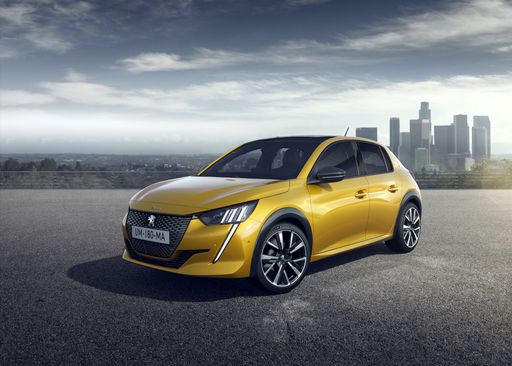
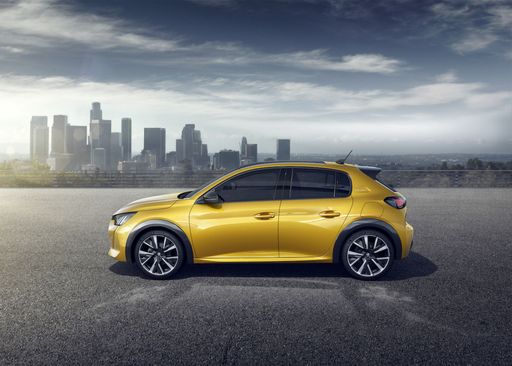
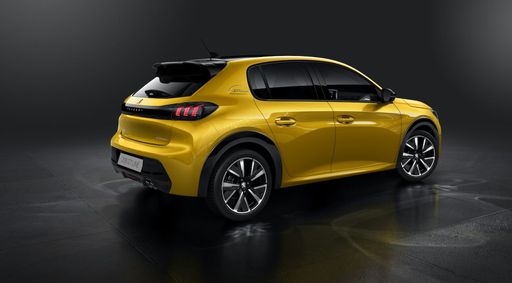
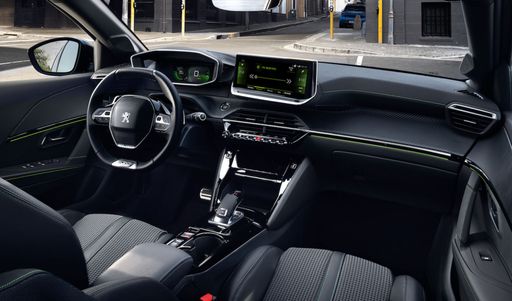
@ Peugeot / Stellantis Media
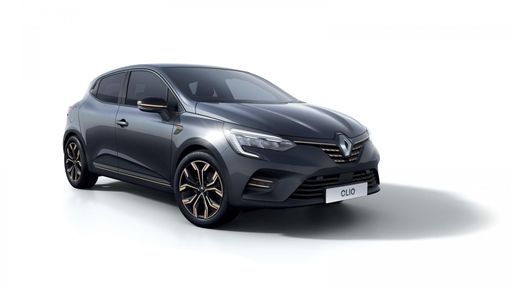
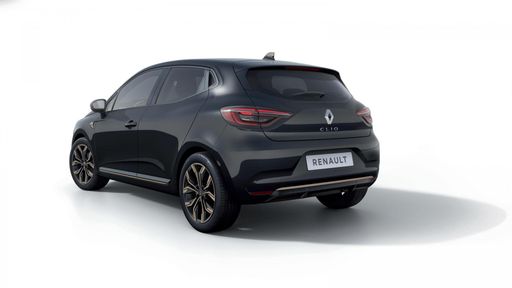
@ Renault Group Media
VS

Peugeot 208 vs Renault Clio – Differences & prices compared

Two cars, one duel: Peugeot 208 meets Renault Clio.
Which one wins in performance, efficiency and value for money? Find out now!

208 @ Peugeot / Stellantis Media

Power and Performance: Under the Hood

The Peugeot 208 offers a diverse range of engine types to cater to different driving preferences, including petrol, electric, and petrol MHEV options. With power outputs ranging from 101 HP to 156 HP, the 208 provides versatility for both urban and highway driving. The torque specs fluctuate between 205 Nm and 270 Nm, ensuring a responsive driving experience.

In contrast, the Renault Clio focuses more on hybrid and petrol engines. Offering power outputs of 67 HP to 143 HP, the Clio caters to drivers looking for efficiency with its full hybrid option. The Clio's torque ranges from 95 Nm to 205 Nm, which provides adequate power for standard driving conditions.

Clio @ Renault Group Media

Speed and Acceleration: Going from 0 to 100km/h

The Peugeot 208 showcases an impressive range of acceleration figures, with the fastest model reaching 0-100 km/h in just 8.3 seconds. It also boasts a top speed of up to 200 km/h, providing excitement for thrill-seekers.

The Renault Clio, while more modest in its speed offerings, still delivers solid performance with its hybrid model achieving 0-100 km/h in 9.3 seconds and a maximum speed of 174 km/h. These figures make the Clio suitable for those prioritizing efficiency over raw speed.

208 @ Peugeot / Stellantis Media

Fuel Efficiency and Environmental Impact

When it comes to fuel economy, the Peugeot 208 delivers impressive consumption numbers, with the electric variant consuming as low as 14.1 kWh/100km and petrol options offering around 4.5 to 5.2 L/100km. The CO2 emissions vary significantly, with electric models having a clear zero emissions rating.

The Renault Clio, focusing heavily on hybrid technology, provides a low consumption rate of 4.3 L/100km for its hybrid engine. This makes it a very eco-friendly option and aligns with drivers looking to reduce their carbon footprint.

Clio @ Renault Group Media

Interior and Cargo Space

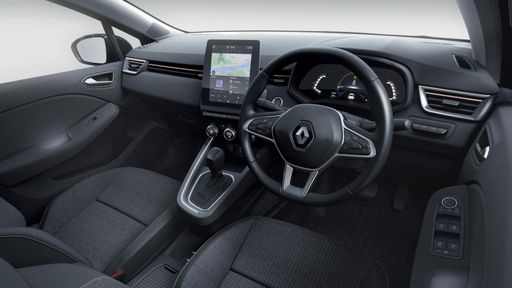
Both the Peugeot 208 and Renault Clio accommodate five passengers comfortably. The Peugeot 208 offers slightly more trunk capacity at 352 litres, compared to the Clio’s range between 301 and 391 litres, depending on the configuration.

The dimensions of the vehicles offer interesting points of comparison, with the 208 measuring 4055 mm in length, while the Clio is slightly more compact at 4053 mm. The width of the Clio is more substantial than the 208, providing a roominess advantage for occupants.

208 @ Peugeot / Stellantis Media

Innovations and Technological Advancements

The Peugeot 208 integrates cutting-edge engineering, with electric models providing a range of up to 432 km on a single charge, thanks to their 51 kWh battery capacity. The inclusion of MHEV variants demonstrates Peugeot's commitment to embracing hybrid technology.

Renault’s Clio showcases its innovation through its full hybrid technology, a major highlight for eco-conscious drivers. The Clio's smaller 0.6 kWh battery aids in efficiency improvements without the weight penalty of a larger battery, keeping the vehicle nimble and economical.

Clio @ Renault Group Media

Conclusion: Choosing Your Ideal Hatchback

In the battle of the hatchbacks, both the Peugeot 208 and Renault Clio present strong cases. The 208 stands out with its variety of powertrains, including a compelling electric model for the environmentally conscious. Meanwhile, the Clio’s strength lies in its hybrid technology, providing an optimal mix of economy and performance.

Ultimately, your choice may boil down to what you prioritize more: the diverse offerings and electric innovation of the Peugeot 208, or the hybrid sophistication of the Renault Clio. Either way, both vehicles promise an engaging driving experience in a compact, stylish package.

Here’s where it gets real: The technical differences in detail

208 @ Peugeot / Stellantis Media

Costs and Efficiency:

Price and efficiency are often the first things buyers look at. Here it becomes clear which model has the long-term edge – whether at the pump, the plug, or in purchase price.

Renault Clio has a distinct advantage in terms of price – it starts at 16600 £, while the Peugeot 208 costs 20700 £. That’s a price difference of around 4097 £.

Fuel consumption also shows a difference: Renault Clio manages with 4.10 L and is therefore minimal more efficient than the Peugeot 208 with 4.50 L. The difference is about 0.40 L per 100 km.

Engine and Performance:

Power, torque and acceleration are the classic benchmarks for car enthusiasts – and here, some clear differences start to show.

When it comes to engine power, the Renault Clio has a minimal edge – offering 158 HP compared to 156 HP. That’s roughly 2 HP more horsepower.

Both models accelerate almost equally fast – 8.30 s from 0 to 100 km/h.

In terms of top speed, the Peugeot 208 performs barely noticeable better – reaching 200 km/h, while the Renault Clio tops out at 180 km/h. The difference is around 20 km/h.

There’s also a difference in torque: Peugeot 208 pulls evident stronger with 270 Nm compared to 205 Nm. That’s about 65 Nm difference.

Space and Everyday Use:

Beyond pure performance, interior space and usability matter most in daily life. This is where you see which car is more practical and versatile.

Both vehicles offer seating for 5 people.

In curb weight, Renault Clio is slight lighter – 1124 kg compared to 1165 kg. The difference is around 41 kg.

In terms of boot space, the Renault Clio offers slight more room – 391 L compared to 352 L. That’s a difference of about 39 L.

In maximum load capacity, the Renault Clio performs minimal better – up to 1176 L, which is about 13 L more than the Peugeot 208.

When it comes to payload, Renault Clio barely noticeable takes the win – 463 kg compared to 430 kg. That’s a difference of about 33 kg.

Who comes out on top?

Overall, the Peugeot 208 shows itself to be wins by a narrow margin and secures the title of DriveDuel Champion.
It convinces with the more balanced overall package and proves to be the more versatile choice for everyday use.

from about £20,700
208 @ Peugeot / Stellantis Media

Peugeot 208

  • Engine Type : Petrol, Electric, Petrol MHEV
  • Transmission : Manuel, Automatic
  • Drive Type : Front-Wheel Drive
  • Power HP : 101 - 156 HP
  • Consumption L/100km : 4.5 - 5.2 L
  • Consumption kWh/100km : 14.1 - 15.4 kWh
  • Electric Range : 362 - 432 km

Peugeot 208

The Peugeot 208 feels like a city-savvy fox: compact, stylish and surprisingly grown-up, with a cabin that punches above its weight and enough personality to make daily commutes a little less boring. It’s a smart pick for buyers who want chic practicality without the showroom bluster — easy to park, thrifty to run and oddly fun when the road tightens up.

details

Renault Clio

The Clio punches above its weight with chic French styling and a surprisingly grown-up cabin that makes city driving feel effortlessly stylish. It's an easy-to-live-with choice that keeps ownership simple and even manages to put a grin on your face when the traffic gets dull.

details
Peugeot 208
Renault Clio
208 @ Peugeot / Stellantis Media
Clio @ Renault Group Media

Costs and Consumption

Price
20700 - 35200 £
Price
16600 - 23700 £
Consumption L/100km
4.5 - 5.2 L
Consumption L/100km
4.1 - 5.3 L
Consumption kWh/100km
14.1 - 15.4 kWh
Consumption kWh/100km
-
Electric Range
362 - 432 km
Electric Range
-
Battery Capacity
46 - 51 kWh
Battery Capacity
0.60 kWh
co2
0 - 117 g/km
co2
92 - 121 g/km
Fuel tank capacity
44 L
Fuel tank capacity
39 - 42 L

Dimensions and Body

Body Type
Hatchback
Body Type
Hatchback
Seats
5
Seats
5
Doors
5
Doors
5
Curb weight
1165 - 1530 kg
Curb weight
1124 - 1331 kg
Trunk capacity
309 - 352 L
Trunk capacity
301 - 391 L
Length
4055 mm
Length
4053 - 4116 mm
Width
1745 mm
Width
1768 - 1798 mm
Height
1430 mm
Height
1440 - 1451 mm
Max trunk capacity
1118 - 1163 L
Max trunk capacity
979 - 1176 L
Payload
380 - 430 kg
Payload
398 - 463 kg

Engine and Performance

Engine Type
Petrol, Electric, Petrol MHEV
Engine Type
Full Hybrid, Petrol
Transmission
Manuel, Automatic
Transmission
Automatic, Manuel
Transmission Detail
Manual Gearbox, Reduction Gearbox, Dual-Clutch Automatic
Transmission Detail
Automatic Gearbox, Manual Gearbox, Dual-Clutch Automatic
Drive Type
Front-Wheel Drive
Drive Type
Front-Wheel Drive
Power HP
101 - 156 HP
Power HP
67 - 158 HP
Acceleration 0-100km/h
8.3 - 10.9 s
Acceleration 0-100km/h
8.3 - 17.1 s
Max Speed
150 - 200 km/h
Max Speed
160 - 180 km/h
Torque
205 - 270 Nm
Torque
95 - 205 Nm
Number of Cylinders
3
Number of Cylinders
3 - 4
Power kW
74 - 115 kW
Power kW
49 - 116 kW
Engine capacity
1199 cm3
Engine capacity
999 - 1789 cm3

General

Model Year
2023 - 2025
Model Year
2023 - 2026
CO2 Efficiency Class
D, A, C
CO2 Efficiency Class
C, D, B
Brand
Peugeot
Brand
Renault
What drive types are available for the Peugeot 208?

The Peugeot 208 is offered with Front-Wheel Drive.

The prices and data displayed are estimates based on German list prices and may vary by country. This information is not legally binding.