VS

Suzuki Ignis vs Toyota Aygo comparison

Compare performance (83 HP vs 116 HP), boot space and price (15600 £ vs 18800 £ ) at a glance. Find out which car is the better choice for you – Suzuki Ignis or Toyota Aygo?

Ignis

Head-to-head city car showdown

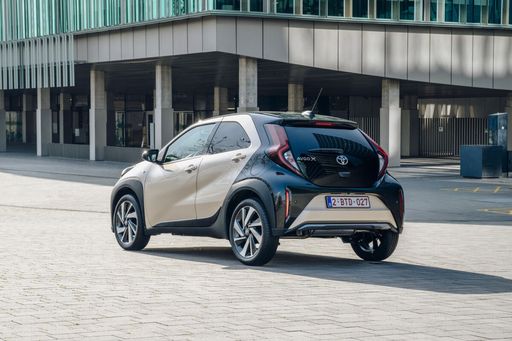
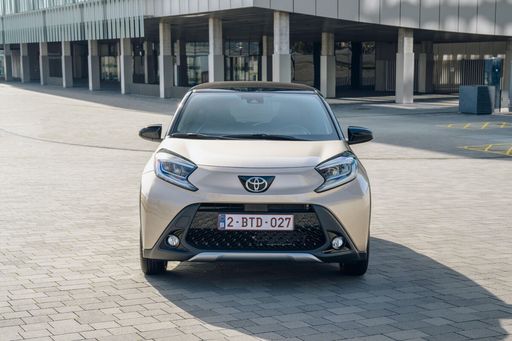
Suzuki Ignis and Toyota Aygo go head-to-head in a compact city car comparison that cuts straight to what matters for urban buyers. On paper they're both pint-sized and city-focused, but the Suzuki Ignis reads like a small crossover with a taller stance while the Toyota Aygo plays the role of a sharp city hatchback. This Suzuki Ignis VS Toyota Aygo guide focuses on how they feel in daily life — roominess, agility, perceived quality and who each will actually suit. If you want a quick, searchable head-to-head that helps shape a real-world decision, you’re in the right place.
Aygo

Two very different personalities

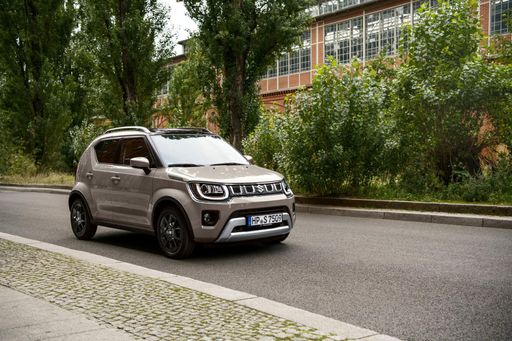
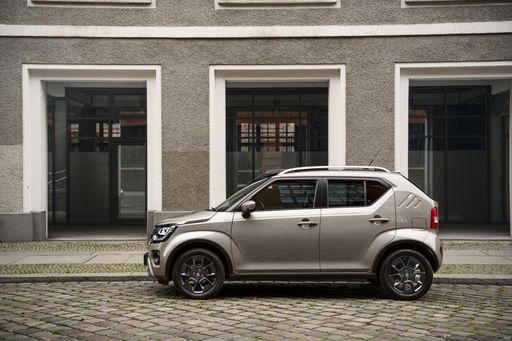
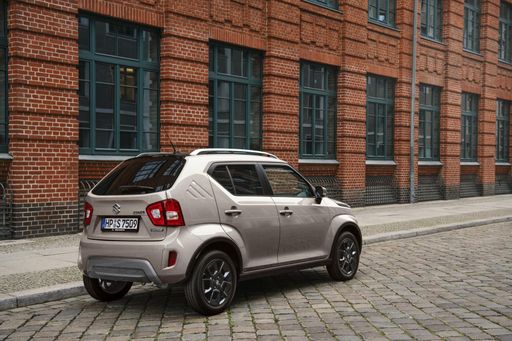
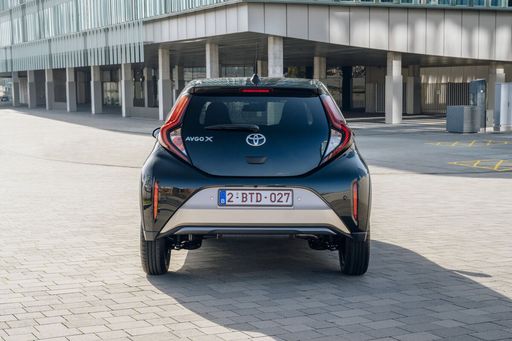
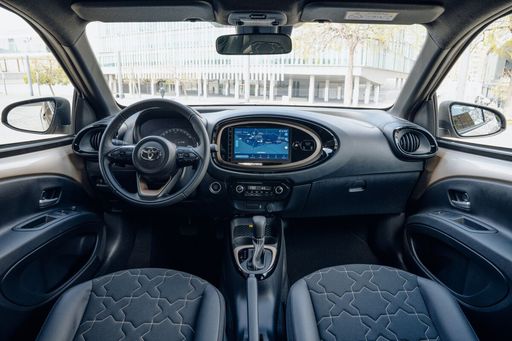
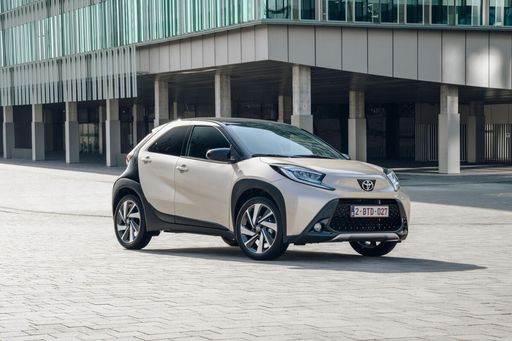
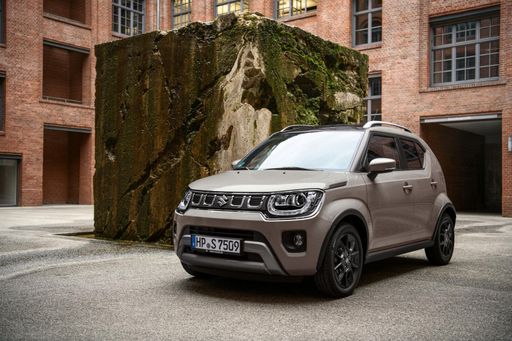
The Suzuki Ignis projects a rugged, slightly cheeky character — upright windows, higher ride height and an honest, no-nonsense attitude that suggests utility over style posturing. By contrast the Toyota Aygo is all about city swagger: tighter proportions, peppy manners and a personality tuned to being noticed in tight streets and café-lined boulevards. Interior finishes reflect that split personality too, with the Ignis feeling more practical and durable while the Aygo leans toward playful trims and visual flair. Pick Ignis if you prefer substance that hides its modest ambitions, pick Aygo if you want a car that wears its fun factor on its sleeve.

Ignis

Daily life — which one makes weekdays easier?

For everyday practicality the Suzuki Ignis tends to feel more accommodating — the raised seating and sensible luggage space make it easier to live with, especially if school runs or weekend kit-loading are part of your routine. The Toyota Aygo instead earns its keep in dense urban environments where agility, visibility and easy parking outweigh extra inches of cabin space. On longer runs the Ignis usually comes across as the cosier companion, while Aygo drivers will praise its light-footedness and simplicity when traffic gets stop-start. Both are easy to drive, but their different focus changes the daily experience: Ignis is the utility-first minivan alternative in city clothing, Aygo is the razor-sharp city tool.

Aygo

How each car helps you justify your choice

Choosing a Suzuki Ignis is a practical statement: you’re saying you prefer usable space, a relaxed ride and a car that doesn’t shout but gets things done. Opting for the Toyota Aygo is the opposite kind of brag — it signals you’re urban-minded, style-aware and you value nimble efficiency over carrying capacity. Both cars let buyers justify their choice easily: the Ignis on sensible grounds and the Aygo on lifestyle grounds, with each offering a believable narrative to friends and partners. If image matters, the Aygo tends to score higher for city-chic street cred, while the Ignis trades sex appeal for quiet competence.

Ignis

Who should seriously consider the Suzuki Ignis?

If your shopping list starts with usable space, ease of loading, and a forgiving driving position, the Suzuki Ignis will feel like it was built for you. It’s the sensible pick for small families, commuters who carry work kit, or anyone who prefers a calm, composed daily drive over sporty theatrics. Budget-conscious buyers who want versatility without drama will appreciate the straightforward packaging and predictable manners. In short, choose the Ignis when functionality and comfort beat headline-grabbing performance.

Aygo

Who should lean toward the Toyota Aygo (and when Ignis still wins)

The Toyota Aygo suits drivers who live in tight city grids — people who prize parking ease, low running fuss and an appearance that’s more boutique than blue-collar. It’s a smart match for style-focused commuters, solo urbanites and anyone who wants a car that’s fun to steer and easy to park between meetings. Owners after crisp manners and an economical daily will find the Aygo’s character hard to resist, while still acknowledging that it’s smaller and less carry-friendly than the Suzuki Ignis. If you value efficiency and streetwise charm, the Aygo is the city weapon; if you occasionally need to cart passengers or weekend gear, the Ignis remains the pragmatic counterpoint.

Suzuki Ignis vs Toyota Aygo: Key differences

Suzuki Ignis

4.7 (1 Reviews)
rate
  • clearly perceptible cheaper
  • slightly lighter
  • to a small extent more trunk space

Toyota Aygo

5 (1 Reviews)
rate
  • evident more power
  • distinct more efficient
  • distinct quicker from 0–100 km/h

All details on performance, efficiency, range and trunk space can be found in the technical comparison below – including user reviews for both models.

Here’s where it gets real: The technical differences in detail

Ignis

Costs and Efficiency:

Price and efficiency are key factors when choosing a car – and this is often where the real differences emerge.

Suzuki Ignis has a clearly perceptible advantage in terms of price – it starts at 15600 £ , while the Toyota Aygo costs 18800 £ . That’s a price difference of around 3240 £.

Fuel consumption also shows a difference: Toyota Aygo manages with 3.70 L and is therefore distinct more efficient than the Suzuki Ignis with 4.90 L. The difference is about 1.20 L per 100 km.

Aygo

Engine and Performance:

Power, torque and acceleration are the classic benchmarks for car enthusiasts – and here, some clear differences start to show.

When it comes to engine power, the Toyota Aygo has a evident edge – offering 116 HP compared to 83 HP. That’s roughly 33 HP more horsepower.

In acceleration from 0 to 100 km/h, the Toyota Aygo is distinct quicker – completing the sprint in 9.20 s, while the Suzuki Ignis takes 12.70 s. That’s about 3.50 s faster.

There’s also a difference in torque: Toyota Aygo pulls somewhat stronger with 120 Nm compared to 107 Nm. That’s about 13 Nm difference.

Ignis

Space and Everyday Use:

Whether family car or daily driver – which one offers more room, flexibility and comfort?

Seats: Suzuki Ignis offers to a small extent more seating capacity – 5 vs 4.

In curb weight, Suzuki Ignis is slightly lighter – 935 kg compared to 1090 kg. The difference is around 155 kg.

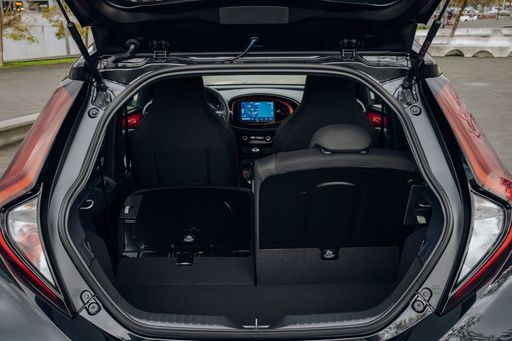
In terms of boot space, the Suzuki Ignis offers to a small extent more room – 267 L compared to 231 L. That’s a difference of about 36 L.

When it comes to payload, Toyota Aygo barely noticeable takes the win – 420 kg compared to 395 kg. That’s a difference of about 25 kg.

Who wins the race in the data check?

The Toyota Aygo is decisively ahead in the objective data comparison.
This result only shows which model scores more points on paper – not which of the two cars feels right for you.

Suzuki Ignis
Toyota Aygo

Costs and Consumption

View detailed analysis

Engine and Performance

View detailed analysis

Dimensions and Body

View detailed analysis
from about £18,800
Aygo

Toyota Aygo

  • Engine Type : Full Hybrid
  • Transmission : Automatic
  • Drive Type : Front-Wheel Drive
  • Power HP : 116 HP
  • Consumption L/100km : 3.70 L

Suzuki Ignis

4.7 (1 Reviews)
rate

The Suzuki Ignis is a cheeky compact crossover that turns city chores into cheerful adventures, with chunky styling and a surprisingly practical cabin. It won't pretend to be a sports car, but its nimble manners, low running costs and ample personality make it an ideal pick for urban buyers who want fun without pretension.

details

Toyota Aygo

5 (1 Reviews)
rate

The Aygo is a cheeky city car that turns congested streets into a playground, with bold styling and sprightly manners that make parking a pleasure rather than a pain. Economical to run and surprisingly well equipped for its size, the Aygo is a smart choice for urban buyers who want personality without a premium price and a car that brings a smile to the daily commute.

details
Suzuki Ignis
Toyota Aygo

Costs and Consumption

Price
15600 - 19500 £
Price
18800 - 24300 £
Consumption L/100km
4.9 - 5.4 L
Consumption L/100km
3.70 L
Consumption kWh/100km
-
Consumption kWh/100km
-
Electric Range
-
Electric Range
-
Battery Capacity
-
Battery Capacity
-
co2
110 - 122 g/km
co2
85 g/km
Fuel tank capacity
30 - 32 L
Fuel tank capacity
-

Dimensions and Body

Body Type
SUV
Body Type
SUV
Seats
4 - 5
Seats
4
Doors
5
Doors
-
Curb weight
935 - 995 kg
Curb weight
1090 kg
Trunk capacity
204 - 267 L
Trunk capacity
231 L
Length
3700 mm
Length
-
Width
1690 mm
Width
1740 mm
Height
1605 mm
Height
-
Max trunk capacity
1086 - 1100 L
Max trunk capacity
-
Payload
335 - 395 kg
Payload
420 kg

Engine and Performance

Engine Type
Petrol MHEV
Engine Type
Full Hybrid
Transmission
Manuel, Automatic
Transmission
Automatic
Transmission Detail
Manual Gearbox, CVT
Transmission Detail
CVT
Drive Type
Front-Wheel Drive, All-Wheel Drive
Drive Type
Front-Wheel Drive
Power HP
83 HP
Power HP
116 HP
Acceleration 0-100km/h
12.7 - 12.8 s
Acceleration 0-100km/h
9.20 s
Max Speed
155 - 165 km/h
Max Speed
-
Torque
107 Nm
Torque
120 Nm
Number of Cylinders
4
Number of Cylinders
3
Power kW
61 kW
Power kW
85 kW
Engine capacity
1197 cm3
Engine capacity
1490 cm3

General

Model Year
2020
Model Year
2025
CO2 Efficiency Class
C, D
CO2 Efficiency Class
B
Brand
Suzuki
Brand
Toyota
What drive types are available for the Suzuki Ignis?

The Suzuki Ignis is offered with Front-Wheel Drive or All-Wheel Drive.

The prices shown are estimates based on German list prices, adjusted for local VAT. Local registration taxes (e.g. NoVA, BPM or CO2 malus) are not included. This information is not legally binding.