VS

Toyota Aygo vs Toyota Yaris Cross comparison

Compare performance (116 HP vs 130 HP), boot space and price (18,800 £ vs 23,700 £ ) at a glance. Find out which car is the better choice for you – Toyota Aygo or Toyota Yaris Cross?

Toyota Aygo vs Toyota Yaris Cross: Key differences

Toyota Aygo

5 (1 Reviews)
rate
  • noticeably cheaper
  • visibly more efficient
  • somewhat quicker 0–100 km/h
  • only slightly lighter
details

Toyota Yaris Cross

4.3 (14 Reviews)
rate
  • somewhat more power
  • considerably more trunk space
details

All details on performance, efficiency, range and trunk space can be found in the technical comparison below – including user reviews for both models.

By Achim Sedelmaier

Aygo

Overview: Toyota Aygo VS Toyota Yaris Cross — which small Toyota suits your life?

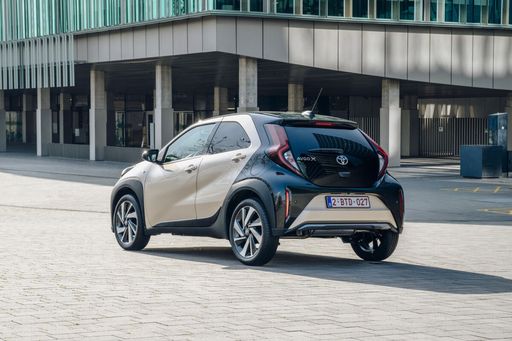
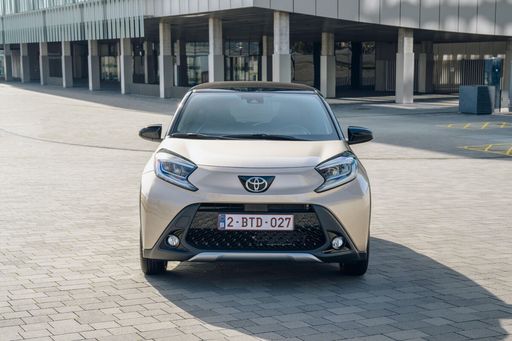
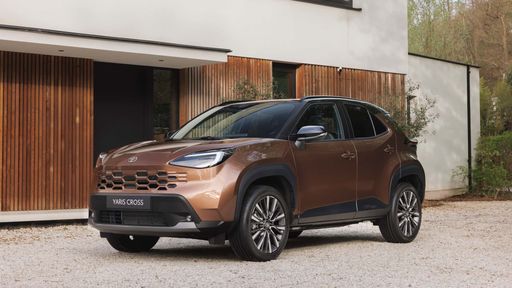
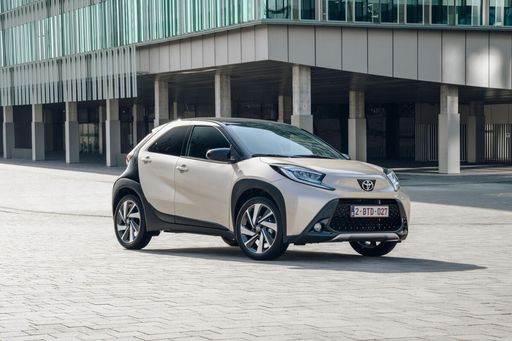
Toyota Aygo VS Toyota Yaris Cross pits a tiny, extremely frugal city specialist against a compact crossover built for everyday versatility. The Toyota Aygo delivers superb maneuverability, low running costs and an automatic setup that makes urban driving effortless, while the Toyota Yaris Cross trades a little of that bare‑bones agility for more room, luggage practicality and composure on longer trips. Both cars wear Toyota’s familiar safety and assistance suite, but they present very different compromises in space, noise and usability. Read on if you want to know which one will feel less like a sacrifice in your daily routine rather than a specification on paper.
Yaris Cross

Character and driving behaviour: city sprinter versus steady crossover

The Toyota Aygo feels like a city sprinter — light steering, tiny turn‑in and a transmission tuned for stress‑free stop‑start traffic that makes urban parking and short hops genuinely pleasant. By contrast, the Toyota Yaris Cross drives with a heavier, more assured demeanour that soaks up motorway cruising better and can carry higher speeds without feeling twitchy. That calmness brings a trade‑off: the Yaris Cross loses some of the Aygo’s nimbleness in tight streets and parking garages, but rewards you with steadier high‑speed manners and an optional drivetrain for better winter traction. In everyday use the Aygo is addictive for inner‑city chores, while the Yaris Cross is the safer, less fussy companion when trips extend beyond town limits.

Aygo

Comfort and cabin feel: compact cockpit vs roomier, but still snug, crossover

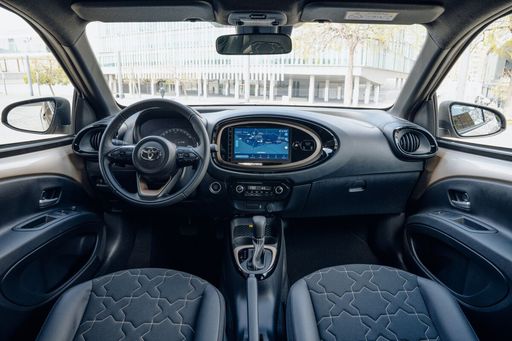
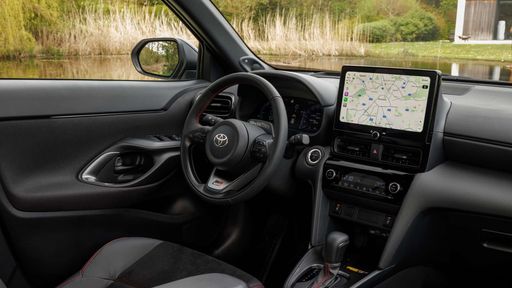
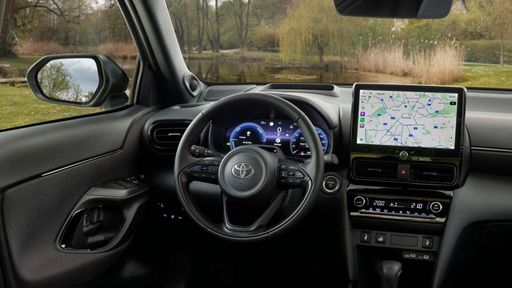
Sitting in the Toyota Aygo is intimate and upright — the raised seat gives a good view and a cozy cockpit, but passengers in the back quickly notice how tight the space and door openings are. The Toyota Yaris Cross presents a more conventional small‑SUV cabin with larger front seats, a more spacious impression and an interior that feels a touch more grown up, especially up front. Neither car is luxurious, yet the Yaris Cross’s additional room and more substantial surfaces make it easier to live with on longer trips, while the Aygo’s smaller footprint and lighter controls keep city commutes less tiring. If you regularly carry adults in the rear, the Yaris Cross will feel noticeably less cramped; if most journeys are solo or two‑up, the Aygo’s cockpit energy is perfectly acceptable.

Yaris Cross

Practicality and everyday usability: boot space and family chores

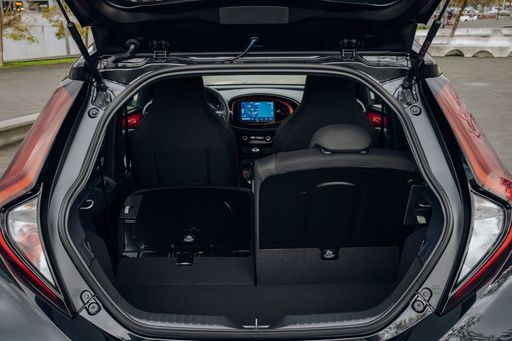
Practicality is where the Toyota Yaris Cross really stretches ahead: its boot and overall storage layout suit grocery runs, weekend bags and even modest family duties without much juggling. The Toyota Aygo’s cargo area is best thought of as daily‑errand size — excellent for shopping and brief outings, but strained the moment you pack a stroller or several suitcases. The Yaris Cross also benefits from a more usable rear bench and payload that make it a credible one‑car choice for small families, whereas the Aygo works best as a clever second car or solo commuter. Keep in mind the Yaris Cross’s optional extra features can nibble at luggage space, so consider load needs when choosing trims or all‑wheel drive options.

Aygo

Perceived quality and tech: simple robustness versus a more complete package

Inside, the Toyota Aygo projects straightforward, durable design — mostly hard plastics and functional controls that feel built to last rather than to impress. The Toyota Yaris Cross leans toward a slightly higher level of finish and a tech package that feels more modern overall, with a bigger focus on convenience and software updates. Both cars come with Toyota’s safety systems, but the Yaris Cross bundles in more practical features that you’ll notice every day, like a configurable load floor and a richer infotainment setup on higher trims. The trade‑off is price: the Aygo’s lower running costs are attractive, yet higher‑spec Aygos can creep toward Yaris Cross territory, so shop the options carefully.

Yaris Cross

Buyer fit: who should choose the Aygo and who the Yaris Cross?

If your life is mostly urban — tight streets, short commutes, scarce parking and a strong desire to keep fuel bills minimal — the Toyota Aygo is the sharper, more economical fit and rewards city‑focused drivers with ease of use. If your priorities include luggage space, carrying passengers comfortably, occasional long runs or the reassurance of optional all‑wheel drive, the Toyota Yaris Cross is the more natural match and will feel less compromised day to day. Budget and personal priorities determine the balance: choose the Aygo when daily running cost and maneuverability matter most, choose the Yaris Cross when practicality, composure and family flexibility matter more. Below you’ll find the technical comparison to translate these everyday differences into the mechanical details that underpin them.

Here’s where it gets real: The technical differences in detail

Aygo

Costs and Efficiency:

When it comes to price and running costs, the biggest differences usually appear. This is often where you see which car fits your budget better in the long run.

Toyota Aygo is noticeably cheaper – starting at 18,800 £ , while the Toyota Yaris Cross costs 23,700 £ . That’s a price difference of around 4,843 £.

Fuel consumption also shows a difference: the Toyota Aygo uses 3.7 L/100km and is visibly more efficient than the Toyota Yaris Cross with 4.5 L/100km. The difference is about 0.8 L/100km.

Yaris Cross

Engine and Performance:

Power, torque and acceleration are the classic benchmarks for car enthusiasts – and here, some clear differences start to show.

When it comes to engine power, the Toyota Yaris Cross offers somewhat more power – delivering 130 HP compared to 116 HP. That’s roughly 14 HP more horsepower.

When accelerating from 0 to 100 km/h, the Toyota Aygo is somewhat quicker – completing the sprint in 9.2 s, while the Toyota Yaris Cross takes 10.7 s. That’s about 1.5 s quicker.

Aygo

Space and Everyday Use:

Whether family car or daily driver – which one offers more room, flexibility and comfort?

Seats: Toyota Yaris Cross offers more seats – 5 vs 4.

In terms of curb weight, Toyota Aygo is only slightly lighter – 1,090 kg compared to 1,180 kg. The difference is around 90 kg.

Looking at boot space, the Toyota Yaris Cross offers considerably more boot space – 397 L compared to 231 L. That’s a difference of about 166 L.

When it comes to payload, the Toyota Yaris Cross carries slightly more – 510 kg compared to 420 kg. That’s a difference of about 90 kg.

Who wins the race in the data check?

The Toyota Yaris Cross is narrowly ahead in the objective data comparison.
This result only shows which model scores more points on paper – not which of the two cars feels right for you.

from £23,700
Yaris Cross

Toyota Yaris Cross

  • Engine Type : Full Hybrid
  • Transmission : Automatic
  • Drive Type : Front-Wheel Drive, All-Wheel Drive
  • Power HP : 116 - 130 HP
  • Consumption L/100km : 4.5 - 4.8 L/100km
Toyota Aygo
Toyota Yaris Cross

Costs and Consumption

View detailed analysis

Engine and Performance

View detailed analysis

Dimensions and Body

View detailed analysis

Toyota Aygo

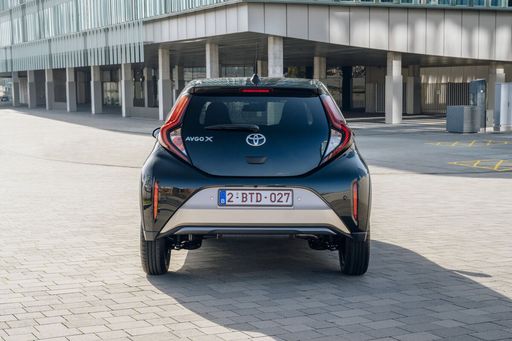
The Aygo is a cheeky city car that turns congested streets into a playground, with bold styling and sprightly manners that make parking a pleasure rather than a pain. Economical to run and surprisingly well equipped for its size, the Aygo is a smart choice for urban buyers who want personality without a premium price and a car that brings a smile to the daily commute.

details

Toyota Yaris Cross

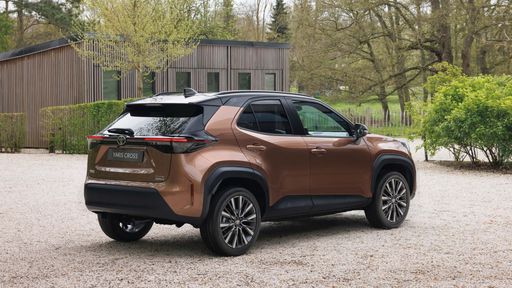
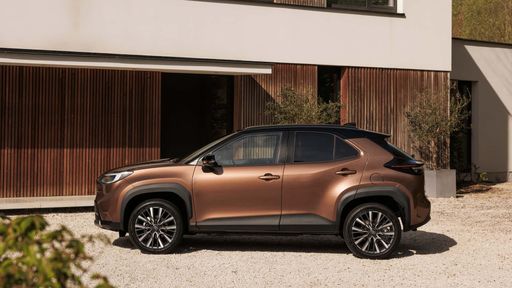
The Toyota Yaris Cross blends the maneuverability of a small hatch with the higher driving position and practicality of a crossover, wrapped in Toyota's dependable build quality. It suits urban buyers who need easy parking, flexible cargo space and a comfortable, economical daily driver.

details
Toyota Aygo
Toyota Yaris Cross

Costs and Consumption

Price
18,800 - 24,300 £
Price
23,700 - 34,300 £
Consumption L/100km
3.7 L/100km
Consumption L/100km
4.5 - 4.8 L/100km
Consumption kWh/100km
-
Consumption kWh/100km
-
Electric Range
-
Electric Range
-
Battery Capacity
-
Battery Capacity
-
co2
85 g/km
co2
101 - 108 g/km
Fuel tank capacity
-
Fuel tank capacity
-

Dimensions and Body

Body Type
SUV
Body Type
SUV
Seats
4
Seats
5
Doors
-
Doors
-
Curb weight
1,090 kg
Curb weight
1,180 - 1,290 kg
Trunk capacity
231 L
Trunk capacity
320 - 397 L
Length
-
Length
-
Width
1,740 mm
Width
1,765 mm
Height
-
Height
-
Max trunk capacity
-
Max trunk capacity
-
Payload
420 kg
Payload
485 - 510 kg

Engine and Performance

Engine Type
Full Hybrid
Engine Type
Full Hybrid
Transmission
Automatic
Transmission
Automatic
Transmission Detail
CVT
Transmission Detail
CVT
Drive Type
Front-Wheel Drive
Drive Type
Front-Wheel Drive, All-Wheel Drive
Power HP
116 HP
Power HP
116 - 130 HP
Acceleration 0-100km/h
9.2 s
Acceleration 0-100km/h
10.7 - 11.3 s
Max Speed
-
Max Speed
-
Torque
120 Nm
Torque
-
Number of Cylinders
3
Number of Cylinders
3
Power kW
85 kW
Power kW
85 - 96 kW
Engine capacity
1,490 cm3
Engine capacity
1,490 cm3

General

Model Year
2025
Model Year
2026
CO2 Efficiency Class
B
CO2 Efficiency Class
C
Brand
Toyota
Brand
Toyota
DriveDuel uses data analysis and artificial intelligence to evaluate vehicle data and create content. Content is regularly reviewed and improved. The displayed prices are estimates based on German list prices, adjusted to the respective country’s VAT. Country-specific registration taxes are not included. This information is not legally binding.