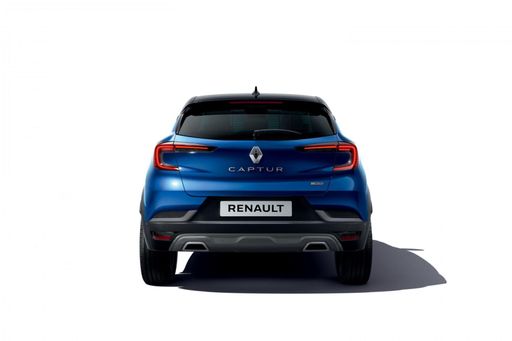
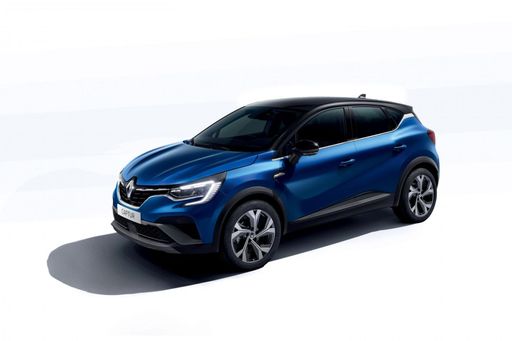
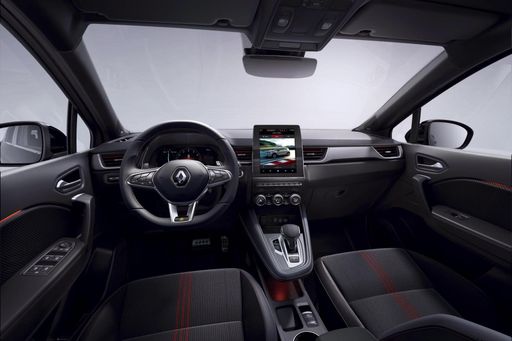
VS

Vauxhall Mokka vs Renault Captur comparison

Compare performance (281 HP vs 158 HP), boot space and price (23,000 £ vs 21,100 £ ) at a glance. Find out which car is the better choice for you – Vauxhall Mokka or Renault Captur?

Vauxhall Mokka vs Renault Captur: Key differences

Vauxhall Mokka

4.3 (3 Reviews)
rate
  • substantially more power
  • substantially quicker 0–100 km/h
  • very slightly lighter

Renault Captur

4.8 (5 Reviews)
rate
  • only slightly cheaper
  • somewhat more efficient
  • moderately more trunk space

All details on performance, efficiency, range and trunk space can be found in the technical comparison below – including user reviews for both models.

Mokka

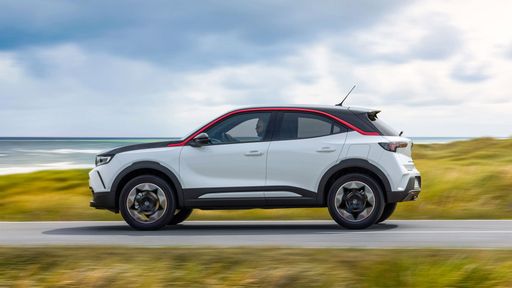
Street Style vs. French Flair

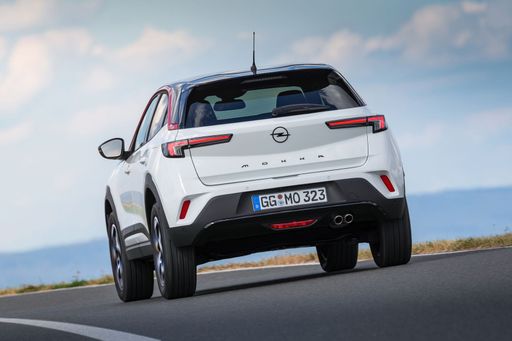
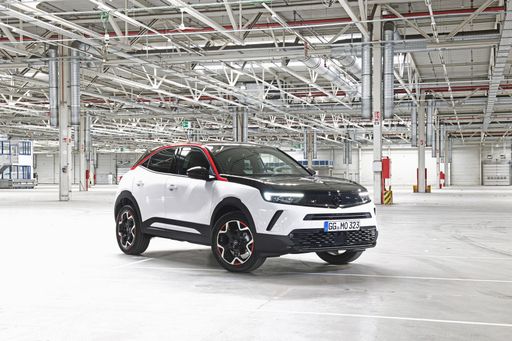
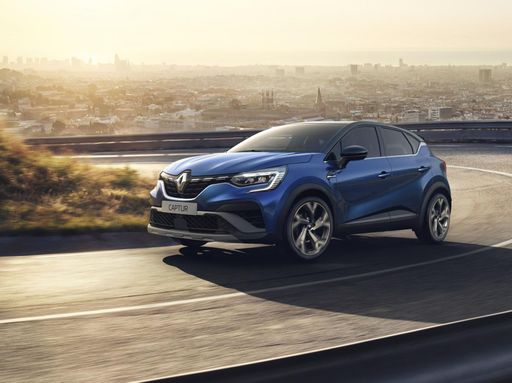
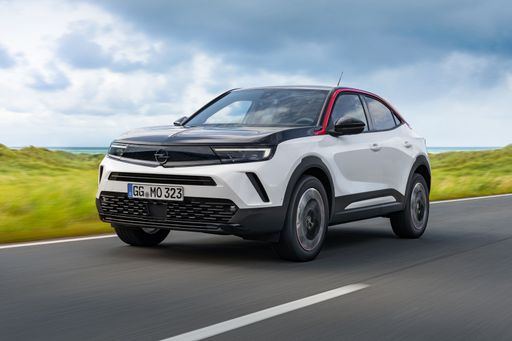
The visual personalities of the two compact crossovers couldn't be more different: the Opel Mokka cuts a bold, chiseled silhouette that wants to be noticed, while the Renault Captur favors a softer, more fashion-forward look that reads as playful and sophisticated. Both attract attention, but they do it for different reasons — one feels more rugged and angular, the other light and urbane. If you care about curb appeal, your choice says a lot about whether you prefer statement-making toughness or stylish understatement.
Captur

Behind the Wheel: How They Feel

On the move, the two take different approaches to the driving experience: the Mokka delivers a taut, confident demeanour that rewards a firmer touch and feels eager when you ask for pace, while the Captur leans into easy, predictable manners that make urban maneuvering and daily commuting pleasantly undemanding. Steering and suspension tuning give each its character — one feels planted and direct, the other composed and forgiving. Pick the Mokka if engagement matters, the Captur if stress-free city life is your priority.

Mokka

Cushioning and Cabin Calm

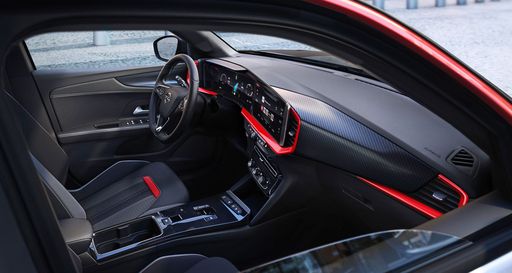
Inside, both cabins aim for comfort but with different emphases: the Captur wraps occupants in a welcoming, refined environment that prioritises smoothness and quiet, whereas the Mokka offers firmer seats and a tougher sense of build that communicates solidity. Materials and ergonomics play a part, too — you’ll notice subtle differences in switchgear and touches that influence perceived quality more than raw spec sheets. Long stints are comfortable in either, but the mood you prefer — soft and civilised or taut and purposeful — will guide your pick.

Captur

Practicalities That Matter

When it comes to day-to-day usability, the Captur focuses on clever packaging and family-friendly tricks that make life easier, while the Mokka relies on straightforward, no-nonsense practicality and a cabin that feels robust under real-world loads. Storage, entry height and how flexibly seats rearrange will influence weekly grocery runs and weekend escapes, and each car interprets those needs differently. Neither leaves you wanting, but the ways they solve small practical problems will reveal which suits your routine better.

Mokka

Daily Running: Wallet and Worries

Ownership considerations tilt the conversation away from flash and toward what you’ll actually live with: one model will appeal to buyers who prize low running hassle and gentle efficiency, the other to those who accept slightly firmer economics in exchange for livelier performance and a more muscular presence. Resale, servicing and everyday friendliness matter more than headlines, and your choice should reflect whether you value thrift or dynamism in equal measure. Think about how many miles you do and what kind of driving you enjoy most before committing.

Captur

Who Should Find These Perfect?

If your life is a blend of city runs, school drop-offs and occasional motorway miles, the Captur will likely charm you with its ease and cleverness; if you want something that feels confident on twisty backroads and projects a sportier persona at the lights, the Mokka is the more characterful companion. Both are sensible, stylish options in today’s compact crossover market, but they target subtly different tastes and priorities. Keep reading — the DriveDuel Champion will be revealed afterwards, and you’ll want to know which one takes the crown.

Here’s where it gets real: The technical differences in detail

Mokka

Costs and Efficiency:

Looking at overall running costs, both models reveal some interesting differences in everyday economy.

Renault Captur is only slightly cheaper – starting at 21,100 £ , while the Vauxhall Mokka costs 23,000 £ . That’s a price difference of around 1,920 £.

Fuel consumption also shows a difference: the Renault Captur uses 4.4 L/100km and is somewhat more efficient than the Vauxhall Mokka with 4.9 L/100km. The difference is about 0.5 L/100km.

Captur

Engine and Performance:

Power, torque and acceleration say a lot about how a car feels on the road. This is where you see which model delivers more driving dynamics.

When it comes to engine power, the Vauxhall Mokka offers substantially more power – delivering 281 HP compared to 158 HP. That’s roughly 123 HP more horsepower.

When accelerating from 0 to 100 km/h, the Vauxhall Mokka is substantially quicker – completing the sprint in 5.9 s, while the Renault Captur takes 8.9 s. That’s about 3 s quicker.

Looking at top speed, the Vauxhall Mokka is a bit faster – reaching 209 km/h, while the Renault Captur tops out at 180 km/h. The difference is around 29 km/h.

There’s also a difference in torque: the Vauxhall Mokka delivers visibly more torque with 345 Nm compared to 265 Nm. That’s about 80 Nm more.

Mokka

Space and Everyday Use:

Whether family car or daily driver – which one offers more room, flexibility and comfort?

Both vehicles offer seating for 5 people.

In terms of curb weight, Vauxhall Mokka is very slightly lighter – 1,294 kg compared to 1,323 kg. The difference is around 29 kg.

Looking at boot space, the Renault Captur offers moderately more boot space – 422 L compared to 350 L. That’s a difference of about 72 L.

For maximum load capacity, the Renault Captur offers moderately more capacity – up to 1,363 L, about 258 L more than the Vauxhall Mokka.

When it comes to payload, the Renault Captur carries moderately more – 453 kg compared to 400 kg. That’s a difference of about 53 kg.

Who wins the race in the data check?

The Vauxhall Mokka is far ahead overall in the objective data comparison.
This result only shows which model scores more points on paper – not which of the two cars feels right for you.

from £23,000
Mokka

Vauxhall Mokka

  • Engine Type : Electric, Petrol MHEV, Petrol
  • Transmission : Automatic, Manuel
  • Drive Type : Front-Wheel Drive
  • Power HP : 136 - 281 HP
  • Consumption L/100km : 4.9 - 5.7 L/100km
  • Consumption kWh/100km : 15.4 - 18.5 kWh/100km
  • Electric Range : 336 - 403 km
Vauxhall Mokka
Renault Captur

Costs and Consumption

View detailed analysis

Engine and Performance

View detailed analysis

Dimensions and Body

View detailed analysis

Vauxhall Mokka

The Opel Mokka cuts a smart, modern silhouette that feels right at home in the city while still turning heads on the open road. It's a practical, easy-to-live-with crossover that blends comfy driving manners with enough flair and tech to keep daily commutes interesting — and it won’t make you regret trading up.

details

Renault Captur

The Renault Captur is a cheeky little crossover that pairs city-friendly agility with a roomy, well-thought-out cabin and enough style to turn heads at the lights. It’s a sensible choice for buyers who want practical versatility and a dash of personality on their daily drives, without taking itself too seriously.

details
Vauxhall Mokka
Renault Captur

Costs and Consumption

Price
23,000 - 40,500 £
Price
21,100 - 28,400 £
Consumption L/100km
4.9 - 5.7 L/100km
Consumption L/100km
4.4 - 6 L/100km
Consumption kWh/100km
15.4 - 18.5 kWh/100km
Consumption kWh/100km
-
Electric Range
336 - 403 km
Electric Range
-
Battery Capacity
51 kWh
Battery Capacity
-
co2
0 - 129 g/km
co2
100 - 137 g/km
Fuel tank capacity
44 L
Fuel tank capacity
48 L

Dimensions and Body

Body Type
SUV
Body Type
SUV
Seats
5
Seats
5
Doors
5
Doors
5
Curb weight
1,294 - 1,672 kg
Curb weight
1,323 - 1,441 kg
Trunk capacity
310 - 350 L
Trunk capacity
326 - 422 L
Length
4,150 mm
Length
4,239 mm
Width
1,787 mm
Width
1,797 mm
Height
1,515 - 1,535 mm
Height
1,575 mm
Max trunk capacity
1,060 - 1,105 L
Max trunk capacity
1,363 L
Payload
388 - 400 kg
Payload
447 - 453 kg

Engine and Performance

Engine Type
Electric, Petrol MHEV, Petrol
Engine Type
Full Hybrid, Petrol, Petrol MHEV
Transmission
Automatic, Manuel
Transmission
Automatic, Manuel
Transmission Detail
Reduction Gearbox, Dual-Clutch Automatic, Manual Gearbox
Transmission Detail
Automatic Gearbox, Manual Gearbox, Dual-Clutch Automatic
Drive Type
Front-Wheel Drive
Drive Type
Front-Wheel Drive
Power HP
136 - 281 HP
Power HP
115 - 158 HP
Acceleration 0-100km/h
5.9 - 9 s
Acceleration 0-100km/h
8.9 - 12.3 s
Max Speed
150 - 209 km/h
Max Speed
180 km/h
Torque
230 - 345 Nm
Torque
160 - 265 Nm
Number of Cylinders
3
Number of Cylinders
3 - 4
Power kW
100 - 207 kW
Power kW
84 - 116 kW
Engine capacity
1,199 cm3
Engine capacity
1,199 - 1,789 cm3

General

Model Year
2,024 - 2,025
Model Year
2,025
CO2 Efficiency Class
A, C, D
CO2 Efficiency Class
C, D, E
Brand
Vauxhall
Brand
Renault
DriveDuel uses data analysis and artificial intelligence to evaluate vehicle data and create content. Content is regularly reviewed and improved. The displayed prices are estimates based on German list prices, adjusted to the respective country’s VAT. Country-specific registration taxes are not included. This information is not legally binding.