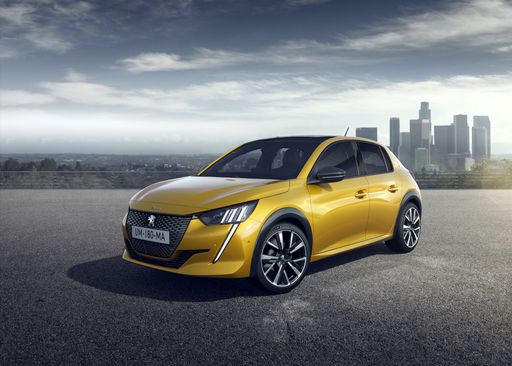
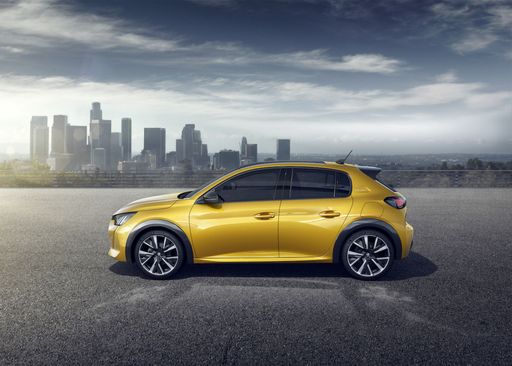
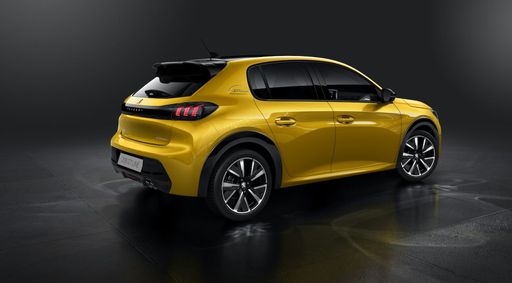
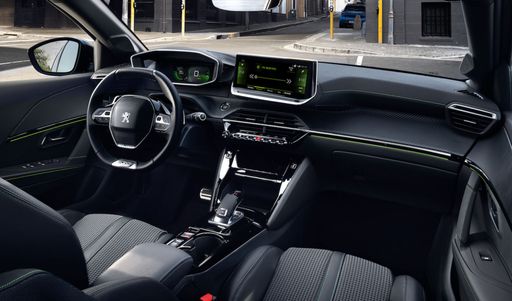
@ Peugeot / Stellantis Media
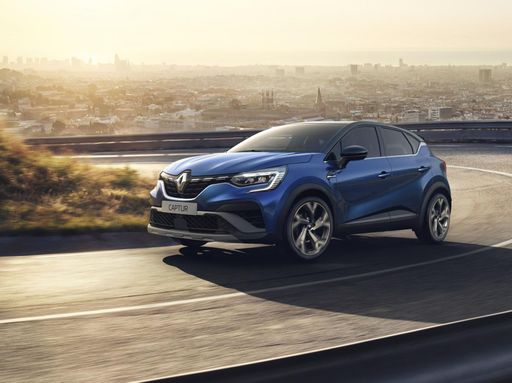
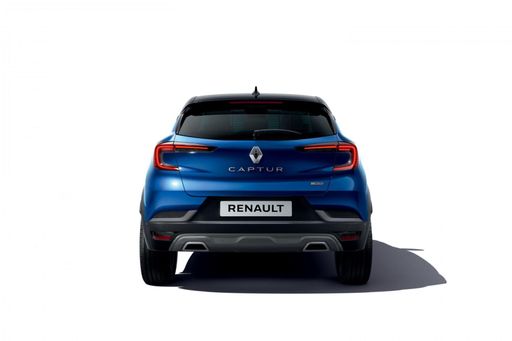
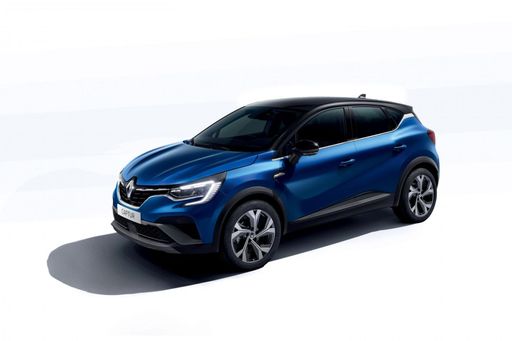
@ Renault Group Media
VS

Peugeot 208 vs Renault Captur – Performance, range & efficiency compared

Both models have their strengths – but which one suits you more?
Compare performance, efficiency, price and space directly: Peugeot 208 or Renault Captur?

208 @ Peugeot / Stellantis Media

The Stylish Debate: Peugeot 208 vs. Renault Captur

In the competitive world of compact cars, the Peugeot 208 and Renault Captur stand out for their excellence and innovation. While both vehicles offer cutting-edge technology and efficiency, they cater to different sensibilities and lifestyles. Below, we dive deep into technical comparisons and unique features, helping you decide which sleek ride suits you best.

Captur @ Renault Group Media

Design and Dimensions

When it comes to visual appeal, the French excel. The Peugeot 208 is a classic hatchback infused with modernity, boasting a bold front grille and signature LED lighting. Its compact design, measuring 4,055 mm in length, appeals to urban dwellers seeking easy maneuverability.

On the other side, the Renault Captur signifies the spunky aura of an SUV, emboldened with a robust yet elegant stance. Its length of 4,239 mm provides a slightly more imposing presence without losing its agility, perfect for those requiring more cargo space and a higher driving position.

208 @ Peugeot / Stellantis Media

Engine and Performance

The Peugeot 208 offers a variety of engine options, including petrol, petrol mild-hybrid (MHEV), and a fully electric variant. Its power ranges from 101 to 156 HP for the petrol engines, ensuring a blend of efficiency and power. Notably, the electric model features an impressive range of up to 410 km and swift acceleration, reaching 0-100 km/h in just 8.3 seconds.

The Renault Captur, conversely, presents engine choices from LPG to full hybrid configurations. The most robust petrol engine offers 158 HP, and the full hybrid system promises both efficiency and environmental friendliness. Captures acceleration from 0-100 km/h is a respectable 8.5 seconds, paired with a maximum speed of 180 km/h.

Captur @ Renault Group Media

Efficiency and Environmental Impact

For eco-conscious drivers, the Peugeot 208 electric version shines with zero CO2 emissions. Traditional petrol models show emissions between 105 to 121 g/km, driven by a three-cylinder engine with superior energy efficiency.

The Renault Captur maintains respectable emission performances across its variants, with the full hybrid emitting as low as 106 g/km of CO2. It emphasizes sustainability with a 4.7 L/100km consumption rate for the hybrid engine - a boon for those prioritizing reduced fuel consumption.

208 @ Peugeot / Stellantis Media

Interiors and Practicality

Inside the Peugeot 208, the i-Cockpit offers a futuristic experience with a digital instrument cluster and touchscreen controls, enhancing driving ease and comfort. Although its trunk capacity is at 309 liters, it is sufficient for urban needs.

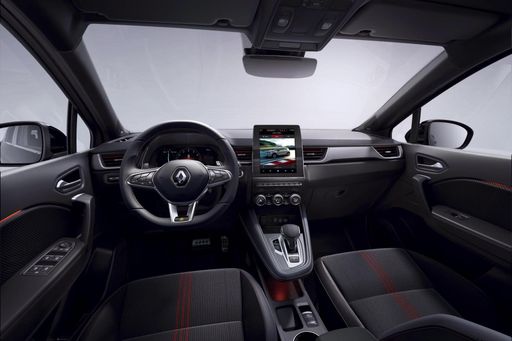
The Renault Captur charms with a spacious cabin and a more flexible trunk capacity up to 422 liters. It prioritizes comfort with ergonomic seats and intuitive infotainment features, setting a new standard for interior adaptability within the SUV category.

Captur @ Renault Group Media

Conclusion: Which is Right for You?

If you crave electrified efficiency mixed with a dash of the avant-garde aesthetic, the Peugeot 208 presents an appealing proposition. Its compact design and electric option make it an eco-friendly choice ideal for city environments.

Meanwhile, the Renault Captur attracts those who desire more room and versatility, without compromising on sustainability and performance. As an urban SUV, it's perfect for families and adventurous spirits looking for economy, comfort, and style all wrapped into one.

Ultimately, both models radiate distinguished French innovation. Your preference will hinge on lifestyle demands and personal values toward efficiency and style in this classic automotive duel.

Here’s where it gets real: The technical differences in detail

208 @ Peugeot / Stellantis Media

Costs and Efficiency:

Price and efficiency are often the first things buyers look at. Here it becomes clear which model has the long-term edge – whether at the pump, the plug, or in purchase price.

Peugeot 208 has a hardly perceptible advantage in terms of price – it starts at 20700 £, while the Renault Captur costs 21100 £. That’s a price difference of around 446 £.

Both cars consume an average of 4.50 L per 100 km – no difference here.

Captur @ Renault Group Media

Engine and Performance:

Power, torque and acceleration say a lot about how a car feels on the road. This is where you see which model delivers more driving dynamics.

When it comes to engine power, the Peugeot 208 has a hardly perceptible edge – offering 156 HP compared to 143 HP. That’s roughly 13 HP more horsepower.

In acceleration from 0 to 100 km/h, the Peugeot 208 is slight quicker – completing the sprint in 8.30 s, while the Renault Captur takes 8.90 s. That’s about 0.60 s faster.

In terms of top speed, the Peugeot 208 performs barely noticeable better – reaching 200 km/h, while the Renault Captur tops out at 180 km/h. The difference is around 20 km/h.

There’s also a difference in torque: Peugeot 208 pulls barely noticeable stronger with 270 Nm compared to 265 Nm. That’s about 5 Nm difference.

Space and Everyday Use:

Whether family car or daily driver – which one offers more room, flexibility and comfort?

Both vehicles offer seating for 5 people.

In curb weight, Peugeot 208 is slightly lighter – 1165 kg compared to 1323 kg. The difference is around 158 kg.

In terms of boot space, the Renault Captur offers to a small extent more room – 422 L compared to 352 L. That’s a difference of about 70 L.

In maximum load capacity, the Renault Captur performs a bit better – up to 1363 L, which is about 200 L more than the Peugeot 208.

When it comes to payload, Renault Captur hardly perceptible takes the win – 453 kg compared to 430 kg. That’s a difference of about 23 kg.

Who comes out on top?

Overall, the Renault Captur shows itself to be dominates this comparison and secures the title of DriveDuel Champion.
It convinces with the more balanced overall package and proves to be the more versatile choice for everyday use.

from about £21,100
Captur @ Renault Group Media

Renault Captur

  • Engine Type : Full Hybrid, Petrol, Petrol MHEV
  • Transmission : Automatic, Manuel
  • Drive Type : Front-Wheel Drive
  • Power HP : 115 - 143 HP
  • Consumption L/100km : 4.5 - 6 L

Peugeot 208

The Peugeot 208 feels like a city-savvy fox: compact, stylish and surprisingly grown-up, with a cabin that punches above its weight and enough personality to make daily commutes a little less boring. It’s a smart pick for buyers who want chic practicality without the showroom bluster — easy to park, thrifty to run and oddly fun when the road tightens up.

details

Renault Captur

5 (1)
rate

The Renault Captur is a cheeky little crossover that pairs city-friendly agility with a roomy, well-thought-out cabin and enough style to turn heads at the lights. It’s a sensible choice for buyers who want practical versatility and a dash of personality on their daily drives, without taking itself too seriously.

details
Peugeot 208
Renault Captur
208 @ Peugeot / Stellantis Media
Captur @ Renault Group Media

Costs and Consumption

Price
20700 - 35200 £
Price
21100 - 28300 £
Consumption L/100km
4.5 - 5.2 L
Consumption L/100km
4.5 - 6 L
Consumption kWh/100km
14.1 - 15.4 kWh
Consumption kWh/100km
-
Electric Range
362 - 432 km
Electric Range
-
Battery Capacity
46 - 51 kWh
Battery Capacity
-
co2
0 - 117 g/km
co2
102 - 137 g/km
Fuel tank capacity
44 L
Fuel tank capacity
48 L

Dimensions and Body

Body Type
Hatchback
Body Type
SUV
Seats
5
Seats
5
Doors
5
Doors
5
Curb weight
1165 - 1530 kg
Curb weight
1323 - 1514 kg
Trunk capacity
309 - 352 L
Trunk capacity
326 - 422 L
Length
4055 mm
Length
4239 mm
Width
1745 mm
Width
1797 mm
Height
1430 mm
Height
1575 mm
Max trunk capacity
1118 - 1163 L
Max trunk capacity
1276 - 1363 L
Payload
380 - 430 kg
Payload
376 - 453 kg

Engine and Performance

Engine Type
Petrol, Electric, Petrol MHEV
Engine Type
Full Hybrid, Petrol, Petrol MHEV
Transmission
Manuel, Automatic
Transmission
Automatic, Manuel
Transmission Detail
Manual Gearbox, Reduction Gearbox, Dual-Clutch Automatic
Transmission Detail
Automatic Gearbox, Manual Gearbox, Dual-Clutch Automatic
Drive Type
Front-Wheel Drive
Drive Type
Front-Wheel Drive
Power HP
101 - 156 HP
Power HP
115 - 143 HP
Acceleration 0-100km/h
8.3 - 10.9 s
Acceleration 0-100km/h
8.9 - 12.3 s
Max Speed
150 - 200 km/h
Max Speed
180 km/h
Torque
205 - 270 Nm
Torque
160 - 265 Nm
Number of Cylinders
3
Number of Cylinders
3 - 4
Power kW
74 - 115 kW
Power kW
84 - 116 kW
Engine capacity
1199 cm3
Engine capacity
1199 - 1789 cm3

General

Model Year
2023 - 2025
Model Year
2025
CO2 Efficiency Class
D, A, C
CO2 Efficiency Class
C, D, E
Brand
Peugeot
Brand
Renault
What drive types are available for the Peugeot 208?

The Peugeot 208 is offered with Front-Wheel Drive.

The prices and data displayed are estimates based on German list prices and may vary by country. This information is not legally binding.