VS

Audi A3 Sportback vs VW Golf comparison

Compare performance (400 HP vs 333 HP), boot space and price (27,000 £ vs 25,200 £ ) at a glance. Find out which car is the better choice for you – Audi A3 Sportback or VW Golf?

Audi A3 Sportback vs VW Golf: Key differences

Audi A3 Sportback

3.9 (1 Reviews)
rate
  • slightly more power
  • visibly quicker 0–100 km/h

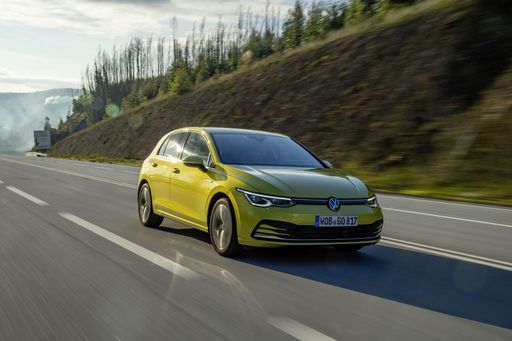
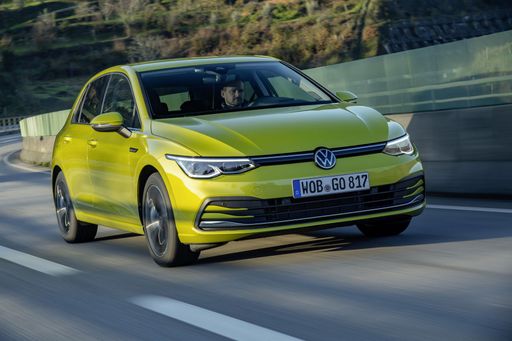
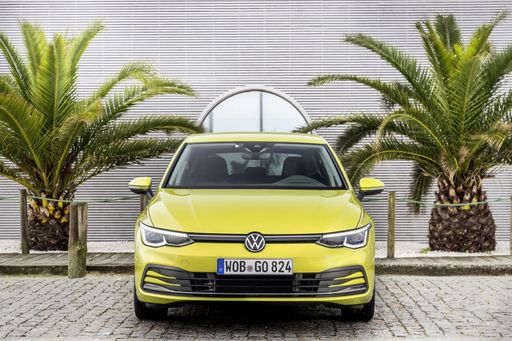
VW Golf

4.6 (1 Reviews)
rate
  • barely cheaper
  • only slightly more electric range
  • barely lighter
  • only slightly more trunk space
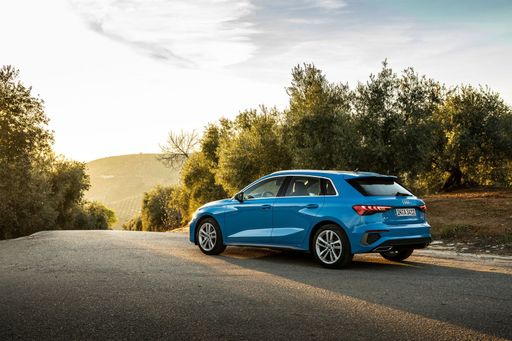
A3 Sportback

The automotive rivalry between the Audi A3 Sportback and the VW Golf is one that has been ongoing for years, captivating enthusiasts with their blend of performance, practicality, and advanced technology. Both vehicles offer a comprehensive range of engines, comfort-focused designs, and tech-savvy features. This article delves into a comprehensive comparison of these iconic hatchbacks to see how they stack up against one another in the 2024 model year.
Golf

Engine Options and Performance

Starting with the engine lineup, both the A3 Sportback and Golf provide diverse choices that cater to different driving preferences. The Audi A3 Sportback offers a selection of petrol, diesel, and even a petrol MHEV variant, while the Golf also features petrol along with plug-in hybrid options in its lineup.

The A3 Sportback boasts a maximum power output of 400 HP with its more powerful models, whereas the Golf reaches up to 333 HP. The A3’s acceleration times are impressively quick, with top models hitting 0-100 km/h in just 3.8 seconds, compared to the Golf's fastest variant which manages it in 4.6 seconds.

When it comes to torque, the A3 tends to provide a slight edge, with its maximum torque reaching up to 500 Nm, making it a formidable opponent in terms of raw power and performance.

A3 Sportback

Fuel Efficiency and Consumption

Fuel efficiency is always a crucial factor in the decision-making process for buyers. The A3 Sportback shows impressive consumption figures, averaging between 4.8 and 9.3 L/100 km depending on the engine choice. Conversely, the Golf performs similarly well with a range of 4.3 to 8.5 L/100 km.

For those concerned about emissions, both cars offer commendable CO2 efficiency ratings, with the Golf holding a slight advantage in efficiency classes overall, having variants rated as low as B to G, while the A3 showcases ratings of D to G.

Golf

Exterior and Interior Design

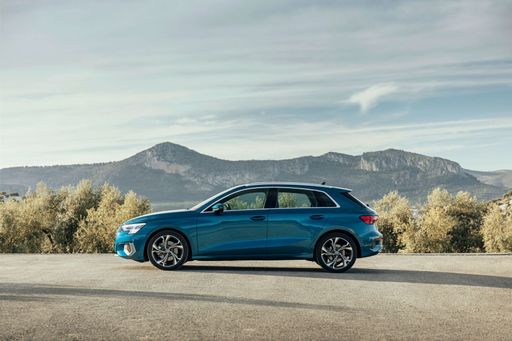
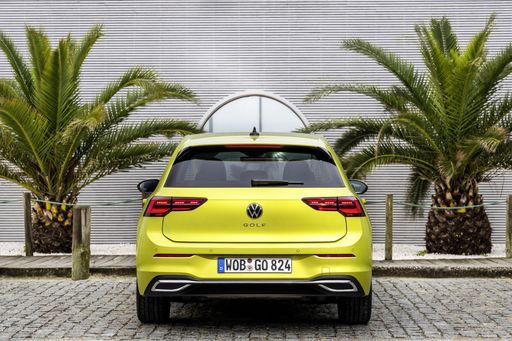
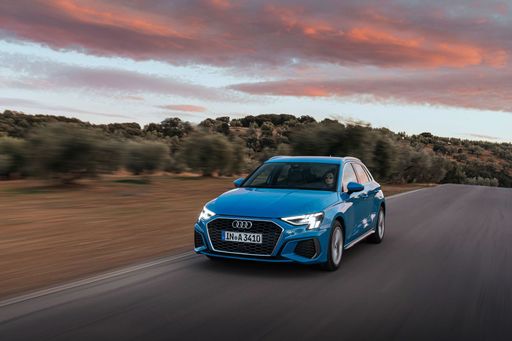
Aesthetically, the A3 Sportback exudes a more premium style with its sleek lines and sporty demeanor, typical of Audi’s design language. It features a body length of up to 4381 mm, coupled with a width of 1816 mm, giving it an imposing presence on the road.

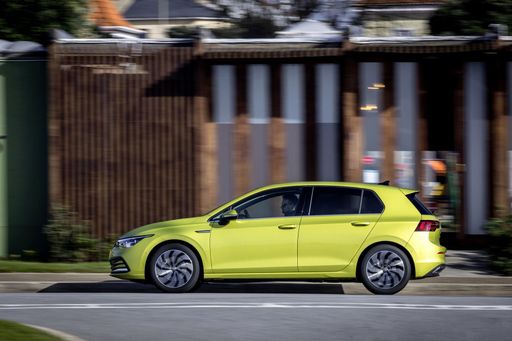
The VW Golf, on the other hand, showcases a more classic hatchback design with its slightly shorter length, ranging between 4282 mm to 4292 mm, and a width of 1789 mm. Its design appeals more widely to those looking for a stylish yet practical family car.

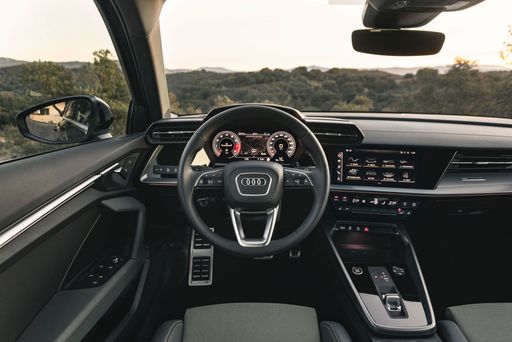
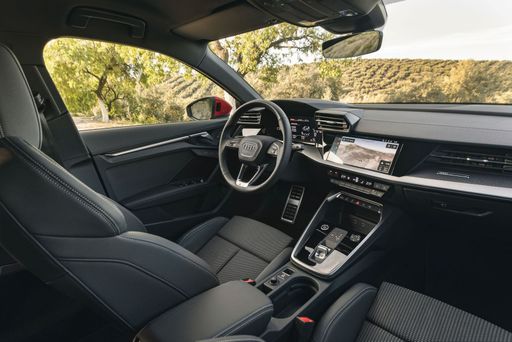
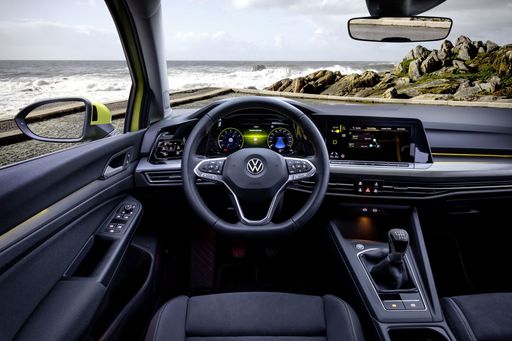
Inside, both vehicles offer high-quality materials and spacious cabins. The A3 Sportback's interior design emphasizes luxury, with cutting-edge technology seamlessly integrated into the dashboard layout. The Golf, while still offering advanced tech features, leans slightly towards a utilitarian aesthetic that prioritizes functionality.

A3 Sportback

Technology and Innovations

Keeping pace with modern technology, both models are equipped with state-of-the-art infotainment systems. The Audi A3 features the MMI Navigation Plus with a high-resolution display and voice recognition capabilities. The Virtual Cockpit provides drivers with customizable digital gauges that enhance the driving experience.

The VW Golf counters this with its Discover Pro infotainment system, which also offers voice control and a variety of connectivity features, including wireless Apple CarPlay and Android Auto. Additionally, the telemetry and driver-assistance features on both vehicles are top-of-the-line, providing a seamless blend of safety and convenience.

Golf

Conclusion: The Verdict

In conclusion, the choice between the Audi A3 Sportback and the VW Golf ultimately boils down to personal preferences and priorities. If luxury, top-tier performance, and innovative tech are at the forefront of your desires, the A3 Sportback will likely capture your attention. However, if you are looking for a well-rounded hatchback that offers practicality and efficiency without compromising on style, the Golf stands strong as a formidable contender.

Both hatchbacks remain exceptional choices, appealing to a wide range of drivers, and serve as excellent examples of what modern automotive engineering has to offer in 2024.

Here’s where it gets real: The technical differences in detail

A3 Sportback

Costs and Efficiency:

Looking at overall running costs, both models reveal some interesting differences in everyday economy.

VW Golf is barely cheaper – starting at 25,200 £ , while the Audi A3 Sportback costs 27,000 £ . That’s a price difference of around 1,805 £.

Both cars consume an average of 1.1 L/100km – no difference here.

As for electric range, the VW Golf offers only slightly more range – reaching up to 143 km, about 2 km more than the Audi A3 Sportback.

Golf

Engine and Performance:

Power, torque and acceleration are the classic benchmarks for car enthusiasts – and here, some clear differences start to show.

When it comes to engine power, the Audi A3 Sportback offers slightly more power – delivering 400 HP compared to 333 HP. That’s roughly 67 HP more horsepower.

When accelerating from 0 to 100 km/h, the Audi A3 Sportback is visibly quicker – completing the sprint in 3.8 s, while the VW Golf takes 4.6 s. That’s about 0.8 s quicker.

Looking at top speed, the VW Golf is a bit faster – reaching 270 km/h, while the Audi A3 Sportback tops out at 237 km/h. The difference is around 33 km/h.

There’s also a difference in torque: the Audi A3 Sportback delivers somewhat more torque with 500 Nm compared to 420 Nm. That’s about 80 Nm more.

A3 Sportback

Space and Everyday Use:

Beyond pure performance, interior space and usability matter most in daily life. This is where you see which car is more practical and versatile.

Both vehicles offer seating for 5 people.

In terms of curb weight, VW Golf is barely lighter – 1,307 kg compared to 1,360 kg. The difference is around 53 kg.

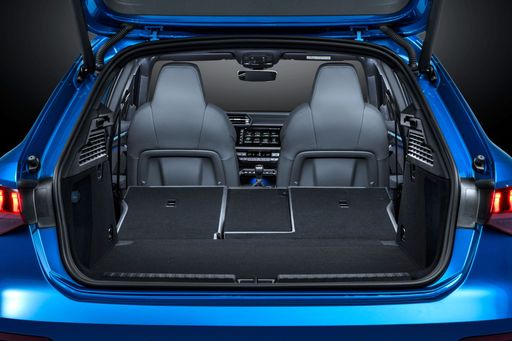
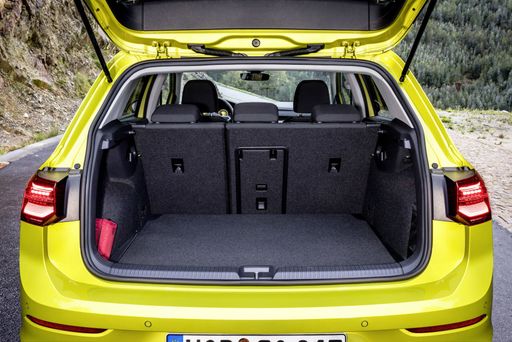
Looking at boot space, the VW Golf offers only slightly more boot space – 381 L compared to 380 L. That’s a difference of about 1 L.

For maximum load capacity, the VW Golf offers a bit more capacity – up to 1,237 L, about 137 L more than the Audi A3 Sportback.

When it comes to payload, the VW Golf carries barely more – 508 kg compared to 480 kg. That’s a difference of about 28 kg.

Who wins the race in the data check?

The Audi A3 Sportback comes out clearly ahead in the objective data comparison.
This result only shows which model scores more points on paper – not which of the two cars feels right for you.

from £27,000
A3 Sportback

Audi A3 Sportback

  • Engine Type : Petrol, Petrol MHEV, Diesel, Plugin Hybrid
  • Transmission : Manuel, Automatic
  • Drive Type : Front-Wheel Drive, All-Wheel Drive
  • Power HP : 116 - 400 HP
  • Consumption L/100km : 1.1 - 9.3 L/100km
  • Electric Range : 134 - 141 km
Audi A3 Sportback
VW Golf

Costs and Consumption

View detailed analysis

Engine and Performance

View detailed analysis

Dimensions and Body

View detailed analysis

Audi A3 Sportback

The Audi A3 Sportback wraps premium materials and crisp German design into a practical hatchback package that makes daily driving feel smart rather than showy. It’s nimble in the city, composed on longer trips, and carries just enough swagger to satisfy buyers who want quality without shouting about it.

details

VW Golf

The VW Golf remains the everyman’s favourite — cleverly balanced, composed and just posh enough to feel grown-up without pretending to be something it’s not. It slips through town and eats up longer trips with a refined cabin, practical layout and a kindly, capable character that turns everyday driving into something a little bit special.

details
Audi A3 Sportback
VW Golf

Costs and Consumption

Price
27,000 - 56,600 £
Price
25,200 - 47,600 £
Consumption L/100km
1.1 - 9.3 L/100km
Consumption L/100km
1.1 - 8.1 L/100km
Consumption kWh/100km
-
Consumption kWh/100km
-
Electric Range
134 - 141 km
Electric Range
131 - 143 km
Battery Capacity
19.7 kWh
Battery Capacity
19.7 kWh
co2
25 - 211 g/km
co2
25 - 184 g/km
Fuel tank capacity
40 L
Fuel tank capacity
40 - 55 L

Dimensions and Body

Body Type
Hatchback
Body Type
Hatchback
Seats
5
Seats
5
Doors
5
Doors
5
Curb weight
1,360 - 1,685 kg
Curb weight
1,307 - 1,662 kg
Trunk capacity
280 - 380 L
Trunk capacity
273 - 381 L
Length
4,352 - 4,353 mm
Length
4,282 - 4,296 mm
Width
1,816 - 1,851 mm
Width
1,789 mm
Height
1,441 - 1,470 mm
Height
1,454 - 1,483 mm
Max trunk capacity
1,100 L
Max trunk capacity
1,129 - 1,237 L
Payload
410 - 480 kg
Payload
438 - 508 kg

Engine and Performance

Engine Type
Petrol, Petrol MHEV, Diesel, Plugin Hybrid
Engine Type
Petrol MHEV, Petrol, Diesel, Plugin Hybrid
Transmission
Manuel, Automatic
Transmission
Automatic, Manuel
Transmission Detail
Manual Gearbox, Dual-Clutch Automatic
Transmission Detail
Dual-Clutch Automatic, Manual Gearbox
Drive Type
Front-Wheel Drive, All-Wheel Drive
Drive Type
Front-Wheel Drive, All-Wheel Drive
Power HP
116 - 400 HP
Power HP
116 - 333 HP
Acceleration 0-100km/h
3.8 - 10.1 s
Acceleration 0-100km/h
4.6 - 10.2 s
Max Speed
225 - 237 km/h
Max Speed
203 - 270 km/h
Torque
220 - 500 Nm
Torque
220 - 420 Nm
Number of Cylinders
4 - 5
Number of Cylinders
4
Power kW
85 - 294 kW
Power kW
85 - 245 kW
Engine capacity
1,498 - 2,480 cm3
Engine capacity
1,498 - 1,984 cm3

General

Model Year
2,025
Model Year
2,024 - 2,025
CO2 Efficiency Class
D, F, E, G, B
CO2 Efficiency Class
D, F, G, C, B
Brand
Audi
Brand
VW
DriveDuel uses data analysis and artificial intelligence to evaluate vehicle data and create content. Content is regularly reviewed and improved. The displayed prices are estimates based on German list prices, adjusted to the respective country’s VAT. Country-specific registration taxes are not included. This information is not legally binding.