VS

Audi A3 Sportback vs VW T-Roc comparison

Compare performance (400 HP vs 150 HP), boot space and price (27,000 £ vs 26,400 £ ) at a glance. Find out which car is the better choice for you – Audi A3 Sportback or VW T-Roc?

Audi A3 Sportback vs VW T-Roc: Key differences

Audi A3 Sportback

3.9 (1 Reviews)
rate
  • significantly more power
  • significantly more efficient
  • considerably quicker 0–100 km/h
  • marginally lighter
  • visibly more trunk space
details

VW T-Roc

4.8 (6 Reviews)
rate
  • barely cheaper
details

All details on performance, efficiency, range and trunk space can be found in the technical comparison below – including user reviews for both models.

By Achim Sedelmaier

A3 Sportback

Audi A3 Sportback VS VW T‑Roc: a concise comparison for buyers

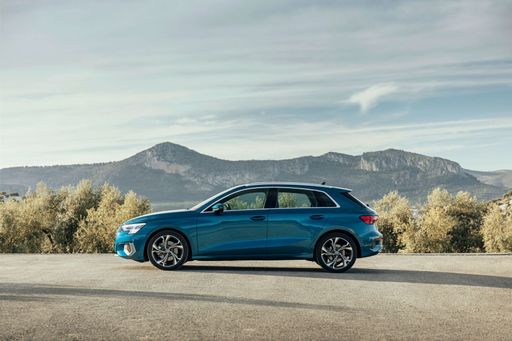
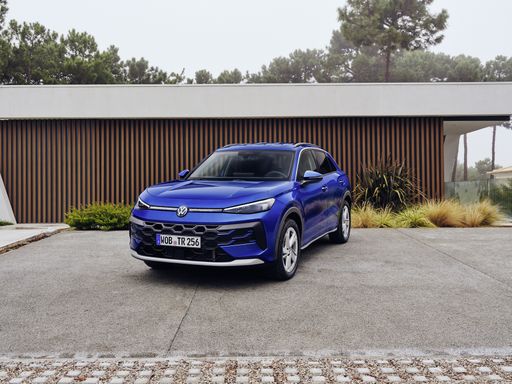
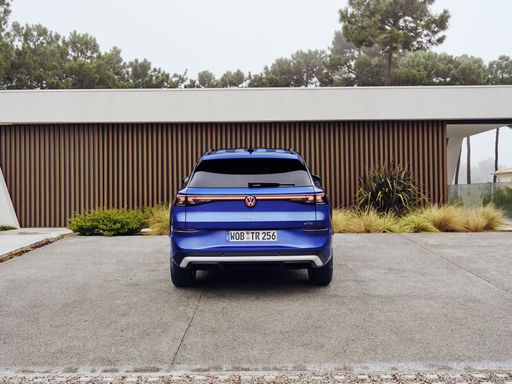
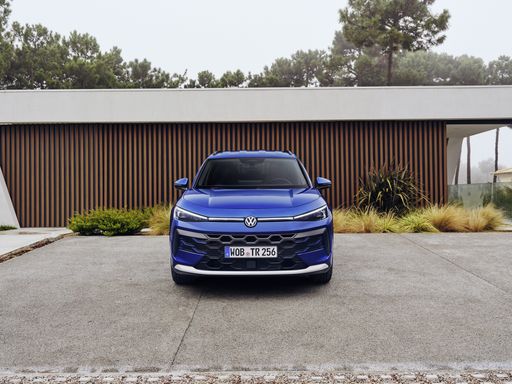
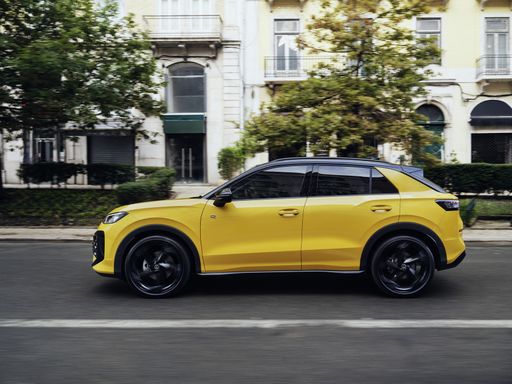
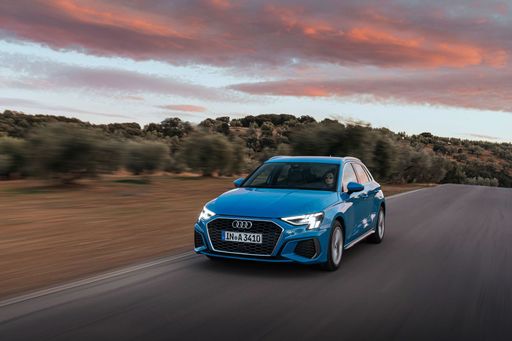
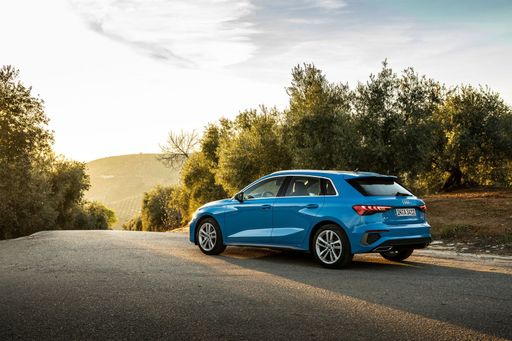
Audi A3 Sportback and VW T‑Roc sit on the same shopping list for many compact-car buyers, but they answer very different needs. The Audi A3 Sportback reads as a premium, composed hatchback that prioritises refinement and a tech-forward cockpit, while the VW T‑Roc presents itself as a practical compact SUV with a taller driving position and more obvious rear‑seat room. Price positioning and available powertrain choices push the two in different buyer directions: the A3 leans into refined petrol, diesel and plug‑in options, the T‑Roc leans into hybridised simplicity and usability. Read on to see how those different choices matter in everyday life rather than just on paper.
T-Roc

Driving character: composed compact hatchback vs easygoing SUV

The Audi A3 Sportback drives like a sports sedan in sensible clothes — lower centre of gravity, sharper steering and an ability to feel planted at speed — which makes it more engaging for drivers who like feedback. The VW T‑Roc prefers to be permissive: higher seating, softer initial responses and a calm, predictable attitude that rewards relaxed inputs rather than enthusiasm. If you want a car that lets you hustle through corners sometimes, the A3 Sportback gives that sharper sensation; if you prefer a composed, confidence-inspiring daily companion, the T‑Roc’s SUV stance and tuned isolation are easier to live with. Both can be made firmer with options, but the trade-off is identical: visual impact and grip vs day‑to‑day comfort and composure.

A3 Sportback

Comfort and long‑distance behaviour: refinement vs roomy serenity

On long runs the Audi A3 Sportback feels like a quiet, grown‑up companion — good soundproofing and seat comfort make motorway miles effortless, and adaptive dampers broaden the comfort-to-firmness range if you want it. The VW T‑Roc, meanwhile, impresses with very low wind and engine noise and a higher seating position that reduces driver fatigue through better visibility. Both cars suffer from the usual large‑wheel trade-offs: attractive alloys can make the ride noticeably firmer, so you pay for looks in ride quality on either model. Practically, the A3 tends to feel tighter and more focused, while the T‑Roc creates a more relaxed, less tiring environment for passengers over long distances.

T-Roc

Practicality, city usability and luggage: hatchback cleverness vs SUV space

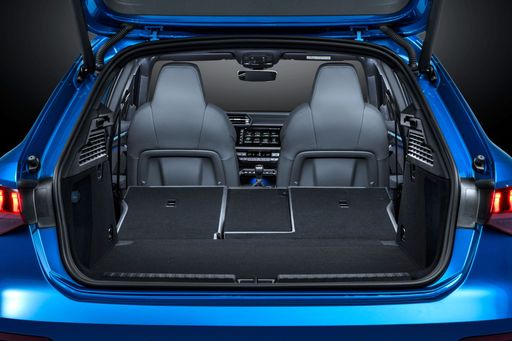
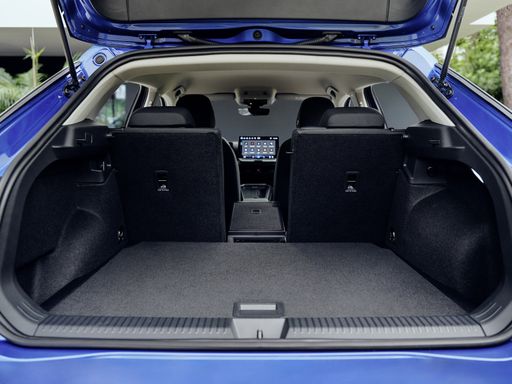
The Audi A3 Sportback hides its practicality well: a wide tailgate, a useful 40:20:40 split and a low loading lip make everyday loading straightforward — though plug‑in variants sacrifice some of that utility. The VW T‑Roc wears practicality on its sleeve with a larger, more flexible boot layout and a variable floor that suits family cargo better, and the higher ride height eases loading and child seat access. In tight urban spaces the A3 Sportback’s more compact silhouette and crisper turning feel make parking and lane‑hopping simpler, while the T‑Roc’s elevated view and easy ingress/egress suit buyers who prioritise comfort getting in and out. The choice is thus about how often you haul luggage or kids versus how often you squeeze into city spaces.

A3 Sportback

Cabin feel and controls: premium restraint vs contemporary comfort

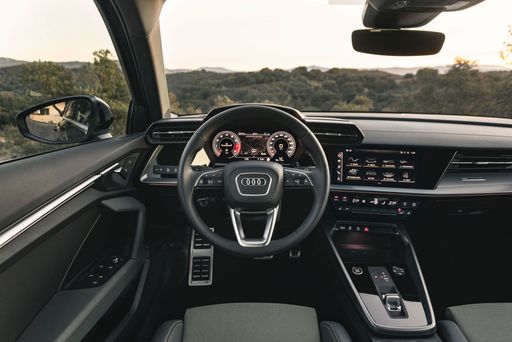
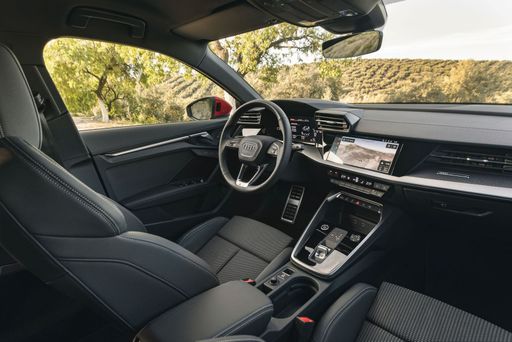
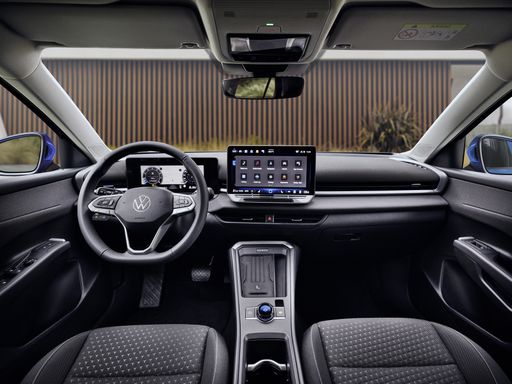
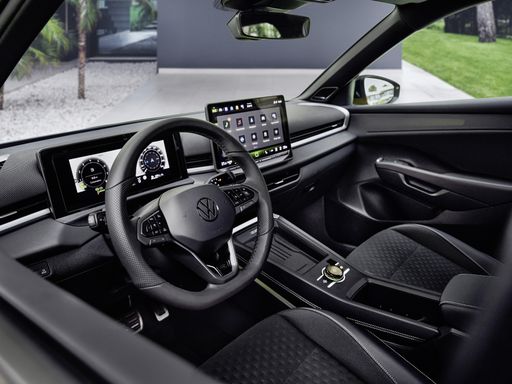
Step into the Audi A3 Sportback and the ambience tilts towards understated premium — neat trim, a digital cockpit and carefully chosen surfaces that aim for refinement rather than flash. The VW T‑Roc has closed the gap with softer materials and a warmer, more tactile interior that feels broadly more welcoming, especially in mid‑spec trims. Where they diverge for daily use is in controls: the A3’s touch‑focused interface can feel modern but less intuitive on the move, whereas the T‑Roc keeps more physical feedback (dials and buttons) that many drivers find less distracting. Both cabins show real improvements, but the A3 sells an image of restrained sophistication while the T‑Roc trades some of that for immediate, user‑friendly comfort.

T-Roc

Buyer fit: who should pick the Audi A3 Sportback and who should choose the VW T‑Roc

If you’re a frequent motorway commuter, place a premium on a quieter, more polished driving experience and want the option of a powerful plug‑in variant, the Audi A3 Sportback is the better fit; you’ll accept higher costs for that refinement. If your priorities are rear‑seat space, a bigger and more flexible boot, easier access for family life and a calm, high‑seated driving position, the VW T‑Roc is more sensible and often better value at entry. Value‑minded buyers should note that the T‑Roc’s price rises with options, while A3 buyers should budget for expensive extras if they want the full premium package. Below this editorial comparison the technical section drills into engines, fuel and electric efficiency, boot specifics and option impacts so you can match the numbers to the practical trade‑offs above.

Here’s where it gets real: The technical differences in detail

A3 Sportback

Costs and Efficiency:

Looking at overall running costs, both models reveal some interesting differences in everyday economy.

VW T-Roc is barely cheaper – starting at 26,400 £ , while the Audi A3 Sportback costs 27,000 £ . That’s a price difference of around 562 £.

Fuel consumption also shows a difference: the Audi A3 Sportback uses 1.1 L/100km and is significantly more efficient than the VW T-Roc with 5.5 L/100km. The difference is about 4.4 L/100km.

T-Roc

Engine and Performance:

Power, torque and acceleration say a lot about how a car feels on the road. This is where you see which model delivers more driving dynamics.

When it comes to engine power, the Audi A3 Sportback offers significantly more power – delivering 400 HP compared to 150 HP. That’s roughly 250 HP more horsepower.

When accelerating from 0 to 100 km/h, the Audi A3 Sportback is considerably quicker – completing the sprint in 3.8 s, while the VW T-Roc takes 8.9 s. That’s about 5.1 s quicker.

There’s also a difference in torque: the Audi A3 Sportback delivers considerably more torque with 500 Nm compared to 250 Nm. That’s about 250 Nm more.

A3 Sportback

Space and Everyday Use:

Beyond pure performance, interior space and usability matter most in daily life. This is where you see which car is more practical and versatile.

Both vehicles offer seating for 5 people.

In terms of curb weight, Audi A3 Sportback is marginally lighter – 1,360 kg compared to 1,465 kg. The difference is around 105 kg.

Looking at boot space, the Audi A3 Sportback offers visibly more boot space – 380 L compared to 284 L. That’s a difference of about 96 L.

When it comes to payload, the VW T-Roc carries only slightly more – 515 kg compared to 480 kg. That’s a difference of about 35 kg.

Who wins the race in the data check?

The Audi A3 Sportback holds a decisive overall lead in the objective data comparison.
This result only shows which model scores more points on paper – not which of the two cars feels right for you.

from £27,000
A3 Sportback

Audi A3 Sportback

  • Engine Type : Petrol, Petrol MHEV, Diesel, Plugin Hybrid
  • Transmission : Manuel, Automatic
  • Drive Type : Front-Wheel Drive, All-Wheel Drive
  • Power HP : 116 - 400 HP
  • Consumption L/100km : 1.1 - 9.3 L/100km
  • Electric Range : 134 - 141 km
Audi A3 Sportback
VW T-Roc

Costs and Consumption

View detailed analysis

Engine and Performance

View detailed analysis

Dimensions and Body

View detailed analysis

Audi A3 Sportback

The Audi A3 Sportback wraps premium materials and crisp German design into a practical hatchback package that makes daily driving feel smart rather than showy. It’s nimble in the city, composed on longer trips, and carries just enough swagger to satisfy buyers who want quality without shouting about it.

details

VW T-Roc

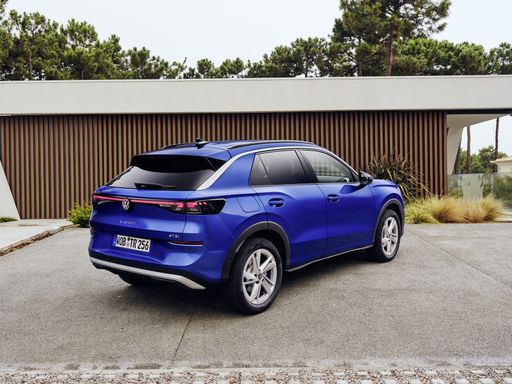
The Volkswagen T‑Roc is a stylish, well-proportioned crossover that blends hatchback agility with SUV presence. It delivers a comfortable cabin, user-friendly tech and a composed ride, making it a sensible choice for buyers who want practicality with a bit of character.

details
Audi A3 Sportback
VW T-Roc

Costs and Consumption

Price
27,000 - 92,900 £
Price
26,400 - 38,600 £
Consumption L/100km
1.1 - 9.3 L/100km
Consumption L/100km
5.5 - 6.3 L/100km
Consumption kWh/100km
-
Consumption kWh/100km
-
Electric Range
134 - 141 km
Electric Range
-
Battery Capacity
-
Battery Capacity
-
co2
25 - 211 g/km
co2
126 - 143 g/km
Fuel tank capacity
-
Fuel tank capacity
-

Dimensions and Body

Body Type
Hatchback
Body Type
SUV
Seats
5
Seats
4 - 5
Doors
-
Doors
-
Curb weight
1,360 - 1,685 kg
Curb weight
1,465 - 1,539 kg
Trunk capacity
280 - 380 L
Trunk capacity
284 L
Length
-
Length
-
Width
1,816 - 1,851 mm
Width
1,811 - 1,828 mm
Height
-
Height
-
Max trunk capacity
-
Max trunk capacity
-
Payload
410 - 480 kg
Payload
368 - 515 kg

Engine and Performance

Engine Type
Petrol, Petrol MHEV, Diesel, Plugin Hybrid
Engine Type
Petrol, Petrol MHEV
Transmission
Manuel, Automatic
Transmission
Manuel, Automatic
Transmission Detail
Manual Gearbox, Dual-Clutch Automatic
Transmission Detail
Manual Gearbox, Dual-Clutch Automatic
Drive Type
Front-Wheel Drive, All-Wheel Drive
Drive Type
Front-Wheel Drive
Power HP
116 - 400 HP
Power HP
115 - 150 HP
Acceleration 0-100km/h
3.8 - 10.1 s
Acceleration 0-100km/h
8.9 - 12.3 s
Max Speed
-
Max Speed
-
Torque
220 - 500 Nm
Torque
200 - 250 Nm
Number of Cylinders
4 - 5
Number of Cylinders
3 - 4
Power kW
85 - 294 kW
Power kW
85 - 110 kW
Engine capacity
1,498 - 2,480 cm3
Engine capacity
999 - 1,498 cm3

General

Model Year
2,025 - 2,026
Model Year
2,024 - 2,025
CO2 Efficiency Class
D, F, E, G, B
CO2 Efficiency Class
E, D
Brand
Audi
Brand
VW
DriveDuel uses data analysis and artificial intelligence to evaluate vehicle data and create content. Content is regularly reviewed and improved. The displayed prices are estimates based on German list prices, adjusted to the respective country’s VAT. Country-specific registration taxes are not included. This information is not legally binding.