VS

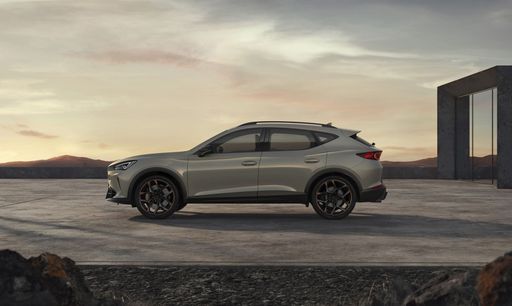
CUPRA Formentor vs VW T-Roc comparison

Compare performance (390 HP vs 150 HP), boot space and price (35,200 £ vs 26,400 £ ) at a glance. Find out which car is the better choice for you – CUPRA Formentor or VW T-Roc?

CUPRA Formentor vs VW T-Roc: Key differences

CUPRA Formentor

4.9 (2 Reviews)
rate
  • clearly more power
  • significantly more efficient
  • considerably quicker 0–100 km/h
  • very slightly lighter
  • noticeably more trunk space
details

VW T-Roc

4.8 (6 Reviews)
rate
  • noticeably cheaper
details

All details on performance, efficiency, range and trunk space can be found in the technical comparison below – including user reviews for both models.

By Achim Sedelmaier

Formentor

Overview — CUPRA Formentor VS VW T‑Roc

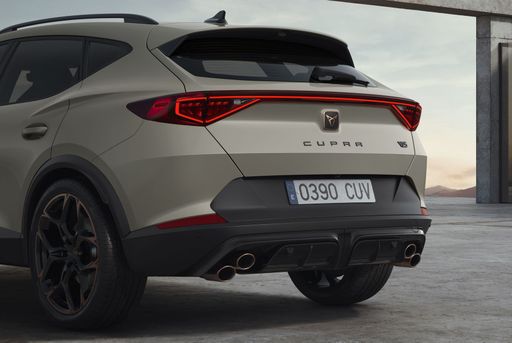
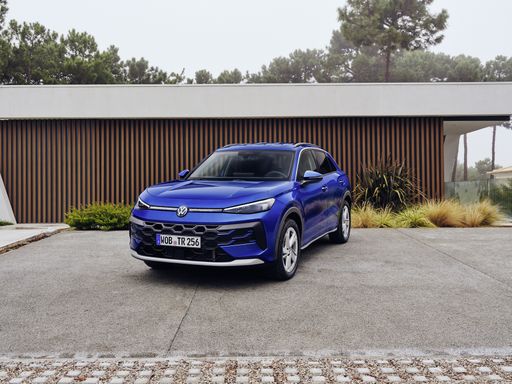
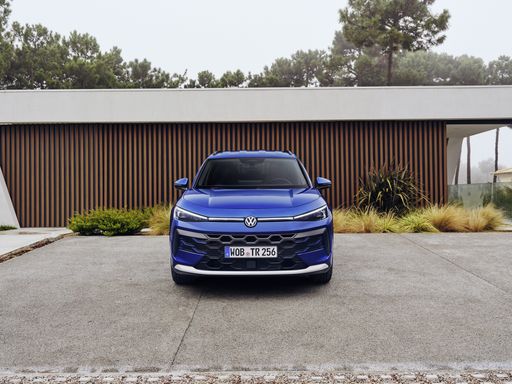
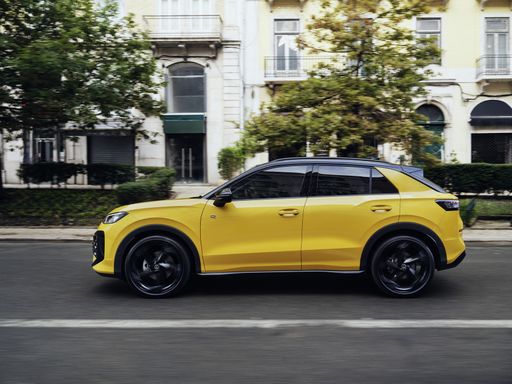
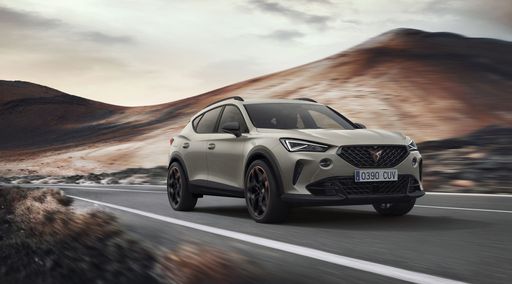
CUPRA Formentor and VW T‑Roc sit in the same compact-SUV territory but approach the job with different priorities: the Formentor pushes driver engagement and sporting presence, the T‑Roc focuses on quiet, comfortable everyday usability. That contrast shapes everything from seating and suspension feel to how each car behaves on the motorway or in town. Buyers who value a taut, energetic drive will notice the Formentor’s intent immediately, while those who prize calm refinement will appreciate the T‑Roc’s insulation and predictable manners. This comparison highlights those real-world trade-offs so you know which car fits your daily routines before diving into numbers.
T-Roc

Character and driving feel

The CUPRA Formentor arrives with a noticeably sharper steering feel and a chassis tuned toward grip and agility, making it feel more engaging on twisty roads and in spirited commutes than the VW T‑Roc. The VW T‑Roc plays a different game: its handling is composed and neutral, designed to be confidence-inspiring rather than thrilling, which suits calm drivers and long motorway stints. In practice that means the Formentor rewards active inputs and feels alive when pushed, while the T‑Roc smooths over rough bits and encourages relaxed progress. If you want involvement and a sporty edge pick the Formentor; if you prefer predictable, low-stress responses pick the T‑Roc.

Formentor

Comfort and long-distance behavior

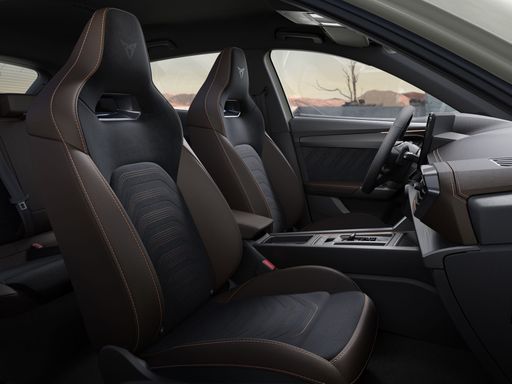
On long runs the VW T‑Roc’s stronger sound insulation and softer ride setup make fatigue less likely, so it feels like the better companion for frequent motorway miles and family tours. The CUPRA Formentor’s firmer suspension and more driver-focused seats provide excellent support, but wind and tyre noise are more noticeable at cruising speeds, which can make long journeys feel more lively than luxurious. Both cars can be specified to soften or stiffen the ride, yet the T‑Roc’s baseline leans toward calm, whereas the Formentor never quite hides its sporting intent. Choose the T‑Roc for quiet comfort, the Formentor if you’d rather have confidence and hold through corners even on long trips.

T-Roc

Practicality and everyday usability

The VW T‑Roc generally wins on packaging: it offers a more forgiving rear seat area and a more versatile boot arrangement with practical features that suit family life and variable cargo loads. The CUPRA Formentor is practical in day-to-day use but its luggage space and rear comfort can vary by drivetrain and trim, and plug‑in variants compromise boot depth further. In town both cars are compact enough to park easily, though the T‑Roc’s slightly more predictable forward visibility and simpler controls make tight manoeuvres less fussed; the Formentor’s long nose and sport seats reward camera and sensor options. If everyday cargo flexibility and rear‑seat comfort matter most, the T‑Roc is the pragmatic choice; if you want the occasional sporty drive and don’t need maximum loadspace, the Formentor will serve well.

Formentor

Cabin feel, controls and perceived quality

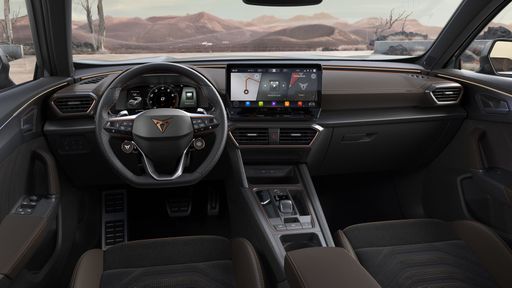
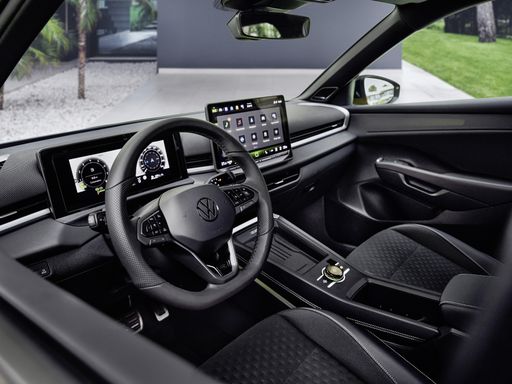
Step into the VW T‑Roc and the impression is of an upmarket, quiet cabin with softer surfaces and an intuitive control layout aimed at reassurance rather than drama. The CUPRA Formentor counterbalances with a cockpit that feels sportier: strong bolsters, a large display and an aggressive design language that appeals to those who want a sportier ambience. Both have modern infotainment systems, but the T‑Roc’s tactile controls and cleaner haptics are easier for many users to live with day-to-day, while the Formentor’s touch‑focused sliders and more performance-orientated interface can be divisive. If premium materials and simple operation top your list, the T‑Roc nudges ahead; if a sporty interior and firmer supportive seats excite you, the Formentor delivers.

T-Roc

Buyer fit — who should consider each car

The CUPRA Formentor suits drivers who prioritise engagement, distinctive styling and the option of higher‑performance or plug‑in powertrains that reward spirited use or provide short electric city runs when charged. The VW T‑Roc will appeal to buyers who want a calm, well‑made compact SUV with better rear passenger comfort, a hands‑on but unobtrusive driving experience and a more restrained, premium cabin feel. Budget sensitivity, intended cargo use and whether you value sportiness over serenity will determine the better fit: choose the Formentor if driver‑centric dynamics and image matter; choose the T‑Roc if quiet refinement, usable space and everyday comfort lead your checklist. Below this editorial comparison you’ll find the technical breakdown to confirm how those practical differences map to engines, boot formats and option packs.

Here’s where it gets real: The technical differences in detail

Formentor

Costs and Efficiency:

Looking at overall running costs, both models reveal some interesting differences in everyday economy.

VW T-Roc is noticeably cheaper – starting at 26,400 £ , while the CUPRA Formentor costs 35,200 £ . That’s a price difference of around 8,803 £.

Fuel consumption also shows a difference: the CUPRA Formentor uses 1.4 L/100km and is significantly more efficient than the VW T-Roc with 5.5 L/100km. The difference is about 4.1 L/100km.

T-Roc

Engine and Performance:

Under the bonnet, it becomes clear which model is tuned for sportiness and which one takes the lead when you hit the accelerator.

When it comes to engine power, the CUPRA Formentor offers clearly more power – delivering 390 HP compared to 150 HP. That’s roughly 240 HP more horsepower.

When accelerating from 0 to 100 km/h, the CUPRA Formentor is considerably quicker – completing the sprint in 4.2 s, while the VW T-Roc takes 8.9 s. That’s about 4.7 s quicker.

There’s also a difference in torque: the CUPRA Formentor delivers considerably more torque with 480 Nm compared to 250 Nm. That’s about 230 Nm more.

Formentor

Space and Everyday Use:

Cabin size, boot volume and payload all play a role in everyday practicality. Here, comfort and flexibility make the difference.

Both vehicles offer seating for 5 people.

In terms of curb weight, CUPRA Formentor is very slightly lighter – 1,434 kg compared to 1,465 kg. The difference is around 31 kg.

Looking at boot space, the CUPRA Formentor offers noticeably more boot space – 450 L compared to 284 L. That’s a difference of about 166 L.

When it comes to payload, the CUPRA Formentor carries very slightly more – 526 kg compared to 515 kg. That’s a difference of about 11 kg.

Who wins the race in the data check?

The CUPRA Formentor is decisively ahead in the objective data comparison.
This result only shows which model scores more points on paper – not which of the two cars feels right for you.

from £35,200
Formentor

CUPRA Formentor

  • Engine Type : Petrol, Petrol MHEV, Diesel, Plugin Hybrid
  • Transmission : Automatic, Manuel
  • Drive Type : Front-Wheel Drive, All-Wheel Drive
  • Power HP : 150 - 390 HP
  • Consumption L/100km : 1.4 - 10.1 L/100km
  • Electric Range : 117 - 126 km
CUPRA Formentor
VW T-Roc

Costs and Consumption

View detailed analysis

Engine and Performance

View detailed analysis

Dimensions and Body

View detailed analysis

CUPRA Formentor

The CUPRA Formentor blends sporty driving dynamics with crossover practicality, delivering sharp handling and an engaging character that makes it fun on twisty roads as well as in daily driving. Inside, it pairs a driver-focused cabin and premium materials with clever practicality, offering a confident, distinctive alternative to conventional SUVs.

details

VW T-Roc

The Volkswagen T‑Roc is a stylish, well-proportioned crossover that blends hatchback agility with SUV presence. It delivers a comfortable cabin, user-friendly tech and a composed ride, making it a sensible choice for buyers who want practicality with a bit of character.

details
CUPRA Formentor
VW T-Roc

Costs and Consumption

Price
35,200 - 62,500 £
Price
26,400 - 38,600 £
Consumption L/100km
1.4 - 10.1 L/100km
Consumption L/100km
5.5 - 6.3 L/100km
Consumption kWh/100km
-
Consumption kWh/100km
-
Electric Range
117 - 126 km
Electric Range
-
Battery Capacity
-
Battery Capacity
-
co2
32 - 229 g/km
co2
126 - 143 g/km
Fuel tank capacity
-
Fuel tank capacity
-

Dimensions and Body

Body Type
SUV
Body Type
SUV
Seats
5
Seats
4 - 5
Doors
-
Doors
-
Curb weight
1,434 - 1,742 kg
Curb weight
1,465 - 1,539 kg
Trunk capacity
345 - 450 L
Trunk capacity
284 L
Length
-
Length
-
Width
1,839 - 1,852 mm
Width
1,811 - 1,828 mm
Height
-
Height
-
Max trunk capacity
-
Max trunk capacity
-
Payload
439 - 526 kg
Payload
368 - 515 kg

Engine and Performance

Engine Type
Petrol, Petrol MHEV, Diesel, Plugin Hybrid
Engine Type
Petrol, Petrol MHEV
Transmission
Automatic, Manuel
Transmission
Manuel, Automatic
Transmission Detail
Dual-Clutch Automatic, Manual Gearbox
Transmission Detail
Manual Gearbox, Dual-Clutch Automatic
Drive Type
Front-Wheel Drive, All-Wheel Drive
Drive Type
Front-Wheel Drive
Power HP
150 - 390 HP
Power HP
115 - 150 HP
Acceleration 0-100km/h
4.2 - 9 s
Acceleration 0-100km/h
8.9 - 12.3 s
Max Speed
-
Max Speed
-
Torque
250 - 480 Nm
Torque
200 - 250 Nm
Number of Cylinders
4 - 5
Number of Cylinders
3 - 4
Power kW
110 - 287 kW
Power kW
85 - 110 kW
Engine capacity
1,498 - 2,480 cm3
Engine capacity
999 - 1,498 cm3

General

Model Year
2,024 - 2,026
Model Year
2,024 - 2,025
CO2 Efficiency Class
G, E, D, F, B
CO2 Efficiency Class
E, D
Brand
CUPRA
Brand
VW
DriveDuel uses data analysis and artificial intelligence to evaluate vehicle data and create content. Content is regularly reviewed and improved. The displayed prices are estimates based on German list prices, adjusted to the respective country’s VAT. Country-specific registration taxes are not included. This information is not legally binding.