VS

Skoda Fabia vs VW Golf comparison

Compare performance (177 HP vs 325 HP), boot space and price (17,300 £ vs 28,300 £ ) at a glance. Find out which car is the better choice for you – Skoda Fabia or VW Golf?

Skoda Fabia vs VW Golf: Key differences

Skoda Fabia

4.9 (2 Reviews)
rate
  • clearly cheaper
  • slightly lighter
details

VW Golf

4.6 (1 Reviews)
rate
  • clearly more power
  • clearly more efficient
  • visibly quicker 0–100 km/h
  • barely more trunk space
details

By Achim Sedelmaier

Fabia

Overview: Skoda Fabia vs VW Golf

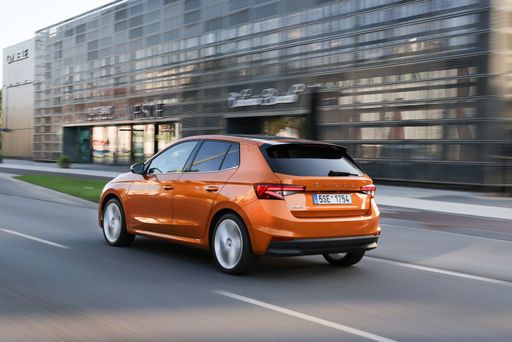
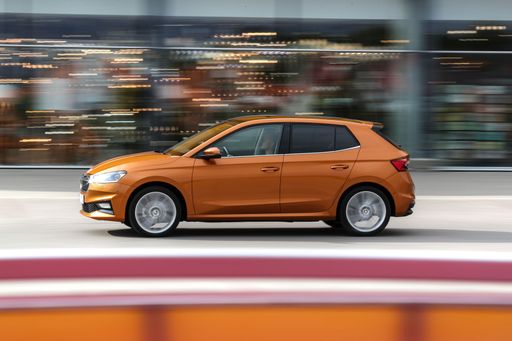
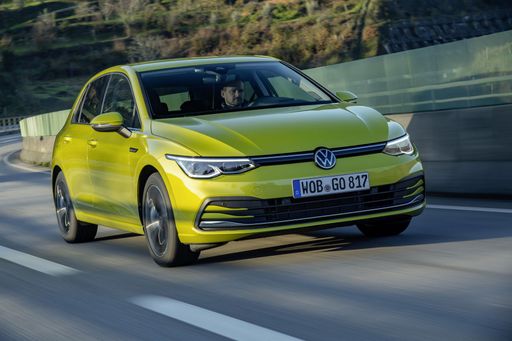
Skoda Fabia and VW Golf present two sensible takes on the compact car: one leans hard into space and economy, the other into refinement and tech. Skoda Fabia VS VW Golf frames a budget‑smart, room‑focused Fabia against a more refined, tech‑forward Golf. On the road the Golf feels more composed and quieter while the Fabia punches above its weight for everyday practicality and running costs. This comparison will focus on real‑world character, comfort, usability and who each car actually suits in daily life.
Golf

Driving character: relaxed pragmatism vs composed refinement

The Skoda Fabia drives like a friendly, pragmatic compact—softly sprung, easy to pilot and tuned for predictable, low‑stress commuting. The VW Golf, by contrast, brings a more composed chassis and sharper steering that make brisk motorway progress feel effortless rather than exhausting. That means the Golf offers stronger acceleration options and a willingness to be hustled, whereas the Fabia asks for a calmer cadence and a little extra gearbox input when you push. Buyers who favour engaged responses and a more planted feel will tilt to the Golf; those after effortless, forgiving daily miles will prefer the Fabia’s temperament.

Fabia

Comfort and long‑distance behaviour

On long journeys the VW Golf rewards you with a quieter cabin and less fatigue thanks to better insulation and the option of adaptive damping for a tauter but still comfortable ride. The Skoda Fabia is very comfortable in town and on rolling roads, yet higher speeds amplify tyre and three‑cylinder noise more readily than in the Golf. Both soak up imperfections well, but the Golf’s composure at motorway speeds gives it an edge for frequent long‑distance drivers. If your week is full of A‑road and motorway miles, the Golf’s refinement feels worth the premium; for mixed urban runs the Fabia’s supple ride and lower running cost are compelling.

Golf

Practicality and family usability

The Skoda Fabia is the compact pragmatist: a boot and rear bench that outperform its footprint, plenty of clever storage touches and easy loading make it a natural family carrier. The VW Golf offers a smartly packaged load area with a variable floor, but some powertrain choices—particularly electrified variants—erode usable space and push the price up. Isofix locations, convenient tie‑downs and an interior designed around real items mean the Fabia is often the less fraught choice for pushchairs, sports kit and week‑end luggage. For buyers who prioritise carrying capacity and simple family life, the Fabia will usually feel more useful day‑to‑day; the Golf suits those who want a tidier, more adjustable cargo area and can accept the trade‑off in cost.

Fabia

City friendliness and everyday usability

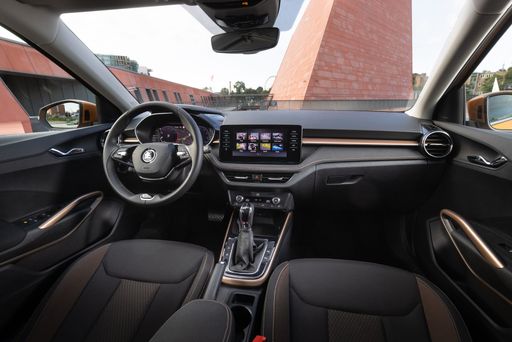
In town the Fabia’s compact exterior, light steering and familiar, physical controls make daily driving pleasantly straightforward and low‑stress. The Golf fights back with smarter driver aids and parking technology that remove many urban headaches, though its touch‑slider quirks and occasional screen locks can interrupt quick adjustments. The Fabia’s simpler ergonomics and intuitive knobs are a plus for stop‑and‑go life, even if the dual‑clutch gearbox can be fussy at very low speeds. If easy, no‑nonsense city driving is your priority choose the Fabia; if you want automation and a more polished assistance package, the Golf will repay the extra spend in convenience.

Golf

Cabin feel, perceived quality and buyer fit — next: the numbers

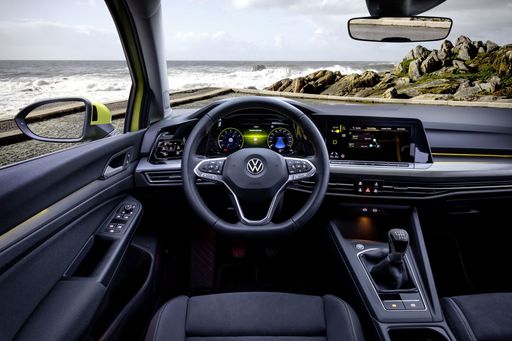
Interior character reflects the priorities: Skoda Fabia keeps things practical and honest with good space where it matters, while VW Golf aims for quieter refinement and a slightly more premium ambience in daily use. Perceived quality and tech polish sit in the Golf’s favour on long trips and busy commuting, but the Fabia returns value with more usable space per pound and lower ongoing costs. Those hunting a pragmatic family car or the cheapest-to-run compact will gravitate to the Fabia; commuters who prize low noise, better menus and broader engine choice will naturally consider the Golf. Below we turn to the technical comparison—powertrains, consumption, weights and options—to map these real‑world impressions onto the figures that decide purchase decisions.

Here’s where it gets real: The technical differences in detail

Fabia

Costs and Efficiency:

Looking at overall running costs, both models reveal some interesting differences in everyday economy.

Skoda Fabia is clearly cheaper – starting at 17,300 £ , while the VW Golf costs 28,300 £ . That’s a price difference of around 10,976 £.

Fuel consumption also shows a difference: the VW Golf uses 1.1 L/100km and is clearly more efficient than the Skoda Fabia with 4.9 L/100km. The difference is about 3.8 L/100km.

Golf

Engine and Performance:

Power, torque and acceleration are the classic benchmarks for car enthusiasts – and here, some clear differences start to show.

When it comes to engine power, the VW Golf offers clearly more power – delivering 325 HP compared to 177 HP. That’s roughly 148 HP more horsepower.

When accelerating from 0 to 100 km/h, the VW Golf is visibly quicker – completing the sprint in 5.3 s, while the Skoda Fabia takes 7.4 s. That’s about 2.1 s quicker.

There’s also a difference in torque: the VW Golf delivers clearly more torque with 420 Nm compared to 250 Nm. That’s about 170 Nm more.

Fabia

Space and Everyday Use:

Beyond pure performance, interior space and usability matter most in daily life. This is where you see which car is more practical and versatile.

Both vehicles offer seating for 5 people.

In terms of curb weight, Skoda Fabia is slightly lighter – 1,143 kg compared to 1,307 kg. The difference is around 164 kg.

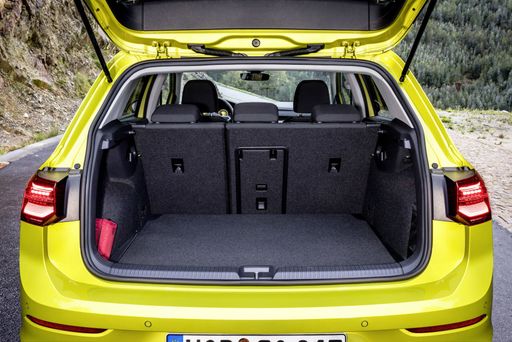
Looking at boot space, the VW Golf offers barely more boot space – 381 L compared to 380 L. That’s a difference of about 1 L.

When it comes to payload, the VW Golf carries moderately more – 508 kg compared to 437 kg. That’s a difference of about 71 kg.

Who wins the race in the data check?

The VW Golf stands well ahead of its rival in the objective data comparison.
This result only shows which model scores more points on paper – not which of the two cars feels right for you.

from £28,300
Golf

VW Golf

  • Engine Type : Petrol, Petrol MHEV, Diesel, Plugin Hybrid
  • Transmission : Manuel, Automatic
  • Drive Type : Front-Wheel Drive, All-Wheel Drive
  • Power HP : 116 - 325 HP
  • Consumption L/100km : 1.1 - 7.6 L/100km
  • Electric Range : 131 - 143 km
Skoda Fabia
VW Golf

Costs and Consumption

View detailed analysis

Engine and Performance

View detailed analysis

Dimensions and Body

View detailed analysis

Skoda Fabia

The Skoda Fabia is a clever, no-nonsense small car that turns everyday chores into a breeze thanks to smart packaging and a surprisingly roomy cabin. It won’t set your pulses racing, but it’s a consistently sensible choice — reliable, easy to live with and blessed with a few neat tricks that make city life less faff.

details

VW Golf

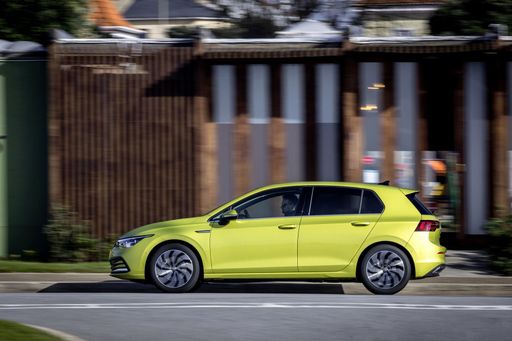
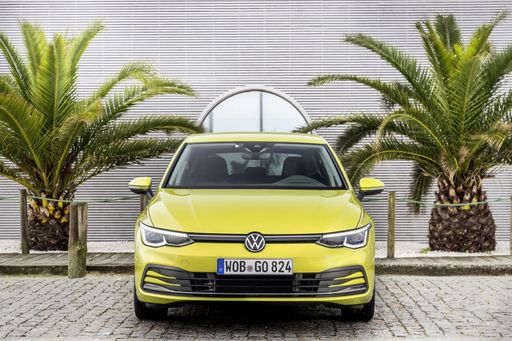
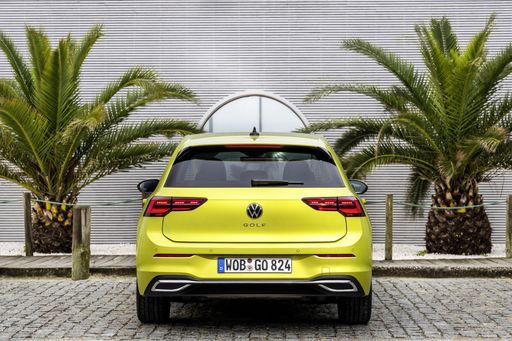
The VW Golf remains the everyman’s favourite — cleverly balanced, composed and just posh enough to feel grown-up without pretending to be something it’s not. It slips through town and eats up longer trips with a refined cabin, practical layout and a kindly, capable character that turns everyday driving into something a little bit special.

details
Skoda Fabia
VW Golf

Costs and Consumption

Price
17,300 - 30,500 £
Price
28,300 - 46,700 £
Consumption L/100km
4.9 - 5.6 L/100km
Consumption L/100km
1.1 - 7.6 L/100km
Consumption kWh/100km
-
Consumption kWh/100km
-
Electric Range
-
Electric Range
131 - 143 km
Battery Capacity
-
Battery Capacity
-
co2
112 - 126 g/km
co2
25 - 173 g/km
Fuel tank capacity
-
Fuel tank capacity
-

Dimensions and Body

Body Type
Hatchback
Body Type
Hatchback
Seats
5
Seats
5
Doors
-
Doors
-
Curb weight
1,143 - 1,278 kg
Curb weight
1,307 - 1,662 kg
Trunk capacity
380 L
Trunk capacity
273 - 381 L
Length
-
Length
-
Width
1,780 mm
Width
1,789 mm
Height
-
Height
-
Max trunk capacity
-
Max trunk capacity
-
Payload
402 - 437 kg
Payload
438 - 508 kg

Engine and Performance

Engine Type
Petrol
Engine Type
Petrol, Petrol MHEV, Diesel, Plugin Hybrid
Transmission
Manuel, Automatic
Transmission
Manuel, Automatic
Transmission Detail
Manual Gearbox, Dual-Clutch Automatic
Transmission Detail
Manual Gearbox, Dual-Clutch Automatic
Drive Type
Front-Wheel Drive
Drive Type
Front-Wheel Drive, All-Wheel Drive
Power HP
80 - 177 HP
Power HP
116 - 325 HP
Acceleration 0-100km/h
7.4 - 15.7 s
Acceleration 0-100km/h
5.3 - 10.2 s
Max Speed
-
Max Speed
-
Torque
93 - 250 Nm
Torque
220 - 420 Nm
Number of Cylinders
3 - 4
Number of Cylinders
4
Power kW
59 - 130 kW
Power kW
85 - 239 kW
Engine capacity
999 - 1,498 cm3
Engine capacity
1,498 - 1,984 cm3

General

Model Year
2025
Model Year
2025
CO2 Efficiency Class
D, C
CO2 Efficiency Class
D, C, F, B
Brand
Skoda
Brand
VW
DriveDuel uses data analysis and artificial intelligence to evaluate vehicle data and create content. Content is regularly reviewed and improved. The displayed prices are estimates based on German list prices, adjusted to the respective country’s VAT. Country-specific registration taxes are not included. This information is not legally binding.