VS

Skoda Kamiq vs VW Golf comparison

Compare performance (150 HP vs 325 HP), boot space and price (22,300 £ vs 28,300 £ ) at a glance. Find out which car is the better choice for you – Skoda Kamiq or VW Golf?

Skoda Kamiq vs VW Golf: Key differences

Skoda Kamiq

4.9 (7 Reviews)
rate
  • markedly cheaper
  • only slightly lighter
  • only slightly more trunk space
details

VW Golf

4.6 (1 Reviews)
rate
  • substantially more power
  • clearly more efficient
  • clearly quicker 0–100 km/h
details

All details on performance, efficiency, range and trunk space can be found in the technical comparison below – including user reviews for both models.

By

Kamiq

Skoda Kamiq VS VW Golf — a practical short guide

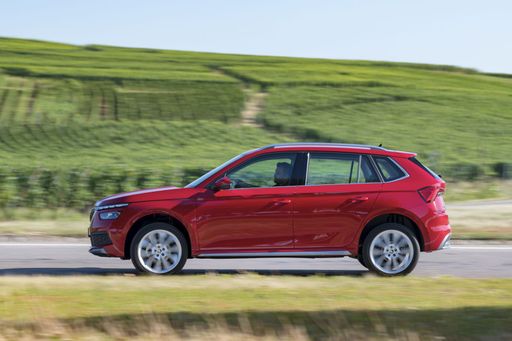
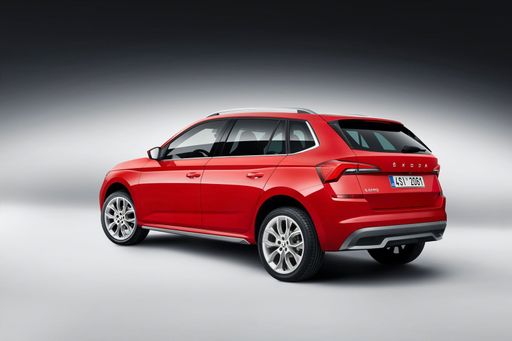
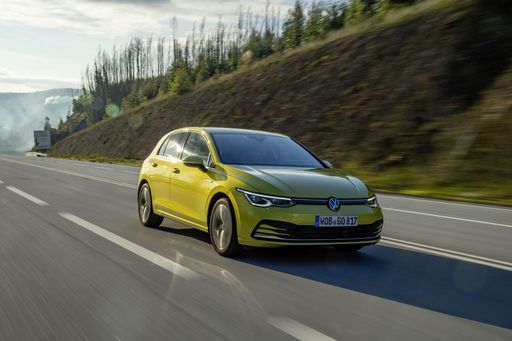
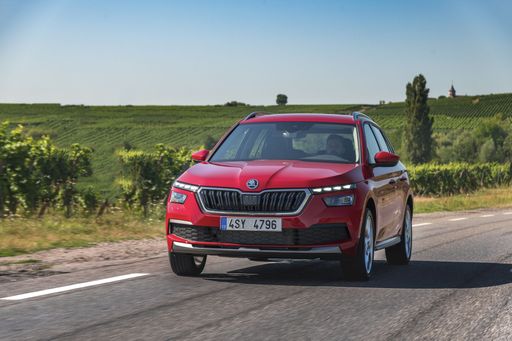
Skoda Kamiq VS VW Golf pits a compact, family-minded small SUV against a refined, all-round compact hatch, and they answer different daily questions. The Skoda Kamiq leans into usable space, simple controls and low running costs, while the VW Golf leans toward refinement, quieter cruising and a more modern in-car tech feel. That makes the Kamiq feel like a sensible, workmanlike companion and the Golf like a composed, slightly more sophisticated daily driver. The practical trade-offs — room and value versus cabin polish and on-road calm — define where each car will please or frustrate buyers.
Golf

City driving and everyday practicality

In tight urban routines the Skoda Kamiq feels deliberately friendly: high seating, wide rear doors and lots of clever storage make school runs and shopping trips easier, and its compact footprint is deceptive given the generous rear space. The VW Golf is equally city-capable but shows its strengths in assistance tech — parking aids, cameras and sharper steering make tight manoeuvres less stressful, albeit usually at a higher price. If you prioritise rear-seat comfort and luggage usability on a budget, the Kamiq tends to win hearts; if you prioritise automated aids, clearer controls and a more composed cockpit for daily stop‑start traffic, the Golf is the better fit. Both are easy to live with, but the Kamiq trades a touch of refinement for straightforward utility while the Golf trades extra cost for convenience gadgets.

Kamiq

Comfort and long-distance behaviour

On long trips the VW Golf plays the long‑distance role more convincingly: lower interior noise, a more composed ride (especially with the adaptive setup) and seats that feel tailored for motorway miles make it the calmer companion on sustained journeys. The Skoda Kamiq is comfortable in its own right — stable at speed and economical over distance — but it preserves a slightly firmer, more SUV‑like ride and a relaxed, less sporty character. That means drivers who want serene mile‑eating and minimal fatigue will prefer the Golf, while pragmatic drivers who value efficiency and a stable, confidence‑inspiring feel will find the Kamiq perfectly adequate. Neither is unpleasant on the motorway, but the Golf leans toward refinement and the Kamiq toward sensible endurance.

Golf

Cabin feel and perceived quality

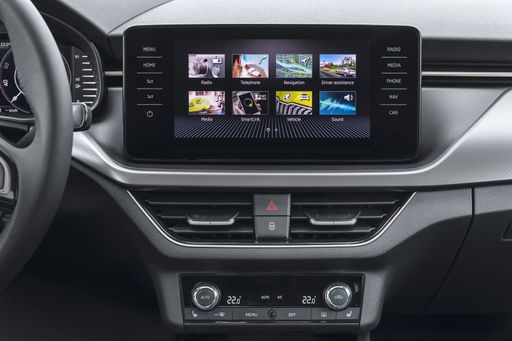
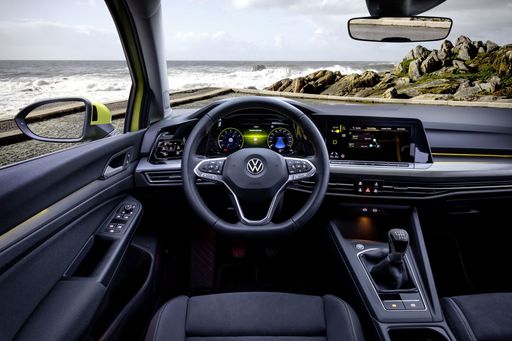
The VW Golf presents a more polished cabin impression: quicker, snappier menus, illuminated controls and an overall touchpoint quality that reads closer to premium for daily use. The Skoda Kamiq answers with practicality — tactile knobs, straightforward ergonomics and lots of small, useful touches — but the materials and finish are more utilitarian, with noticeable hard plastics in less prominent areas. In short, the Golf looks and feels a step up if you care about cabin ambience and tech responsiveness, whereas the Kamiq delivers honest workmanship that favours function over flair. Buyers who want a modern, quieter cockpit will gravitate to the Golf; those who prioritise ease of use and smart storage will appreciate the Kamiq.

Kamiq

Usability, luggage and everyday convenience

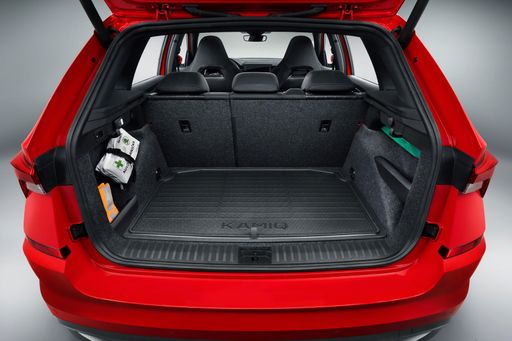
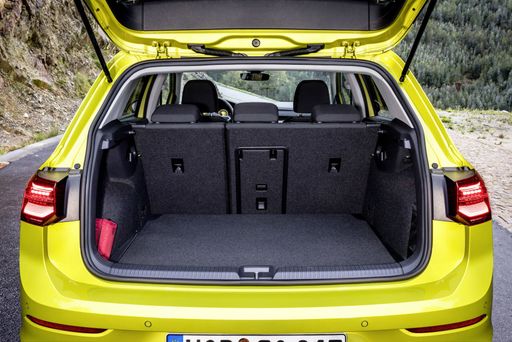
The Kamiq’s strength is immediately obvious in everyday usability: large rear legroom, simple physical controls and numerous small storage solutions that make life easier without thinking about it. The Golf counters with a more flexible boot arrangement and stronger driver aids that simplify loading, parking and longer trips, though some powertrain or hybrid variants reduce usable luggage space. That trade‑off means families carrying strollers or frequent bulky loads may prefer the Kamiq’s roomy rear and straightforward access, while buyers who want a neater, more adjustable cargo area and more assistant features will favour the Golf. Value plays through here as well — the Kamiq typically undercuts the Golf on price for similar practicality, while the Golf demands options for its comfort and tech advantages.

Golf

Which buyer suits which car?

Choose the Skoda Kamiq if you want maximum usable space in a compact footprint, low running costs and a fuss‑free interior that puts practicality first; it suits city families and pragmatic owners who value simple operation and everyday usefulness. Choose the VW Golf if your priorities are quieter long‑distance comfort, a more polished cabin and quicker, more modern infotainment and driver aids — it fits commuters and buyers who tolerate higher cost for refinement. Both cars are sensible choices, but the Kamiq is the pragmatic, space‑centric pick and the Golf the refinement‑oriented, tech‑leaning option. Read on to the technical comparison to see how those real‑world differences map onto engines, drivetrains and specification choices.

Here’s where it gets real: The technical differences in detail

Kamiq

Costs and Efficiency:

Price and efficiency are key factors when choosing a car – and this is often where the real differences emerge.

Skoda Kamiq is markedly cheaper – starting at 22,300 £ , while the VW Golf costs 28,300 £ . That’s a price difference of around 6,013 £.

Fuel consumption also shows a difference: the VW Golf uses 1.1 L/100km and is clearly more efficient than the Skoda Kamiq with 5.3 L/100km. The difference is about 4.2 L/100km.

Golf

Engine and Performance:

Power, torque and acceleration are the classic benchmarks for car enthusiasts – and here, some clear differences start to show.

When it comes to engine power, the VW Golf offers substantially more power – delivering 325 HP compared to 150 HP. That’s roughly 175 HP more horsepower.

When accelerating from 0 to 100 km/h, the VW Golf is clearly quicker – completing the sprint in 5.3 s, while the Skoda Kamiq takes 8.1 s. That’s about 2.8 s quicker.

There’s also a difference in torque: the VW Golf delivers substantially more torque with 420 Nm compared to 250 Nm. That’s about 170 Nm more.

Kamiq

Space and Everyday Use:

Beyond pure performance, interior space and usability matter most in daily life. This is where you see which car is more practical and versatile.

Both vehicles offer seating for 5 people.

In terms of curb weight, Skoda Kamiq is only slightly lighter – 1,231 kg compared to 1,307 kg. The difference is around 76 kg.

Looking at boot space, the Skoda Kamiq offers only slightly more boot space – 400 L compared to 381 L. That’s a difference of about 19 L.

When it comes to payload, the Skoda Kamiq carries barely more – 539 kg compared to 508 kg. That’s a difference of about 31 kg.

Who wins the race in the data check?

The VW Golf stands well ahead of its rival in the objective data comparison.
This result only shows which model scores more points on paper – not which of the two cars feels right for you.

from £28,300
Golf

VW Golf

  • Engine Type Petrol, Petrol MHEV, Diesel, Plug-in Hybrid
  • Transmission Manual, Automatic
  • Drive Type Front-Wheel Drive, All-Wheel Drive
  • Power HP 116 - 325 HP
  • Consumption L/100km 1.1 - 7.6 L/100km
  • Electric Range 131 - 143 km
Skoda Kamiq
VW Golf

Costs and Consumption

View detailed analysis

Engine and Performance

View detailed analysis

Dimensions and Body

View detailed analysis

Skoda Kamiq

The Skoda Kamiq is a practical, well-built small crossover that mixes city-friendly manners with surprisingly versatile interior space and clever storage solutions. It offers a comfortable ride, user-friendly technology and solid value, making it a sensible choice for everyday driving.

details

VW Golf

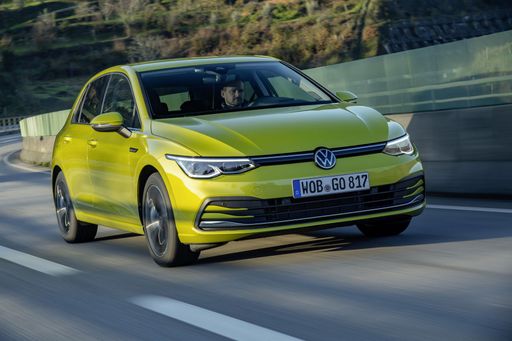
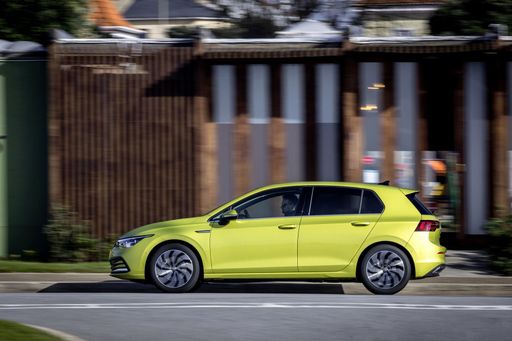
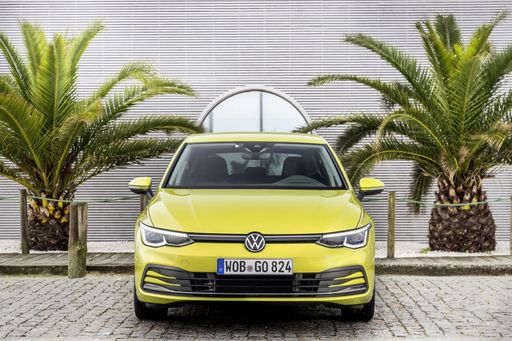
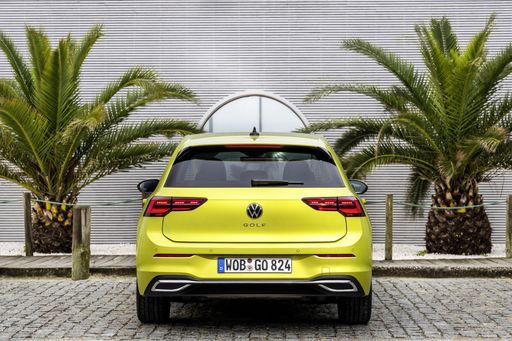
The Golf is a quietly accomplished compact that blends practicality, refinement and approachable driving manners into a very usable everyday package. It’s well built, comfortable and versatile, making it a smart choice whether you want sensible family transport or an enjoyable commuter.

details
Skoda Kamiq
VW Golf

Costs and Consumption

Price
22,300 - 32,700 £
Price
28,300 - 46,700 £
Consumption L/100km
5.3 - 5.7 L/100km
Consumption L/100km
1.1 - 7.6 L/100km
Consumption kWh/100km
-
Consumption kWh/100km
-
Electric Range
-
Electric Range
131 - 143 km
Battery Capacity
-
Battery Capacity
-
co2
121 - 128 g/km
co2
25 - 173 g/km
Fuel tank capacity
-
Fuel tank capacity
-

Dimensions and Body

Body Type
SUV
Body Type
Hatchback
Seats
5
Seats
5
Doors
-
Doors
-
Curb weight
1,231 - 1,340 kg
Curb weight
1,307 - 1,662 kg
Trunk capacity
400 L
Trunk capacity
273 - 381 L
Length
-
Length
-
Width
1,793 mm
Width
1,789 mm
Height
-
Height
-
Max trunk capacity
-
Max trunk capacity
-
Payload
439 - 539 kg
Payload
438 - 508 kg

Engine and Performance

Engine Type
Petrol
Engine Type
Petrol, Petrol MHEV, Diesel, Plug-in Hybrid
Transmission
Manual, Automatic
Transmission
Manual, Automatic
Transmission Detail
Manual Gearbox, Dual-Clutch Automatic
Transmission Detail
Manual Gearbox, Dual-Clutch Automatic
Drive Type
Front-Wheel Drive
Drive Type
Front-Wheel Drive, All-Wheel Drive
Power HP
95 - 150 HP
Power HP
116 - 325 HP
Acceleration 0-100km/h
8.1 - 11 s
Acceleration 0-100km/h
5.3 - 10.2 s
Max Speed
-
Max Speed
-
Torque
175 - 250 Nm
Torque
220 - 420 Nm
Number of Cylinders
3 - 4
Number of Cylinders
4
Power kW
70 - 110 kW
Power kW
85 - 239 kW
Engine capacity
999 - 1,498 cm3
Engine capacity
1,498 - 1,984 cm3

General

Model Year
2025
Model Year
2025
CO2 Efficiency Class
D
CO2 Efficiency Class
D, C, F, B
Brand
Skoda
Brand
VW
DriveDuel uses data analysis and artificial intelligence to evaluate vehicle data and create content. Content is regularly reviewed and improved. The displayed prices are estimates based on German list prices, adjusted to the respective country’s VAT. Country-specific registration taxes are not included. This information is not legally binding.