VS

Alfa Romeo Stelvio vs BMW 3 Series Touring comparison

Compare performance (520 HP vs 530 HP), boot space and price (51,900 £ vs 41,100 £ ) at a glance. Find out which car is the better choice for you – Alfa Romeo Stelvio or BMW 3 Series Touring?

Alfa Romeo Stelvio vs BMW 3 Series Touring: Key differences

Alfa Romeo Stelvio

4.5 (2 Reviews)
rate
  • marginally more trunk space
details

BMW 3 Series Touring

4.3 (1 Reviews)
rate
  • visibly cheaper
  • barely more power
  • significantly more efficient
  • only slightly quicker 0–100 km/h
  • slightly lighter
details

All details on performance, efficiency, range and trunk space can be found in the technical comparison below – including user reviews for both models.

By Achim Sedelmaier

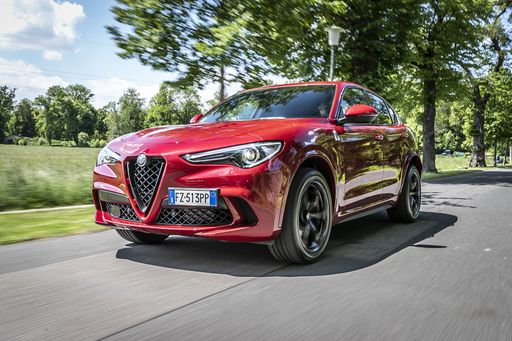
Stelvio

Alfa Romeo Stelvio vs. BMW 3 Series Touring: A Clash of Elegance and Performance

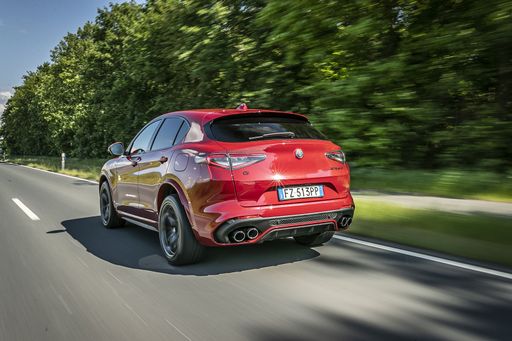
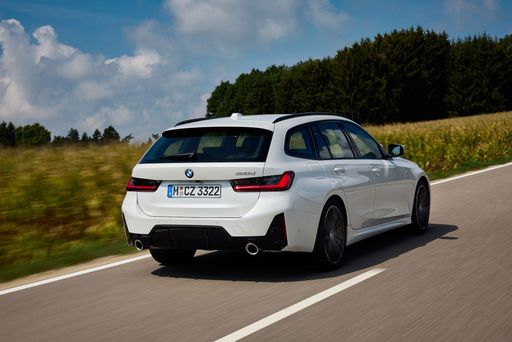
In the realm of premium automobiles, few names resonate as strongly with performance and luxury as Alfa Romeo and BMW. Today, we delve into a face-off between the Alfa Romeo Stelvio and the BMW 3 Series Touring. While one embodies the spirit of an SUV with Italian flair, the other offers the sophistication of a German-made wagon. Both cars are equipped with advanced technology, powerful engines, and a keen focus on driver experience.
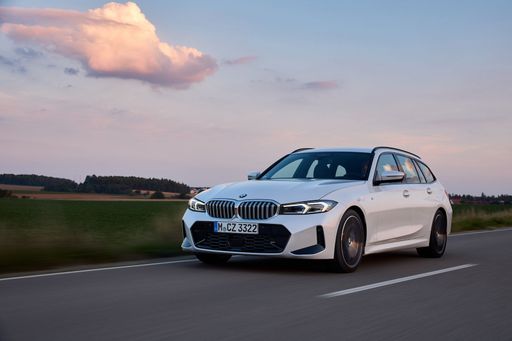
3 Series Touring

Engine Performance and Capabilities

The Alfa Romeo Stelvio, true to its namesake, comes across as a powerful performer. With a range of petrol and diesel engines, the Stelvio provides power options stretching from 210 HP to an impressive 520 HP. This SUV is engineered to accelerate briskly, with its top model achieving 0-100 km/h in just 3.8 seconds. It sports an automatic transmission system paired with an all-wheel-drive capability that ensures superior traction, especially in challenging terrains.

On the flip side, the BMW 3 Series Touring offers an array of engine types, including diesel MHEV, petrol, and plug-in hybrids. Its power output is equally varied, with options running from 150 HP to a mighty 550 HP. The rear-wheel-drive and optional all-wheel-drive enhance the Touring's agility, while the plug-in hybrid variant promises an extended electric range of up to 96 km, showcasing BMW's commitment to sustainable innovation.

Stelvio

Design and Interior Comfort

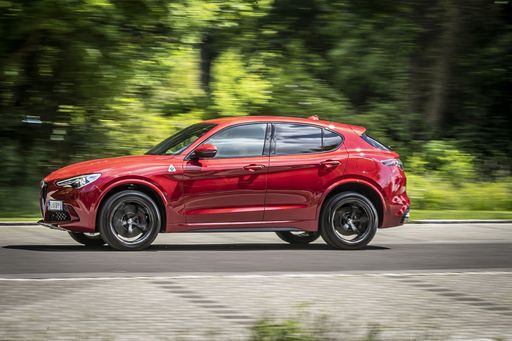
The Stelvio's exterior is a sleek meld of Alfa Romeo's iconic styling, with dimensions emphasizing its robust SUV stance. It strikes a fine balance between sportiness and elegance with dimensions measuring up to 4701 mm in length and 1955 mm in width. Inside, the Stelvio promises comfort with seating for five and a generous trunk capacity of 525 liters, making it an ideal choice for those seeking space and utility.

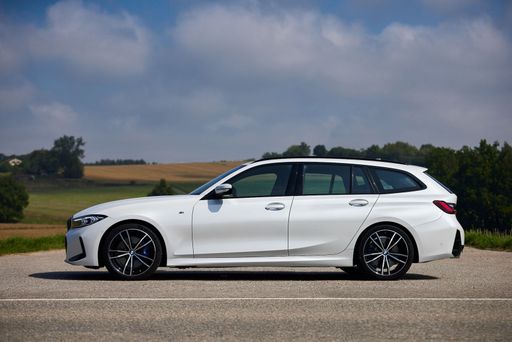
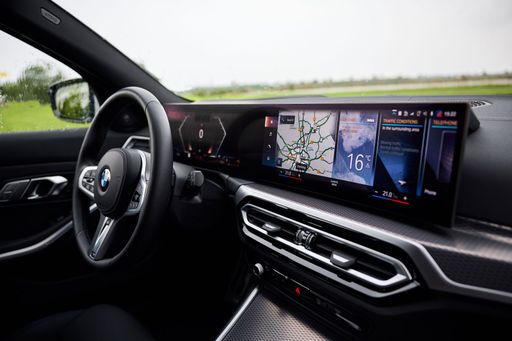
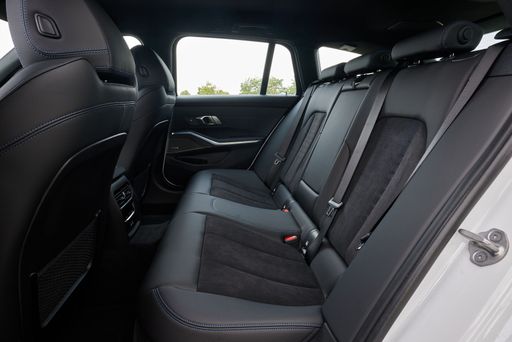
BMW's 3 Series Touring, with a distinctively aerodynamic design, extends slightly longer at up to 4801 mm. While it offers a lesser trunk capacity of 500 liters, what it sacrifices in cargo space it makes up for with luxurious attention to detail inside. The Touring's cabin is laden with sophisticated technology and features designed to enhance the driving experience, with options for different upholstery and finishes.

3 Series Touring

Efficiency and Environmental Impact

From an efficiency perspective, both models feature advanced technology to mitigate their environmental footprint. The Stelvio's fuel consumption ranges from an efficient 6.0 L/100km for diesel variants to 11.8 L/100km for its high-performance petrol counterpart. Despite its power, efforts to improve CO2 efficiency earn it class ratings of G and F.

The BMW 3 Series Touring shines in this department with its plug-in hybrid model boasting an incredibly low consumption of 0.9 L/100km and CO2 emissions as minimal as 20 g/km. This highlights BMW's forward-thinking approach to reducing emissions, particularly in urban settings.

Stelvio

Final Verdict

Ultimately, choosing between the Alfa Romeo Stelvio and the BMW 3 Series Touring boils down to personal preference and driving needs. The Stelvio is ideal for those seeking an SUV with a balance of performance and practicality, along with the Italian finesse Alfa Romeo is renowned for. Meanwhile, the 3 Series Touring appeals to drivers desiring a stylish and versatile sports wagon that promises not only power but also hybrid efficiency.

Both vehicles command attention, but each stays true to its unique brand philosophy, promising an exhilarating driving experience. Whether traversing winding country roads or maneuvering through city streets, Alfa Romeo and BMW ensure that drivers get where they're going with style and grace.

Here’s where it gets real: The technical differences in detail

Stelvio

Costs and Efficiency:

Price and efficiency are key factors when choosing a car – and this is often where the real differences emerge.

BMW 3 Series Touring is visibly cheaper – starting at 41,100 £ , while the Alfa Romeo Stelvio costs 51,900 £ . That’s a price difference of around 10,885 £.

Fuel consumption also shows a difference: the BMW 3 Series Touring uses 2.5 L/100km and is significantly more efficient than the Alfa Romeo Stelvio with 6 L/100km. The difference is about 3.5 L/100km.

3 Series Touring

Engine and Performance:

Power, torque and acceleration are the classic benchmarks for car enthusiasts – and here, some clear differences start to show.

When it comes to engine power, the BMW 3 Series Touring offers barely more power – delivering 530 HP compared to 520 HP. That’s roughly 10 HP more horsepower.

When accelerating from 0 to 100 km/h, the BMW 3 Series Touring is only slightly quicker – completing the sprint in 3.6 s, while the Alfa Romeo Stelvio takes 3.8 s. That’s about 0.2 s quicker.

There’s also a difference in torque: the BMW 3 Series Touring delivers moderately more torque with 700 Nm compared to 600 Nm. That’s about 100 Nm more.

Stelvio

Space and Everyday Use:

Cabin size, boot volume and payload all play a role in everyday practicality. Here, comfort and flexibility make the difference.

Both vehicles offer seating for 5 people.

In terms of curb weight, BMW 3 Series Touring is slightly lighter – 1,650 kg compared to 1,820 kg. The difference is around 170 kg.

Looking at boot space, the Alfa Romeo Stelvio offers marginally more boot space – 525 L compared to 500 L. That’s a difference of about 25 L.

When it comes to payload, the Alfa Romeo Stelvio carries somewhat more – 590 kg compared to 520 kg. That’s a difference of about 70 kg.

Who wins the race in the data check?

The BMW 3 Series Touring holds a decisive overall lead in the objective data comparison.
This result only shows which model scores more points on paper – not which of the two cars feels right for you.

from £41,100
3 Series Touring

BMW 3 Series Touring

  • Engine Type Diesel MHEV, Petrol, Petrol MHEV, Plugin Hybrid
  • Transmission Automatic
  • Drive Type Rear-Wheel Drive, All-Wheel Drive
  • Power HP 150 - 530 HP
  • Consumption L/100km 2.5 - 10.3 L/100km
  • Electric Range 91 - 97 km
Alfa Romeo Stelvio
BMW 3 Series Touring

Costs and Consumption

View detailed analysis

Engine and Performance

View detailed analysis

Dimensions and Body

View detailed analysis

Alfa Romeo Stelvio

The Alfa Romeo Stelvio combines Italian artistry with sporty performance, making it a standout in the SUV market. Its dynamic design captures the essence of elegance and agility, while the interior offers a driver-focused experience that enhances every journey. With a perfect blend of luxury and power, the Stelvio is ideal for those seeking both style and substance on the road.

details

BMW 3 Series Touring

The BMW 3 Series Touring blends sporting poise with everyday practicality, wrapping sharp handling and a premium cabin into a wagon that actually makes errands feel enjoyable. It’s the kind of car that hides a family-hauler’s sense of duty beneath a driver's-car attitude — useful, classy, and just cheeky enough to make you smile on the open road.

details
Alfa Romeo Stelvio
BMW 3 Series Touring

Costs and Consumption

Price
51,900 - 93,300 £
Price
41,100 - 93,300 £
Consumption L/100km
6 - 11.8 L/100km
Consumption L/100km
2.5 - 10.3 L/100km
Consumption kWh/100km
-
Consumption kWh/100km
-
Electric Range
-
Electric Range
91 - 97 km
Battery Capacity
-
Battery Capacity
-
co2
157 - 267 g/km
co2
57 - 233 g/km
Fuel tank capacity
-
Fuel tank capacity
-

Dimensions and Body

Body Type
SUV
Body Type
Estate
Seats
5
Seats
5
Doors
-
Doors
-
Curb weight
1,820 - 1,925 kg
Curb weight
1,650 - 2,025 kg
Trunk capacity
525 L
Trunk capacity
410 - 500 L
Length
-
Length
-
Width
1,903 - 1,955 mm
Width
1,827 - 1,903 mm
Height
-
Height
-
Max trunk capacity
-
Max trunk capacity
-
Payload
535 - 590 kg
Payload
430 - 520 kg

Engine and Performance

Engine Type
Diesel, Petrol
Engine Type
Diesel MHEV, Petrol, Petrol MHEV, Plugin Hybrid
Transmission
Automatic
Transmission
Automatic
Transmission Detail
Automatic Gearbox
Transmission Detail
Automatic Gearbox
Drive Type
All-Wheel Drive
Drive Type
Rear-Wheel Drive, All-Wheel Drive
Power HP
210 - 520 HP
Power HP
150 - 530 HP
Acceleration 0-100km/h
3.8 - 6.6 s
Acceleration 0-100km/h
3.6 - 8.8 s
Max Speed
-
Max Speed
-
Torque
470 - 600 Nm
Torque
250 - 700 Nm
Number of Cylinders
4 - 6
Number of Cylinders
4 - 6
Power kW
154 - 382 kW
Power kW
110 - 390 kW
Engine capacity
2,143 - 2,891 cm3
Engine capacity
1,995 - 2,998 cm3

General

Model Year
2,025 - 2,026
Model Year
2,024 - 2,025
CO2 Efficiency Class
F, G
CO2 Efficiency Class
D, E, F, G, B
Brand
Alfa Romeo
Brand
BMW
DriveDuel uses data analysis and artificial intelligence to evaluate vehicle data and create content. Content is regularly reviewed and improved. The displayed prices are estimates based on German list prices, adjusted to the respective country’s VAT. Country-specific registration taxes are not included. This information is not legally binding.