VS

BMW 3 Series Touring vs BMW 5 Series Touring comparison

Compare performance (530 HP vs 727 HP), boot space and price (41,100 £ vs 52,500 £ ) at a glance. Find out which car is the better choice for you – BMW 3 Series Touring or BMW 5 Series Touring?

BMW 3 Series Touring vs BMW 5 Series Touring: Key differences

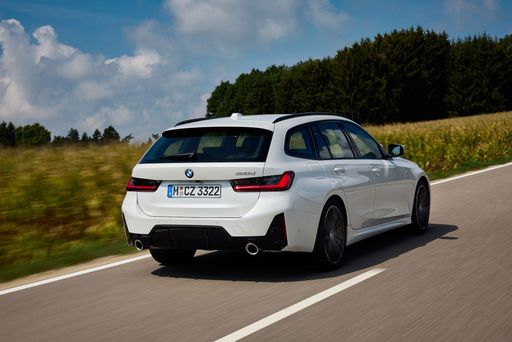
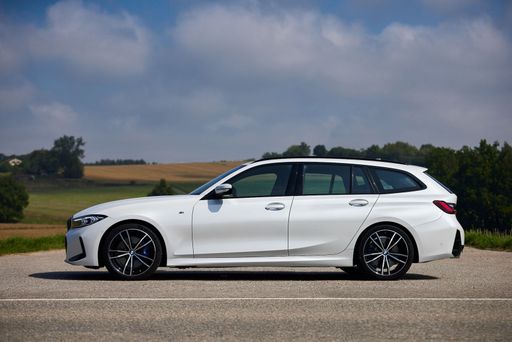
BMW 3 Series Touring

4.3 (1 Reviews)
rate
  • visibly cheaper
  • slightly lighter
details

BMW 5 Series Touring

  • clearly more power
  • barely more efficient
  • barely more electric range
  • moderately more trunk space
details

By Achim Sedelmaier

3 Series Touring

BMW 3 Series Touring VS BMW 5 Series Touring — compact sportiness or spacious composure?

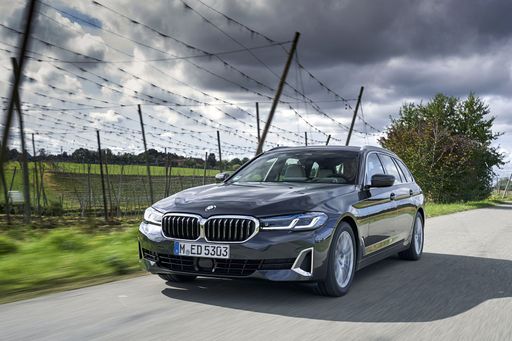
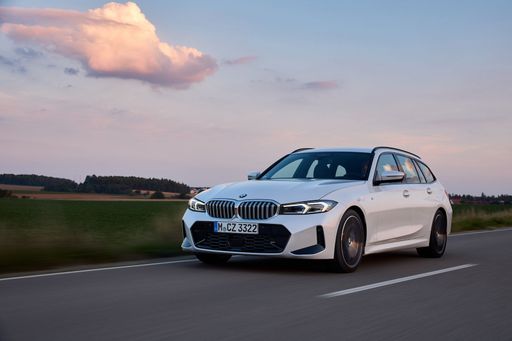
BMW 3 Series Touring VS BMW 5 Series Touring opens the question every buyer faces: do you want a driver‑centric Kombi that feels lithe on twisty roads, or a larger, more composed wagon built for long miles and maximum carry‑on comfort? The 3 Series Touring projects a taut, athletic character that rewards engagement and precise inputs from the wheel. The 5 Series Touring trades some of that immediacy for more room, softer reactions and an unmistakable focus on serenity over cornering thrills. This comparison will focus on how those different personalities translate into everyday life, from school runs to motorway miles.
5 Series Touring

Character and driving dynamics: precision versus composure

The BMW 3 Series Touring is unmistakably the more driver‑oriented choice, with steering and chassis tuned for directness and a sense of connection that makes mundane trips feel purposeful. The BMW 5 Series Touring, by contrast, dampens feedback in favor of a glide‑like, unflappable demeanour that soaks up distance with minimal fuss. That means the 3 Series rewards someone who enjoys placing the car exactly where they want it, while the 5 Series appeals to drivers who prefer to be insulated from road unevenness and traffic stress. Choose the 3 Series if you want engagement; choose the 5 Series if you want effortlessness.

3 Series Touring

Comfort and long‑distance behavior: highway calm versus executive-level smoothness

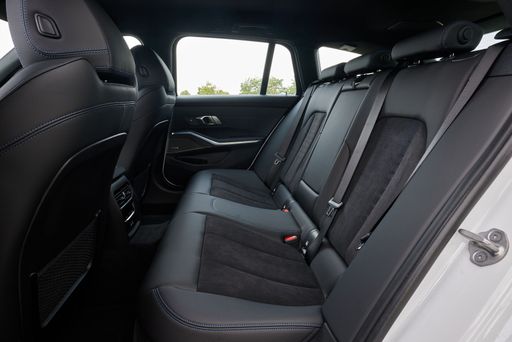
On the motorway both wagons are quiet and stable, but the BMW 5 Series Touring raises the bar for long‑haul comfort with roomier rear seating and a more cushioned ride that blunts fatigue over long stints. The BMW 3 Series Touring still impresses with low wind noise and well‑contoured seats, delivering surprisingly good endurance for its size, yet rear occupants notice the 5 Series’ extra shoulder and knee room. Where the 3 Series can feel taut and occasionally firm—especially with larger wheels or M sport tuning—the 5 Series prefers to float over imperfections. If frequent long trips and back‑seat passenger comfort are priorities, the 5 Series leans more toward that mission.

5 Series Touring

Practicality and family use: clever details versus outright capacity

The BMW 3 Series Touring makes everyday life easier with practical touches like the separately opening rear glass, a low loading lip and smart underfloor storage that hide real‑world clutter well. The BMW 5 Series Touring, however, answers with a noticeably larger, squarer boot and easier packaging for bulky family kit, dogs or holiday luggage, so you load more without creative stacking. That said, plug‑in variants affect usable space differently in each car, so PHEV buyers will want to check how cables and batteries claim trunk volume. Families who regularly need maximum, straightforward cargo space will feel the 5 Series is the more forgiving choice; those who prize cleverness and handling adaptability will prefer the 3 Series.

3 Series Touring

City friendliness and daily usability: maneuverability against executive scale

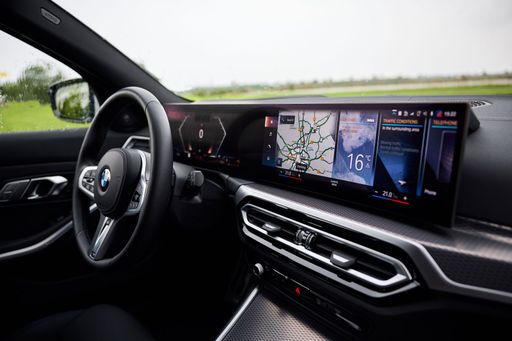
In tight urban environments the BMW 3 Series Touring is the more nimble companion, easier to park and easier to position in narrow spaces thanks to its smaller footprint and sharper turn‑in. The BMW 5 Series Touring can feel large in the city, but optional rear‑axle steering and comprehensive camera systems close the gap and make awkward garages manageable. Both suffer from touch‑centric climate controls that can be fiddly on the move, yet both retain the iDrive control knob that eases menu navigation better than touchscreen‑only rivals. If your life is mostly city streets and shopping centers, the 3 Series is the easier daily partner; if your urban needs include occasional large loads and you accept the bulk, the 5 Series still copes competently.

5 Series Touring

Buyer fit: who should pick which Touring and why

Choose the BMW 3 Series Touring if you’re a driving‑enthusiast commuter, a frequent solo motorway traveler who values steering precision and efficiencies, or a buyer who likes practical but cleverly packaged cargo space. Opt for the BMW 5 Series Touring if your priority is back‑seat comfort, maximum usable luggage space and an ultra‑refined long‑distance experience—especially for business users who spend hours on trunk‑heavy trips. Budget sensitivity, intended passenger loads and how often you tow or carry big items will push you decisively one way or the other. Read on to the technical comparison to see how powertrain, boot layout and suspension choices turn these character differences into measurable trade‑offs.

Here’s where it gets real: The technical differences in detail

3 Series Touring

Costs and Efficiency:

Looking at overall running costs, both models reveal some interesting differences in everyday economy.

BMW 3 Series Touring is visibly cheaper – starting at 41,100 £ , while the BMW 5 Series Touring costs 52,500 £ . That’s a price difference of around 11,485 £.

Fuel consumption also shows a difference: the BMW 5 Series Touring uses 2.3 L/100km and is barely more efficient than the BMW 3 Series Touring with 2.5 L/100km. The difference is about 0.2 L/100km.

As for electric range, the BMW 5 Series Touring offers barely more range – reaching up to 98 km, about 1 km more than the BMW 3 Series Touring.

5 Series Touring

Engine and Performance:

Power, torque and acceleration say a lot about how a car feels on the road. This is where you see which model delivers more driving dynamics.

When it comes to engine power, the BMW 5 Series Touring offers clearly more power – delivering 727 HP compared to 530 HP. That’s roughly 197 HP more horsepower.

Both models accelerate almost equally fast – 3.6 s from 0 to 100 km/h.

There’s also a difference in torque: the BMW 5 Series Touring delivers noticeably more torque with 1,000 Nm compared to 700 Nm. That’s about 300 Nm more.

3 Series Touring

Space and Everyday Use:

Beyond pure performance, interior space and usability matter most in daily life. This is where you see which car is more practical and versatile.

Both vehicles offer seating for 5 people.

In terms of curb weight, BMW 3 Series Touring is slightly lighter – 1,650 kg compared to 1,850 kg. The difference is around 200 kg.

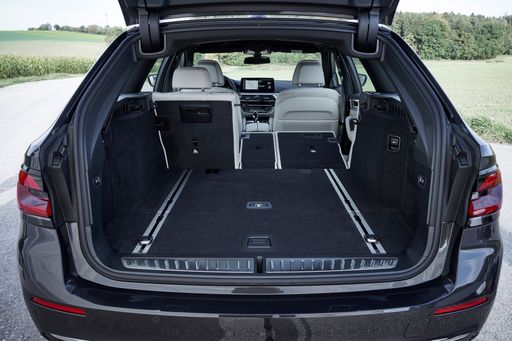
Looking at boot space, the BMW 5 Series Touring offers moderately more boot space – 570 L compared to 500 L. That’s a difference of about 70 L.

When it comes to payload, the BMW 5 Series Touring carries moderately more – 620 kg compared to 520 kg. That’s a difference of about 100 kg.

Who wins the race in the data check?

The BMW 5 Series Touring stands well ahead of its rival in the objective data comparison.
This result only shows which model scores more points on paper – not which of the two cars feels right for you.

from £52,500
5 Series Touring

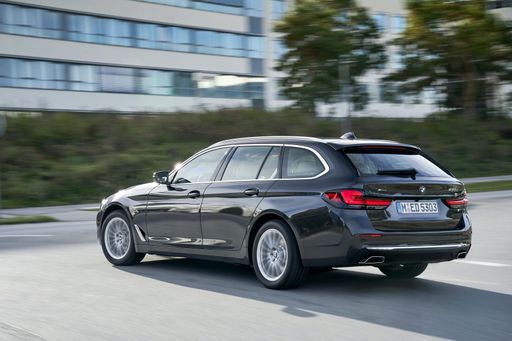
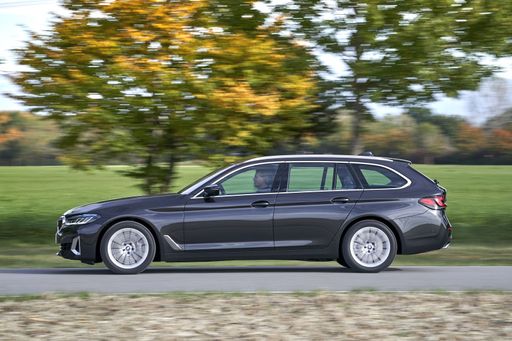
BMW 5 Series Touring

  • Engine Type : Diesel MHEV, Petrol MHEV, Plugin Hybrid
  • Transmission : Automatic
  • Drive Type : Rear-Wheel Drive, All-Wheel Drive
  • Power HP : 197 - 727 HP
  • Consumption L/100km : 2.3 - 6.1 L/100km
  • Electric Range : 65 - 98 km
BMW 3 Series Touring
BMW 5 Series Touring

Costs and Consumption

View detailed analysis

Engine and Performance

View detailed analysis

Dimensions and Body

View detailed analysis

BMW 3 Series Touring

The BMW 3 Series Touring blends sporting poise with everyday practicality, wrapping sharp handling and a premium cabin into a wagon that actually makes errands feel enjoyable. It’s the kind of car that hides a family-hauler’s sense of duty beneath a driver's-car attitude — useful, classy, and just cheeky enough to make you smile on the open road.

details

BMW 5 Series Touring

The BMW 5 Series Touring takes executive elegance and stretches it into a practical estate, marrying refined interior comfort with everyday usability. It drives with reassuring poise, offers plenty of space for luggage or a small life's worth of gear, and somehow manages to look sharper than most saloons in the car park — a compelling choice if you want luxury without surrendering practicality.

details
BMW 3 Series Touring
BMW 5 Series Touring

Costs and Consumption

Price
41,100 - 91,900 £
Price
52,500 - 126,200 £
Consumption L/100km
2.5 - 10.3 L/100km
Consumption L/100km
2.3 - 6.1 L/100km
Consumption kWh/100km
-
Consumption kWh/100km
-
Electric Range
91 - 97 km
Electric Range
65 - 98 km
Battery Capacity
-
Battery Capacity
-
co2
57 - 233 g/km
co2
53 - 157 g/km
Fuel tank capacity
-
Fuel tank capacity
-

Dimensions and Body

Body Type
Estate
Body Type
Estate
Seats
5
Seats
5
Doors
-
Doors
-
Curb weight
1,650 - 2,025 kg
Curb weight
1,850 - 2,550 kg
Trunk capacity
410 - 500 L
Trunk capacity
500 - 570 L
Length
-
Length
-
Width
1,827 - 1,903 mm
Width
1,900 - 1,970 mm
Height
-
Height
-
Max trunk capacity
-
Max trunk capacity
-
Payload
430 - 520 kg
Payload
500 - 620 kg

Engine and Performance

Engine Type
Diesel MHEV, Petrol, Petrol MHEV, Plugin Hybrid
Engine Type
Diesel MHEV, Petrol MHEV, Plugin Hybrid
Transmission
Automatic
Transmission
Automatic
Transmission Detail
Automatic Gearbox
Transmission Detail
Automatic Gearbox
Drive Type
Rear-Wheel Drive, All-Wheel Drive
Drive Type
Rear-Wheel Drive, All-Wheel Drive
Power HP
150 - 530 HP
Power HP
197 - 727 HP
Acceleration 0-100km/h
3.6 - 8.8 s
Acceleration 0-100km/h
3.6 - 7.5 s
Max Speed
-
Max Speed
-
Torque
250 - 700 Nm
Torque
330 - 1,000 Nm
Number of Cylinders
4 - 6
Number of Cylinders
4 - 8
Power kW
110 - 390 kW
Power kW
145 - 535 kW
Engine capacity
1,995 - 2,998 cm3
Engine capacity
1,995 - 4,395 cm3

General

Model Year
2,024 - 2,025
Model Year
2,024 - 2,026
CO2 Efficiency Class
D, E, F, G, B
CO2 Efficiency Class
E, F, B, C
Brand
BMW
Brand
BMW
DriveDuel uses data analysis and artificial intelligence to evaluate vehicle data and create content. Content is regularly reviewed and improved. The displayed prices are estimates based on German list prices, adjusted to the respective country’s VAT. Country-specific registration taxes are not included. This information is not legally binding.