VS

BMW 3 Series Touring vs BMW 4 Series Gran Coupe comparison

Compare performance (530 HP vs 392 HP), boot space and price (41,100 £ vs 45,700 £ ) at a glance. Find out which car is the better choice for you – BMW 3 Series Touring or BMW 4 Series Gran Coupe?

BMW 3 Series Touring vs BMW 4 Series Gran Coupe: Key differences

BMW 3 Series Touring

4.3 (1 Reviews)
rate
  • a bit cheaper
  • markedly more power
  • clearly more efficient
  • visibly quicker 0–100 km/h
  • very slightly lighter
  • barely more trunk space

BMW 4 Series Gran Coupe

3 Series Touring

The automotive market is constantly evolving, introducing vehicles that cater to a diverse array of consumer preferences and needs. Among these choices, the BMW 3er Touring and the BMW 4er Gran Coupe stand out as compelling options, each representing a distinct approach to performance, design, and practicality.
4 Series Gran Coupe

Body Types and Design Philosophy

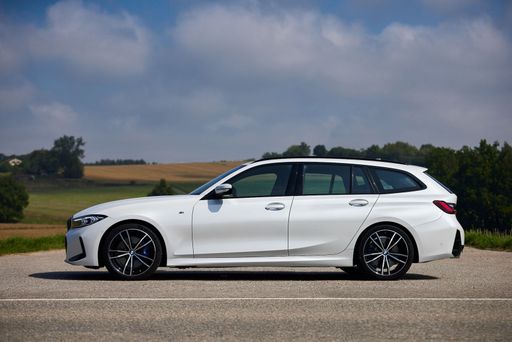
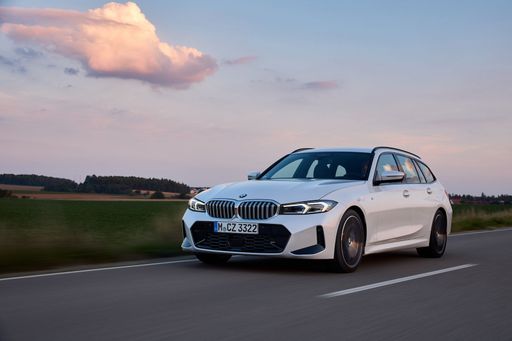
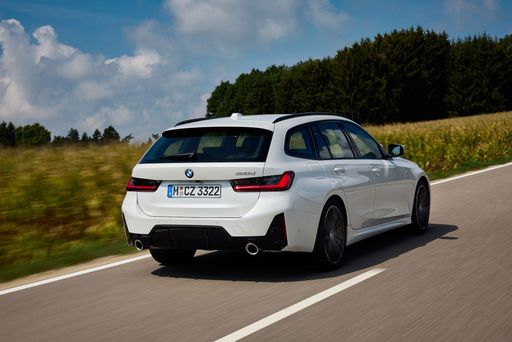
The BMW 3er Touring is a wagon, blending functionality with sporty performance. With a robust trunk capacity of up to 500 liters, it is perfect for families or those requiring ample storage without sacrificing driving enjoyment. Its dimensions, standing at 4713 mm in length and 1827 mm in width, lend it an imposing presence on the road, while maintaining elegance and agility.

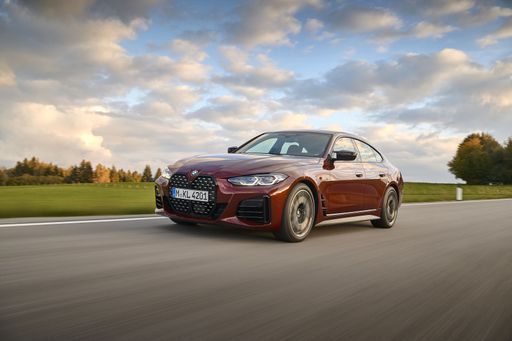
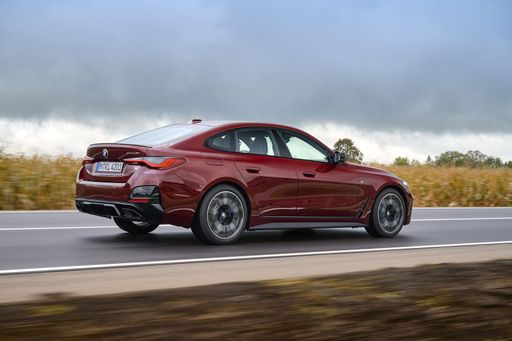
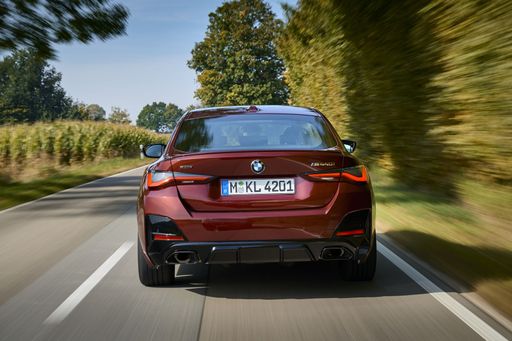
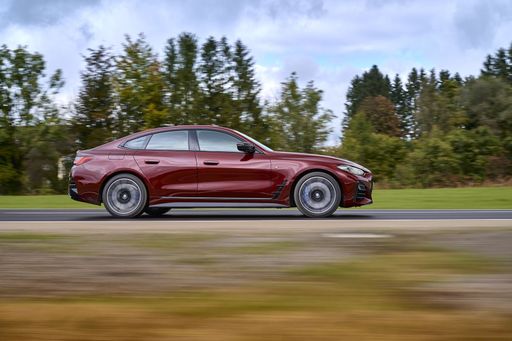
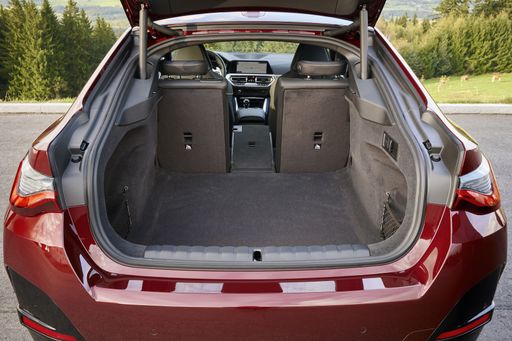
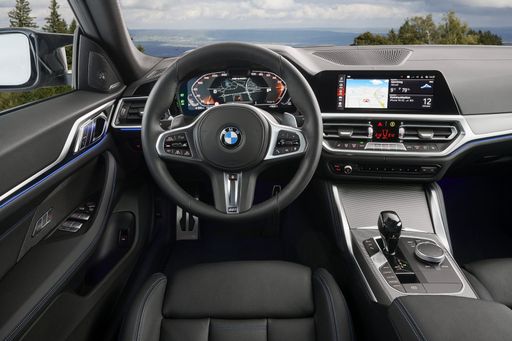
On the other hand, the BMW 4er Gran Coupe takes the shape of a stylish hatchback, offering more of a sport-oriented aesthetic. Its sleek profile not only attracts the eye but also enhances aerodynamics. Measuring 4783 mm in length and 1852 mm in width, it produces a perfect balance between sportiness and practicality, with a trunk capacity of 470 liters.

3 Series Touring

Engine Choices and Performance

When it comes to powertrains, both vehicles offer a range of options suitable for various driving styles. The 3er Touring is available with a selection of engines, including Diesel MHEV and Petrol MHEV variants, with power outputs ranging from 150 to 374 HP. The top performance model can accelerate from 0 to 100 km/h in just 3.6 seconds – impressive for a wagon!

The 4er Gran Coupe features a similarly versatile lineup, with power outputs from 190 to 374 HP. It, too, allows for thrilling performance, achieving a 0-100 km/h time as quick as 4.7 seconds. Both models support rear-wheel and all-wheel drive, enhancing their driving dynamics in various conditions.

4 Series Gran Coupe

Fuel Efficiency and Emissions

Fuel consumption is a crucial factor for many buyers. The 3er Touring boasts a commendable range of fuel efficiencies, with values as low as 5.1 L/100km for certain configurations, catering to eco-conscious consumers. For those seeking electrification, options like the Plugin Hybrid can achieve an impressive electric range of up to 96 km.

In contrast, the 4er Gran Coupe's fuel consumption figures range from 5.0 to 8.2 L/100km, showcasing its efficiency, especially considering its sporty capabilities. Despite its performance focus, the Gran Coupe maintains competitive CO2 emissions levels - maximums of 186 g/km that place it solidly within the 'D' efficiency class.

3 Series Touring

Innovative Technologies

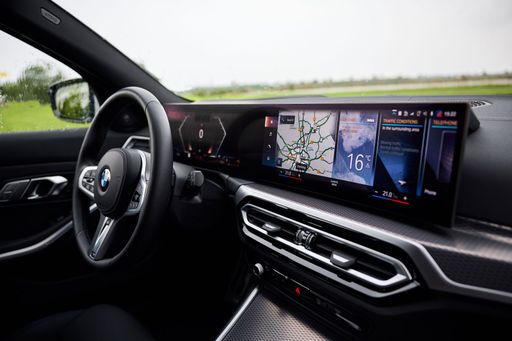
Both the 3er Touring and 4er Gran Coupe come packed with BMW's cutting-edge technology. Standard features include a high-resolution infotainment screen, advanced driver-assistance systems, and connectivity options to keep drivers seamlessly integrated with their devices. Additionally, BMW's iDrive system continues to evolve, enhancing usability and personalization for an engaging driving experience.

Moreover, innovations such as adaptive suspensions, dynamic traction control, and smart navigation options can be found across both models, ensuring that driving is not just about getting from A to B; it’s about enjoying the journey.

4 Series Gran Coupe

Conclusion: Which One is Right for You?

Choosing between the BMW 3er Touring and the BMW 4er Gran Coupe largely depends on individual needs and preferences. If practicality and storage are top priorities, the Touring stands out as an incredibly versatile option. Alternatively, those seeking a sporty vibe combined with innovative design may find the Gran Coupe irresistible.

Ultimately, both vehicles encapsulate BMW's commitment to delivering exceptional driving experiences and advanced technology, making them worthy contenders in the premium automotive segment.

Here’s where it gets real: The technical differences in detail

3 Series Touring

Costs and Efficiency:

Price and efficiency are often the first things buyers look at. Here it becomes clear which model has the long-term edge – whether at the pump, the plug, or in purchase price.

BMW 3 Series Touring is a bit cheaper – starting at 41,100 £ , while the BMW 4 Series Gran Coupe costs 45,700 £ . That’s a price difference of around 4,628 £.

Fuel consumption also shows a difference: the BMW 3 Series Touring uses 2.5 L/100km and is clearly more efficient than the BMW 4 Series Gran Coupe with 5 L/100km. The difference is about 2.5 L/100km.

4 Series Gran Coupe

Engine and Performance:

Under the bonnet, it becomes clear which model is tuned for sportiness and which one takes the lead when you hit the accelerator.

When it comes to engine power, the BMW 3 Series Touring offers markedly more power – delivering 530 HP compared to 392 HP. That’s roughly 138 HP more horsepower.

When accelerating from 0 to 100 km/h, the BMW 3 Series Touring is visibly quicker – completing the sprint in 3.6 s, while the BMW 4 Series Gran Coupe takes 4.6 s. That’s about 1 s quicker.

There’s no difference in top speed – both reach 250 km/h.

There’s also a difference in torque: the BMW 3 Series Touring delivers marginally more torque with 700 Nm compared to 650 Nm. That’s about 50 Nm more.

3 Series Touring

Space and Everyday Use:

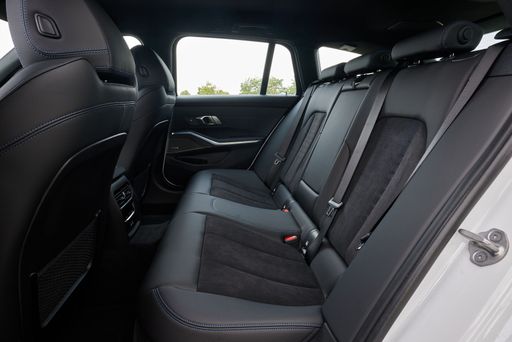
Beyond pure performance, interior space and usability matter most in daily life. This is where you see which car is more practical and versatile.

Both vehicles offer seating for 5 people.

In terms of curb weight, BMW 3 Series Touring is very slightly lighter – 1,650 kg compared to 1,695 kg. The difference is around 45 kg.

Looking at boot space, the BMW 3 Series Touring offers barely more boot space – 500 L compared to 470 L. That’s a difference of about 30 L.

For maximum load capacity, the BMW 3 Series Touring offers slightly more capacity – up to 1,510 L, about 220 L more than the BMW 4 Series Gran Coupe.

When it comes to payload, the BMW 3 Series Touring carries only slightly more – 520 kg compared to 480 kg. That’s a difference of about 40 kg.

Who wins the race in the data check?

The BMW 3 Series Touring is decisively ahead in the objective data comparison.
This result only shows which model scores more points on paper – not which of the two cars feels right for you.

from £41,100
3 Series Touring

BMW 3 Series Touring

  • Engine Type : Diesel MHEV, Petrol, Petrol MHEV, Plugin Hybrid
  • Transmission : Automatic
  • Drive Type : Rear-Wheel Drive, All-Wheel Drive
  • Power HP : 150 - 530 HP
  • Consumption L/100km : 2.5 - 10.3 L/100km
  • Electric Range : 91 - 97 km
BMW 3 Series Touring
BMW 4 Series Gran Coupe

Costs and Consumption

View detailed analysis

Engine and Performance

View detailed analysis

Dimensions and Body

View detailed analysis

BMW 3 Series Touring

The BMW 3 Series Touring blends sporting poise with everyday practicality, wrapping sharp handling and a premium cabin into a wagon that actually makes errands feel enjoyable. It’s the kind of car that hides a family-hauler’s sense of duty beneath a driver's-car attitude — useful, classy, and just cheeky enough to make you smile on the open road.

details

BMW 4 Series Gran Coupe

The BMW 4 Series Gran Coupe marries coupe-like drama with hatchback practicality, offering a sloping roofline that still lets you load bags without a wrestling match. It steers with familiar BMW poise, so buyers after sporty looks and everyday usability get the best of both worlds—and a car that makes the commute feel a bit more glamorous.

details
BMW 3 Series Touring
BMW 4 Series Gran Coupe

Costs and Consumption

Price
41,100 - 91,900 £
Price
45,700 - 68,800 £
Consumption L/100km
2.5 - 10.3 L/100km
Consumption L/100km
5 - 7.8 L/100km
Consumption kWh/100km
-
Consumption kWh/100km
-
Electric Range
91 - 97 km
Electric Range
-
Battery Capacity
19.5 kWh
Battery Capacity
-
co2
57 - 233 g/km
co2
131 - 179 g/km
Fuel tank capacity
40 - 59 L
Fuel tank capacity
59 L

Dimensions and Body

Body Type
Estate
Body Type
Hatchback
Seats
5
Seats
5
Doors
5
Doors
5
Curb weight
1,650 - 2,025 kg
Curb weight
1,695 - 1,935 kg
Trunk capacity
410 - 500 L
Trunk capacity
470 L
Length
4,713 mm
Length
4,783 mm
Width
1,827 - 1,903 mm
Width
1,852 mm
Height
1,440 - 1,448 mm
Height
1,442 mm
Max trunk capacity
1,420 - 1,510 L
Max trunk capacity
1,290 L
Payload
430 - 520 kg
Payload
480 kg

Engine and Performance

Engine Type
Diesel MHEV, Petrol, Petrol MHEV, Plugin Hybrid
Engine Type
Diesel MHEV, Petrol, Petrol MHEV
Transmission
Automatic
Transmission
Automatic
Transmission Detail
Automatic Gearbox
Transmission Detail
Automatic Gearbox
Drive Type
Rear-Wheel Drive, All-Wheel Drive
Drive Type
Rear-Wheel Drive, All-Wheel Drive
Power HP
150 - 530 HP
Power HP
184 - 392 HP
Acceleration 0-100km/h
3.6 - 8.8 s
Acceleration 0-100km/h
4.6 - 7.9 s
Max Speed
213 - 250 km/h
Max Speed
233 - 250 km/h
Torque
250 - 700 Nm
Torque
300 - 650 Nm
Number of Cylinders
4 - 6
Number of Cylinders
4 - 6
Power kW
110 - 390 kW
Power kW
135 - 288 kW
Engine capacity
1,995 - 2,998 cm3
Engine capacity
1,995 - 2,998 cm3

General

Model Year
2,024 - 2,025
Model Year
2,024 - 2,025
CO2 Efficiency Class
D, E, F, G, B
CO2 Efficiency Class
D, E, F, G
Brand
BMW
Brand
BMW
DriveDuel uses data analysis and artificial intelligence to evaluate vehicle data and create content. Content is regularly reviewed and improved. The displayed prices are estimates based on German list prices, adjusted to the respective country’s VAT. Country-specific registration taxes are not included. This information is not legally binding.