VS

Audi A6 Avant vs BMW 3 Series Touring comparison

Compare performance (367 HP vs 530 HP), boot space and price (49,700 £ vs 41,100 £ ) at a glance. Find out which car is the better choice for you – Audi A6 Avant or BMW 3 Series Touring?

Audi A6 Avant vs BMW 3 Series Touring: Key differences

Audi A6 Avant

  • barely more efficient
  • barely more electric range
  • barely more trunk space
details

BMW 3 Series Touring

4.3 (1 Reviews)
rate
  • markedly cheaper
  • clearly more power
  • clearly quicker 0–100 km/h
  • slightly lighter
details

By Achim Sedelmaier

A6 Avant

Quick intro: Audi A6 Avant VS BMW 3 Series Touring — who to read this for

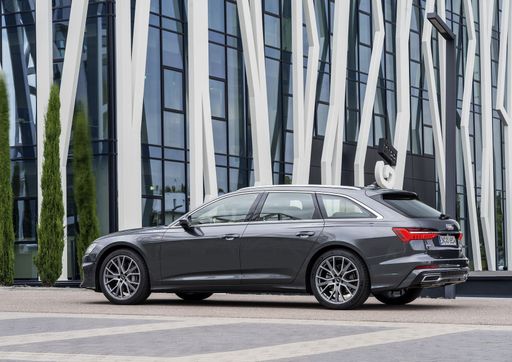
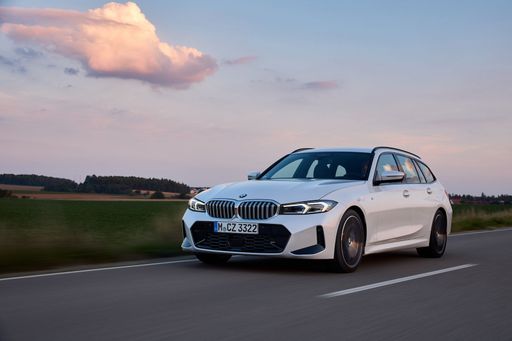
Audi A6 Avant VS BMW 3 Series Touring is the matchup for buyers who want a true estate car that balances business‑class comfort against driver engagement. The Audi A6 Avant presents itself as a serene, technology‑heavy long‑distance companion, while the BMW 3 Series Touring pitches a sharper, more driver‑centric package with clever everyday details. This preview focuses on how they feel day‑to‑day — character, comfort, usability, cabin mood and family practicality — not on sterile spec sheets. Read on if you care more about which car will make daily commutes, long motorway stints or school runs actually easier or more enjoyable.
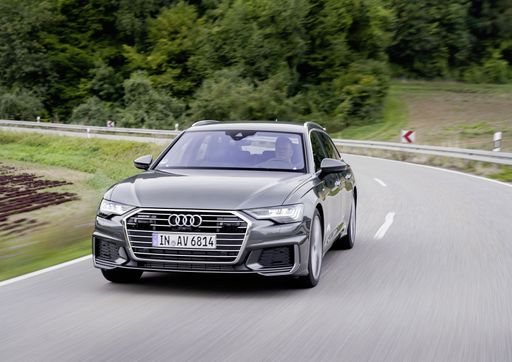
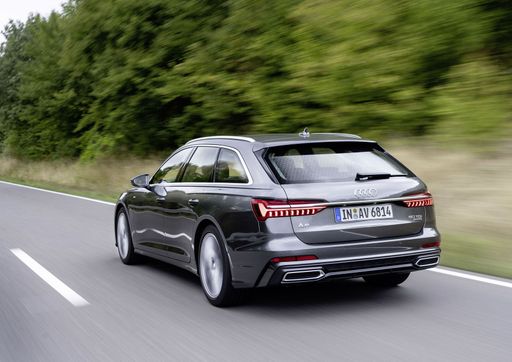
3 Series Touring

Driving character and dynamics

The Audi A6 Avant leans toward composure: it masks road irregularities and invites a relaxed, predictable drive that rewards cruise control and steady speeds. The BMW 3 Series Touring is notably more engaged, with crisper steering and a chassis that rewards a firmer driving style — it feels alive in corners and when you ask for acceleration. Where the A6 soothes and insulates, the 3 Series hands you steering input that feels immediate and precise, a trade‑off that becomes obvious on twisty B‑roads. If you prefer a laid‑back, confidence‑inspiring cruiser the Audi suits better; if you want feedback and sportier responses the BMW is the more natural choice.

A6 Avant

Comfort, long‑distance behavior and motorway manners

On long runs the Audi A6 Avant stands out for its exceptional quietness and seat comfort — cabin noise is tamed and fatigue is delayed, so motorway miles arrive with less stress. The BMW 3 Series Touring is also very capable at speed but carries a firmer suspension character, especially with sport options, so it feels taut rather than plush over less‑than‑perfect surfaces. Both cars are stable and composed on highways, but the Audi’s suspension tuning and assistance systems make it feel like a place to recover energy; the BMW keeps you alert and engaged, which some drivers prefer for long trips. If your priority is arriving relaxed, the A6 is the safer bet; if you want to enjoy driving even on long distances, the 3 Series keeps the experience entertaining.

3 Series Touring

Practicality and family usability

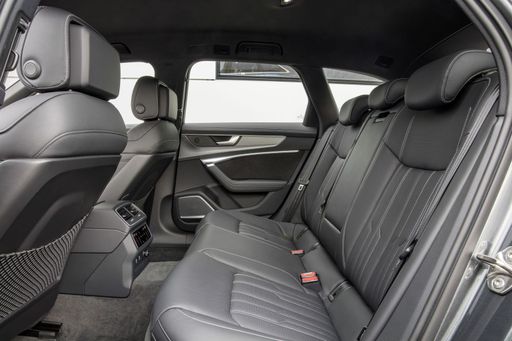
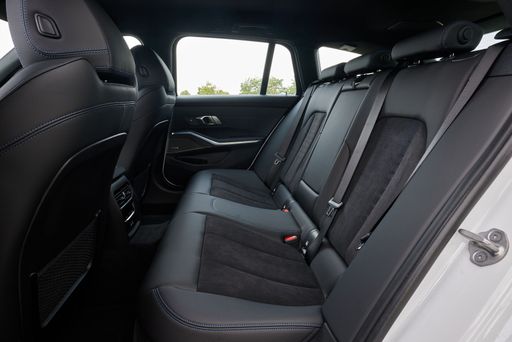
Both estates give you sensible day‑to‑day practicality, but they approach it differently: the Audi A6 Avant offers a low loading sill and clever luggage features that make bulkier items easier to handle, while the BMW 3 Series Touring wins points for underfloor storage, an ebable separate tailgate opening and extremely usable detail solutions. Rear seating in the Audi tends to feel roomier and more comfortable for two adults, whereas the BMW’s rear middle seat and tunnel are more compromised, making it more of a four‑person car in practice. The plug‑in variants in the BMW range can reduce usable boot space, so consider cargo needs if you want the PHEV option. For family buyers who prioritise effortless packing and rear comfort the Audi nudges ahead, but for those who value smart, driver‑friendly loading tricks the BMW is persuasive.

A6 Avant

Cabin mood, controls and perceived quality

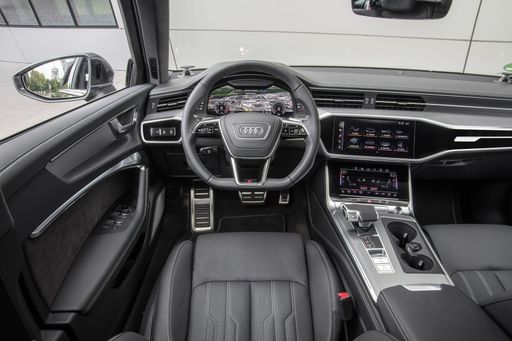
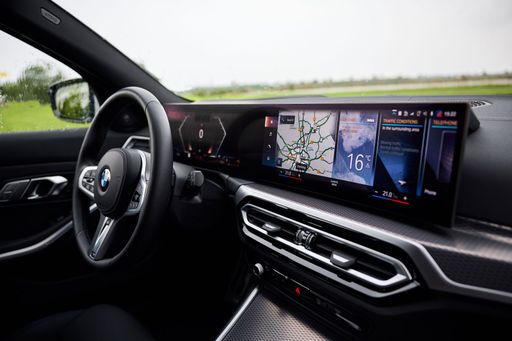
The Audi A6 Avant projects an understated, high‑end ambience with refined materials and a sleek, modern cockpit, though its reliance on glossy touch surfaces can feel fiddly and shows fingerprints quickly. The BMW 3 Series Touring mixes tactile controls with a large screen and the familiar iDrive controller, which many testers find easier to use while driving — it simply distracts less. Both cabins feel premium, but the Audi emphasises serene luxury and tech polish, whereas the BMW emphasises clarity, driver orientation and long‑term resilience. If you prize minimalist luxury and a hushed cabin go Audi; if you want intuitive, driver‑friendly ergonomics and a slightly sportier aesthetic, the BMW will suit you better.

3 Series Touring

Buyer fit and final decision cues before the technical sheet

Choose the Audi A6 Avant if your days are full of high‑speed miles, you value a hushed, comfortable cabin and rich assist systems, and you’re prepared to pay a premium for that serenity and perceived prestige. Opt for the BMW 3 Series Touring if you want a more engaging drive, sharper steering, better baseline value and practical driver‑centric details like the separately opening tailgate and efficient engine options. Each car plays a different hand: the A6 favours relaxed refinement and presence, the 3 Series favours precision, economy and everyday adaptability. Scroll down to the technical comparison to see how those real‑world differences map to engines, weights and equipment when you start narrowing options.

Here’s where it gets real: The technical differences in detail

A6 Avant

Costs and Efficiency:

Looking at overall running costs, both models reveal some interesting differences in everyday economy.

BMW 3 Series Touring is markedly cheaper – starting at 41,100 £ , while the Audi A6 Avant costs 49,700 £ . That’s a price difference of around 8,657 £.

Fuel consumption also shows a difference: the Audi A6 Avant uses 2.3 L/100km and is barely more efficient than the BMW 3 Series Touring with 2.5 L/100km. The difference is about 0.2 L/100km.

As for electric range, the Audi A6 Avant offers barely more range – reaching up to 101 km, about 4 km more than the BMW 3 Series Touring.

3 Series Touring

Engine and Performance:

Power, torque and acceleration say a lot about how a car feels on the road. This is where you see which model delivers more driving dynamics.

When it comes to engine power, the BMW 3 Series Touring offers clearly more power – delivering 530 HP compared to 367 HP. That’s roughly 163 HP more horsepower.

When accelerating from 0 to 100 km/h, the BMW 3 Series Touring is clearly quicker – completing the sprint in 3.6 s, while the Audi A6 Avant takes 4.7 s. That’s about 1.1 s quicker.

There’s also a difference in torque: the BMW 3 Series Touring delivers a bit more torque with 700 Nm compared to 580 Nm. That’s about 120 Nm more.

A6 Avant

Space and Everyday Use:

Beyond pure performance, interior space and usability matter most in daily life. This is where you see which car is more practical and versatile.

Both vehicles offer seating for 5 people.

In terms of curb weight, BMW 3 Series Touring is slightly lighter – 1,650 kg compared to 1,865 kg. The difference is around 215 kg.

Looking at boot space, the Audi A6 Avant offers barely more boot space – 503 L compared to 500 L. That’s a difference of about 3 L.

When it comes to payload, the Audi A6 Avant carries very slightly more – 570 kg compared to 520 kg. That’s a difference of about 50 kg.

Who wins the race in the data check?

The BMW 3 Series Touring is far ahead overall in the objective data comparison.
This result only shows which model scores more points on paper – not which of the two cars feels right for you.

from £41,100
3 Series Touring

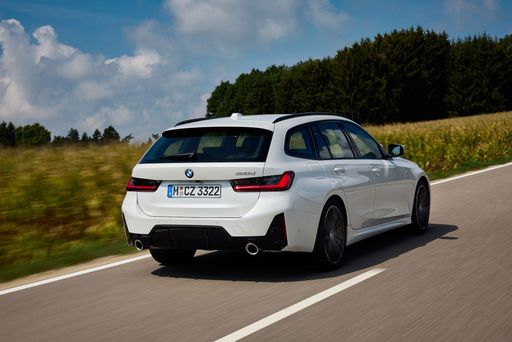
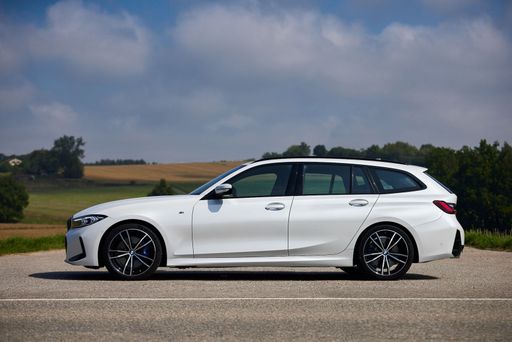
BMW 3 Series Touring

  • Engine Type Diesel MHEV, Petrol, Petrol MHEV, Plugin Hybrid
  • Transmission Automatic
  • Drive Type Rear-Wheel Drive, All-Wheel Drive
  • Power HP 150 - 530 HP
  • Consumption L/100km 2.5 - 10.3 L/100km
  • Electric Range 91 - 97 km
Audi A6 Avant
BMW 3 Series Touring

Costs and Consumption

View detailed analysis

Engine and Performance

View detailed analysis

Dimensions and Body

View detailed analysis

Audi A6 Avant

The Audi A6 Avant wraps executive poise and usable practicality into an impeccably finished estate that makes everyday driving feel noticeably more grown-up. It serves up a calm, composed ride and clever packaging for buyers who want space and refinement without ostentation — the sensible choice that still manages to impress.

details

BMW 3 Series Touring

The BMW 3 Series Touring blends sporting poise with everyday practicality, wrapping sharp handling and a premium cabin into a wagon that actually makes errands feel enjoyable. It’s the kind of car that hides a family-hauler’s sense of duty beneath a driver's-car attitude — useful, classy, and just cheeky enough to make you smile on the open road.

details
Audi A6 Avant
BMW 3 Series Touring

Costs and Consumption

Price
49,700 - 70,200 £
Price
41,100 - 93,300 £
Consumption L/100km
2.3 - 7.5 L/100km
Consumption L/100km
2.5 - 10.3 L/100km
Consumption kWh/100km
-
Consumption kWh/100km
-
Electric Range
94 - 101 km
Electric Range
91 - 97 km
Battery Capacity
-
Battery Capacity
-
co2
53 - 170 g/km
co2
57 - 233 g/km
Fuel tank capacity
-
Fuel tank capacity
-

Dimensions and Body

Body Type
Estate
Body Type
Estate
Seats
5
Seats
5
Doors
-
Doors
-
Curb weight
1,865 - 2,240 kg
Curb weight
1,650 - 2,025 kg
Trunk capacity
404 - 503 L
Trunk capacity
410 - 500 L
Length
-
Length
-
Width
1,875 mm
Width
1,827 - 1,903 mm
Height
-
Height
-
Max trunk capacity
-
Max trunk capacity
-
Payload
535 - 570 kg
Payload
430 - 520 kg

Engine and Performance

Engine Type
Petrol, Petrol MHEV, Diesel MHEV, Plugin Hybrid
Engine Type
Diesel MHEV, Petrol, Petrol MHEV, Plugin Hybrid
Transmission
Automatic
Transmission
Automatic
Transmission Detail
Dual-Clutch Automatic
Transmission Detail
Automatic Gearbox
Drive Type
Front-Wheel Drive, All-Wheel Drive
Drive Type
Rear-Wheel Drive, All-Wheel Drive
Power HP
204 - 367 HP
Power HP
150 - 530 HP
Acceleration 0-100km/h
4.7 - 8.3 s
Acceleration 0-100km/h
3.6 - 8.8 s
Max Speed
-
Max Speed
-
Torque
340 - 580 Nm
Torque
250 - 700 Nm
Number of Cylinders
4 - 6
Number of Cylinders
4 - 6
Power kW
150 - 270 kW
Power kW
110 - 390 kW
Engine capacity
1,968 - 2,995 cm3
Engine capacity
1,995 - 2,998 cm3

General

Model Year
2025
Model Year
2,024 - 2,025
CO2 Efficiency Class
F, D, E, B
CO2 Efficiency Class
D, E, F, G, B
Brand
Audi
Brand
BMW
DriveDuel uses data analysis and artificial intelligence to evaluate vehicle data and create content. Content is regularly reviewed and improved. The displayed prices are estimates based on German list prices, adjusted to the respective country’s VAT. Country-specific registration taxes are not included. This information is not legally binding.