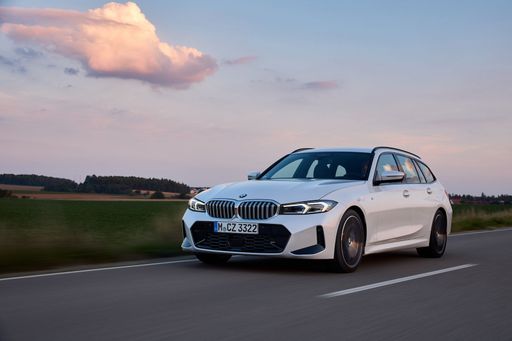
@ BMW Group Press
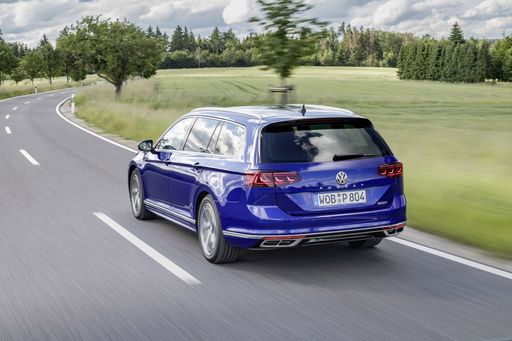
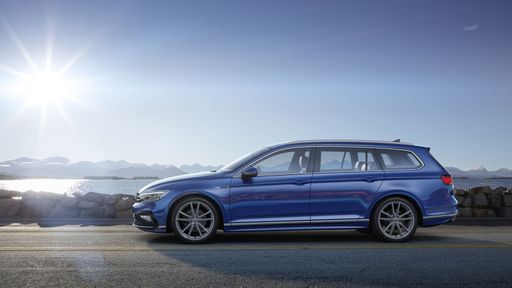
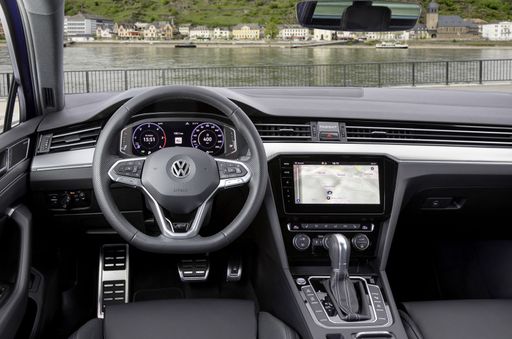
@ Volkswagen AG / VW Media
VS

BMW 3 Series Touring vs VW Passat – Differences & prices compared

Compare performance, boot capacity, efficiency and price at a glance.
Find out which car is the better choice for you – BMW 3 Series Touring or VW Passat?

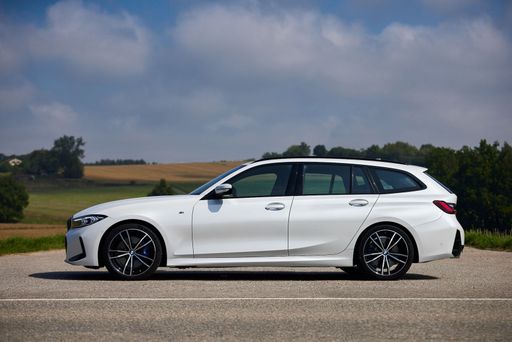
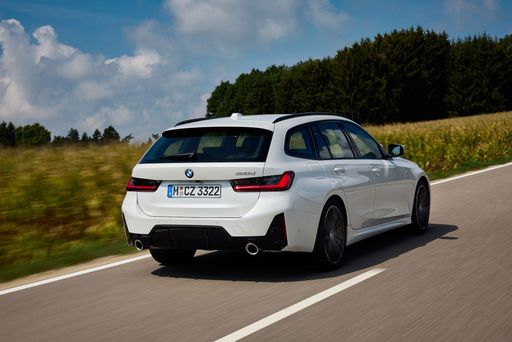
3 Series Touring @ BMW Group Press

Unveiling the Duel: BMW 3er Touring vs. VW Passat

The automotive world is filled with fierce competition and remarkable advances in technology. Two stalwarts in the family wagon segment, the BMW 3er Touring and the VW Passat, are no exception. Both offer an impressive blend of performance, practicality, and luxury. Let's delve deeper into how these icons stack up against each other, considering their technical prowess and innovative features.
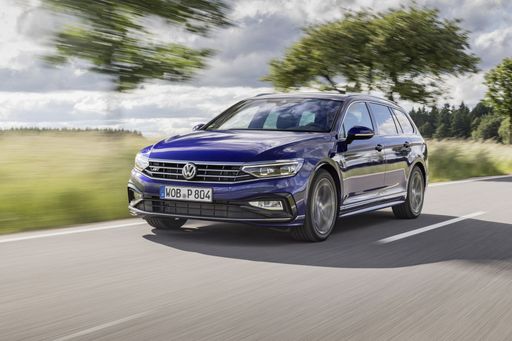
Passat @ Volkswagen AG / VW Media

Performance Prowess

The BMW 3er Touring is available in a variety of engine options, catering to different preferences. With power output ranging from 150 to a staggering 550 HP, the 3er Touring can achieve 0-100 km/h in as little as 3.5 seconds, thanks to its range-topping engine. On the other hand, the VW Passat’s power spectrum ranges from 122 to 272 HP, achieving a commendable 0-100 km/h in 5.8 seconds in its most potent variant.

3 Series Touring @ BMW Group Press

Innovative Powertrains

Both vehicles offer plug-in hybrid options, emphasizing efficiency without compromising on power. The BMW 3er Touring boasts a 19.5 kWh battery, facilitating an electric range of 96 km. Meanwhile, the Passat is equipped with a 19.7 kWh battery that offers an impressive 126 km range, allowing for extended journeys with minimal environmental impact.

Passat @ Volkswagen AG / VW Media

Efficiency and Economy

In terms of fuel consumption, the BMW 3er Touring offers a range from an ultra-efficient 0.9 L/100km, thanks to its plug-in variant, to a more robust 10.5 L/100km at peak performance. The Passat counters this with figures ranging from 0.4 L/100km in its plug-in hybrid to 8.1 L/100km in its higher power offerings. Such figures highlight the emphasis both manufacturers place on blending efficiency with performance.

3 Series Touring @ BMW Group Press

Design and Practicality

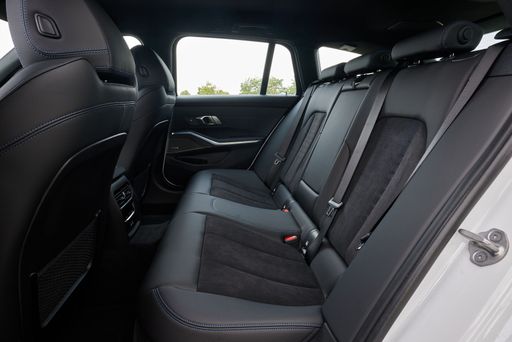
Beyond their mechanical capabilities, both models offer practicality with their five-seat configurations. The BMW 3er Touring's trunk space ranges from 410 to 500 liters, making it suitable for family trips and everyday usability. Conversely, the VW Passat excels with a trunk capacity of up to 690 liters, emphasizing its prowess in cargo space.

Passat @ Volkswagen AG / VW Media

Dimensions and Comfort

When it comes to size, the Passat is slightly longer at 4917 mm compared to the 3er Touring’s maximum length of 4801 mm. This translates into more interior room, potentially offering a more comfortable ride for passengers. Both vehicles feature a five-door configuration, ensuring ease of access and versatility.

3 Series Touring @ BMW Group Press

Tech-Savvy Features

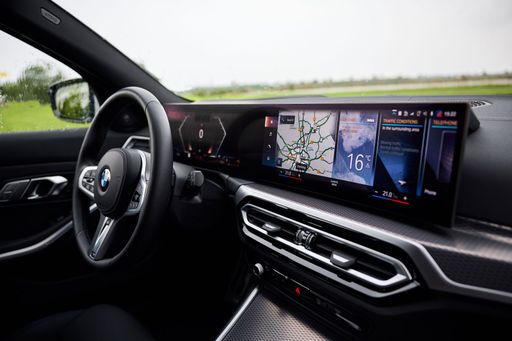
Both automakers have equipped their models with the latest technology to ensure a premium experience. Advanced infotainment systems, driver assistance features, and connectivity options cater to tech-savvy consumers looking for a modern driving experience.

Passat @ Volkswagen AG / VW Media

Conclusion: The Verdict

In the BMW 3er Touring and VW Passat, we see two distinct approaches to the family wagon. The 3er Touring, with its emphasis on sporty performance and dynamic driving experience, contrasts with the Passat’s focus on space and economy. Choosing between the two would largely depend on personal priorities: whether one values performance and a prestigious badge, or space and efficiency. Either way, both models represent the pinnacle of innovation and design in the modern automotive landscape.

Here’s where it gets real: The technical differences in detail

3 Series Touring @ BMW Group Press

Costs and Efficiency:

Price and efficiency are often the first things buyers look at. Here it becomes clear which model has the long-term edge – whether at the pump, the plug, or in purchase price.

VW Passat has a to a small extent advantage in terms of price – it starts at 35700 £, while the BMW 3 Series Touring costs 41100 £. That’s a price difference of around 5323 £.

Fuel consumption also shows a difference: VW Passat manages with 1.20 L and is therefore significantly more efficient than the BMW 3 Series Touring with 2.50 L. The difference is about 1.30 L per 100 km.

As for range, the VW Passat performs distinct better – achieving up to 135 km, about 38 km more than the BMW 3 Series Touring.

Engine and Performance:

Power, torque and acceleration are the classic benchmarks for car enthusiasts – and here, some clear differences start to show.

When it comes to engine power, the BMW 3 Series Touring has a clearly edge – offering 550 HP compared to 272 HP. That’s roughly 278 HP more horsepower.

In acceleration from 0 to 100 km/h, the BMW 3 Series Touring is convincingly quicker – completing the sprint in 3.50 s, while the VW Passat takes 5.80 s. That’s about 2.30 s faster.

In terms of top speed, the BMW 3 Series Touring performs a bit better – reaching 300 km/h, while the VW Passat tops out at 250 km/h. The difference is around 50 km/h.

There’s also a difference in torque: BMW 3 Series Touring pulls decisively stronger with 700 Nm compared to 400 Nm. That’s about 300 Nm difference.

Space and Everyday Use:

Beyond pure performance, interior space and usability matter most in daily life. This is where you see which car is more practical and versatile.

Both vehicles offer seating for 5 people.

In curb weight, VW Passat is hardly perceptible lighter – 1573 kg compared to 1650 kg. The difference is around 77 kg.

In terms of boot space, the VW Passat offers distinct more room – 690 L compared to 500 L. That’s a difference of about 190 L.

In maximum load capacity, the VW Passat performs clearly perceptible better – up to 1920 L, which is about 410 L more than the BMW 3 Series Touring.

When it comes to payload, VW Passat slight takes the win – 577 kg compared to 520 kg. That’s a difference of about 57 kg.

Who comes out on top?

Overall, the VW Passat shows itself to be edges ahead and secures the title of DriveDuel Champion.
It convinces with the more balanced overall package and proves to be the more versatile choice for everyday use.

from about £35,700
Passat @ Volkswagen AG / VW Media

VW Passat

  • Engine Type : Petrol, Petrol MHEV, Diesel, Plugin Hybrid
  • Transmission : Automatic
  • Drive Type : All-Wheel Drive, Front-Wheel Drive
  • Power HP : 122 - 272 HP
  • Consumption L/100km : 1.2 - 8 L
  • Electric Range : 124 - 135 km

BMW 3 Series Touring

The BMW 3 Series Touring blends sporting poise with everyday practicality, wrapping sharp handling and a premium cabin into a wagon that actually makes errands feel enjoyable. It’s the kind of car that hides a family-hauler’s sense of duty beneath a driver's-car attitude — useful, classy, and just cheeky enough to make you smile on the open road.

details

VW Passat

5 (2)
rate

The VW Passat is the grown-up family car that gets the basics absolutely right — roomy, comfortable and built to handle weekday commutes and weekend getaways without fuss. It won't set your pulse racing, but its calm composure and sensible packaging make it boring in the best possible way: a dependable, no‑drama choice for buyers who value practicality over flash.

details
BMW 3 Series Touring
VW Passat
3 Series Touring @ BMW Group Press
Passat @ Volkswagen AG / VW Media

Costs and Consumption

Price
41100 - 131100 £
Price
35700 - 58500 £
Consumption L/100km
2.5 - 10.5 L
Consumption L/100km
1.2 - 8 L
Consumption kWh/100km
-
Consumption kWh/100km
-
Electric Range
91 - 97 km
Electric Range
124 - 135 km
Battery Capacity
19.50 kWh
Battery Capacity
19.70 kWh
co2
57 - 238 g/km
co2
28 - 181 g/km
Fuel tank capacity
40 - 59 L
Fuel tank capacity
45 - 66 L

Dimensions and Body

Body Type
Estate
Body Type
Estate
Seats
5
Seats
5
Doors
5
Doors
5
Curb weight
1650 - 2025 kg
Curb weight
1573 - 1858 kg
Trunk capacity
410 - 500 L
Trunk capacity
510 - 690 L
Length
4713 - 4801 mm
Length
4917 mm
Width
1827 - 1918 mm
Width
1849 mm
Height
1440 - 1448 mm
Height
1521 mm
Max trunk capacity
1420 - 1510 L
Max trunk capacity
1770 - 1920 L
Payload
405 - 520 kg
Payload
501 - 577 kg

Engine and Performance

Engine Type
Diesel MHEV, Petrol, Petrol MHEV, Plugin Hybrid
Engine Type
Petrol, Petrol MHEV, Diesel, Plugin Hybrid
Transmission
Automatic
Transmission
Automatic
Transmission Detail
Automatic Gearbox
Transmission Detail
Dual-Clutch Automatic
Drive Type
Rear-Wheel Drive, All-Wheel Drive
Drive Type
All-Wheel Drive, Front-Wheel Drive
Power HP
150 - 550 HP
Power HP
122 - 272 HP
Acceleration 0-100km/h
3.5 - 8.8 s
Acceleration 0-100km/h
5.8 - 10.7 s
Max Speed
213 - 300 km/h
Max Speed
212 - 250 km/h
Torque
250 - 700 Nm
Torque
250 - 400 Nm
Number of Cylinders
4 - 6
Number of Cylinders
4
Power kW
110 - 405 kW
Power kW
90 - 200 kW
Engine capacity
1995 - 2998 cm3
Engine capacity
1498 - 1984 cm3

General

Model Year
2024 - 2025
Model Year
2024 - 2025
CO2 Efficiency Class
D, E, F, G, B
CO2 Efficiency Class
G, D, E, B
Brand
BMW
Brand
VW
Is the BMW 3 Series Touring offered with different drivetrains?

The BMW 3 Series Touring is offered with Rear-Wheel Drive or All-Wheel Drive.

The prices and data displayed are estimates based on German list prices and may vary by country. This information is not legally binding.