VS

BMW 3 Series Touring vs Skoda Octavia Combi comparison

Compare performance (530 HP vs 204 HP), boot space and price (41,100 £ vs 25,600 £ ) at a glance. Find out which car is the better choice for you – BMW 3 Series Touring or Skoda Octavia Combi?

BMW 3 Series Touring vs Skoda Octavia Combi: Key differences

BMW 3 Series Touring

4.3 (1 Reviews)
rate
  • clearly more power
  • substantially more efficient
  • significantly quicker 0–100 km/h
details

Skoda Octavia Combi

4.6 (3 Reviews)
rate
  • clearly cheaper
  • clearly lighter
  • clearly more trunk space
details

All details on performance, efficiency, range and trunk space can be found in the technical comparison below – including user reviews for both models.

By Achim Sedelmaier

3 Series Touring

Head-to-head: BMW 3 Series Touring vs Skoda Octavia Combi

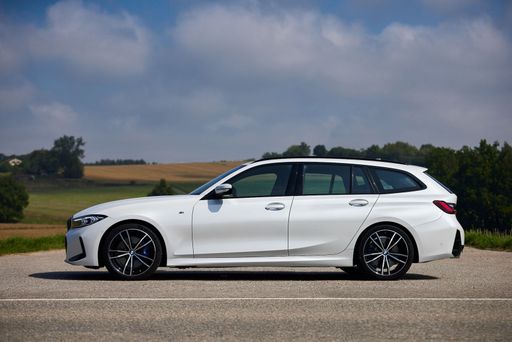
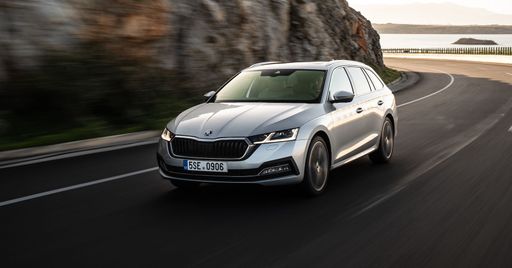
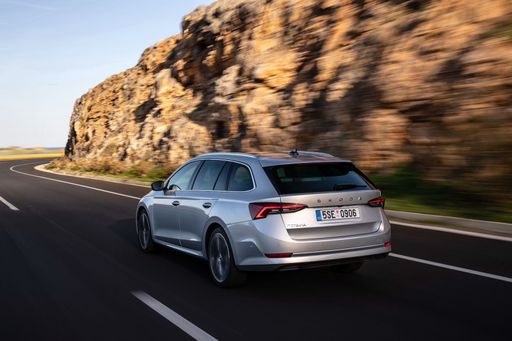
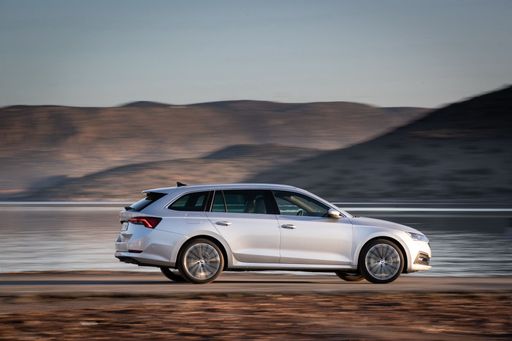
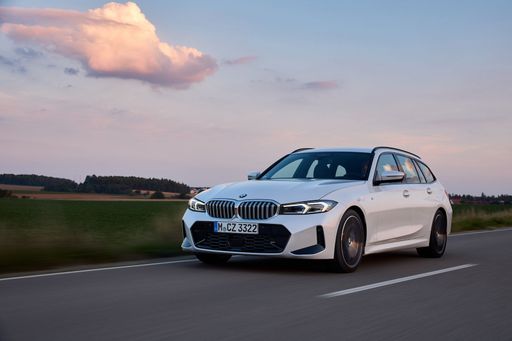
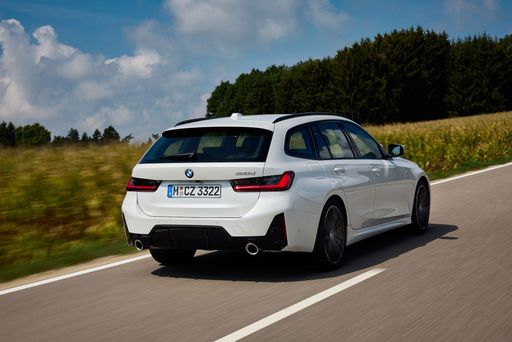
BMW 3 Series Touring VS Skoda Octavia Combi pits a driver‑focused premium kombi against a space‑maximising, no‑nonsense family wagon. The BMW sells the idea of precise handling, a quieter long‑distance cabin and premium materials, while the Skoda trades a little luxury for much more usable room and a lower running cost. Pricing and options push the BMW into a noticeably higher budget bracket, which shows in perceived finish and driving polish. The Octavia answers with a clearer everyday bargain: bigger boot, more rear legroom and a layout tailored to luggage and kids rather than corner carving.
Octavia Combi

Driving character and highway demeanor

The BMW 3 Series Touring feels taut and focused on the road; its steering is direct and the chassis reward drivers who value feel and feedback. The Skoda Octavia Combi behaves more dutifully — steady, confidence‑inspiring and designed to remove stress rather than excite. On motorways the BMW’s refined noise insulation and composed demeanour make long hauls effortless, whereas the Octavia is equally comfortable but a touch louder under load and with less of the BMW’s telegraphed agility. If you prioritise involvement and precision, the BMW is the natural pick; if you want calm, predictable progress without drama, the Octavia is the more suitable companion.

3 Series Touring

Comfort, ride and long‑distance usability

For sustained miles the BMW’s cabin feels more like a premium cocoon: seats that hold you, excellent wind‑noise control and a suspension that balances poise with control — though firm wheel choices will expose a sterner ride. The Octavia leans into comfort with a soft, confident ride and an option‑rich chassis set‑up that can be tuned toward even more comfort with adaptive dampers. Families and commuters who cover lots of motorway kilometres will appreciate the Octavia’s easygoing ride and lower running fuss, while drivers after quieter refinement and tighter body control will prefer the BMW. Both cope with long trips well, but they do so with different priorities: BMW refines and engages, Skoda relaxes and accommodates.

Octavia Combi

Practicality and everyday usability

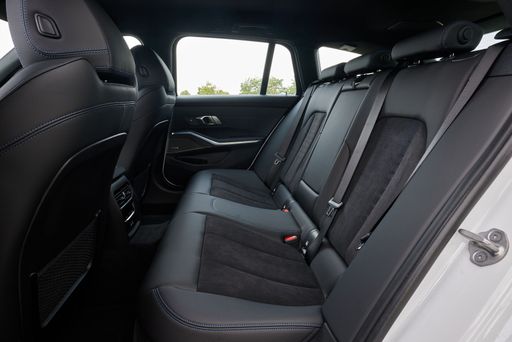
This is where the Octavia Combi really draws a line: its boot is square, deep and designed to swallow luggage, buggies or a week’s worth of DIY in a way the BMW does not match. The BMW 3 Series Touring counters with clever details — a separately opening tailgate, underfloor storage and a low load lip — that improve daily handling, but its usable cargo space and middle rear seat feel tighter. For families who routinely carry bulky loads or three child seats the Octavia’s packaging is a clear real‑world advantage, while buyers who prize a neater finish and tighter dimensions for urban use will find the BMW’s layout neater despite the smaller volume. Remember that electrified BMW variants can eat into boot capacity, whereas the Octavia’s footprint stays consistently practical.

3 Series Touring

Cabin feel, controls and perceived quality

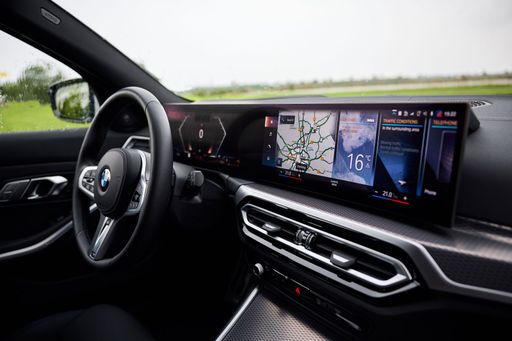
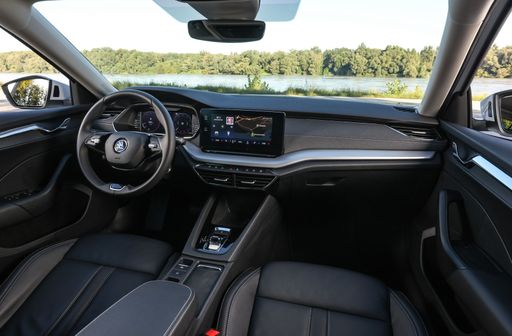
Step inside the BMW and you’ll notice softer surfaces, more tactile buttons and an overall ambience pitched toward premium ownership; the iDrive controller remains a strong plus for tactile operation. The Skoda Octavia’s interior reads functional and well thought‑out — knobs and clever storage — but it shows harder plastics in less visible places and a more utilitarian presentation. Both cars have moved toward touchscreens for many functions, yet the Octavia’s touch‑first climate sliders attract more complaints for distraction than the BMW’s mixture of touchscreen and physical interface. In short, the BMW feels more grown‑up and expensive, the Octavia feels honest, robust and engineered around everyday chores.

Octavia Combi

Who each car suits and how to decide

If your priority is driver engagement, motorway serenity and a premium cabin that ages well, the BMW 3 Series Touring is oriented to that buyer even if it costs more and reduces pure cargo volume. If you need maximum usable space, easy family‑friendly practicality and low running costs, the Skoda Octavia Combi is the sharper tool for daily life, holidays and three‑child setups. Budget‑minded buyers and those who value straightforward usability will lean Octavia; buyers who want brand cachet, sharper dynamics and a quieter long‑distance companion will lean BMW. The technical comparison that follows will sharpen these trade‑offs with numbers and packaging details so you can match the right kompromiss to your needs without declaring a single winner.

Here’s where it gets real: The technical differences in detail

3 Series Touring

Costs and Efficiency:

When it comes to price and running costs, the biggest differences usually appear. This is often where you see which car fits your budget better in the long run.

Skoda Octavia Combi is clearly cheaper – starting at 25,600 £ , while the BMW 3 Series Touring costs 41,100 £ . That’s a price difference of around 15,480 £.

Fuel consumption also shows a difference: the BMW 3 Series Touring uses 2.5 L/100km and is substantially more efficient than the Skoda Octavia Combi with 4.4 L/100km. The difference is about 1.9 L/100km.

Octavia Combi

Engine and Performance:

Power, torque and acceleration say a lot about how a car feels on the road. This is where you see which model delivers more driving dynamics.

When it comes to engine power, the BMW 3 Series Touring offers clearly more power – delivering 530 HP compared to 204 HP. That’s roughly 326 HP more horsepower.

When accelerating from 0 to 100 km/h, the BMW 3 Series Touring is significantly quicker – completing the sprint in 3.6 s, while the Skoda Octavia Combi takes 6.7 s. That’s about 3.1 s quicker.

There’s also a difference in torque: the BMW 3 Series Touring delivers clearly more torque with 700 Nm compared to 360 Nm. That’s about 340 Nm more.

3 Series Touring

Space and Everyday Use:

Beyond pure performance, interior space and usability matter most in daily life. This is where you see which car is more practical and versatile.

Both vehicles offer seating for 5 people.

In terms of curb weight, Skoda Octavia Combi is clearly lighter – 1,366 kg compared to 1,650 kg. The difference is around 284 kg.

Looking at boot space, the Skoda Octavia Combi offers clearly more boot space – 640 L compared to 500 L. That’s a difference of about 140 L.

When it comes to payload, the Skoda Octavia Combi carries very slightly more – 534 kg compared to 520 kg. That’s a difference of about 14 kg.

Who wins the race in the data check?

The BMW 3 Series Touring is clearly superior overall in the objective data comparison.
This result only shows which model scores more points on paper – not which of the two cars feels right for you.

from £41,100
3 Series Touring

BMW 3 Series Touring

  • Engine Type Diesel MHEV, Petrol, Petrol MHEV, Plugin Hybrid
  • Transmission Automatic
  • Drive Type Rear-Wheel Drive, All-Wheel Drive
  • Power HP 150 - 530 HP
  • Consumption L/100km 2.5 - 10.3 L/100km
  • Electric Range 91 - 97 km
BMW 3 Series Touring
Skoda Octavia Combi

Costs and Consumption

View detailed analysis

Engine and Performance

View detailed analysis

Dimensions and Body

View detailed analysis

BMW 3 Series Touring

The BMW 3 Series Touring blends sporting poise with everyday practicality, wrapping sharp handling and a premium cabin into a wagon that actually makes errands feel enjoyable. It’s the kind of car that hides a family-hauler’s sense of duty beneath a driver's-car attitude — useful, classy, and just cheeky enough to make you smile on the open road.

details

Skoda Octavia Combi

The Skoda Octavia Combi is a practical, well‑packaged estate that delivers generous and flexible interior space ideal for families or active owners. Its sensible cabin layout, comfortable ride and solid reputation for reliability make it a pragmatic choice for buyers who value utility over flash.

details
BMW 3 Series Touring
Skoda Octavia Combi

Costs and Consumption

Price
41,100 - 93,300 £
Price
25,600 - 39,600 £
Consumption L/100km
2.5 - 10.3 L/100km
Consumption L/100km
4.4 - 6.9 L/100km
Consumption kWh/100km
-
Consumption kWh/100km
-
Electric Range
91 - 97 km
Electric Range
-
Battery Capacity
-
Battery Capacity
-
co2
57 - 233 g/km
co2
113 - 157 g/km
Fuel tank capacity
-
Fuel tank capacity
-

Dimensions and Body

Body Type
Estate
Body Type
Estate
Seats
5
Seats
5
Doors
-
Doors
-
Curb weight
1,650 - 2,025 kg
Curb weight
1,366 - 1,553 kg
Trunk capacity
410 - 500 L
Trunk capacity
640 L
Length
-
Length
-
Width
1,827 - 1,903 mm
Width
1,829 mm
Height
-
Height
-
Max trunk capacity
-
Max trunk capacity
-
Payload
430 - 520 kg
Payload
502 - 534 kg

Engine and Performance

Engine Type
Diesel MHEV, Petrol, Petrol MHEV, Plugin Hybrid
Engine Type
Petrol, Petrol MHEV, Diesel
Transmission
Automatic
Transmission
Automatic, Manuel
Transmission Detail
Automatic Gearbox
Transmission Detail
Dual-Clutch Automatic, Manual Gearbox
Drive Type
Rear-Wheel Drive, All-Wheel Drive
Drive Type
All-Wheel Drive, Front-Wheel Drive
Power HP
150 - 530 HP
Power HP
116 - 204 HP
Acceleration 0-100km/h
3.6 - 8.8 s
Acceleration 0-100km/h
6.7 - 10.7 s
Max Speed
-
Max Speed
-
Torque
250 - 700 Nm
Torque
220 - 360 Nm
Number of Cylinders
4 - 6
Number of Cylinders
4
Power kW
110 - 390 kW
Power kW
85 - 150 kW
Engine capacity
1,995 - 2,998 cm3
Engine capacity
1,498 - 1,984 cm3

General

Model Year
2,024 - 2,025
Model Year
2025
CO2 Efficiency Class
D, E, F, G, B
CO2 Efficiency Class
E, F, D, C
Brand
BMW
Brand
Skoda
DriveDuel uses data analysis and artificial intelligence to evaluate vehicle data and create content. Content is regularly reviewed and improved. The displayed prices are estimates based on German list prices, adjusted to the respective country’s VAT. Country-specific registration taxes are not included. This information is not legally binding.