VS

Kia Sportage vs Skoda Octavia Combi comparison

Compare performance (288 HP vs 204 HP), boot space and price (29,100 £ vs 25,600 £ ) at a glance. Find out which car is the better choice for you – Kia Sportage or Skoda Octavia Combi?

Kia Sportage vs Skoda Octavia Combi: Key differences

Kia Sportage

5 (3 Reviews)
rate
  • clearly more power
  • significantly more efficient
details

Skoda Octavia Combi

3.9 (1 Reviews)
rate
  • moderately cheaper
  • slightly quicker 0–100 km/h
  • somewhat lighter
  • marginally more trunk space
details

All details on performance, efficiency, range and trunk space can be found in the technical comparison below – including user reviews for both models.

By Achim Sedelmaier

Sportage

Kia Sportage vs Skoda Octavia Combi: A Comprehensive Comparison

In the ever-expanding automotive market, two models that stand out for their innovative features and practical design are the Kia Sportage and the Skoda Octavia Combi. Both vehicles cater to diverse needs and come with unique advantages, making them worthy of comparison. This article explores technical specifications, innovations, and essential features of both cars to help potential buyers make an informed decision.
Octavia Combi

Design and Dimensions

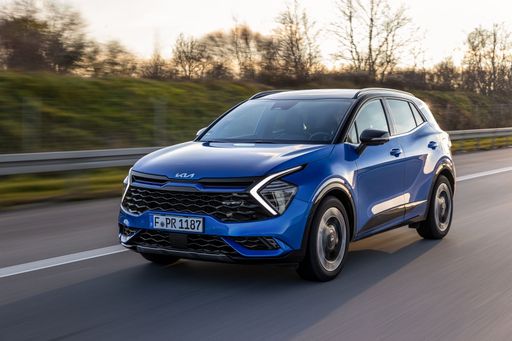
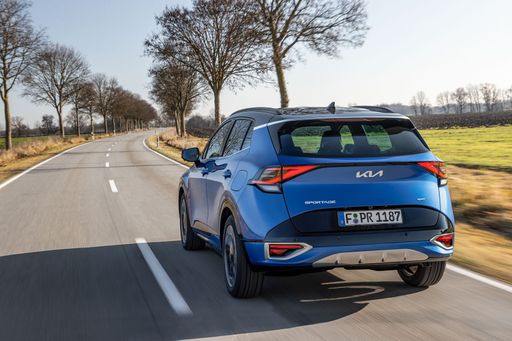
The Kia Sportage is a stylish SUV measuring 4,515 mm in length, 1,865 mm in width, and 1,650 mm in height. With a spacious cabin and a trunk capacity ranging from 526 to 587 liters, it offers ample space for families and adventurers alike.

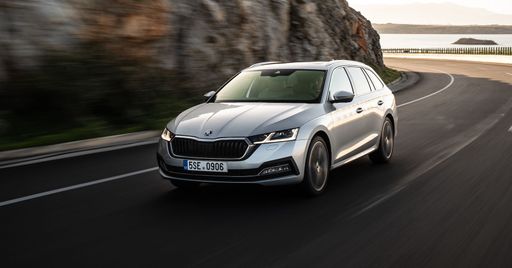
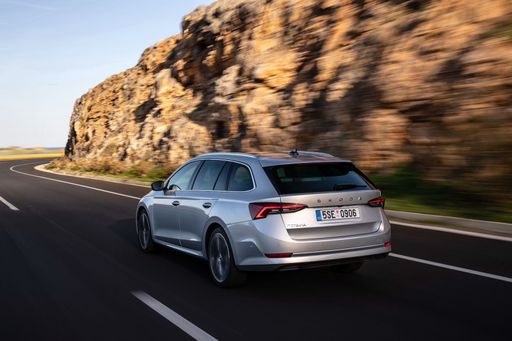
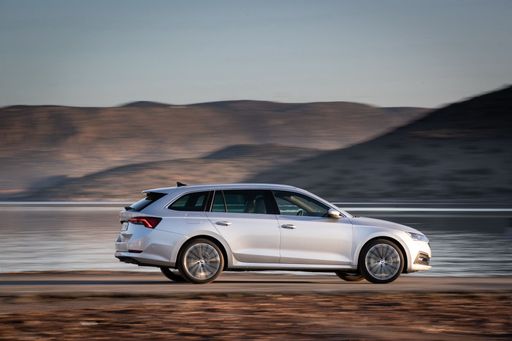
In contrast, the Skoda Octavia Combi, a versatile wagon, boasts a more extended length of 4,698 to 4,709 mm but is slightly narrower at 1,829 mm and lower at a height of around 1,455 to 1,491 mm. The standout feature of the Octavia Combi is its trunk capacity, which can reach an impressive 640 liters, making it one of the most practical choices for those needing extra space.

Sportage

Powertrains and Performance

The Kia Sportage offers a range of engine options, including Diesel MHEV, Petrol MHEV, Full Hybrid, Petrol, and Plugin Hybrid variants. Power outputs vary from 136 HP to a robust 252 HP, along with torque figures ranging from 265 Nm to 350 Nm, which ensures potent performance across the lineup. Acceleration from 0 to 100 km/h is remarkably efficient with the petrol variants, achieving as low as 8.3 seconds.

On the other hand, the Skoda Octavia Combi presents an array of engines primarily focused on Petrol and Diesel variants. With power outputs from 116 HP to an incredible 265 HP, it caters to performance enthusiasts as well. The Octavia Combi also impresses with its acceleration figures; the top model can dash from 0 to 100 km/h in just 6.5 seconds, making it very competitive in its class.

Octavia Combi

Fuel Efficiency and Emissions

Fuel efficiency is crucial for modern drivers, and here both cars perform admirably. The Kia Sportage boasts combined consumption figures ranging from 5 to 7.2 L/100 km, depending on the engine choice, making it quite economical for an SUV.

The Skoda Octavia Combi, focusing on efficiency, offers even better rates, with consumption figures as low as 4.4 L/100 km for specific diesel variants. This gives the Octavia an edge in terms of fuel efficiency, considering it’s a larger vehicle.

Sportage

Innovative Technologies

Both the Kia Sportage and Skoda Octavia Combi feature cutting-edge technology aimed at enhancing the driving experience. The Sportage showcases a modern infotainment system with advanced connectivity options, including Apple CarPlay and Android Auto, alongside safety innovations like lane-keeping assist and adaptive cruise control.

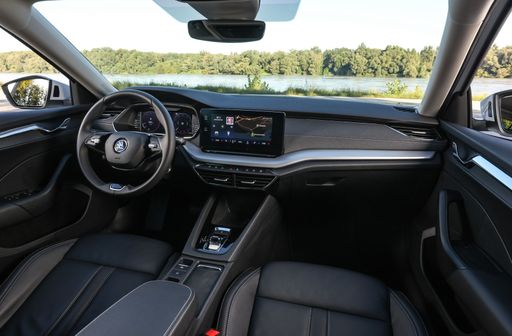
The Octavia Combi doesn't fall short either, featuring a sophisticated virtual cockpit and numerous driver assistance systems that provide invaluable support while driving. Its infotainment system is intuitive and significantly focuses on user experience, ensuring seamless navigation and connectivity.

Octavia Combi

Driving Dynamics and Comfort

With the Kia Sportage, drivers can expect a comfortable ride complemented by good handling, whether navigating city streets or cruising on highways. Its all-wheel-drive option enhances stability and confidence in varying conditions.

Conversely, the Skoda Octavia Combi is known for its exceptional driving dynamics, providing a more engaging experience behind the wheel. Its sporty undertones assure responsive handling without compromising comfort, making it an ideal choice for both everyday commutes and longer journeys.

Sportage

Conclusion

Choosing between the Kia Sportage and the Skoda Octavia Combi ultimately depends on individual needs and preferences. The Sportage shines with its stylish SUV design, robust power options, and innovative technology, while the Octavia Combi excels in practicality, fuel efficiency, and driving dynamics. Both vehicles present a compelling case in their respective categories, ensuring that buyers will find satisfaction regardless of which they choose.

Here’s where it gets real: The technical differences in detail

Sportage

Costs and Efficiency:

Price and efficiency are often the first things buyers look at. Here it becomes clear which model has the long-term edge – whether at the pump, the plug, or in purchase price.

Skoda Octavia Combi is moderately cheaper – starting at 25,600 £ , while the Kia Sportage costs 29,100 £ . That’s a price difference of around 3,557 £.

Fuel consumption also shows a difference: the Kia Sportage uses 2.9 L/100km and is significantly more efficient than the Skoda Octavia Combi with 4.4 L/100km. The difference is about 1.5 L/100km.

Octavia Combi

Engine and Performance:

Power, torque and acceleration are the classic benchmarks for car enthusiasts – and here, some clear differences start to show.

When it comes to engine power, the Kia Sportage offers clearly more power – delivering 288 HP compared to 204 HP. That’s roughly 84 HP more horsepower.

When accelerating from 0 to 100 km/h, the Skoda Octavia Combi is slightly quicker – completing the sprint in 6.7 s, while the Kia Sportage takes 7.5 s. That’s about 0.8 s quicker.

There’s also a difference in torque: the Kia Sportage delivers only slightly more torque with 380 Nm compared to 360 Nm. That’s about 20 Nm more.

Sportage

Space and Everyday Use:

Whether family car or daily driver – which one offers more room, flexibility and comfort?

Both vehicles offer seating for 5 people.

In terms of curb weight, Skoda Octavia Combi is somewhat lighter – 1,366 kg compared to 1,552 kg. The difference is around 186 kg.

Looking at boot space, the Skoda Octavia Combi offers marginally more boot space – 640 L compared to 587 L. That’s a difference of about 53 L.

When it comes to payload, the Kia Sportage carries barely more – 580 kg compared to 534 kg. That’s a difference of about 46 kg.

Who wins the race in the data check?

The Kia Sportage holds a decisive overall lead in the objective data comparison.
This result only shows which model scores more points on paper – not which of the two cars feels right for you.

from £29,100
Sportage

Kia Sportage

  • Engine Type : Petrol, Full Hybrid, Diesel MHEV, Plugin Hybrid
  • Transmission : Manuel, Automatic
  • Drive Type : Front-Wheel Drive, All-Wheel Drive
  • Power HP : 136 - 288 HP
  • Consumption L/100km : 2.9 - 7.8 L/100km
  • Electric Range : 63 - 66 km
Kia Sportage
Skoda Octavia Combi

Costs and Consumption

View detailed analysis

Engine and Performance

View detailed analysis

Dimensions and Body

View detailed analysis

Kia Sportage

The Kia Sportage is a roomy, well-equipped compact SUV that balances comfort and practicality for daily driving. It delivers a modern interior, composed ride, and strong value for buyers who want versatility without fuss.

details

Skoda Octavia Combi

The Skoda Octavia Combi is a practical, well‑packaged estate that delivers generous and flexible interior space ideal for families or active owners. Its sensible cabin layout, comfortable ride and solid reputation for reliability make it a pragmatic choice for buyers who value utility over flash.

details
Kia Sportage
Skoda Octavia Combi

Costs and Consumption

Price
29,100 - 47,100 £
Price
25,600 - 39,600 £
Consumption L/100km
2.9 - 7.8 L/100km
Consumption L/100km
4.4 - 6.9 L/100km
Consumption kWh/100km
-
Consumption kWh/100km
-
Electric Range
63 - 66 km
Electric Range
-
Battery Capacity
-
Battery Capacity
-
co2
67 - 177 g/km
co2
113 - 157 g/km
Fuel tank capacity
-
Fuel tank capacity
-

Dimensions and Body

Body Type
SUV
Body Type
Estate
Seats
5
Seats
5
Doors
-
Doors
-
Curb weight
1,552 - 1,896 kg
Curb weight
1,366 - 1,553 kg
Trunk capacity
526 - 587 L
Trunk capacity
640 L
Length
-
Length
-
Width
1,865 mm
Width
1,829 mm
Height
-
Height
-
Max trunk capacity
-
Max trunk capacity
-
Payload
533 - 580 kg
Payload
502 - 534 kg

Engine and Performance

Engine Type
Petrol, Full Hybrid, Diesel MHEV, Plugin Hybrid
Engine Type
Petrol, Petrol MHEV, Diesel
Transmission
Manuel, Automatic
Transmission
Automatic, Manuel
Transmission Detail
Manual Gearbox, Dual-Clutch Automatic, Automatic Gearbox
Transmission Detail
Dual-Clutch Automatic, Manual Gearbox
Drive Type
Front-Wheel Drive, All-Wheel Drive
Drive Type
All-Wheel Drive, Front-Wheel Drive
Power HP
136 - 288 HP
Power HP
116 - 204 HP
Acceleration 0-100km/h
7.5 - 11.6 s
Acceleration 0-100km/h
6.7 - 10.7 s
Max Speed
-
Max Speed
-
Torque
250 - 380 Nm
Torque
220 - 360 Nm
Number of Cylinders
4
Number of Cylinders
4
Power kW
100 - 212 kW
Power kW
85 - 150 kW
Engine capacity
1,598 cm3
Engine capacity
1,498 - 1,984 cm3

General

Model Year
2,025 - 2,026
Model Year
2025
CO2 Efficiency Class
F, D, E, G, B
CO2 Efficiency Class
E, F, D, C
Brand
Kia
Brand
Skoda
DriveDuel uses data analysis and artificial intelligence to evaluate vehicle data and create content. Content is regularly reviewed and improved. The displayed prices are estimates based on German list prices, adjusted to the respective country’s VAT. Country-specific registration taxes are not included. This information is not legally binding.