VS

Alfa Romeo Stelvio vs BMW X1 comparison

Compare performance (210 HP vs 326 HP), boot space and price (51,900 £ vs 38,200 £ ) at a glance. Find out which car is the better choice for you – Alfa Romeo Stelvio or BMW X1?

Alfa Romeo Stelvio vs BMW X1: Key differences

Alfa Romeo Stelvio

5 (1 Reviews)
rate

BMW X1

4.2 (6 Reviews)
rate
  • noticeably cheaper
  • noticeably more power
  • considerably more efficient
  • visibly quicker 0–100 km/h
  • a bit lighter
  • only slightly more trunk space

All details on performance, efficiency, range and trunk space can be found in the technical comparison below – including user reviews for both models.

Stelvio

Alfa Romeo Stelvio vs. BMW X1: A Battle of Luxury SUVs

In the constantly evolving landscape of luxury SUVs, two names often rise to the surface: the Alfa Romeo Stelvio and the BMW X1. Each offers a unique blend of style, performance, and innovation, tailored to those who seek more than just a beautiful ride. Here, we delve into what sets these models apart in key areas, offering insights for prospective buyers.
X1

Design and Dimensions

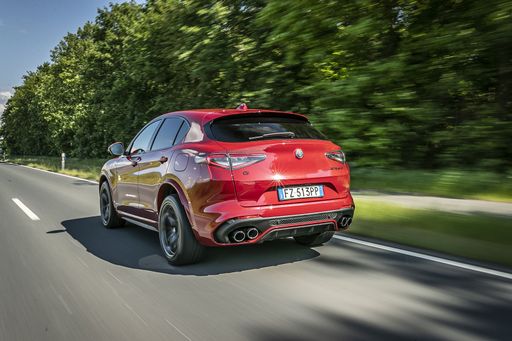
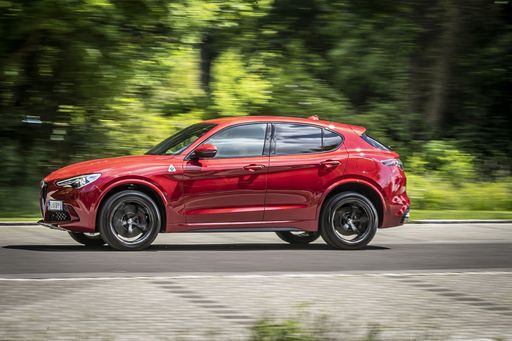
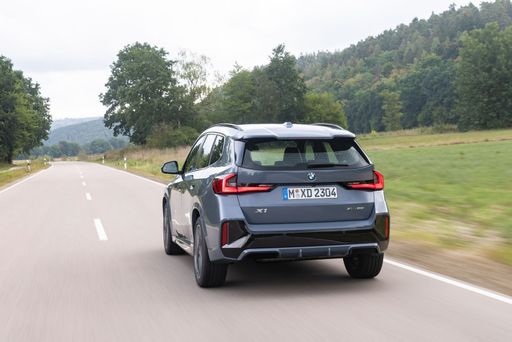
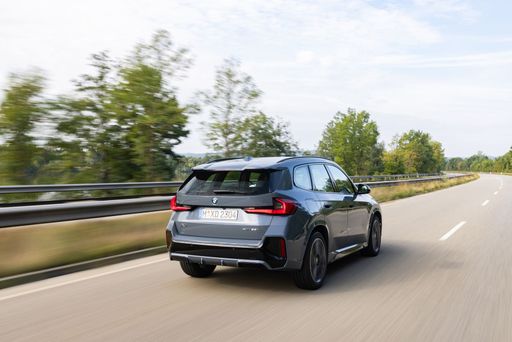
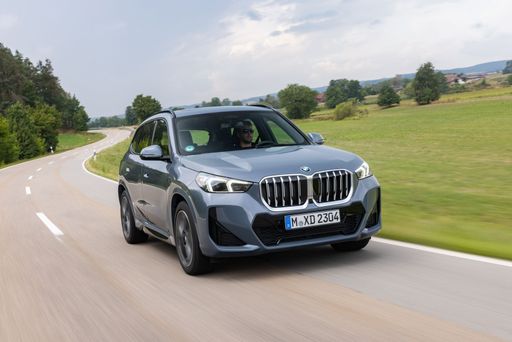
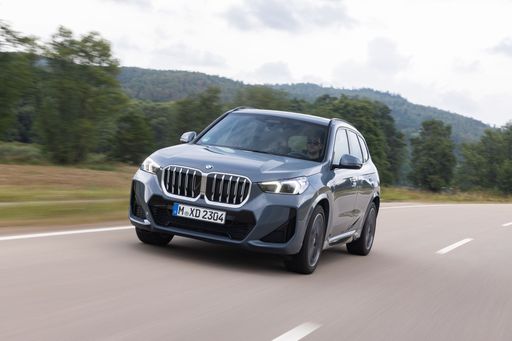
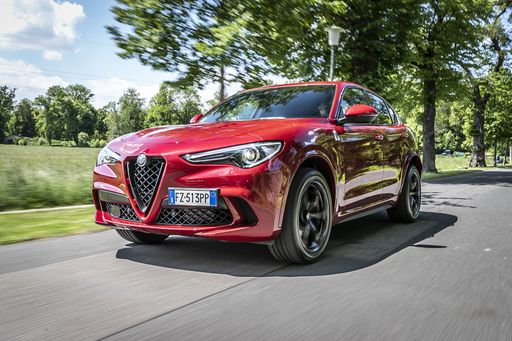
The Alfa Romeo Stelvio captivates with its Italian flair, sporting a sleek, aerodynamic silhouette. Measuring up to 4701 mm in length, 1955 mm in width, and standing at a height of 1693 mm, it commands attention on the road. Contrastingly, the BMW X1 adopts a more utilitarian form, with dimensions slightly compact at 4505 mm in length, 1845 mm in width, and a varying height of up to 1642 mm. Its design leans towards precision and functionality, hallmarks of German engineering.

Stelvio

Performance and Powertrains

Under the hood, the Stelvio is a powerhouse. This Italian SUV offers a range of petrol and diesel engines, with power peaking at an impressive 520 HP. Coupled with an all-wheel drive system and a responsive automatic gearbox, it boasts an acceleration from 0-100 km/h as swift as 3.8 seconds. Its top speed reaches a thrilling 285 km/h, ensuring a pulse-racing experience.

The BMW X1 presents a diverse lineup, featuring diesel, petrol, mild hybrid, and plug-in hybrid engines. Its output ranges from 136 to 326 HP, catering to eco-conscious drivers with electric consumption as low as 0.8 L/100 km and an electric range of 83 km. The X1 balances performance with sustainability, reaching 100 km/h in as little as 5.4 seconds with a top speed of 250 km/h.

X1

Efficiency and Environmental Considerations

The Alfa Romeo Stelvio's charm may come at an environmental cost, with CO2 emissions ranging from 157 to 267 g/km, leading to efficiency classes of G and F. Despite a more robust performance profile, it maintains a reasonable fuel consumption rate between 6 to 11.8 L/100 km, based on the engine choice.

Conversely, the BMW X1 strides ahead in terms of eco-friendliness, offering CO2 efficiency classes from B to F, with emissions starting at 17 g/km, particularly with its hybrid models. Consumption varies from an economical 4.6 to 7.7 L/100 km, positioning it as a more conservative option for fuel efficiency and emission control.

Stelvio

Interior and Cargo Space

Both SUVs are built to accommodate modern lifestyles. The Stelvio features a spacious cabin that comfortably seats five, with a trunk capacity of 525 liters, making it ideal for longer journeys and additional cargo needs.

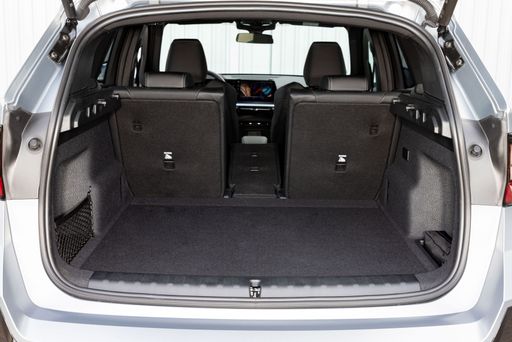
The X1, while slightly smaller, utilizes its interior wisely. It offers a trunk capacity of up to 540 liters, accommodating diverse travel essentials easily. Both models provide premium materials and advanced infotainment systems, ensuring that luxury and comfort are never compromised on the road.

X1

Conclusion: Choosing the Right Luxury SUV

The choice between the Alfa Romeo Stelvio and the BMW X1 largely depends on individual priorities. For those enthusiasts who crave power and Italian passion, the Stelvio represents a thrilling ride with an edge of sophistication. On the other hand, the BMW X1 caters to those who value versatility and efficiency, with its extensive range of hybrid options and eco-friendly credentials.

Ultimately, both the Stelvio and the X1 stand as testament to the extraordinary innovation and luxury within the SUV segment, each leaving a distinct mark in a high-stakes automotive market.

Here’s where it gets real: The technical differences in detail

Stelvio

Costs and Efficiency:

Price and efficiency are often the first things buyers look at. Here it becomes clear which model has the long-term edge – whether at the pump, the plug, or in purchase price.

BMW X1 is noticeably cheaper – starting at 38,200 £ , while the Alfa Romeo Stelvio costs 51,900 £ . That’s a price difference of around 13,714 £.

Fuel consumption also shows a difference: the BMW X1 uses 2.5 L/100km and is considerably more efficient than the Alfa Romeo Stelvio with 6 L/100km. The difference is about 3.5 L/100km.

X1

Engine and Performance:

Power, torque and acceleration say a lot about how a car feels on the road. This is where you see which model delivers more driving dynamics.

When it comes to engine power, the BMW X1 offers noticeably more power – delivering 326 HP compared to 210 HP. That’s roughly 116 HP more horsepower.

When accelerating from 0 to 100 km/h, the BMW X1 is visibly quicker – completing the sprint in 5.4 s, while the Alfa Romeo Stelvio takes 6.6 s. That’s about 1.2 s quicker.

There’s also a difference in torque: the BMW X1 delivers barely more torque with 477 Nm compared to 470 Nm. That’s about 7 Nm more.

Stelvio

Space and Everyday Use:

Beyond pure performance, interior space and usability matter most in daily life. This is where you see which car is more practical and versatile.

Both vehicles offer seating for 5 people.

In terms of curb weight, BMW X1 is a bit lighter – 1,575 kg compared to 1,820 kg. The difference is around 245 kg.

Looking at boot space, the BMW X1 offers only slightly more boot space – 540 L compared to 525 L. That’s a difference of about 15 L.

When it comes to payload, the Alfa Romeo Stelvio carries moderately more – 590 kg compared to 500 kg. That’s a difference of about 90 kg.

Who wins the race in the data check?

The BMW X1 holds a decisive overall lead in the objective data comparison.
This result only shows which model scores more points on paper – not which of the two cars feels right for you.

from £38,200
X1

BMW X1

  • Engine Type : Diesel MHEV, Petrol MHEV, Petrol, Diesel, Plugin Hybrid
  • Transmission : Automatic
  • Drive Type : Front-Wheel Drive, All-Wheel Drive
  • Power HP : 136 - 326 HP
  • Consumption L/100km : 2.5 - 7.7 L/100km
  • Electric Range : 81 km
Alfa Romeo Stelvio
BMW X1

Costs and Consumption

View detailed analysis

Engine and Performance

View detailed analysis

Dimensions and Body

View detailed analysis

Alfa Romeo Stelvio

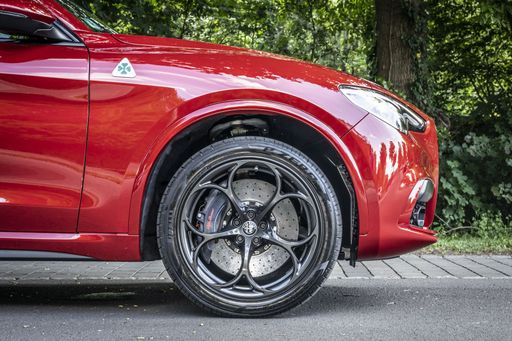
The Alfa Romeo Stelvio combines Italian artistry with sporty performance, making it a standout in the SUV market. Its dynamic design captures the essence of elegance and agility, while the interior offers a driver-focused experience that enhances every journey. With a perfect blend of luxury and power, the Stelvio is ideal for those seeking both style and substance on the road.

details

BMW X1

The BMW X1 brings a premium feel to compact crossover life, wrapping practical space and agile handling into a tidy, upscale package. It’s ideal for buyers who want BMW driving dynamics without the bulk, offering everyday comfort and a few clever tricks to keep the commute interesting.

details
Alfa Romeo Stelvio
BMW X1

Costs and Consumption

Price
51,900 - 56,700 £
Price
38,200 - 55,500 £
Consumption L/100km
6 L/100km
Consumption L/100km
2.5 - 7.7 L/100km
Consumption kWh/100km
-
Consumption kWh/100km
-
Electric Range
-
Electric Range
81 km
Battery Capacity
-
Battery Capacity
14.2 kWh
co2
157 g/km
co2
57 - 175 g/km
Fuel tank capacity
-
Fuel tank capacity
47 - 54 L

Dimensions and Body

Body Type
SUV
Body Type
SUV
Seats
5
Seats
5
Doors
-
Doors
5
Curb weight
1,820 kg
Curb weight
1,575 - 1,935 kg
Trunk capacity
525 L
Trunk capacity
490 - 540 L
Length
-
Length
4,500 mm
Width
1,903 mm
Width
1,845 mm
Height
-
Height
1,630 - 1,642 mm
Max trunk capacity
-
Max trunk capacity
1,495 - 1,545 L
Payload
590 kg
Payload
490 - 500 kg

Engine and Performance

Engine Type
Diesel
Engine Type
Diesel MHEV, Petrol MHEV, Petrol, Diesel, Plugin Hybrid
Transmission
Automatic
Transmission
Automatic
Transmission Detail
Automatic Gearbox
Transmission Detail
Dual-Clutch Automatic
Drive Type
All-Wheel Drive
Drive Type
Front-Wheel Drive, All-Wheel Drive
Power HP
210 HP
Power HP
136 - 326 HP
Acceleration 0-100km/h
6.6 s
Acceleration 0-100km/h
5.4 - 9.2 s
Max Speed
-
Max Speed
190 - 233 km/h
Torque
470 Nm
Torque
230 - 477 Nm
Number of Cylinders
4
Number of Cylinders
3 - 4
Power kW
154 kW
Power kW
100 - 240 kW
Engine capacity
2,143 cm3
Engine capacity
1,499 - 1,998 cm3

General

Model Year
2,025
Model Year
2,024 - 2,025
CO2 Efficiency Class
F
CO2 Efficiency Class
D, E, F, B
Brand
Alfa Romeo
Brand
BMW
DriveDuel uses data analysis and artificial intelligence to evaluate vehicle data and create content. Content is regularly reviewed and improved. The displayed prices are estimates based on German list prices, adjusted to the respective country’s VAT. Country-specific registration taxes are not included. This information is not legally binding.