VS

BMW X1 vs BMW X3 comparison

Compare performance (326 HP vs 398 HP), boot space and price (38,200 £ vs 51,300 £ ) at a glance. Find out which car is the better choice for you – BMW X1 or BMW X3?

BMW X1 vs BMW X3: Key differences

BMW X1

4.2 (6 Reviews)
rate
  • noticeably cheaper
  • somewhat more efficient
  • clearly lighter

BMW X3

4.6 (1 Reviews)
rate
  • a bit more power
  • marginally more electric range
  • moderately quicker 0–100 km/h
  • very slightly more trunk space

All details on performance, efficiency, range and trunk space can be found in the technical comparison below – including user reviews for both models.

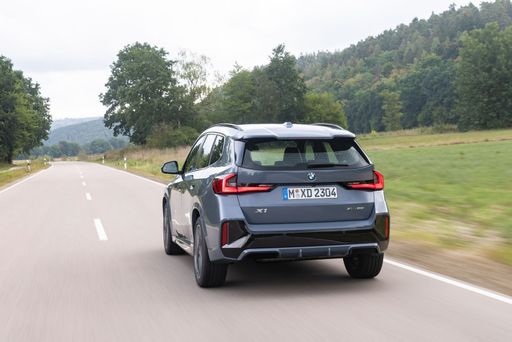
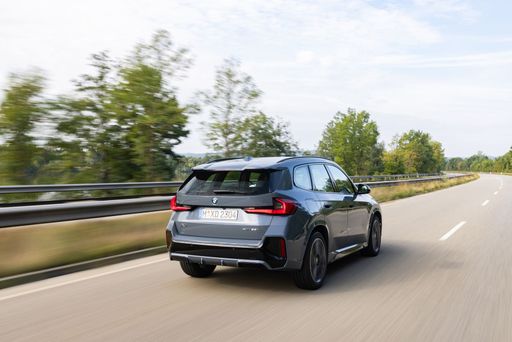
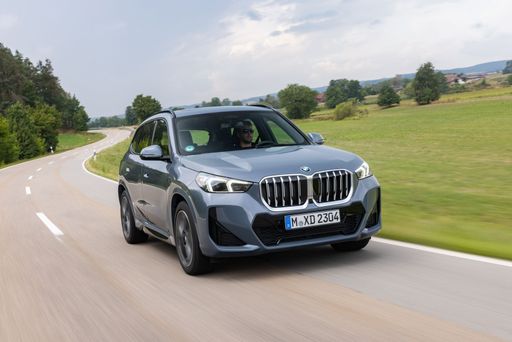
X1

The Compact SUV Battle: BMW X1 vs. BMW X3

In the world of luxury SUVs, BMW has consistently carved out a reputation for blending performance with practicality. In this article, we explore a head-to-head comparison between two popular models from the German automaker: the BMW X1 and the BMW X3. Both vehicles offer a distinctive take on the SUV experience, catering to different driver needs and preferences. Let’s dive into their specifications, innovations, and overall appeal.
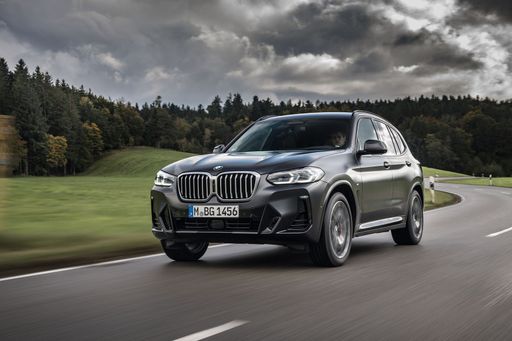
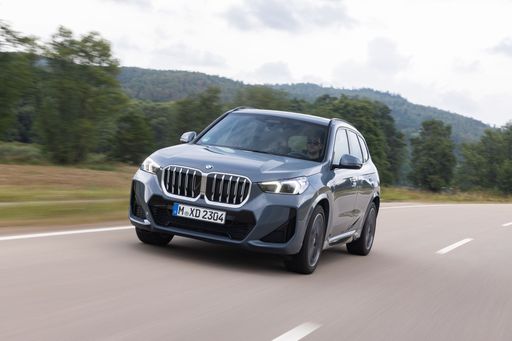
X3

Design and Dimensions

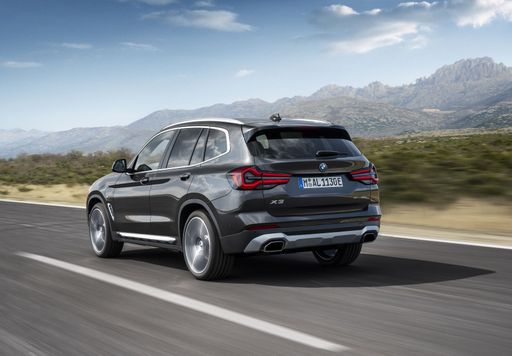
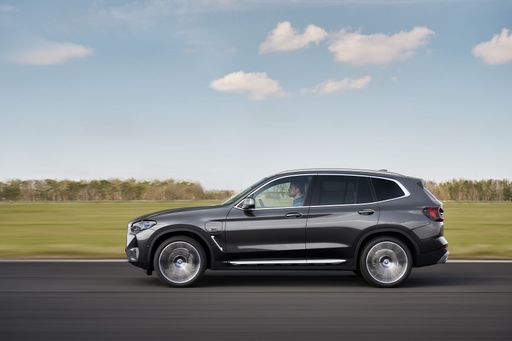
The BMW X1 stands at a length of 4,500 mm, which makes it compact and maneuverable, suitable for urban environments. In contrast, the BMW X3 is slightly larger, measuring 4,708 mm, offering more interior space and cargo capacity. With a width of 1,845 mm for the X1 and 1,891 mm for the X3, both models provide a robust stance on the road. The height varies slightly—with the X1 ranging from 1,622 to 1,642 mm, while the X3 stands at approximately 1,676 mm. This height advantage gives the X3 an edge in headroom for both passengers and cargo.

X1

Engine Options and Performance

When it comes to engine options, both models are impressive. The BMW X1 boasts a versatile lineup that includes diesel, petrol, and hybrid variants, with power output ranging from 136 HP to a vigorous 326 HP. Acceleration from 0-100 km/h varies from 5.4 to 9.2 seconds, ensuring ample performance for city driving and highway merging alike.

The X3, however, offers even more power, with engines generating between 184 HP and a whopping 510 HP in the top-tier performance model. Its impressive acceleration capabilities range from 3.8 seconds to 8.4 seconds, putting it firmly in the sportier realm of the SUV segment. The automatic transmission in both models guarantees smooth gear changes, but the X3 benefits from a more refined automatic gearbox.

X3

Fuel Efficiency and Eco-Friendliness

Fuel efficiency is an increasingly important factor for many buyers. The BMW X1 demonstrates commendable fuel economy, with consumption figures as low as 4.6 L/100 km in hybrid variants. The diesel options also provide a solid efficiency with consumption around 5.1 to 6.5 L/100 km.

Meanwhile, the BMW X3 features slightly higher consumption rates due to its more powerful engines, with the most economical option sitting around 5.8 L/100 km. Both models offer plug-in hybrid alternatives, promoting eco-friendliness with lower CO2 emissions. However, the BMW X1 takes the lead in overall efficiency, making it the more environmentally-conscious choice.

X1

Technological Innovations

Both the X1 and X3 are equipped with BMW’s latest technology, providing a cutting-edge driving experience. The X1 features a modern infotainment system with a 10.25-inch touchscreen, offering seamless integration with smartphones and a suite of online services.

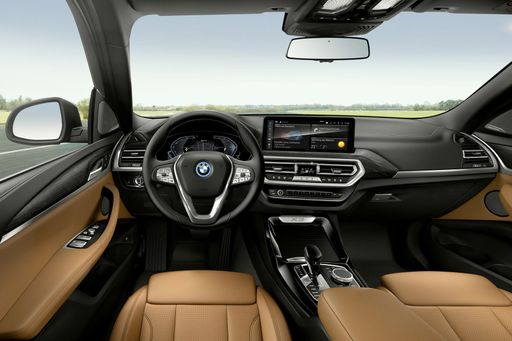
The X3, however, elevates this experience with its available 12.3-inch display and more advanced driver assistance features, such as adaptive cruise control and lane-keeping assistance. Its cockpit layout is designed with driver ergonomics in mind, making it not just a vehicle, but a premium mobile command center.

X3

Interior Comfort and Cargo Space

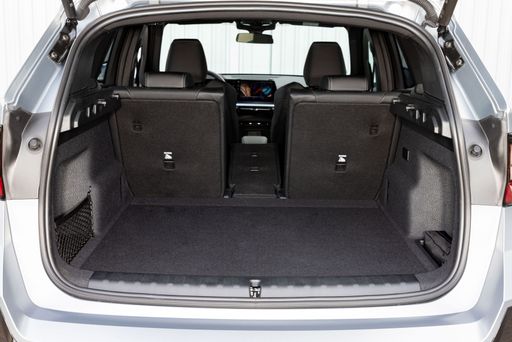
Cabin comfort is essential in the luxury SUV market. The X1 offers a cozy interior with high-quality materials and ample room for five passengers, complemented by a trunk capacity of 540 to 490 liters depending on the variant. This makes it practical for daily use and family outings.

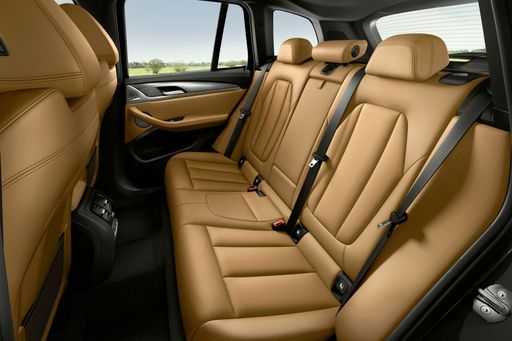
Contrastingly, the X3 excels in space and comfort, providing up to 570 liters of cargo capacity. With a more spacious cabin and available luxury features, it appeals to those who value both comfort and functionality, especially during longer journeys.

X1

Conclusion: Which One Suits You?

Ultimately, the choice between the BMW X1 and BMW X3 depends on the buyer’s preferences and lifestyle needs. The BMW X1 is ideal for city dwellers seeking a compact, efficient SUV with a modern flair. On the other hand, the BMW X3 caters to those desiring more power, space, and luxury comfort in their driving experience.

Both models represent the quintessential Bavarian engineering prowess, promising dynamic driving experiences backed with advanced technology. As the luxury SUV segment continues to grow, the BMW X1 and X3 stand out as impressive contenders, each carving its unique place on the road.

Here’s where it gets real: The technical differences in detail

X1

Costs and Efficiency:

Price and efficiency are key factors when choosing a car – and this is often where the real differences emerge.

BMW X1 is noticeably cheaper – starting at 38,200 £ , while the BMW X3 costs 51,300 £ . That’s a price difference of around 13,029 £.

Fuel consumption also shows a difference: the BMW X1 uses 2.5 L/100km and is somewhat more efficient than the BMW X3 with 2.8 L/100km. The difference is about 0.3 L/100km.

As for electric range, the BMW X3 offers marginally more range – reaching up to 88 km, about 7 km more than the BMW X1.

X3

Engine and Performance:

Power, torque and acceleration are the classic benchmarks for car enthusiasts – and here, some clear differences start to show.

When it comes to engine power, the BMW X3 offers a bit more power – delivering 398 HP compared to 326 HP. That’s roughly 72 HP more horsepower.

When accelerating from 0 to 100 km/h, the BMW X3 is moderately quicker – completing the sprint in 4.6 s, while the BMW X1 takes 5.4 s. That’s about 0.8 s quicker.

Looking at top speed, the BMW X3 is marginally faster – reaching 250 km/h, while the BMW X1 tops out at 233 km/h. The difference is around 17 km/h.

There’s also a difference in torque: the BMW X3 delivers noticeably more torque with 670 Nm compared to 477 Nm. That’s about 193 Nm more.

X1

Space and Everyday Use:

Cabin size, boot volume and payload all play a role in everyday practicality. Here, comfort and flexibility make the difference.

Both vehicles offer seating for 5 people.

In terms of curb weight, BMW X1 is clearly lighter – 1,575 kg compared to 1,930 kg. The difference is around 355 kg.

Looking at boot space, the BMW X3 offers very slightly more boot space – 570 L compared to 540 L. That’s a difference of about 30 L.

For maximum load capacity, the BMW X3 offers only slightly more capacity – up to 1,700 L, about 155 L more than the BMW X1.

When it comes to payload, the BMW X3 carries somewhat more – 570 kg compared to 500 kg. That’s a difference of about 70 kg.

Who wins the race in the data check?

The BMW X3 is far ahead overall in the objective data comparison.
This result only shows which model scores more points on paper – not which of the two cars feels right for you.

from £51,300
X3

BMW X3

  • Engine Type : Petrol MHEV, Diesel MHEV, Plugin Hybrid
  • Transmission : Automatic
  • Drive Type : All-Wheel Drive
  • Power HP : 197 - 398 HP
  • Consumption L/100km : 2.8 - 7.7 L/100km
  • Electric Range : 88 km
BMW X1
BMW X3

Costs and Consumption

View detailed analysis

Engine and Performance

View detailed analysis

Dimensions and Body

View detailed analysis

BMW X1

The BMW X1 brings a premium feel to compact crossover life, wrapping practical space and agile handling into a tidy, upscale package. It’s ideal for buyers who want BMW driving dynamics without the bulk, offering everyday comfort and a few clever tricks to keep the commute interesting.

details

BMW X3

The BMW X3 mixes Bavarian poise with everyday practicality, delivering a composed ride and a cabin that feels both premium and lived-in. It’s the sort of SUV that lets you enjoy sporty handling without sacrificing family-friendly space, so you get fun and sense in one neat package.

details
BMW X1
BMW X3

Costs and Consumption

Price
38,200 - 55,500 £
Price
51,300 - 72,400 £
Consumption L/100km
2.5 - 7.7 L/100km
Consumption L/100km
2.8 - 7.7 L/100km
Consumption kWh/100km
-
Consumption kWh/100km
-
Electric Range
81 km
Electric Range
88 km
Battery Capacity
14.2 kWh
Battery Capacity
-
co2
57 - 175 g/km
co2
64 - 175 g/km
Fuel tank capacity
47 - 54 L
Fuel tank capacity
60 - 65 L

Dimensions and Body

Body Type
SUV
Body Type
SUV
Seats
5
Seats
5
Doors
5
Doors
5
Curb weight
1,575 - 1,935 kg
Curb weight
1,930 - 2,140 kg
Trunk capacity
490 - 540 L
Trunk capacity
460 - 570 L
Length
4,500 mm
Length
4,755 mm
Width
1,845 mm
Width
1,920 mm
Height
1,630 - 1,642 mm
Height
1,660 mm
Max trunk capacity
1,495 - 1,545 L
Max trunk capacity
1,700 L
Payload
490 - 500 kg
Payload
570 kg

Engine and Performance

Engine Type
Diesel MHEV, Petrol MHEV, Petrol, Diesel, Plugin Hybrid
Engine Type
Petrol MHEV, Diesel MHEV, Plugin Hybrid
Transmission
Automatic
Transmission
Automatic
Transmission Detail
Dual-Clutch Automatic
Transmission Detail
Automatic Gearbox
Drive Type
Front-Wheel Drive, All-Wheel Drive
Drive Type
All-Wheel Drive
Power HP
136 - 326 HP
Power HP
197 - 398 HP
Acceleration 0-100km/h
5.4 - 9.2 s
Acceleration 0-100km/h
4.6 - 7.8 s
Max Speed
190 - 233 km/h
Max Speed
215 - 250 km/h
Torque
230 - 477 Nm
Torque
330 - 670 Nm
Number of Cylinders
3 - 4
Number of Cylinders
4 - 6
Power kW
100 - 240 kW
Power kW
145 - 293 kW
Engine capacity
1,499 - 1,998 cm3
Engine capacity
1,995 - 2,998 cm3

General

Model Year
2,024 - 2,025
Model Year
2,024 - 2,025
CO2 Efficiency Class
D, E, F, B
CO2 Efficiency Class
F, E, B
Brand
BMW
Brand
BMW
DriveDuel uses data analysis and artificial intelligence to evaluate vehicle data and create content. Content is regularly reviewed and improved. The displayed prices are estimates based on German list prices, adjusted to the respective country’s VAT. Country-specific registration taxes are not included. This information is not legally binding.